


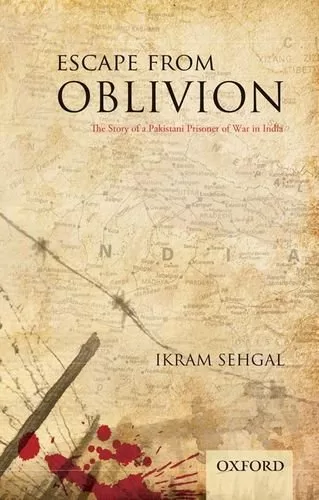
This is the story of a young officer hardly four years service, who decided to fight alongside his old unit, raised and commanded by his father. He had grown up in the unit and earned a nick name ‘Chand Sahib’ in the unit. He left the comfortable living as a pilot in the Army Aviation Flight at Dacca and decided to join 2 East Bengal Regiment (EBR) on 29 March 1971 at Joydebpor. The author terms it as a decision of his heart against mind (page 5). Why Heart over Mind? There is need to study why or what forces young officers/men to stand up for a cause. This is to be viewed in the circumstances prevailing in East Pakistan at that time. The Governor and the Commander Eastern Command, both non-Bengalis, resigned in protest against the Federal Government Decision to cancel the National Assembly session scheduled for 3 March 1971 at Dacca. This was Yayha’s most stupid decision, which became the immediate cause for the creation of BANGLA DESH. It was viewed by the people of East Pakistan as reluctance by the Federal Government to hand over power to the Majority Party leader after the Elections. The entire civil government, police and the people, business men, civil society, villagers poor and rich, henceforth (1 March 1971) started working on the directions of Sh Mujib ur Rehman and Awami League. Writ of the federal government was non-existent since 1 March 1971. It was an all out Up rising and defiance by the people of the entire province. The local shopkeepers refused to sell any thing to the Army units or Families. The Author had observed the massacre of Non-Bengalis on 4 March 1971 at Chittagong , when he was sent by General Yaqub to observe and report. (Page 125-126). However the Bengali elements of Pakistan Army Including EBR and East Pakistan had not yet revolted, but their sympathies were clearly with the Awami League. (GOC 14 Div Gen Khadim Raja in his recently published Book, “I was a stranger in my own country.”).
Note: (The Army Higher Command took no action in this period to take protective measures like withdrawing the West Pakistani troops deployed in penny packets in isolated Posts or small towns on IS for the Election duty. Some Companies took action on their own in defiance of higher command orders as such were able to save these men.
The Federal Government/Gen Yahya instead of taking note of the resignation of the two senior most Officers, (who were pressing for a political solution) ordered Army action by Pakistan Army for 25 March 1971. The senior PAF Officer in East Pakistan A/ Cdr Mithi Masood openly told Yahya Khan in a meeting on 15 March 1971,”Sir, The present situation needs a Political solution NOT Military, if you take Army action there will be civil war and the entire non Bengali population will be massacred.” Yahya khan retired the officer. Mitty Masud ‘s Words proved prophetic. When hundreds of innocent people/families were killed between 1 March 71 to first week April 71 all the PAF/EPR and Army Personnel deployed on isolated posts were massacred in cold blood. Thereafter it was reaction/revenge by the West Pakistan Troops since April 71 in the army action.
Those were difficult times; Yahya, his cronies and ZAB had decided not to hand over power to the majority leader Sh Mujib Ur Rehman. (To Quote Gen Khadim Raja), “It will be recalled that despite the pleading of both Mujib and Governor Ahsan, the President had decided to postpone the National Assembly convened to meet on 3 March 1971″, page 48- ‘A stranger in my own country’ OUP.”) Army action was ordered on 25 March 1971, from then onwards the entire East Bengal members of the Armed forces revolted. Major (later Maj Gen) Zia Ur Rehman of 8 EBR after killing the west Pakistani CO and other officers announced the start of War of Independence for Bangladesh on Chittagong Radio on 26 March 1971. (Sh Mujib Ur Rehman was arrested by Pak Army Commandos on Ni 25/26 March 1971).
All my Bengali Course mates, who were present in East Pakistan in March 1971 also revolted and joined the BANGLADESH war of liberation with Bengali troops.

Ikram Sehgal has a mixed parentage – a Punjabi father and Bengali mother. His father after Partition had raised 2 EBR in 1949 when the author was about 4 to 5 years old. His father later commanded the same unit and spent most of his service in the then-East Pakistan . The author’s decision to join 2 East Bengal Regiment (EBR) on 29 March 1971 has to be viewed in the environment prevailing in East Pakistan. As per his own statement it was his HEART not MIND which forced him to take that decision. But his sweet dream turned into night mare, when he reached 2 EBR. (Relevant Extracts Page 5 to 7) “By the time I reached my unit, my world had been turned topsy-turvy – the writing clearly on the wall. One could never believe that 2 EBR had killed their West Pakistani colleagues’. Sadly it was true. The massacre of subedit Ayub’s family was heinous and unforgivable.xxxx .They ( West Pakistani) all were of the sentiment that if they stood their ground, they will be able to stop any action that might be taken against their unit. But they proved to be grossly wrong. They were murdered – their martyrdom proves that they were heroes by all means. Their killing is a dark stain on history and can never obliterate the fact that they were a fine battalion. In Bhairab Bazaar, I realized that my romantic notion: ‘glory and honour of the regiment must come first’ was shattered. Xxxxxx- It was destiny, which brought me here to the unit I loved, even though I loved Pakistan from the very core of my being. I was left with no choice but to die in uniform among my troops whom I loved.” (Page 6-7 of the book.)
(My Note: Unfortunately, after 25 March 71, all EBR and East Pakistan Rifles(EPR) units killed all their West Pakistani officers during 25 to 31 March 1971.Major Khalid Musharraf 4 EBR was the only exception who arrested his CO and other West Pakistani s and subsequently handed them over to the Indian Army as POWs. In case of 1 EBR, unit which had played a friendly match with their sister unit 27 Baloch only a few days back in Jessore Cantt, disobeyed the orders of their Bengali CO Lt Col Raza Jalil, who surrendered to West Pakistan brigade commander with about 40 other ranks at Jessore. The remaining unit under their young officers revolted and fought a fierce battle in and around the Cantt with the same unit 27 Baloch. (Col Jalil was not forgiven by the new government and spent the rest of his life in almost misery close to DHAKA). Major (later Lt Gen) Lehrasab Khan of 1 EBR escaped and took refuge along with his family and later joined 27 Baloch. Fate found him fighting against his own men, with whom he had served for 9 long years 2/LT to Major in 1 EBR. (27 Baloch digest of service), The author has referred to Lt Gen Lehrasab as his living hero at notes page-38).
The Author’s CO Major (later Maj Gen) Safiullah, who had been his father’s Adjutant saved him (Page 7). (Later perhaps in consultation with Col Osmany, Major Khalid Musharraf handed him over to Indian BSF. There he met a Punjabi Sepoy named Khaliq from Jhelum who had strayed into India a few days earlier. This Sepoy though being from Artillery looked after Ikram Sehgal (Page 16). (Indicates the loyalty of the West Pakistani troops to their officers in Bangladesh, even in captivity).
(The subsequent story from captivity in India to his escape and reaching Dacca is very thrilling and adventurous, fit to be made into a film).
The author has also discussed the situation after the 1970 elections and attitude of ZAB and the Establishment under YAYHA Khan in his book at page 2 to 5. To quote, “Between 2 March 1971 and 25 March1971, a stand off prevailed, with the entire population of East Pakistan in a state of open defiance ; the Army holed up in their cantonments behind barricades. Many excesses were perpetrated in the East Wing on West Pakistanis and on non Bengali population during this period in isolated areas.” Last paragraph Page-2 The author further writes that,” after several days of shut–down strikes and non– cooperation, on the night of 25 March 1971, the Pakistan Military cracked down on Dacca, the capital of East Pakistan (page 3). This resulted in large scale rebellion from the regular and non-regular Armed forces of Bengali all ranks.
(My comments: Gen Yahya Khan committed that most stupid blunder since the creation of Pakistan by postponing the NA session on 1 March, which was scheduled to meet on 3 March 1971. Unfortunately Yahya Khan did not realize the gravity of the situation; Governor Ahsan was retired on 1 March 71 and Gen Yaqub also resigned on 5 March 71.)
“Yahya khan visited Dacca on 15 March 1971. A/Cdr Mithi Masud, AOC PAF East Pakistan, openly informed YAYHA on 15 march 71 at Dacca that in case of military action there will be a civil war and all West Pakistani and non-Bengali elements would be massacred : Yahya retired him from service. (Gen Khadim-Book-‘I was a stranger in my own country’.) A/Cdr Masud’s words prophetically proved to true. From now onwards it was a Game of ZAB, Gen Gul Hasan, Air Chief Rahim Khan and other close associates under Yahya, who wanted to get rid of East Pakistan , ZAB also wanted to sort out the Army in the process. Sh Mujib talks with Gen Rao Farman Ali after meeting Yahya and ZAB at Dacca. Gen Rao Farman Ali’s Book-“How Pakistan got divided.”
Ikram Sehgal’s view that he had gone with the tacit permission of Major Pat C Tierney and Major (later Brig) Bokhari is described by the author. (Page 5 of the book). “I went to Maj Patrick, reluctantly gave me permission” I was sanctioned some weapons by Major Liaqat Bokhari for my protection, and for my batman Mostafa. xxxxx” I borrowed the car of ADC to GOC eastern command.”
My Comments: The drawl of weapons and Ammunition from kotes can only be done with the permission of competent authority. Was the Kotes non-commissioned officer (NCO) or the Concerned Junior Commissioned Officer (JCO) also punished for this lapse i.e. issuance of the weapons to Ikram Sehgal? This aspect has been left unanswered by the Author? If the author’s version is taken as correct, then there is no case against the author and he was wrongly punished after his return to Dacca from escape. Or perhaps he failed to convince the interrogating team in Dacca , who interrogated him for almost three months.

The second question which is confusing is (page6-7); The CO Major Safiullah gave him the command of his old Bravo Company immediately on his arrival and he was cheered by Jawans, ‘their Chand Sahib was back’. The look of envy on the faces of some of the younger Bengali officers in the unit said it all. ‘I was a dead man’. The question was when? (page 9). The author observed Indian involvement while he was in the Quarter Guard cell of 91 BSF “I gathered from their conversation (Indian interrogating Officers-April 71) that they were to be the advisors to the rebel Army. It was easy to sense that for some of them the job was not particularly to their liking. I could see a constant flow of rebel leaders, political and military going to the Officer’s Mess which was hardly 150 yards away. It was like a gathering of vultures flocking to prey upon the carcass of Pakistan .” (Page 4to10). (while Our leadership was busy drinking and merry making, the Indians were working over time after 1965 War). (My comments: In my opinion the situation in East Pakistan was so fragile that the young officers of 2 EBR could not be trusted not to spare a West Pakistani officer. (page 11) “Although my brethren of the 2 EBR spared my life but they did give me a living death.” Major Safiullah being the Ex adjutant of Col Majeed Sehgal, perhaps decided in consultation with Col Osmany and Khalid Musharraf to hand over the author to the Indian Army /BSF). The Author should be grateful to Major Khalid Musharraf who did not kill him en route to 91 BSF. (The author’s apprehensions about Khalid Musharraf and Col Osmany on page 11 and in the notes on page 12 need clarification ; these two saved/spared his life and handed him over to BSF. Ikram Sehgal had himself observed the killing of non-Bengalis by EBR rebels on 4 March 1971, when he was sent on a special mission by Gen Yaqub as indicated by Sehgal on the notes of page125-126 of the Book.
After having read Ikram Sehgal’s “ESCAPE FROM OBLIVION” I am reminded of very famous novel ” LORD JIM” by Joseph Conrad which was also made into a classic film. Air Marshal Asghar is right when he say the book will make a good film.
Ikram Sehgal was couple of courses junior to me in PMA. We met in June 1968, when we came to ARMY AVIATION School , Dhamial Camp for our basic course. After the course, we were posted to 1 Army Aviation Sqn at Mangla. We shared adjoining BOQs in the officers’ mess. Ikram was very fond of his parent unit 2 East Bengal, which his father had not only raised but also commanded. We spent most of the evenings together watching movies, going to the BOWLING ALLEY and undertaking other sports activities while living in the isolated Mangla Cantt (1969-70). Those were good days, I had served in East Pakistan 1966-68; as such we shared many happy memories of East Pakistan. We discussed many issues including effects of Martial Law in East Pakistan, the Agartalla case and other aspects. But never once Ikram gave any negative ideas. His Patriotism about Pakistan was never in Doubt.
DESTINY. It was destiny that had brought me here to the unit I loved, even though I loved Pakistan from the core of my being (Last lines of page 6). Ikram Sehgal was a good professional officer who had done well in the Army so far and may have risen high in the Army but for his decision of 29 March 1971. But Almighty ALLAH has his ways; Ikram was lucky to have survived the 1971 war, Allah has been kind to him and he could have been killed between his decision to join his Pultun 2 EBR and return to Dacca in August 1971.To quote him, “One is always wiser after the event is over. So much could have gone wrong. A plan seldom materializes according to the script worked out by the planner, though in the end the results may turn out to be just as successful .xxx. “My luck held throughout—someone up there was looking over me. (Page 130”).
(In my opinion the author was also lucky to have retired in 1973/74, so that at an early age he could establish his business. He might have been in for a shock after about ten years or so at the time of his promotion to next rank. His punishment in Dacca and Brig Jabbar’s 1971 report would have caught up with him then. He would have to either ask for retirement then as Major with around 15 years of service or continue as a major. ALLAH KNOWS BEST.)
Few observations/views.
Some people have suggested that Ikram Sehgal should not have written the book after 40 years. I do not agree, I feel Books must be written to let the new generation know as to what really happened in 1971, why our beloved country broke up after 24 years? The book is well written and makes a very good reading. It is very interesting and keeps the reader spell bound from his leaving the Aviation flight to joining the 2 East Bengal regiment and thereafter till his retirement from the Army.
The Author should have included the interview of some of the Officers/Men who were with him in various places. The Book would have looked more authenticated. For example his companions in Agartalla Jail and Panagarh POW Camp, especially Major Sadiq Nawaz, who was instrumental in his escape and as per the author, did all the planning. (“I have no hesitation in admitting that Sadiq Nawaz deserves the credit for my Escape-page 65”). Why Sadiq did not join or what happened later could have been clarified in the interview. Sepoy Khaliq, who looked after him in Agartalla Jail should have also been interviewed. Gen Lehrasab and Brig Taj’s interviews would have lent more authenticity to his account.
Why Ikram Sehgal decided to join his unit? This action needs to be viewed in the over all situation prevailing in EAST PAKISTAN at that time. After the stupid decision of Yahya Khan to postpone the NA session on 1 March 1971, everything in East Pakistan came to stand still. Even the Bengali staff from the Governor house deserted. Gen Tikka khan could not find even a Bengali or non Bengali Judge from East Pakistan high court to give him oath. But the Leadership in West Pakistan failed to understand or deliberately sacrificed innocent lives and suffered humiliating defeat at the Hands of the INDIANS. Have we learnt any lessons now?
Gen Khadim Raja himself admits that on his visit to 2 EBR in Joydebpor on 24th march 71, just one day before the Army action, he was not comfortable with the attitude of the rank and file. In spite of that he failed to withdraw West Pakistani officers and men from the out posts in penny pockets, who were subsequently massacred by the EPR and the rebellious crowd. Col Shafqat Baloch an S.J, and hero of 1965 war, was CO 25 Pb at Rajshahi refused to fire on Muslim Bengalis as such was removed from Command by Gen Khadim Raja.
Author’s role in 1971 war in Chor Sector. I suggest in the next edition the author must include the Interview of Brig Taj, his war time CO in 1971 war in Chor Sector. This is the most important aspect of the authors’ role after he was sent back from East Pakistan and also from Army Aviation in Oct/Nov 71 to join 44 Punjab in the desert under the Command of Lt Col Later Brig Taj. He had been humiliated earlier by refusing to be served food in the Army Aviation mess. After he joined 44 Punjab, he proved his loyalty to Pakistan , as well as his men under Command both during 1971 war in Chor Sector and later in Baluchistan. The CO was so happy with his performance that he not only promoted him to major but also the Company was nick named the company which he led in the attack as Sehgal Company, 44 Punjab now 4 Sind is still carrying it. The same can be seen from the picture of the author with the unit in 2007 after almost 36 years. In my opinion the author should have dealt with this in more details, Why the officer was retired in 1973 on Administrator grounds remains a mystery. I wish Ikram Sehgal had contested this decision. Many of his old colleagues in Army Aviation, including me also came to know of his performance in 1971 war and Baluchistan after reading his Book. This is a serious matter and the author must correct it in the next edition.

Lot of water has flown under the bridge. There is a need to re-evaluate the East Pakistan tragedy in present environment. We need to draw lessons. Why do people revolt? What is freedom? Can we subjugate people forcibly? How do we see the war on terror in FATA & Swat? How do we see the burning of Pakistan Flags in Baluchistan ? How do we see the ethnic target killings that go on even today?
I went to Bangladesh in 2004. All my Bengali course mates invited me and my friends for lunch in Defence Club Dhaka. They gave presents to all my Colleagues. Majority of them had revolted as Majors in 1971 and fully participated in their war of liberation. In 2004 they were as loving as in 1963, when we met first time in PMA. But I am sure we would have killed each other like animals if we had seen each other during 1971 in then EAST PAKISTAN. Thank Allah I was in Champ Sector. In my two years (1966-68) stay I found the East Pakistani brethren to be better Muslims and better Pakistanis than those of us in the then-West Pakistan
Bangladesh Revisited. I went to Bangladesh in 2004. All my Bengali course mates invited me and my friends for lunch in Defence Club Dhaka. They gave presents to all my Colleagues. Majority of them had revolted as Majors in 1971 and fully participated in their war of liberation. In 2004 they were as loving as in 1963, when we met first time in PMA. But I am sure we would have killed each other like animals if we had seen each other during 1971 in then EAST PAKISTAN. Thank Allah I was in Champ Sector.
In my two years (1966-68) stay I found the East Pakistani brethren to be better Muslims and better Pakistanis than those of us in the then-West Pakistan.
MAY ALMIGHTY ALLAH HAVE MERCY ON US AND FORGIVE US AND OUR LEADERS AND GIVE THEM THE VISION TO UNDERSTAND AND FORESEE (AND AVOID) ANY MORE BREAK UP/BALINISATION OF OUR BELOVED COUNTRY.