



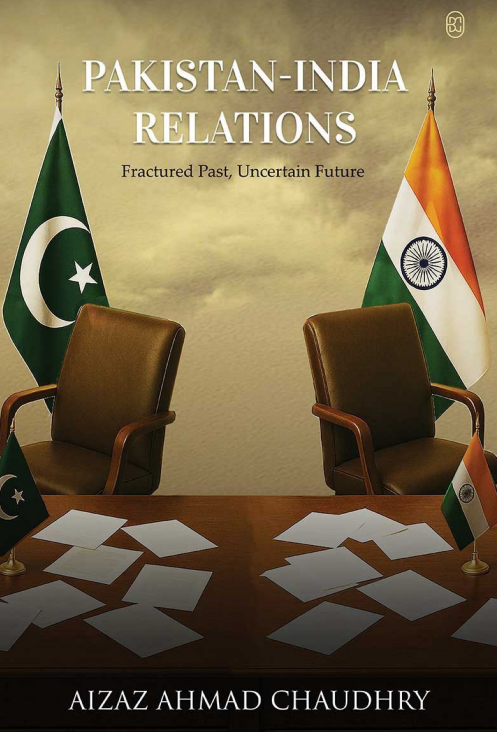
(Jhelum: Book Corner Pakistan, 2025), ISBN: 978-969-662-622-0 (Pages: 320)
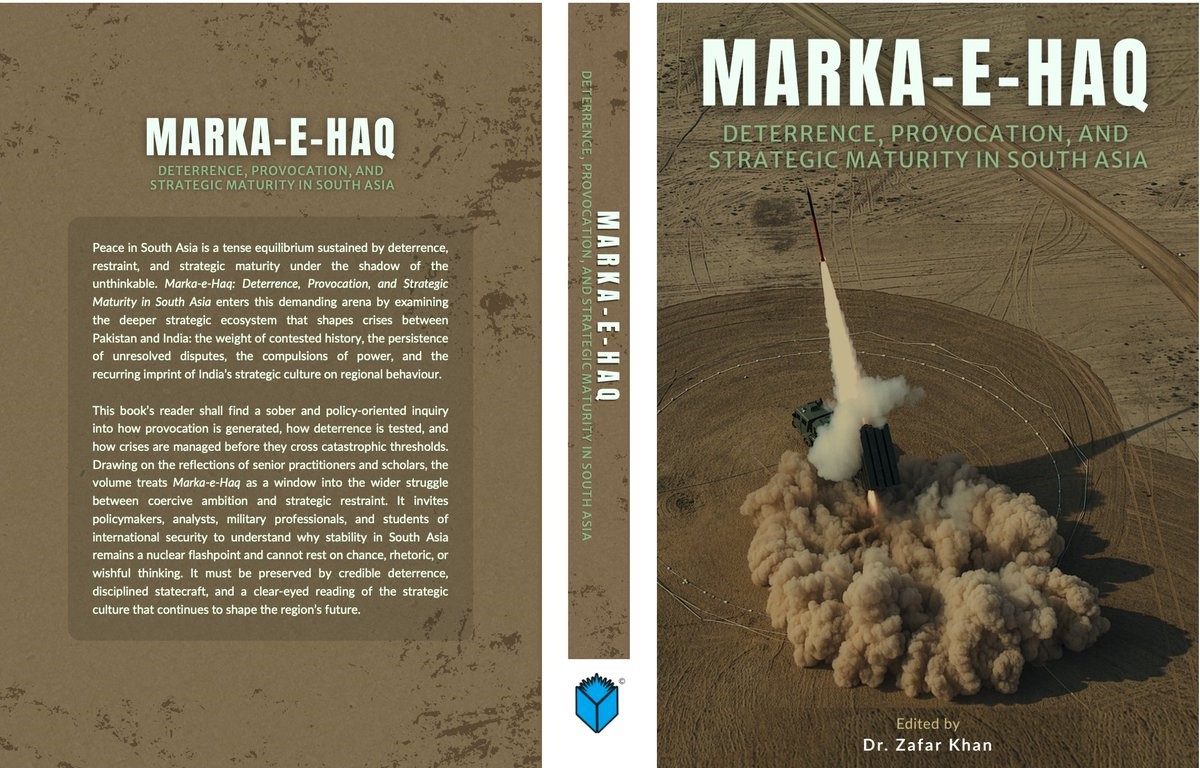
The outbreak of a brief armed confrontation between the pair of South Asian nuclear contestants in 2025 has raised several questions in the existing literature concerning the role of deterrence between nuclear-armed states. The four-day armed clash between Islamabad and New Delhi has forced the global leading circles of strategic communities to update their conventional wisdom related to the varying levels of low-intensity conflict under the nuclear shadows. In this regard, the literature from the South Asian nuclearised subcontinent has gained a momentous importance in the world because the strategic communities and formal policymakers of two contesting nuclear-armed states have generated a new debate on the South Asian version of strategic stability beyond the fixed patterns of global nuclear politics. In the initial round of literature emerging from the same year of India-Pakistan kinetic armed confrontation 2025, the book of an Islamabad former diplomat, Aizaz Ahmad Chaudhry, has managed to secure a greater and positive reputation among the evolving scholarly discussion on the post-Pahalgam South Asian security environment and its regional alternation beyond the existing strategic patterns of nuclear politics between territorially adjoining states.
Ambassador Chaudhry has served in the Foreign Services of Pakistan for 37 years while remaining the Foreign Secretary of Pakistan for a brief period (2013-17). Apart from his present professional engagement as the Chairman of an independent research institute (Sanober Institute), Ambassador Chaudhry has secured a prominent position in Pakistan’s strategic, academic, and diplomatic communities due to his professional and academic exceptional insight into changing patterns of global power politics and its South Asian directions. In his book about the evolution of South Asian regional strategic complexities with the prevalence of a hybrid warfare conflict between India and Pakistan, Ambassador Chaudhry tries to provide a fresh look at the history of prolonged New Delhi-Islamabad strategic competition and its varying trends in the regional and extra-regional affairs. A persistent growth of these intense South Asian developments has made the region strategically challenging, diplomatically taxing, politically disengaged, and economically disconnected.
This scenario is dubbed in the book as the troubled India-Pakistan bilateral interaction, inseparably connected with a fractured past and an uncertain future, hindering the scope of durable peace, sustainable development, and cordial diplomatic growth. By exclusively emphasising the May 2025 clash, the book’s arguments revolve around the addition of a new chapter in the history of India-Pakistan’s decades-long rivalry, containing an explicit use of missiles, drones, air attacks, cyber operations, disinformation campaigns, and hydro-aggression. It was an overt phase of the Modi government’s hybrid strategic posture originating from Operation Sindoor, which is temporarily paused by a ceasefire, according to New Delhi.
It could be treated as an upgraded deterrence doctrine of India, defined by Prime Minister Modi. This upgradation contains three guiding principles, defined by Indian Prime Minister Narendra Modi: “India alone would decide about the manner of its retaliation, it would not tolerate nuclear blackmail, and it would not take any distinction between terrorists and the states that back them (p. 212).” As the book’s central theme is divided into eight brief chapters, the arguments in eights chapters provide a brief conceptual examination of contemporary South Asia. The book starts the debate from a comprehensive introduction and a concise account of concluding remarks at the end.
After a formal introduction explaining the book’s central idea, starting from the foundations of India-Pakistan conflict from the ashes of British colonial retreat and the creation of a disputed Kashmir issue, the first chapter formally starts the discussion on the genesis of contemporary New Delhi-Islamabad conflict. It pointed out the arrival of Narendra Modi in Indian politics as the prime minister partially formalised his anti-Pakistan obsession, laced with the transnational promotion of broader anti-Muslim sentiments. Witnessing from an explicit involvement of Modi in the historical intercommunal violence of Gujarat, the Modi government has introduced various policy initiatives cemented in its anti-Pakistan appeal, which are efficiently traced by the author in the book.
Based on these explanations, this book uses an incomparable structure based on a blend of rigorous historical narratives laced with varying policy analysis. The author has attempted to avoid a memoir writing style and tried to provide an impartial academic account, carrying a strategic and analytical lens. The author’s professional diplomatic background has placed his analysis beyond the conventional historical academic investigations, which is mainly due to his direct engagement with the formal interstate negotiations and policy planning. This factor augmented the book’s remarkability by examining the major turning points of South Asian regional politics gripped in India-Pakistan hostility over the Kashmir issue, and its transformation into a regional nuclear flashpoint.
Instead of adopting a traditional approach explaining the fragmented parts of multifaceted New Delhi-Islamabad strategic competition, this book explains a structural cycle of hostility between two nuclear neighbours preoccupied with the recurring mistrust and contested formal narratives. In addition to describing the historical mistrust and conflicting legacies, territorial disagreements, politicised terrorism discourse, and domestic political volatility are underlined in the book as the responsible factors generating a longstanding geostrategic competition in South Asia. These developments cannot be divorced from the Indian quest for securing a regional domination originating from the notion of Akhand Bharat, which translates Pakistan as a chief obstacle to New Delhi’s goal (p. 11).
The evidence-based analysis in all chapters and the author’s avoidance of dense academic jargon makes the complex strategic realities of the South Asian nuclear regional order in the book understandable to non-specialised communities and students. It tries to communicate to readers the past failures of India-Pakistan hostile interaction, which could be transformed into cordial peaceful communication by addressing the structural governmental-level mistrust rationally.
The book’s policy-oriented analysis makes it a valuable addition to the existing literature concerning the post-Pahalgam South Asia while making it an interesting read for policy practitioners, career diplomats, military analysts, political leaders, and civil servants. Moreover, the academic and journalist communities could treat this book as a scholarly, balanced and conceptually coherent account with commendable intellectual strength. It is also an appreciable addition to the prevailing academic discussions on the India-Pakistan conflict after the Pahalgam crisis.