



Dear Readers,
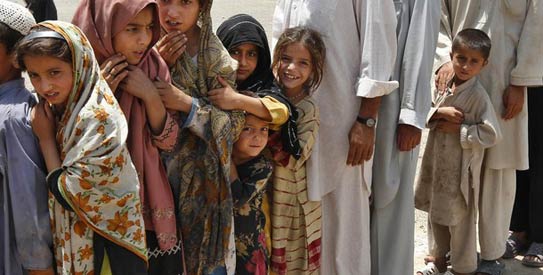
With the death of Osama bin Laden the world must start refocusing attention to building up Pakistan’s capacity to prevent and combat violent extremism. One of the underlying factors that have pushed Pakistan to the front line of the war on terrorism is the nexus between transnational crime, poverty, and terrorism. Perhaps no region better typifies this dangerous linkage than does the Federally Administered Tribal Areas (FATA) in Pakistan. One of the most neglected areas of the country (the other being Balochistan) the people have been living under grinding poverty and lack of resources for as long as one can remember. They need schools, colleges, hospitals, roads and economic opportunities to be able to lead respectable and secure lives. Only an all encompassing development strategy can ensure the achievement of these goals and also act as a bulwark against the rising wave of extremism and militancy in the area. The military operation in South Waziristan has almost broken the militants’ back but is unlikely to succeed in curbing the spread of religious militancy in the FATA unless the Pakistan government implements political reforms and accords the highest priority to initiating measures on a fast track for economic initiatives in the area. The local economy has to be fuelled to provide employment opportunities for the locals who at this time have no option but to take up unlawful activities such as smuggling, working in poppy fields, etc, and are only able to barely feed and clothe their families because of shortage of employment opportunities, there being no agriculture base in the region or an independent infrastructure. The world can try military and political solutions for the next 100 years; these will only fetch makeshift peace unless an economic mechanism is put into place. The militants’ hold over FATA can be broken and the longer the State delays implementing economic reforms, the more difficult it will be to stabilise the region. For the benefit of readers I am re-producing my article “BORDER TRADE ZONE”.
With agriculture sparse on both sides of the Durand Line that divides Pakistan and Afghanistan and with zero manufacturing capacity, the inhabitants of the area cannot even eke out a meager existence. For every 100 able-bodied men, there are only 5 or 6 jobs. With almost nothing else to fuel the local economy the only work for the male population who live astride the borders is to be a hired gun, mostly for the highest paymaster, this being the only means of livelihood whether it be smuggling, part of the tribal militia, para-military forces, Talibaan etc. It requires no genius to figure out that economic initiatives must be given preference if peace is to be restored on both sides of the border. Of the more than three million Pathan construction workers whose sweat and blood went into the concrete of infra-structure projects in the Middle East in the 70s and part of the 80s, not many know that more than 40% came from FATA and adjacent borders areas. Fertile recruiting ground for the Mujahideen, once the Middle East spigot of foreign remittances was turned off and the Afghan War started, this area became a logistics launch pad for operations in support of Mujahideen operations across the border.
Heavily weighted in favour of Afghanistan to our detriment the recently signed Afghan Transit Trade Agreement (ATTA) is a ridiculous document which needs phasing out and than eventually stopped. The only exception to transit trade must be the Afghan government’s official imports of essentials, they must pay adequate transit fees to cater for the wear and tear of our roads and railways. Promised setting up by the US as far back as 2006, the proposed “Reconstruction Opportunity Zones” (ROZs) is an attempt to correct the economic imbalance but is really a patchwork solution that cannot function practically on the ground. The ROZ concept is interlinked with the US economy, because of opposition from vested lobbies the legislation has already failed twice in the US Congress. In the proposed BTZ concept, US (and international) donor aid is only required for development of roads and communications. BTZ is thus Pakistan- centric rather than taking away something from the US economy. If the proposed ROZs continues to remain inactive indefinitely what options are we left with for a long term solution to alleviate the poverty of the people of FATA?
A contiguous Border Trade Zone (BTZ) must be the economic force-multiplier for transforming the lives of the people of the tribal areas. Instead of earmarking small areas as ROZs, entire FATA and all other border districts adjoining Pakistan and Afghanistan should be designated as a BTZ, a free inland dry port on the pattern of Dubai Free Ports. Within the BTZ there must be designated hubs that feed into the smugglers’ routes into Afghanistan. These hubs must be developed like Export Processing Zones where intending entrepreneurs have ready infra-structure to move into by turning a key and an electric switch. The BTZ must source not only Afghan transit goods but Central Independent States’ (CIS) exports and imports as well. Instead of using Karachi and Qasim Ports, this transit trade must exclusively use the ports of Gwadar and Pasni. This will help develop Balochistan also.
An unofficial BTZ supports the illegal contraband smuggling regime for the benefit for locals on both sides of Durand Line. What is needed is to regulate smuggling into a legal system that eliminates graft and illegal gratification going presently into the pockets of corrupt customs and border gaurds. Some 25% to 35% of the US$ 2.06 Billion value documented Afghan transit trade via Pakistan ends up as profit for the smuggling mafia on the border. Afghanistan must import all its non-Pakistan origin imports transiting via Pakistan by buying it from the BTZ, the service charges and related employment opportunities will transform the lives of the border people.
The focal point must be to make Pakistan’s FATA the hub of all logistics of Afghanistan and Central Asia via Pakistan, bringing with it the Afghan border contraband mafia into Pakistan’s tax system. All goods should only be bought by Afghan traders from companies that are registered in the BTZ area. This measure will eliminate re-smuggling of the goods imported under the ATTA back to Pakistan. A tax free product may be exported to other parts of the world by encouraging investment inside the BTZ in Pakistan, this reduces cost of the product because of cheap labour and duty free imports and exports and also provides job opportunities for locals.
While improvement is required, almost 60% of the communications are already in place and operational. Infrastructure is one of the key elements for success of the proposed BTZ concept. The US can assist in the proposed BTZ by investing not more than US$ 10 Billion for improving existing roads. Security is another key element that will have to be the principal responsibility of the Pakistani State. The draconian laws of the Frontier Crimes Regulation (FCR) will have to be abolished and FATA will have to be established as a Province with full Provincial status.
Both Pakistan and Afghanistan constitute the strategic heartland of world politics, the US has major strategic stakes in the region. The US can gain major economic as well as strategic advantages from trade with India, China and the CIS but only if Afghanistan and Pakistan are stable. The border areas of Pakistan and Afghanistan is presently a strategic calamity for the US, with a relatively small investment this can become a great strategic opportunity.
The Peoples Republic of China (PRC) visualizes Pakistan as one of the main two strategic transit zones (the other is already functioning through Myanmar). Pakistan is vital for the Sinkiang Trade Zone as well as all strategic mineral imports to China from Afghanistan (Ainak Copper Mining Complex is already owned by China) as well as Balochistan, specifically the Saindak Copper Complex, and possibly Reko Diq. It may be possible to have a cross exchange of goods between the east and the west using BTZ as a hub that will benefit Afghanistan, the CIS countries on the one hand and China on the other.
With economic livelihood guaranteed, the tribals will have a vested interest in protecting the means of their income by keeping the peace on both sides of the Durand Line. Special security company licenses must only be sanctioned for FATA business concerns. With factories and shopping centres etc coming up, schools, colleges, hospitals, etc will naturally follow. The aim must be to eliminate the prevalent permanent economic deprivation that breeds anarchy. With a vested interest in keeping peace in Afghanistan the west must make a joint effort with Pakistan to club together economic initiatives with political and military ones. Instead of spending billions of dollars fighting a war without end, why not spend fraction of that creating jobs and reinvigorating the economy?
Far more importantly, the BTZ will act as a base for development of Afghanistan and transform a population that are historically predators who live off goods and people transitting through their country into a viable vibrant country with an economy not perennially dependant on others.
Ikram Sehgal