



Safe from Whom?
Given the impunity with which Pakistan’s civil and military installations have been repeatedly targeted by the fanatic militants, legitimate apprehensions both in-country and abroad are being raised about the security of its nuclear assets. ‘Is their safety as fool proof as is being claimed,’ is a valid concern. Any serious attempt to answer this critical question should begin by another query: safe from whom? The threat to Pakistan’s nuclear weapons emanate from two very different sources: the religiously motivated home-grown militants under the garb of al Qaeda/Taliban, and the paranoid West led by USA. Each has different motives and capabilities for targeting Pakistan’s nuclear assets. The former would like to get hold of this very dangerous weapon to threaten/blackmail the rest of the world in pursuance of their global agenda of establishing an Islamic Emirate; and the latter because of their fear about the inability of Pakistan to prevent the weapons or the fissile material from falling into the hand of the religious fanatics which, as the Pakistanis fear, has led to the preparation of contingency plans to denuclearize the country either through persuasion/intimidation or use of force, if necessary.
Nuclear Weapons Safety
Parameters in Pakistan
The possession of nuclear weapons by Pakistan and its acceptance as a de facto nuclear weapons state by the international community has provided the country a high degree of protection against unprovoked aggression from adversarial powers. It has also made it incumbent for the country to behave as a responsible and mature nation whose actions or the lack of it does not threaten the global peace. Ensuring fool-proof systems are in place against theft, accidental or unauthorized use of these weapons of mass destructions has thus become an inescapable requirement if Pakistan is to survive as a sovereign state. The international community also has a high stake in ensuring Pakistan is provided the necessary technical and professional assistance and expertise to make its strategic assets very secure.
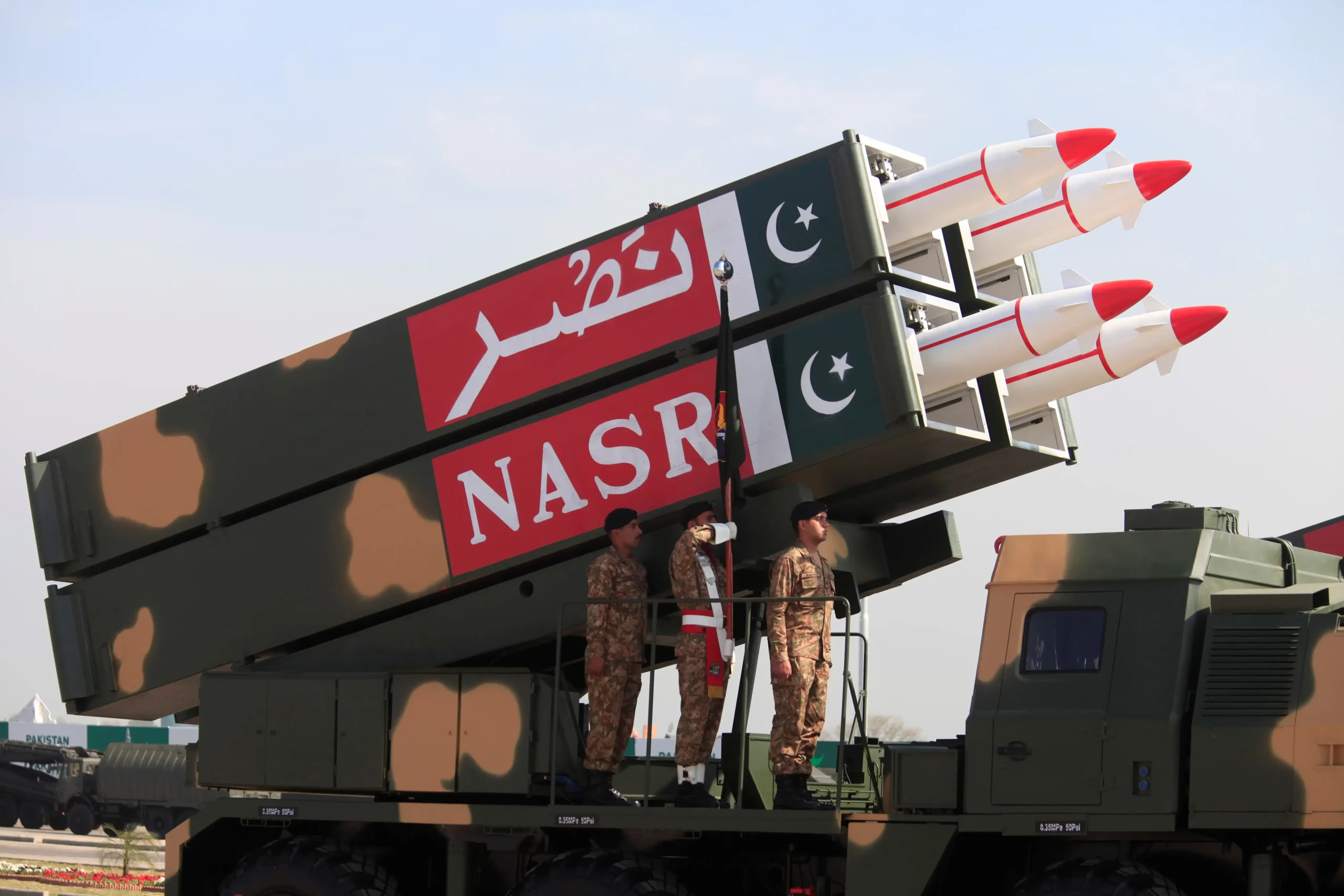
The basic parameters of Pakistan’s nuclear safety network follow a layered defence system similar to the ones employed by the big five. In one aspect it is even more stringent than the one in use by USA where a specific number of nuclear weapons are kept ready for launch within minutes or hours, following the Launch on Warning (LOW) concept. Pakistan’s nuclear weapons on the other hand are kept apart in disassembled form. The fissile material along with other sensitive elements like the nuclear trigger mechanism are stored separately and perhaps are provided the highest level of security – these are the most sought after items by the terror groups. The bomb shells are secured separately whereas the delivery vehicles (missiles/aircraft) are similarly dispersed and well protected. Pakistan has adopted this policy despite the fact that security and responsiveness are inversely proportional, while it must be having procedures in place to reduce the response time, should the situation so warrant. Security of the nuclear assets, as can be seen, has been given priority by Pakistan over responsiveness.
The entire nuclear assets are widely dispersed and where necessary stored in fortified underground bunkers. The aim of dispersion is to ensure no country including the lone superpower (USA) can guarantee destruction of the entire nuclear arsenal in a single swoop, and enough will be left for a nuclear riposte – the very essence of the 2nd strike capability, which is the bedrock of nuclear deterrence theory.
Besides the dispersed and fortified shelters/bunkers, physical security to the nuclear sites is provided by a corps of highly trained troops that maintain a round the clock vigil. These men, along with anybody associated with the nuclear programme are selected after undergoing very strict security and psychological tests, which are frequently repeated. Highly sophisticated electronic and procedural based dual control systems are in place where at every level, from access to nuclear material, mating of the various components of the bombs, issuance of firing order or firing of the bomb, no single person has the authority or power to do so. Since safety and security of Pakistan’s nuclear weapons is also in the interest of the rest of the world at large, the country has benefited from training and availability of the cutting edge electronic and mechanical safety devices from the West, without allowing them access to its weapons, the fissile material or the delivery modes.
The Strategic Plans Division (SPD) of Pakistan has been entrusted with the maintenance and security of the nation’s nuclear arsenal. To allay any fear of the international community about the safety and security of Pakistan’s nuclear arsenal, they periodically keep them briefed and updated on the security systems in place.
Threat from the West
The western threat to Pakistan’s nuclear weapons emanates from USA and its closest ally Israel. The two fear that while they have no direct threat from a nuclear armed Pakistan, the possibility that these weapons of mass destruction may inadvertently or otherwise fall into the hands of groups whose declared policy is the destruction of Israel through any means and they would not be averse to use them.
That USA and Israel would like to defang Pakistan of its nuclear arsenal is beyond doubt. Their best opportunity was in the late 1970s and the early 1980s when Pakistan’s nuclear programme was in it embryonic stage. In the 1970s Pakistan attempted to gather fissile material Plutonium 239 from the Reprocessing Plant it had negotiated with France, which was stymied by USA by forcing France to cancel the deal. Pakistan then took the Uranium enrichment route and here it appears USA made a strategic blunder when it assumed the enrichment technology was too sophisticated for a developing country like Pakistan to master.
The Soviet invasion of Afghanistan in 1979 changed the matrix of the geostrategic relationship between the two countries where from a hostile relationship Pakistan and USA once again became strategic allies in their joint effort to defeat the Soviet forces in Afghanistan. For its participation in the Afghanistan campaign, besides financial and military assistance to Pakistan USA agreed to turn a blind eye to its nuclearization programme. The Symington Act that specifically prohibited provision of any military or economic aid to a country suspected of following a nuclear weaponization programme was replaced by a far more watered down Pressler Amendment where such aids could be given provided the US President certified each year that Pakistan was not in possession of any nuclear device.
By 1985, Pakistan had crossed the nuclear threshold and was in possession of a few crude nuclear weapons and rudimentary delivery capability. US President Reagan up until 1988 and Senior Bush in 1989 continued to duly certify to their Congress that Pakistan did not have any nuclear weapons even when Pakistan had unofficially let it be known to India that indeed it did possess a ‘bomb in the basement’. With the complete withdrawal of Soviet forces from Afghanistan by 1990, Pakistan had served its purpose but by then the country by all account had produced and cold tested about a dozen nuclear devices with the ability to deliver them through specially modified combat planes. The US President then refused to give any further certificate.
The option of militarily taking out Pakistan’s nuclear weapons manufacturing capability must have come under serious consideration by the US administration in 1990. Pakistan had learnt the lessons of Israeli destruction of Iraq’s nascent nuclear programme through a precision airstrikes in 1981 and had taken due precautions to disperse the nuclear assets and have the critical portions well protected in heavily fortified and defended underground shelters.
Perhaps the inability of the US military commanders to guarantee destruction of all the nuclear bombs in one coordinated air strike dissuaded their President to give the go ahead to such a dangerous campaign. Even if a handful of nuclear weapons that would survive such a blitz could trigger a nuclear war in the region – this risk USA was unwilling to take. Instead, sanctions via the Pressler Amendment were applied. This strategy has been in place since then with minor variations especially after 9/11 when Pakistan once again became a US ally, this time against the Taliban government in Afghanistan. Pakistan in the meanwhile was put on notice that in case of deliberate proliferation of nuclear material or technology or if an ‘extremist regime’ from their point of view gets control of the nuclear assets, all bets would be off. Barring A. Q. Khan proliferation blip, Pakistan has so far managed to display the level of maturity expected of a nuclear power.
Many in Pakistan profess that USA is deliberately attempting to destabilize Pakistan so that they can with the authority of UNO mount a military campaign to denuclearize the country. They need to study and understand the nuclear dynamics more closely to realise that such a possibility is unrealistic. This option was most likely considered and rejected in the early 1990s when there were no more than a dozen nuclear weapons in the country’s arsenal and the surface to surface ballistic missiles were of limited ranges. Today when according to foreign sources Pakistan has over eighty nuclear devices and multiple short and medium range ballistic missile delivery capability, such an unprovoked attack with or without UN sanction would in all probability lead to a cataclysmic nuclear war in the region. A stable Pakistan under a mature administration is in the best interest of the world including USA.
For USA, a destabilized Pakistan where the nuclear arsenal could come under control of extremist elements in the society would be a nightmare scenario where not initiating military actions to destroy/seize the weapons might be considered riskier than the military option even if leads to a nuclear war. The US contingency plans to take out Pakistan’s nuclear weapons should be viewed in this context. A stable, mature and legitimate government that ensures zero tolerance towards any acts of in-country nuclear proliferation and in addition provides fool-proof protection to the weapons, especially the fissile material from theft, unauthorized or accidental use will be the ultimate insurance against foreign intervention that could destroy the country and lead to a nuclear holocaust.
Threat from the Religious Extremists
For nearly a decade Pakistan has been perpetually at war, not from its traditional enemy from the east but from terror syndicates that have their roots in its western flank. A combination of internal and external factors has brought the nation to a point where the armed forces have had to conduct series of major military operations to crush the militants. As a consequence to the military actions against the insurgents, they are conducting a spate of terror and suicide attacks in the nation’s major towns and cities. The current state of affairs is a result of the presence of US and NATO forces in Afghanistan and Pakistan’s own internal dynamics where the religious militants still enjoy a degree of sympathy and support from a minority section of the general public.
The religious militants have a single point agenda – establishment of a Caliphate of Islamic Emirate in Afghanistan and in the Tribal Belts of Pakistan, if not in the entire country, where their version of the Islamic Sharia (Deobandi/Salafi) will be enforced. Lacking the support of the vast majority of the Pakistani public, they rely on terror, blackmail and through portrayal of America as the occupation force in Afghanistan that is the principal cause of all evils that beset the region. The current spate of suicide and terror attacks in the cities of Pakistan is, from their perspective, a punishment for the government and the people for supporting the US and ISAF forces in neighbouring Afghanistan. If they are able to lay their hands on some weapons of mass destruction they could, in their reckoning, blackmail the Americans and force them to a hasty withdrawal from Afghanistan. Pakistan’s nuclear assets thus become a lucrative target for the terror syndicate.
Experts agree that a nuclear device is too sophisticated for the al Qaeda/Taliban combine to operate, transport or handle, even if they are able to get hold of one. The real threat is from the fissile material that could be easily converted into a dirty nuclear bomb and delivered against Israel or US interest in the region in simple unguided rockets. The security and safety of Pakistan’s enriched uranium and Plutonium 239 rather than the bomb shell or the delivery modes, therefore, is central to Pakistan’s nuclear security threat from the religious militants. Pakistan has taken all possible steps to make their safety and security as fool-proof as possible and barring a meltdown of law and order and governance, the chances of their being pilfered by the extremists is very rare.
Conclusion
For as long as the syndicate of terror in the garb of religious militants continues to operate with some degree of impunity in Pakistan, the world will remain apprehensive about the danger of its nuclear arsenal falling into the wrong hands, regardless of the steps the country adopts to ensure their safety. The defeat of the religious insurgents in Pakistan, therefore, must be the first priority for the state as they pose an existential threat to its security.
The Americans may be guilty of many sins but destabilizing Pakistan at this juncture is not one of them, as it would be against their current vital national interest. Those who continue to propagate the theory that the terror activities in the country are being sponsored by the Americans with the objective of destabilizing it so that a military campaign to destroy its nuclear arsenal can be justified, are treading a very dangerous path. While further stoking the anti American sentiments in the country, it is likely to garner greater support for the religious terror groups; and if God forbid the present low level support for the fanatics rises and crosses a critical point, the chances of destabilization would become a reality. Should the country destabilize, an armed aggression by the world led by America to secure the nukes before they fall into the wrong hands could become inevitable. The conspiracy theorists’ continuous utterances about a US raid on Pakistan’s nuclear assets may eventually turn into a self-fulfilling prophecy.