


Executive Summary
An opportunity for Iran
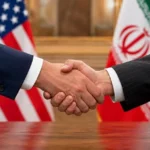
Even twugh the new chief of the international nuclear watchdog body has pledged to resolve the West’s ongoing stand-off with Tehran over the latter’s nuclear programme, the issue has become knottier than ever before in the aftermath of last month’s presidential election in Iran. Yukiya Amano, who was appointed as director general of the International Atomic Energy Agency said he would do his “utmost” to resolve Iran’s nuclear question and ensure that all signatories to the Nuclear Non-Proliferation Treaty abide by its terms. In his first direct comment on Iran’s nuclear pro- gramme since his election he told Reuters on July 3 “I don’t see any evidence in IAEA official documents about this,” when asked whether he believed Iran was seeking a nuclear weapons capability.
lran now has an opportunity to move ahead. But the detention by Iran of some British diplomats has added to the tension between Tehran and the European Union and could make Mr. Amano’s task more difficult. Compared to America, Iran’s European interlocutors have over the years been less rigid on the nuclear question, but the Iranian armed forces chief didn’t help matters when he said the EU was disqualified from talking to Tehran on the nuclear issue and demanded that it apologise for “interference” in Iran’s internal affairs.
Iran must display pragmatism and try to put its election controver- sy behind and face the challenges that lie ahead. The biggest task before President Mahmoud Ahmadinejad should be to lower the level of confrontation with the West and respond positively to the over- tures being made by the new American administration. Relatively speaking, President Barack Obama’s reaction to the post-elec- tion situation in Iran has been mild, and he has refused many sugges- tions by anti-lran hardliners among the neocons to take measures like wearing a green tie to sympathise with the Iranian opposition. Iran must understand that a normalisa- tion of relations with the West will help Tehran improve its economy, invite western investment in a big way, and modernise its ageing oil
industry. While Iran does have the right to acquire nuclear technology for peaceful uses, it is its uranium enrichment that stands in the way of normal relations with the US and EU, especially because Israel, which itself has a nuclear arsenal, feels threatened.
The appointment of a new IAEA chief provides Tehran with an opportunity to open a new chapter in relations with the nuclear body and make its nuclear programme transparent.
Yemen — springboard for al-Qaeda
Yemen continues to battle a host of security problems on several fronts. On Thursday, July 23 at least 16 people were killed and 30 wounded in shelling and gunfire during clashes between govern- ment forces and armed activists at a separatist rally in Jinzibar, 50 kms east of the southern port of Aden. Six of the dead were police- men. The demonstration was called by Tarek al-Fadhli, an Islamist leader and former key ally of President Ali Abdullah Saleh. Fadhli recently switched sides to support the secession of south Yemen from the north.
Incidentally, Fadhli had fought the Soviets in Afghanistan along with al-Qaeda chief Osama bin Laden in the 1980s and then helped Saleh crush southern sep- aratists in 1994. The impover- ished Arabian Peninsula country is the ancestral home of the al- Qaeda leader.
Yemen is one of the poorest of the Arab states but strategically located between the Red Sea and the Gulf, is facing mounting security problems on several fronts, under- lining concern that it could become a springboard for a renewed al- Qaida offensive in Saudi Arabia and the Horn of Africa. The Saudi and Yemeni branches of al-Qaida were united in January to form al-Qaida in the Arabian Peninsula under the leadership of Nasser al-Wahaishi, a Yemeni asso- ciated with Osama bin Laden.
When the Saudis crushed a four- year al-Qaeda insurgency in 2007- 08, Yemen has become the organi- zation’s new base in the Gulf region. Security officials in Sanaa believe scores of al-Qaida operatives fled Saudi Arabia and rebased in Yemen. They are believed to have been reinforced by jihadists who fled Afghanistan and Pakistan. This has fueled concerns that Yemen (or possibly war-ravaged Somalia) across the Red Sea, will become new sanctuaries for jihadists fleeing the Pakistani army’s offensives.
The Saudis are so concerned at al-Qaeda’s resurgence in Yemen they have set aside their traditional deep distrust of their southern neighbor, the most populous state on the Arabian Peninsula, and pushed intelligence collaboration between Riyadh and Sanaa to unprecedented levels. King Abdullah of Saudi Arabia handed cash-strapped Yemeni President Ali Abdullah Saleh several hundred million dollars to finance efforts by Yemen’s security services to seal their porous common border.
On June 14 Yemen announced that two days earlier it had arrested a Saudi named Hassan bin Hussein Alwan in Marib province in eastern Yemen. This person was identified as the leading financier of al-Qaida in Yemen and Saudi Arabia and one of those who had fled Pakistan’s war-torn Waziristan region. The Yemenis said his capture was expected to lead to the arrest of other senior jihadist figures.
In the past, Saleh’s government, heavily dependent on the support of Islamist tribal leaders, has been reluctant to mount an all out offen-
sive against the jihadists so long as al-Qaida did not get too strong or aggressive, and did not bring its leadership into Yemen.
Although circumstances may have changed, Saleh’s reluctance to move against al-Qaida has been enhanced because he faces a mul- titude of other security challenges and a declining economy.
A five-year-old rebellion by Shiite tribesmen in northern Yemen contin- ues unabated and has even extend- ed to areas close to the capital.
The state is being further weak- ened, and fears of wider regional instability heightened, by mounting friction between the conservative, Islamist northerners and the social- ists of the south who once had their own Soviet-backed state and now want it reinstated.
Yemen is immersed in a multitude of problems that will have to be resolved quickly. If al-Qaeda is allowed to tighten its grip over Yemen and flourish and if its leaders manage to come into the country, Yemen could descend into chaos and anarchy.
International
Sarkozy advises Israel to sack FM
The president of France advised Israel’s prime minister to fire ultrana- tionalist Foreign Minister Avigdor Lieberman, senior Israeli govern- ment officials said Tuesday, June 30.
Lieberman’s spokesman Tzahi Moshe said the comments, “if true,” represented “intolerable” meddling in Israel’s internal affairs.
Prime Minister Benjamin Netanyahu’s spokesman, Nir Hefetz, would not confirm or deny the report. But he told Army Radio that “the prime minister doesn’t feel he needs advice on his govern- ment from outside sources” and “holds Foreign Minister Lieberman in great esteem.”
French President Nicolas Sarkozy’s office wouldn’t immediately comment on his discussions with Netanyahu in Paris last week. It is not unusual for the French leader to dis- cuss countries’ internal political mat- ters with foreign’ government leaders.
Lieberman has ordered his sub- ordinates not to publicly respond further to the remarks to prevent diplomatic tensions, one of the Israeli officials said.
Sarkozy told Netanyahu that “you must get rid of that man” and replace him with the more moderate former foreign minister Tzipi Livni, the officials said.
Lieberman’s appointment has been ill-received internationally because of his hard-line positions on peace and positions widely seen as racist.
In May, his party unsuccessfully tried to advance a proposal to strip the citizenship of Israelis who do not pledge loyalty to the state a pro- posal viewed as aimed at Israel’s Arab minority.
Police unearth arms distribution in Tehran
The Police in Iran has said that large cargoes of weapons and ammunitions have been smuggled into Tehran to arm rioters for a new surge of unrests after weeklong ral- lies and riots ceased on last Sunday and Tehran could experience calm and order for a couple of days. Large cache of weapons have been transferred to Tehran through different entry points during the last few days and rioters can easily get cheap weapons in a number of neighbour-hoods in the Iranian cap- ital, an lranian newspaper reported. The Iranian police seized an arms shipment carrying 30 colts last weekend, the report added. Prior to Iran’s Presidential election on June 12, Iranian security forces warned that supporters and foreign liaison of rioters had plans to transfer dif- ferent types of weapons to Tehran in a bid to intensify possible post-elec- tion unrests.—|INP
Qaeda threatens to take revenge from France
Al-Qaeda’s North Africa wing threatened on Tuesday, June 30 to take revenge on France for its oppo- sition to the burka, calling on Muslims to retaliate against the country, the ‘US monitoring service SITE Intelligence reported.
President Nicolas Sarkozy had said earlier this month that the burka, which covers the whole face, was not welcome in the strictly sec- ular country. “Yesterday was the hijab (the Islamic headscarf long banned in French schools) and today, it is the niqab (the full veil),” the leader of Al-Qaeda in the Islamic Maghreb Abu Musab Abdul Wadud was quoted as saying.
We will take revenge for the hon- our of our daughters and sisters against France and against its inter- ests by every means at our disposal.” The group also called on Muslims to retaliate for what it called French “hostility” against the community and its attempt to obstruct Islam’s practice on its territory. “For us, the Mujahideen … we will not remain silent to such provocations and injus- tices,” Abdul Wadud said without elaborating, according to SITE.
On June 22, Sarkozy said the burka was not a symbol of religious faith but a sign of women’s “sub- servience,” adding that the head-to- toe veil was “not welcome” in staunchly secular France. The French National Assembly set up an inquiry into the rising number of Muslim women who wear the burka. France is home to Europe’s largest Muslim commuagity and faces a dilemma between accommodating Islam and maintaining secularism. In 2004, it passed a law banning headscarves or any other “conspicuous” religious symbols in schools to uphold a separation between church and state.
N. Korea fires three missiles off east coast: S. Korea
North Korea fired three missiles off its eastern coast Saturday (July 4) South Korea said, in what was likely to be seen as a message of defiance to the United States on its Independence Day holiday.
The launches, which came two days after North Korea fired four short- range missiles, could further escalate tensions in the region as the U.S. tries to muster support for tough enforce- ment of the U.N. resolution imposed on the communist regime for its May nuclear test. South Korea’s Joint Chiefs of Staff said the missiles were fired Saturday morning, but declined to elaborate on the type. Two missiles were fired early Saturday, while a third was fired later in the morning, it said. South Korea’s Yonhap news agency quoted military officials as saying the missiles appeared to be a type of Scud missile. A senior presi- dential official told The Associated Press the missiles fired are believed to have a range of less than about 300 miles (500 kilometers).
The chief of U.S. Naval opera- tions, Adm. Gary Roughead, said the American military was ready for any North Korean missile tests. “Our ships and forces here are pre- pared for the tracking of the missiles and observing the activities that are going on,” Roughead said after meeting Japanese military officials in Tokyo on Saturday.
Speculation had been high that the communist country might launch more missiles. North Korea had warned shipping to stay away from its east coast effective through July 10. The senior presidential official cautioned that North Korea could
fire more missiles in coming days, but said there was little possibility it could fire the intercontinental ballis- tic missile it threatened in April. He spoke on condition of anonymity because he was not authorized to speak to media.
Saturday’s launches came on July 4, or U.S. Independence Day. The North has a record of timing mis- sile tests for the U.S. national day.
Iraq group calls for more attacks on US troops
An insurgent group of iraq urged militants to continue attacks against U.S. forces even after combat troops were pulled from city centers, accord- ing to an audiotape released on Wednesday. “Even if the Americans remain nowhere but a small spot in the Iraqi desert … so every Muslim should battle them until they are expelled,” the voice, reported to be Abu Omar al-Baghdadi, head of the so-called Islamic State of Iraq, said in the recording posted on a website used by jihadists. The Iraqi govern- ment heralded the capture this spring of a man they identified as Baghdadi, just as an uptick in major attacks raised troubling questions about whether Iraq would be able to main- tain a sharp decline in the violence unleashed by the U.S.-led invasion in 2003. It was not the first time Iraqi officials had announced the capture of someone identified as Baghdadi, and the Sunni Arab insurgent group has since denied his arrest.
The Islamic State of Iraq is believed to be affiliated with al Qaeda’s gain organization in Iraq, led by Abu Ayyub al-Masri, also known as Abu Hamza al-Muhajir. The tape comes a week after the United States pulled combat troops from bases within Iraqi cities and towns, part of a plan to halt combat operations in August 2010 and withdraw all American forces by the end of 2011.
But militant attacks continue, espe- cially in Baghdad and parts of northern Iraq, underscoring doubts about whether local forces will be able to impose order on their own. The speaker called on Sunni Arab mili- tiamen, who helped drive al Qaeda out of most of Iraq after they began col- laborating with American forces in 2006, to rejoin the insurgency and bat- tle Iraq’s Shi’ite-led government.
Death knell tolls for G8, new body seen forming
World leaders signalled the demise of the Group of Eight wealthy nation club on Friday, July 10 saying only a forum that included the major developing economies could legitimately take important global decisions. The G8 is made up of wealthy northern hemisphere countries, but problems such as global warming and the economic crisis have revealed its limitations.
The US President also said G8 leaders are seriously concerned about the “appalling events” surround- ing Iran’s election and deeply troubled by the risk its nuclear programme poses to nuclear proliferation.
“One thing that is absolutely true is that for us to think we can somehow deal with some of these global chal- lenges in the absence of major powers like China, India and Brazil seems to be wrongheaded,” US President Barack Obama told reporters, signalling sup- port for the expansion of the group to include major emerging economies, streamlining the international system and reducing the number of summits. “And my expectation is that over the next several years you’ll see an evolu- tion and we’ll be able to find the right combination. The one thing | will be looking forward to is fewer summit meetings,” he said.
Italian PM Berlusconi said he thought this new grouping would become the dominant international talking shop.
U.S. hawks urge ‘sabotage’ against Iran
Some U.S. lawmakers are urg- ing the Obama administration to do more to support Iranian opposition groups seeking the downfall of the hard-line clerical regime in Tehran.
Former House Speaker Newt Gingrich, a leading Republican hawk, even called Sunday (July 12) for the United States to “sabotage” Iran’s oil and gas industry to trigger an economic crisis that would bring about regime change.
’ The United States “should use covert operations to create a gaso- line-led crisis to try and replace the regime,” he declared.
The objective of all this agitation by hard-line Republicans is to inten- sify the pressure on the regime headed by firebrand . President Mahmoud Ahmadinejad as it grap- ples with unrest stirred by his dis- puted re-election in June and wide- spread allegations of poll fraud ona breathtaking scale.
Rep. Bob Filner, D-Calif., chair- man of the House Veterans’ Affairs Committee, called on June 26 for greater backing for “resistance groups” in Iran. He singled out the Mujahedeen-e Khalq, or Peoples’ Holy Warriors, the most prominent dissident group seeking to topple the Tehran regime. It helped oust the shah in 1979, but then the Ayatollah Ruhollah Khomeini started eliminat- ing his erstwhile allies and the Mujahedeen eventually were given sanctuary by Saddam Hussein.
For now, at least, the Obama administration is not expected to heed lawmakers’ calls for cloak- and-dagger action against Tehran. Any such moves would be certain to intensify the political turbulence in the Gulf region and would torpedo President Obama’s efforts to engage Tehran in a diplomatic dia- logue to settle the issue of Iran’s nuclear program.
Taiwan to cut military amid warming ties with China: official
Taiwan will reduce the size of its armed forces by a fifth as ties improve with long-time rival China, a defence ministry official said Wednesday, July 15.
The defence ministry hopes to cut the number of troops from 275,000 at present to 215,000 with- in five years, the official said, adding that around a quarter of the gener- als would also be phased out.
But the official, who requested anonymity, cast doubts over whether the ministry could meet its plan of scrapping compulsory mili- tary service by 2014.
Currently, all men aged 20 are required to spend a year in the armed forces.
A group of top military officers, during a backgrounder briefing with reporters Tuesday, renewed the ministry’s plan of replacing con- scripts with professional soldiers.
Proponents argue that the con- scription policy needs to be over- hauled as the armed forces have struggled to enhance their defence capabilities as conscripts are unable to become proficient with high-tech weaponry during their short military service.
However, the new proposals sparked concerns over whether the defence ministry would be able to recruit professional soldiers at a monthly salary of 35,000 Taiwan dollars (1,000 US).
US begins major anti-terrorism exercise
US law enforcement agencies led by the Department of Homeland Security have started a process fora major anti-terrorism exercise to test its capabilities to combat attacks on the country. The Department of Homeland Security (DHS) will launch the congressionally mandat- ed five-day National Level Exercise 2009 (NLE 09) on Monday, July 27 that will be directed by the White House and coordinated by the Federal Emergency Management Agency (FEMA). It aims to promote intelligence and information sharing between and among federal, state and international participants — Australia, Canada, Mexico, the United Kingdom and the Navajo Nation — in the wake of a fictional terrorist attack somewhere outside the United States.
This will be the “first major exer- cise conducted by the United States government that will focus exclu- sively on terrorism prevention and protection, as opposed to incident response and recovery,” the Federal Emergency Management Agency (FEMA) said in a statement.
Special Emphasis on Terrorism
Terrorist activities
- Suspected militants of the Mangal Bagh group killed four Policemen in an ambush on the out- skirts of Peshawar on July 20, Dawn reported. According to official sources, the Police team was patrolling the Sarband cattle fair on Bara Road at around noon when was attacked. Sub-Inspector Riaz Khan, constables Laiq Shah and Khudadad and driver Zahir Shah were killed on the spot. Another Policeman is reported to have jumped out of the vehicle and escaped unhurt. A case has been registered against Mangal Bagh, the head of the proscribed Lashkar-e-lslam group, and his ‘commanders’ Gul Amin, Fazal Amin, Said Noor, Dilawar, Tariq, Saifur and Wahid. Sources said it could be a revenge attack for the July 18 operation in the Achini vil- lage in which Lashkar-e-lslam’s office was destroyed.
Elsewhere in the province, a roadside bomb killed a soldier of the Frontier Constabulary (FC) in the Bannu District on July 20. The bomb targeted an FC vehicle, killing one trooper and injuring seven constab- ulary officers, local hospital official Mohammad Jawed said.
- The Khyber Rifles and Khasadar troopers have confiscated a huge quantity of ammunition at Loy Shelman Ghunda Khel, a far- flung area to the north of Landikotal, in the Khyber Agency on July 21, Daily Times reported. The Security Forces raided a house in Loy Shelman after being tipped off while investigating two arrested suspects, said Khyber Rifles Commandant Colonel Furgan at the Landikotal army camp. Furqan said the sus- pects — who were ammunition deal- ers in Landikotal —- were arrested by the Frontier Corps personnel earlier. He said that Afghan national Noor Afghan was the main suspect in smuggling weapons from Afghanistan to Loy Shelman, from where the arrested dealers supplied the weapons to Mohmand and Orakzai Agencies.
- Six people were injured when an explosive device went off in a busy market in Khuzdar, while four persons, including three women, were injured in a grenade attack in Quetta, capital of Balochistan, on July 21, Daily Times reported. According to Khuzdar Police, the explosives were planted on a motorbike parked near the post office on Chakkar Khan Road. In addition, four people, including three women, were injured when unidentified militants lobbed a hand grenade into a shopping centre in the Muddasir Market of Quetta.
- Elsewhere in the province, gas supply to the Pirkoh purification plant from the Sui gas field was sus- pended after unidentified men blew up an 18-inch piece of a pipeline on
July 21. According to the Police, the men had strapped explosives to the pipeline, which exploded early on July 21, suspending gas supply to the plant. The blast also damaged a 3-foot long section of the pipeline.
- Continuing their operation in the Maidan revenue division of Lower Dir District Security Forces (SFs) claimed on July 21 to have killed 12 militants, including two ringleaders, identified as Qari Hakimullah and Sher Khan, Dawn reported. According to official sources, troops have taken control of militants’ strongholds in Takatak, Undak, Misri Khani, Safaray and Kala Dag. Army officers told local journalists who vis- ited the violence-hit areas of Maidan that 80 per cent of the revenue divi- sion had been cleared of militants. More than 100 militants were killed over the past two days.
- Three Taliban groups in South Waziristan Agency have formed a new anti-Baitullah Mehsud alliance, with Ikhlas Khan alias Waziristan Baba as its chief, according to Daily Times. A private TV channel report- ed on July 22 that the Turkistan Bathni, Haji Tehsil Khan Wazir and Ikhlas Khan Mehsud factions have named the alliance Abdullah Mehsud group. The new group has reportedly already -established offices in Gomal, Umar Adda, Jandola, Pang, and Sheikh Autar areas of South Waziristan.
42-year old Waziristan Baba believes that Baitullah Mehsud was behind the assassination of former Prime ®linister Benazir Bhutto. He said he would avenge the killings of innocent people who fell victim to attacks launched by Baitullah. “Those who destroy hospitals and schools and kill our brothers and sisters are not our well-wishers,” he said. The alliance comes after Baitullah assassinated archrival Qari Zainuddin — who was _ shot dead by one of his own bodyguards. - Unidentified men blew up an under-construction Police Station in the Sarbandar area of Gwadar on July 22, Daily Times reported. Police sources said the powerful explosion caused extensive dam- age to the building. However, no casualties were reported.
- Ten militants were killed when military planes bombed suspected positions of militants in the South Waziristan Agency @n July 22, Dawn reported. The AFP quoted an official as saying that the planes bombed two places in the Sarwakai area of South Waziristan. The mili- tants killed in the strikes reportedly belonged to the Tehrik-e-Taliban Pakistan, he said. Official sources said that a training centre run by Baitullah Mehsud’s group was destroyed in Gurguri while some houses were bombed in the Ous Pass area. Local people were reported to have vacated their hous- es because of the possibility of mili- tary operation in the area and these were occupied by the Taliban.
- Further, four bodies, including two of sons of a slain militant com- mander, were found on the Tank- Jandola road on July 22, Police said. The bullet-riddled bodies, said to be of Idrees and Sher Qanoon, the sons of late militant commander Gul Pir, Jamshed and Younus, were found near the Fauji bridge. Gul Pir, a supporter of Baitullah Mehsud, was killed during an operation in the Sheikh Utar area two days ago. Security Forces also arrested 12 militants during the operation.
- 28 militants were killed and sev- eral houses were razed during the ongoing military operation Rah-e- Rast in the Swat, Buner and Dir Lower Districts on July 22, The News reported. Locals from Swat said Security Forces took action in parts of the Kabal sub-division to track down the hiding Taliban mili- tants. They said six suspected mili-
tants in Ningolai and two in Malukabad were killed during search operations by the troops. It was also reported that the body of a suspect- ed militant was found at the Aqba Pull in central Mingora city. The Army-run Inter-Services — Public Relations (ISPR) also said the SFs had killed eight militants in the Swat valley during the last 24 four hours. The ISPR media said SFs killed two militants and arrested another during a search operation in Malukabad. The troops also conducted a search operation in Ningolai in which six ter- rorists were killed and four suspects were arrested, the said. It added that five machine guns, along with ammunition, were also recovered during the operation.
Locals reported that the SFs also carried out an operation in Mamdheri, a former headquarters of the Tehrik-e-Taliban Pakistan (TTP) Swat chapter chief Maulana Fazlullah, and destroyed eight houses. The house of cleric Fazl Haq was also demolished in the Gulkada area. Two militants were reported to have been arrested in Malukabad. The ISPR said SFs car- ried out a search operation in the Qalagai Banda area, destroying one house and arresting five terrorists.
- Security Forces (SFs) claimed to have killed eight more militants and recovered a Prado used by the Swat Taliban chief Maulana Fazlullah during search operations in the Mauja Kandao and Dadrah areas of Kabal sub-division in Swat District on July 23, The News reported. A spokesman for the Swat Media Centre told reporters that the SFs launched operations in Mauja Kandao, killing six militants. He said that a Prado used by Maulana Fazlullah was also recovered, besides another one. A media of the Inter-Services Public Relations (ISPR) said the SFs killed two mili- tants and arrested three others in
Dadrah area during a search opera- tion. In addition, two bodies of mili- tants, identified as Bakht Bedar and Akhtar Ali, were found in Mingora city. According to the ISPR, the SFs conducted a,.search operation in Samai Killay, demolishing 11 hous- es of terrorists. One machine gun, two rifles and 150 rounds were also recovered. The ttoops, it added, also conducted search operations in Dardial, Maira Banda, Kamyari and Daku Banda areas, recovering 1,029 rounds of machine gun and two safety fuses.
- The principal of a school was shot dead in a suspected sectarian incident in Quetta, capital of Balochistan, on July 23, according to Dawn. Police said Haji Mohammad Mohsin, principal of the Government High School in Sariab Mills, was going to school when armed men riding a motorcycle opened fire on him, killing him on the spot. “It is a target killing,” a Police officer said, adding that raids were being carried out in various areas to arrest the killers.
- The Tehrik-e-Taliban Pakistan (TTP) on July 24 denied claims that Maulana Fazlullah, the Swat unit chief of the TTP, was wound- ed, and threatened to unleash a renewed “holy war’, Daily Times reported. Pakistan said on July 8 it had “credible” information that Fazlullah was hurt during a mili- tary operation in Swat. “Taliban chief Fazlullah is alive, healthy and has never been wounded,” TTP spokesman Muslim Khan told AFP over the telephone from an undisclosed location. “All of the Taliban leadership in Swat are alive and are in hiding with a strategy. We will continue our jihad until the enforcement of Sharia [Islamic law],” he said. “Army artillery and tanks cannot prevent us from achieving our objective,” he added.
Regional
Bangladesh — Internal Dynamics
Chief of JMB’s new offshoot captured in Gazipur
The Special Branch of Police in Gazipur arrested Abdur Rahim alias Shahadat, the chief organiser of “Islam and Muslim’, a new offshoot of the Jama’atul Mujahideen Bangladesh on an unspecified date, reports Daily Star on July 1. According to the SB, Islam and Muslim had a plan to dominate an area comprised of several upazilas (sub-division) of Chapainawabganj, Rajshahi and Naogaon. Intelligence Officials also seized some books on Jihad during their raid. Following information gleaned from the two arrestees, the SB’s anti-militancy unit later arrested Jalaluddin alias Jalal, the Bagmara upazila JMB com- mander, from Bagmara in Rajshahi District along with an Indian single- shot gun and five rifle bullets.
Chairman of Kamtapur Liberation Organisation arrested in Dhaka
According to Times of India, the Kamtapur Liberation Organization chief, Jibon Singha alias Timir Das, was reportedly arrested during a raid at a hotel in Jamalpur near cap- ital Dhaka on July 9. “We have got in touch with the Bangladesh Government. After initial examina- tion, there is a strong possibility that the person arrested is none other than KLO chief Jibon Singha,” said a senior Police officer in Kolkata. According tos, sources, the Bangladesh Police were looking for suspects in the Chittagong arms smuggling case. The Indian external affairs ministry had passed on details about Jibon to Bangladesh Police after the KLO training camp in Bhutan was destroyed in a joint operation by the Indian Army and Royal Bhutan Army in 2003.
Arms factory neutralised in Khulna District
The kKapia Action Battalion on July 16 neutralised an arms factory at Debitala under Batiaghat Sub- District in Khulna District, reports Daily Star. RAB personnel also arrested three persons on the spot and recovered three pipe guns, five barrels of pipe gun, one cartridge, springs, blades and small saws.
3000 jawans are involved in BDR mutiny, indicates military investigation report
Amilitary investigation found 3000 jawans’ (personnel) involvement in the Bangladesh Riffles (BDR) mutiny case, reports Daily Star. Military Intelligence recently completed screening around 8000 BDR jawans who were inside Pilkhana during the mutiny, sources said. Through the screening, 3,000 BDR jawans were found involved in criminal offences during the mutiny, including murder, looting, arson, and torture.
Meanwhile, the charge sheet in the case might be submitted in mid- September by the Criminal Investigation Department (CID). A CID investigator said about 100 BDR troops might have been direct- ly involved in the killings of army officers during the mutiny. The Investigation Officer of the case, CID’s Senior Assistant Superintendent Abdul Kahar Akand said they arrested 1706 persons so far, most of whom are BDR jawans who were present at the headquar- ters during the mutiny, and 267 of them already gave confessional statements. In the aftermath of the mutiny, 40 cases were filed in 28 Districts outside the capital and a total of 1,721 BDR jawans were arrested on charges of mutiny out- side the headquarters.
One JMB cadre arrested in Rajshahi District
Rajshahi Police arrested Belal Hossain, an aide to Jama’atul Mujahideen Bangladesh’s _ leader Siddiqul Islam Bangla Bhai, from Raninagar in Naogaon area on July 19, reports Daily Star. Belal was reportedly on the run for a long time. The Superintendent of Police in Naogaon said Belal faces several extortion cases and had been arrested twice before.
Lashkar-e-Toiba militant arrested in Dhaka
The Detective Branch of Police has arrested a Lashkar-e-Toiba mili- tant from a madrassa (seminary) in the Dakkhin Khan area of the capital Dhaka in the night of July 20, reports Daily Star. The arrestee was an Indian national identified as Moulana Mohammad Mansur Ali. He was also an organiser of the Asif Reza Commando Force (ARCF), the ter- rorist outfit responsible for the attack on American Centre in Kolkata on January 22, 2002. Police arrested him following information obtained from Mufti Obaidullah, an Indian LeT operative arrested in Dhaka recently.
PBCP cadre shot dead in Jhenaidah District
Unidentified assailants shot dead a cadre4pof the outlawed Purba Banglar Communist Party at Harinakunda in the Jhenaidah District on July 23, reports Daily Star. The victim was identified as Ajibar Mandal, 40, son of Shefatullah, of Udoinagar village under Islami University Police Station in Kushtia District. Quoting locals, Police said a group of four persons took Ajibar to an isolated brickfield at Teltupi village of Harianakunda Sub District where they shot him dead.
India — ; Internal Dynamics
Paramilitary casualty rises to 12 in Maoist triggered landmine blast
IANS reports that 12 Central Reserve Police Force (CRPF) per- sonnel were killed in the landmine blast triggered by Communist Party of India-Maoist cadres at Tonagapal in Dantewada District in#he evening of June 20. Earlier, it was reported that five CRPF personnel were killed in the incident. Subsequently seven more CRPF personnel who were wounded in the ambush suc- cumbed to their injuries. About a dozen CRPF troopers sustained multiple injuries in the incident.
Centre bans CPI-Maoist
The Centre on June 22 banned the Communist Party of India- Maoist, terming it a terrorist organi- sation, The Hindu reported. It invoked Section 41 of the Unlawful Activities (Prevention) Act against the extremist outfit.
The CPl-Maoist came into exis- tence following the merger of the People’s War Group (PWG) and the Maoist Communist Centre (MCC) in September 2004. The ban was to avoid any ambiguity though all for- mations and front organisations of the PWG and the MCC came under the purview of the ban. Union Home Minister P. Chidambaram said the merged organisation would contin- ue to be listed as a terror organisa- tion. “When | looked into the matter a couple of days ago, | said that may be the position in the law. In order to avoid any ambiguity, let us add the CPI (Maoist) by name in that schedule of the Act.”
According to Indian Express, the Union Ministry of Home Affairs announced that it was adding the CPI-Maoist as a sepa- rate entry – No. 35 – in India’s official list of ‘terrorist organisations’ proscribed under the Unlawful Activities (Prevention) Act. This was a re-statement – aimed at making the list completely unam- biguous – of the Government’s view of the CPI-Maoist had been formed by the merger of two banned organisations, the MCC and the PWG, and it was, there- fore, deemed banned as well — even though it was not, until now, specifically listed as such.
Militant shot dead in Manipur
According to /mphal Free Press, a combined team of the Thoubal District Police and Assam Rifles shot dead an unidentified militant in an encounter at Tentha near YK College gate along NH-39 on June 21. One 9 mm pistol, one magazine loaded with four live rounds and a scooter without reg- istration number were recovered from the encounter site.
Four non-locals shot dead by NDFB militants in Assam
According to Assam Tribune, the National Democratic Front of Bodoland militants shot dead four persons of a family at Naharani Grant village under Rangapara Police Station of Sonitpur District in the night of June 30. The Officer-in-Charge of Rangapara Police Station, Tapas Chakrabarty, said that four motor- cycle-borne NDFB militants with AK series rifles entered the house of Munna Pal and indiscriminately fired on the family. The deceased persons were identified as Munna Pal, his wife Subhapati Pal, younger brother Tunna Pal and his three-year old son Pankaj Pal. Munna Pal, a milkman by profes- sion, was living in the area for the last many years.
Maoists extort INR 300 crore annually in Chhattisgarh
The Communist Party of India- Maoist (CPI-Maoist) extort up to INR 300 crorés every year in Chhattisgarh from traders of forest products, transporters and iron ore mining firms, said the Chief Minister Raman Singh, The Hindu reported on July 5. “Maoists extort at least Rs.250-300 crore (Rs.2.5-3 billion) annually and their extortion busi- ness runs from the state’s southern tip of Bastar to the northern Surguja district,” Singh told JANS. “They mainly extort money from traders of “tendu” leaves, iron ore mining firms, small and big contractors and transporters,” he added. Tendu leaves are used to make bidis (leaf-rolled cigarettes) and are one of.the most important forest prod- ucts of the Bastar region, which is considered a hub of the Maoist insurgency. “The traders, business- men, contractors and others who pay extortion money hardly have the courage to report it to the police because of the fear of Maoists and their own business interests in the region,” said Singh.
One lawyer killed and five others injured in a human bomb explosion in Bihar
A lawyer was killed and at least five others were injured in a human bomb explosion at the local civil court premises in Bhojpur (also known as Arrah) District on July 10, reports Times of India. Eyewitnesses said a teenaged youth came in the wakalatkhana or lawyers’ chamber around 12:15pm and exploded the bomb tied in his waist before anyone could smell any foul play. Such was the impact of the explosion that the lower part of the youth’s body was blown into pieces while blood splattered all around.
SP among 36 Police personnel killed by Maoists in Chhattisgarh
On July 12, cadres of the banned Communist Party of India-Maoist killed 36 Police personnel, including a Superintendent of Police (SP), in two incidents in the Rajnandgaon District, reports Times of India. While the bodies of 36 Police personnel, including that of SP Vinod Kumar Chaubey have been found, the Security Forces’ toll could rise once search operations resume on July 13. Rajnandgaon (Kawardha), which happens to be Chief Minister Raman Singh’s Legislative Assembly con- stituency, is 68 kilometers from Raipur, the State capital. Meanwhile the Union Government is reported to have rushed additional troops to Rajnandgaon.
Maoist violence has claimed 3,800 lives since 2004 says MHA annual report
The annual report of the Ministry of Home Affairs for 2008-09 says that a total of 3338 persons were killed in 7806 incidents of Maoist (Left Wing Extremism) violence in Chhattisgarh, Bihar, Andhra Pradesh, Jharkhand, Madhya Pradesh, Maharashtra, Orissa, Uttar Pradesh, West Bengal and Karnataka from 2004 to 2008, Times of India reported. The total number of casualties increased to 3823 till July 13, 2009. The country witnessed the killing of 566 persons in Maoist violence in 2004 677 in 2005 678 in 2006 696 in 2007 and 721 in 2008. The year 2009 has so far reported the killings of 485 per- sons, including 230 Security Force personnel. The annual report said the highest casualties during the period (2004-08) were in Chhattisgarh where a total of 4,250 people lost their lives in 2,654 incidents. The State saw 242 deaths in 2008, 369 deaths in 2007 and 388 in’ 2006.
Maoist violence claimed 776 lives in Jharkhand, one of the worst affected States, in the last five years. In 2008 alone, the State witnessed 207 deaths from 484 incidents of vio- lence. Altogether, 452 people lost their lives in Bihar in 915 incidents in the last five years. In 2008, there were 73 deaths in 164 incidents of Maoist violence in Bihar while in 2007, 67 deaths in 135 incidents were reported. Andhra Pradesh wit- nessed 420 deaths in 1,252 incidents in the last five years. There was less violence in the State in 2008 – 46 deaths in 92 incidents – in comparison to 2005 when there were 208 deaths in 535 incidents, the MHA report said. The Maoist violence claimed 149 lives in Orissa in 291 incidents that took place between 2004 and 2008. Incidentally, 101 deaths had taken place in 2008 alone in 103 incidents. While West Bengal witnessed 71 deaths in 115 incidents, there were 35 Maoist related deaths in Uttar Pradesh and 18 deaths in Karnataka.
Maoists threaten to assassinate PM, Home Minister and Sonia Gandhi
tne ynarkhand unit of the out- lawed Communist Party of India- Maoist has warned Prime Minister Manmohan Singh, Union Minister of Home Affairs P. Chidambaram and the ruling United Progressive Alliance (UPA) Chairperson Sonia Gandhi against “dreaming to wipe out Naxalites from the country”, saying if they don’t give up on their bid, all three would be eliminated, according to Times of India.
The threat was issued through a letter originating in Garhwa District and is now in circulation in State capital Ranchi. Dated July 20 and numbered 25, the letter is signed by one Anupji “on behalf of Ghatshila sub-zonal committee.” The letter- head reads, “CPI (Maoist),
Jharkhand State Central Committee” and is not addressed to anyone in particular. “Chidambaram says Naxalites would be wiped out… He should stop daydreaming or else he would be given death punishment,” the letter reads and dares him to come to the “land of Jharkhand” and see that “Naxalites are not clay toys.”
The letter also threatens Prime Minister (PM) Manmohan Singh and UPA Chairperson Sonia Gandhi, say- ing, “Both the PM and Sonia Gandhi will meet a fate like former prime min- ister, late Rajiv Gandhi,” adds Indian Express. \t asked all Congress legis- lators, both from the Parliament and Assembly, to quit within a week or face “death warrants.”
| Monthly Fatalities: The following deaths, related to ongoing insurgencies/terrorism occurred during the period June 26, 2009 to July 25, 2009 | ||||
| Civilian | Indian Security Personner | Militant | Total | |
| Assam | 31 | 00 | 37 | 68 |
| Manipur | 02 | 00 | 35 | 37 |
| Nagaland | 02 | 00 | 02 | 04 |
| Tripura | 01 | 00 | 01 | 02 |
| Left-wing | 26 | 57 | 17 | 100 |
| Total | 62 | 57 | 05 | 211 |
Nepal — Internal Dynamics
Maoist politburo decides to push for “National Government”
According to Nepa! News, it was decided in the meeting of the politburo of the Unified Communist Party of Nepal-Maoist (Unified CPN-Macist) which concluded on June 29 to go for a Maoist-led “national Government”. At the end of the meeting that ran for two weeks at Koteshwor, party chair- man Pushpa Kamal Dahal alias Prachanda said the politburo has decided to push for a national Government in place of the “unethi- cally and unconstitutionally estab- lished” Government of 22 parties.
Seven CPN-UML cadres hurt in YCL attack
The Himaiayan Times reports that seven activists of the ruling Communist Party of Nepal-Unified Marxist Leninist (CPN-UML) were injured when they were attacked by the cadres of the Young Communist League at Bhimad Bazaar in Tanahun District on June 30. Sources said that the YCL cadres suddenly attacked the CPN-UML cadres who had seen them taking a Youth Force member towards Khairenitar on the charge of being involved in a brawl 20 days ago. Two YCL cadres were also injured in the incident.
TASC District Chairman arrested in Bardiya District
Kantipuronline repo that Police arrested the District Chairman of the Tharuhat Autonomous State Council, Kanaihyalal Chaudhry, and four cadres of the Tharu organisation while they were indulging in extortion at Bhurigaun in the Bardiya District on July 16. The TASC has reportedly intensified “tax” collection in the Bardiya and adjoining Districts in recent days. Issuing a public notice some two weeks ago, the Tharu body warned people not to pay tax to the Government, declaring itself as the only authentic body to collect tax on the District’s natural resources.
Further, TASC activists have warned a contractor, Bishnu Rijal, not to pay tax to the Government and pay it to them instead. The Bardiya District Development Committee has awarded Tharu the contract to oper- ate steamer across the Geruwa River. The cadres threatened to take physical action against Rijal if he did not obey their decree.
Nepal to free child soldiers from Maoist camps
Nepal will release thousands of former child soldiers living in Maoist camps by early November, a minis- ter said on Thursday, July 16 more than two years after a peace deal ended a deadly civil war in the Himalayan nation.
The United Nations estimated in 2007 that nearly 3,000 children were living in camps housing former Maoist fighters, part of a deal to end a decade-long conflict that caused more than 13,000 deaths.
The government will also release another 1,000 people who joined as Maoist fighters after the peace process began and were therefore disqualified from the camps. A government statement said authorities expected “full coopera- tion” from the Maoists. This is the first time the government has set a deadline for the release of minors from the camps set up under the 2006 peace deal. From Friday, July 17 authorities will meet the chil- dren individually to decide how they will be rehabilitated.
Sri Lanka — Internal Dynamics
Two foreign nationals involved in a LTTE suicide plot to kill President Rajapakse
Colombo Page quoting Sri Lankan Sunday weekly reports that two foreign nationals along with three drivers attached to internation- al aid agencies along with two Sri Lankan politicians have reportedly been involved in a suicide plot to assassinate the Sri Lankan President Mahinda Rajapakse. According to Nation, Police have commenced investigations to arrest the two politicians. The weekly said that investigations have uncovered plans for a suicide bomber to explode himself with the help of the politicians while the three drivers attached to the United Nations Office for Project Services (UNOPS), United Nations High Commissioner __ for Refugees (UNHCR) and ‘Save the Children’ offices in Vavuniya have transported the explosives to be used for the attack. Investigations have revealed that 40 kilograms of C4 explosives have been brought to Colombo from Kilinochchi in petrol tanks of the vehicles of aid agencies. The United Nations said on June 20 that two of its local staff members, one from UNHCR and one from UNOPS, have been arrested but they were not aware of any charges or details of any accusations.
Two LTTE militants arrested in Mannar District
A Liberation Tigers of Tamil Eelam leader, Keenan, and his deputy, Kannawan, were arrested by the Anti-Terrorist Unit of the Vavuniya Police at Pesalai in Mannar District on June 29, according to Tamil Net. Two claymore mines, two T-56 weapons, five magazines and 142 rounds of ammunition were recov- ered from their possession. According to Police, there were two girls along with the militants. In their statement to Police, both girls said they were abducted and forcibly kept by the two LTTE cadres.
Figures sent to certain media groups about civilian casualties were exaggerated, admits doctors serving in the No Fire Zone
Five doctors who were serving in the No Fire Zone during the last few days of the final battle in Mullaivaikkal admitted on July 8 that the figures they were dispatch- ing to certain media groups about civiian casualties were false and exaggerated, due to pressure exerted by the Liberation Tigers of Tamil Eelam and regretted their errors, Daily News reported. The doctors revealed that the number of civilians deaths were between 300- 350 from January to May 2009 and the estimated civilian casualties may be around 600 to 650. “It was under the pressure of the LTTE that we were giving these contradictory figures about the civilian casualties. Today we are under the custody of the CID, but they are not an armed group like the LTTE. The Court will give the verdict on us. Therefore we will tell the truth,” the doctors said in unison when the media queried whether they were giving those statements under pressure. They admitted that there were civilian casualties and deaths in the final stages of the battle. “Even at the last stages of the battle there were civilian deaths due to the explosion of shell loaded trucks of the LTTE and we saw the dead bodies of the civilians due to these explosions but not due to the shelling of the Security Forces. There was no room for the civilians to escape”, the doctors added. “But not the exaggerated numbers of civilians deaths and casualties we were forced to give under pressure of the LTTE”, one of the doctors, Thurairaja Vartharajah, Regional Director of Health Services (Mullaitivu), said.
Weapons recovered in Wanni
Troops on search and clear oper- ations in the Visuamadu, Pullayanpokkanai and Puthukudiyiruppu east and west areas recovered a cache of arms and ammunition on July 9, reports Sri Lanka Army. The recoveries included five Bangalore torpedoes, two shot- guns, mine Rocket Propelled Grenade (RPG) bombs, one 12.5 kilograms claymore mine, 94 anti- personnel mines (APMs), one impro- vised explosive device (IED), seven hundred and sixty-three 81-mm mor- tar bombs, ninety-eight 130-mm artillery shells, one 130-mm artillery round, one modified mortar bomb, six booby traps, 317 hand grenades, eighty-five 85-mm mortar fuses, one T-56 weapon, 2000 rounds of T-56 ammunition, one S-85 weapon, two rounds of RPG ammunition, one M- 16 weapon and four magazines, one 40 mm grenade launcher, one 9-mm pistol with two magazines, one .38 pistol, one .22 pistol with a magazine, fifteen rounds of 40-mm ammunition, 15 RPG bombs, 1800 electric deto- nators, one twelve bore shotgun, 21000 of FNC ammunition, 13 kilo- grams. of C-4 explosive each con- taining one kilogram , four packets of C-4 explosive each containing 250 grams, one packet of C-4 explosive containing 200 grams, two AR 3000 radio sets, one Cougar set, one lap- top computer, one CD pack, four diaries, six computer hard disks, two sights of artillery weapons, two Liberation Tigers of Tamil Eelam uni- forms, six computer power guards, two I-com sets with two microphones.
On July 8, the Security Forces recovered one T-56 magazine, one pouch, one T-56 weapon, one Light Machine Gun (LMG) tripod, one shotgun, one hand grenade, two 12.7-mm ammunition drums, one General Purpose Machine Gun (GPMG), one GPMG tripod, one 130-mm_ artillery projectile, 33 APMs, five IEDs, fifty-five 60-mm mortar bombs, thirty-eight 152-mm artillery projectiles, three 81-mm mortar bombs, 1000 mortar charg- ers, three RPG and.one IED made using an 81-mm mortar bomb from Visuamadu, Puliyanpokkanai, lranamadu and Kulamurippu areas.
President Mahinda Rajapakse rules out separate ethnic provinces
Sri Lankan President Mahinda Rajapakse has rejected the idea of ethnicity-based separate provinces in an interview to the latest edition of the American magazine Time pub- lished on July 15. Asked if he believed in some kind of self-gover- nance for the Tamils, Rajapakse said, “Don’t say Tamils. In this coun- try you can’t give separate areas on an ethnic basis, you can’t have this.” But provinces could certainly have powers, to enable them to handle local matters, he stated. While rejecting the idea of changing the demography of Tamil-majority areas, the President pointed out that demographic changes were happening in the Sinhalese-majority Colombo. Ruling out any special devolution for the wholly Tamil- speaking Northern Province, Rajapakse said the North could not have a model of its own. He noted that there were differences among the Tamils as to what they should ask for, now that the Liberation Tigers of Tamil Eelam has been defeated and its leader Velupillai PrabhakarafPis dead.
Meanwhile, Sri Lanka can- celled plans to purchase weapons and ammunition worth US$ 200 million from China and Pakistan after the war against the LTTE ended, the newly appointed Chief of Defense Staff, former Army Commander General Sarath Fonseka said. Addressing the media after assuming duties as the new CDS, Fonseka said the Government cancelled the orders for weapons since the LTTE is completely defeated and its leader was dead.
Canada was a key source of LTTE funding indicates report
Canada was one of the top sources of funding for the Liberation Tigers of Tamil Eelam providing up to $12-million a year, says a secret intelligence report obtained by the National Post. In a classified report written in June 2008, federal officials wrote that the outfit was getting much of their money from Canada. “Canada’s Tamil com- munity has been among the LTTE’s largest sources of funds, having contributed up to $10- to $12-million annually in past years,” the report said. A copy of the report was released to National Post under the Access to Information Act. The RCMP began investigating LTTE fundraising efforts in Canada in 2002. Police believe the outfit raised money in Toronto and Montreal to finance weapons pur- chases, but investigators have never said the dollar figures were so high. “The LTTE through its many front organizations in other countries, including Canada, has conducted extensive fundraising and other activities to support its efforts in Sri Lanka,” the report added. The tactics used to collect money were “often coercive,” it said, naming the Toronto-based World Tamil Movement (WTM) as the outfit’s leading front in Canada. “As such, the WTM has been instrumental in fundraising in Canada -on behalf of the LTTE.” Police searched the World Tamil Movement offices in Ontario and Quebec in 2006. In 2009, the Government banned the group under the Anti- Terrorism Act. Federal lawyers are now in court trying to seize its properties. and bank accounts. The organization has, however, denied any wrongdoing.
New political formation of LTTE claimed
Addressed as originating from the headquarters of the Liberation Tigers of Tamil Eelam an Executive Committee on July 21 announced restructure of the organization and the leadership of Selvarasa Pathmanathan in tak- ing up the future course of the movement, reports pro-LTTE Website Tamil Net. “We have set up a head office for our liberation movement and formulated various sector-based working groups and an executive committee,” a press release on behalf of the Executive Committee said adding that the details will be shared in due course. The press. release claimed the announcement is a collective decision arrived at after consultations “among our mem- bers, including our cadres who bravely fought their way out of the battlefield and our representatives abroad and in the Diaspora.” “The Eelam Tamil people are in the midst of a critical and sorrowful period in the history of the strug- gle for freedom of our nation, Tamil Eelam. No one can deny the fact that we have experienced massive and irreparable losses, losses we would not accept even in our worst dreams,” the LTTE’s statement said, adds Express Buzz. It was the Tamils’ ‘historic duty’ to rise up and fight for their ‘legitimate’ rights, it said. But like all liberation struggles, the LTTE had decided to ‘modify’ the form and strategies of the struggle according to the times and the exigencies of the situation. The statement said the LTTE had set up a headquarters, but did not disclose the location.
Domestic Political Matters Whither Balochistan?
Reports emanating from Quetta suggest that incidents of target killings are on the rise but the Government seems helpless in controlling the situation. On June 24 two unidentified assailants opened fire on Amanat Baig, Principal of Quetta Commerce College who was criti- cally wounded and later suc- cumbed to injuries.
This is not the fist time target- ted killings have occurred in the province; a few days back a judge and his aide were killed by unknown assailants while many people including cricket playing children were targeted in different areas including Mastung and Noshki. According to media reports, in 2008 over four hundred people were killed, prominent among them was Prof Safdar of Balochistan University. In the first six months of the current year, two hundred people have lost their lives in similar incidents. In many cases, the outlawed Balochistan Liberation Army (BLA) has claimed responsibility. Majority of the victims were offi- cials of the Pakistan Army, Frontier Corps, Police, intelli- gence agencies and members of some ethnic communities or set- tlers and the BLA justified the killings to be in response to ‘state injustices to Baloch people.
It is regrettable that the Provincial Government has expressed its inability to do any- thing to address the problem. During debate on law and order situation in the Provincial Assembly, provincial Interior Minister Mir Zafar Zehri acknowl- edged that the Government knew the culprits behind target killings but has no authority to take action. Chief Minister Nawab Aslam Raisani too made a similar statement in August last year when he claimed that the Government could not stop target killings in the Province. All this shows that the situation in Balochistan is getting worse with the passage of each day but those at the helm of affairs are not showing any sense of urgency and ultimately another military operation could become inevitable. But everyone knows that the use of force has never produced desired results; in fact this only works to complicate mat- ters in the long run.
There is, therefore, a dire need to initiate a genuine political dia- logue and legal and constitutional processes that could help address the grievances of Baloch people. It is to the credit of the previous Government that it made record financial allocations for the province. While the incumbent gov- ernment is also pursuing the same strategy it must realize that political issues are far more important than the financial health of the Province. There are also indications of for- eign involvement in the Province and a coordinated approach will have to be adopted to tackle the complicated situation.
Whatever happened to the All Parties Conference on Balochistan that the Government had announced, a few weeks ago it would conve¥..soon? It would appear that this idea has been put in cold storage. One wonders why? Is the government so helpless that it cannot bring together all the stakeholders for a conference in the province?
In the meantime, on June 23 another Baloch nationalist leader, Mureed Bugti, a close associate of Brahamdagh Bugti and a mem- ber of the Central. Executive Committee of the fiercely nation- alist Baloch Republican Party, was killed at a village near Hala in Sindh. This piece of news made only a minor splash in much of the mainstream press, but was head- line material in many Balochi lan- guage newspapers that have linked this killing with the gory murder of three nationalist lead- ers earlier this year or to the killing of Balaach Maari. While the government has not been able to solve these murders, there is a perception among many in the province, that state forces may be involved in these killings. This fits in nicely with the notion that the Centre is an enemy of Balochistan and its people who have always been denied justice.
When the PPP government came to office early last year, it made many bold promises of a genuine reconciliation effort in Balochistan and of a bid to pull the province back into the federa- tion as a contented unit of state. Unfortunately, little of this has actually been implemented and none of the primary concerns of the Baloch have been addressed. While former Chief Minister Akhtar Mengal was released, hun- dreds, some groups claim thou- sands, still remain missing in the province and a sense of unrest rustles loudly through it. Periodic attacks on gas-supply lines and other acts of random terrorism are reported every now and then. These accounts rarely reflect the depth of resentment in Balochistan or the degree to which its people feel betrayed. The dangers inherent in this situ- ation are grave and many.
The issue of Balochistan has simmered on for far too long. It is time to address it. If we do not do so now, there may not be a second chance. It is questionable whether the Baloch can actually break away, following in the footsteps of East Pakistan. But the worsening situation of Baloch resentment and discontent can always prevent a strong federation from being built by acting as a constant source of tension that creates a damaging sense of disharmony and discon- nect between the state and the people it rules.
The ‘more provinces’ controversy
In the backdrop of rumours, the Government has made a cate- gorical statement on the issue of more provinces. Talking to news- men on Friday, July 10 Prime Minister Syed Yousuf Raza Gilani ruled out the division of Punjab saying that the country could not afford such a venture at the pres- ent challenging times.
Earlier too, both the President and the Prime Minister had made similar direct or indirect statements but the latest remarks of the PM are more categorical and are indicative of a formal position of the ruling party on the issue. One now hopes that this brings to an end the controversy that was being generated by vested interests. In princip¥ there is nothing wrong if such a demand is made with a view to ensuring effective manage- ment of the regions and delivery of good governance. However, as pointed out by the Prime Minister the idea is ill timed and might open a Pandora’s Box. By taking a clear position on the issue, the PPP Government has saved both the country and the party from possi- ble negative consequences. This is because it was widely believed that the campaign had been launched at the behest of the Government to divert attention of the masses from bitter and burning issues like deteriorating security environment, unprecedented price-hike, unbridled corruption, absence of merit and transparency in the functioning of the Government and ‘frustration caused by growing unemployment. It was also being alleged that those at the helm of affairs wanted to destabilize the Punjab Government and they had to change the course in the face of stiff opposition by the PML (N). There is also an impression that the idea was to get feedback, which was highly adverse and could have caused major dents to the reputation of the party in Punjab. Credit goes to the Prime Minister for adopting a clear posi- tion despite the fact that he hails from Seraiki area.
At a time when the country is facing enormous challenges and there is a dire need for harmony, the leadership must avoid moves and actions that could cause fur- ther split. Otherwise too, if provinces are to be created on the basis of languages spoken, then there would be no end to demand for this and that Province.
Scrapping the LB system
As was largely fearea Prime Minister Syed Yousuf Raza Gilani has announced dissolution of the Local Governments throughout the country and postponed LB elections for an indefinite period linking them with improvement in law and order situation. He announced the deci- sion after an Inter-Provincial Coordination Committee meeting saying that non-political administra- tor would replace the elected Nazims from August to run the affairs of local governments.
It appears to be a well thought out decision and typical in line with actions of successive Governments in Pakistan to go for a big kill of acts, good or bad of the predecessors, instead of making improvements where needed. After the February, 2008 elections, Provincial Governments had opposed the existence of the local bodies sys- tem because most of the Nazims heading the district governments were elected on the tickets of their opponents. During the last one-year, district governments had almost become non-function- al due to inadequate release of funds by the Provincial Governments as they preferred to utilise these funds through mem- bers of the Provincial Assemblies.
The fact is that no one wants local governments. Even though it makes nothing but sense to decen- tralise government, excuses have always been put forward when it’s actually time for the Federation and the provinces to relinquish their power in favour of grassroots governance. The security situation has been given as the reason for postponement of LB elections this time, but if one remembers cor- rectly, the present government won its election after widespread violence in the wake of Benazir Bhutto’s assassination.
But one agrees that local gov- ernments should be run on non- political basis to improve the lot of the people at grass-roots level on equal footing. It is a recognised fact that the system benefited the people at the grass-roots level who before its introduction did not have easy access to the Deputy Commissioners or Members of the Assemblies to register their prob- lems. Yes, no system is immune to
flaws yet those could have been rectified in consultation with all the stakeholders, particularly the rep- resentatives of the civil society and social welfare organisations. The system produced local leader- ship and middle, lower and poor classes including labourers and farmers got representation at the union and district ‘council level. The appointment of administrators from the bureaucracy reflects a typical mindset and negation of the democratic culture which is bound to create heart burning, as they would be inaccessible to the people and would act as per their own sweet will rather than attend- ing the genuine and urgent needs of the masses.
Developing FATA
On Weencs ray, July 15 a high- level meeting was chaired by Governor Owais Ahmed Ghani in Peshawar which approved the FATA Annual Development Programme worth Rs. 10.350 bil- lion for the current financial year. The meeting was informed that the Federal Government had allocated Rs. 11.5 billion for FATA for the year out of which Rs. 1.15 billion would be spent by FATA Development Authority leaving behind Rs. 10.350 for the ADP.
There can be no doubt that pri- oritizing the development of FATA is a step in the right direction and the Governor deserves credit for . sensitizing the relevant Government quarters about the need for greater allocation for the purpose. Earlier too, Governor Owais had obtained special devel- opmental packages for the entire province and different areas of Balochistan. If one looks at the scope of the problem in FATA and its needs, the amount allocated for development of FATA is simply not adequate; in fact it is peanuts if ground reality is taken into account. Looking at the monu- mental task ahead, sagacity would demand that the Government starts to spare its own resources and should also urge the interna- tional community to play its due role in the socio-economic devel- opment of FATA. This is perhaps the surest way to bring normalcy to the region.
If there is to be peace in back- ward FATA, it is imperative that infrastructure development, cre- ation of employment opportunities and social awareness become the essential ingredients of any plan to restore peace. Allocation of only 10% of the budgeted amount (Rs. 10.350 billion) for spending on new development schemes would send the wrong kind of signals to the people of the area. While the use of force to fight militancy has become unavoidable, force alone has never worked therefore the policy-makers and planners should prepare a comprehensive strategy to bring FATA into the national mainstream whereby the people will obtain a sense of belonging and contributing for the national good.
Miscellaneous
Pakistan starts JF-17 Thunder production
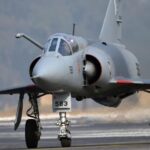
Pakistan has started production of first Pakistani-built, light-weight multi- role combat aircraft, JF-17 Thunder, ISPR said Tuesday, June 30.
Chief of Air staff, Air Chief Marshal Rao Qamar Suleman inau- gurated the construction in a cere- mony at Pakistan Aeronautical Complex, Kamra. Top military and civil officers of Pakistan and China attended the ceremony.
Incorporated with modern fea- tures and technologies, JF-17 has evolved into a more advanced fighter after its original design to be a small and capable light-weight fight- er powered by a single engine.
The JF-17 is being built by China’s Chengdu Aircraft Industry Corporation (CAC) and Pakistan Aeronautical Complex, Kamra.
On the occasion, Air Chief Marshal Rao Qamar Suleman said this success would enhance Pakistan’s air power in the region and at international scale.
Assistance to Pakistan: US rejects Indian concern
Brushing aside Indian concerns on American assistance for Pakistan, the United States said the Indians should not worry about Washington’s support for Islamabad but rather back the effort to ratchet up its neighbor’s ability to overcome economic and militancy challenges.
Robert Blake, Assistant Secretary of State for South Asia, rejected the reported con- tention by visiting Indian parlia- mentarians last week that Pakistan might divert U.S. aid to build up its forces against India. The senior diplomat acknowl- edged Islamabad’s focus on tamping down militancy in its troubled areas and reaffirmed the Obama Administration’s commitment to dramatically increase economic assistance for Pakistan. “I do not think India needs to be concerned about U.S. assistance to Pakistan. As you know, the new focus in terms of our relationship with Pakistan is to dramatically increase eco- nomic assistance to help that country overcome its economic challenges and to extend the writ of the government to other parts of Pakistan,” Blake said, when asked about his response to Indian MPs’ concern that Islamabad might use US aid against their country.
When pressed on Indian MPs’ concerns, Blake responded by saying “Again, | do not think that they should be concerned about that. Pakistan is increasingly focused on dealing with the extremist problems in its own country. We have seen very impor- tant progress that has taken place for example in the Swat Valley. What is important to note is that not only is the Government of Pakistan taking this action, but this action has garnered strong sup- port from Pakistani people”.
We think this represents a very important development and we should give the Government of Pakistan encouragement to con- tinue this process of confronting the extremists inside Pakistan,” he added.— APP
Zawahiri asks Pakistanis to join war against US
Al-Qaeda’s deputy leader called on the Pakistanis to join his group’s holy war against the United States in Pakistan and Afghanistan and warned they could face the destruction of both countries and provoke God’s wrath if they don’t.
Zawahiri pointed his finger at “a clique of corrupt politicians and a junta of military officers who are fighting to remain on the American pay list by employing Pakistan’s entire military and all its resources in the American Crusade against Islam.”
Zawahiri said the only hope to save paistan from the “disastrous fate” of American control was Jihad. “It is the individual duty of every Muslim in Pakistan to join the mujahideen, or at the very least to support the Jihad in Pakistan and Afghanistan with money, advice, expertise, information, communica- tions, shelter and anything else he can offer,” said Zawahiri. The authenticity of the mes- sage could not be verified, but it carried the logo of al-Qaeda’s media wing, as-Sahab, and was posted on websites that usually carry militant statements.
Pak-French N-deal to focus on safety
Vowing to open a new chapter of relationship with Pakistan, France on Thursday, July 23_,underlined the possibility of signing, inter alia, agreement on nuclear cooperation for civilian purposes during President Nicolas Sarkozy’s visit in coming December.
“The new chapter that France wants to open with Pakistan has two pillars including defence as well as internal security and economic development,” said visiting French Minister for Foreign Trade Anne Marie Idrac while addressing a press conference here. Answering a question about securi- ty concerns of the foreign investors, she said, the government of France has full confidence in both Pakistan’s democracy and the country’s fight against terrorism.
Therefore, she said, France wants to help Pakistan in its fight against terrorism by providing both training and equipment for the army for border defence and, of course, police for internal security.
On the economic development side, she underlined areas including transport, energy, water treatment and the food and agriculture as priority sec- tors for the development of Pakistan and all correspond to a strong French know-how. She further said that the main objective of her visit was to final- ize framework on different trade and economic subjects before the visit of French President Nicolas Sarkozy.
France will also provide Pakistan with modern technology including Fennec Helicopter for curbing ter- rorism, she added.
| Current Threat Levels : | ||
| City/Region | Threat Level | |
| Islamabad | Level 2 | ** |
| Karachi | Level 2 | ** |
| Lahore | Level 2 | ** |
| Punjab | Level 2 | ** |
| Khyber Pakhtunkhwa | Level 3 | *** |
| Peshawar | Level 2 | ** |
| Quetta | Level 2 | ** |
| Upper Balochistan | Level 3 | *** |
| Lower Balochistan | Level 2 | ** |
| Upper/ Rural Sindh | Level 2 | ** |
| Gilgit and Northern areas | Level 3 | *** |
| Tribal Areas, Close to Afghan border | Level 3 | *** |
| Index to Threat Level Perceptions | |
| Threat Level 1 Indicates there is no threat to foreigners although there may be isolated incidents involving petty crime. No security precautions are required | * |
| Threat Level 2 No specific threat to foreigners, however because of the overall general law & order situation, some security precautions are advised, especially if traveling. | ** |
| Threat Level 3 Indicates that law and order situation is cause for concern and travel should be avoided unless absolutely necessary. Foreigners should rehearse plans for evacuation. | *** |
| Threat Level 4 Indicates complete breakdown of civil administration and law and order leading to possible anarchy. All foreigners remain indoors and confined to their own city. Families and staff not required to be evacuated retaining only a skeleton staff. | **** |
| Threat Level 5 Indicates complete breakdown of law and order, enemy action/hostilities, invasion/ occupation by enemy | ***** |