




The Repositioning of the Conflict Resolution in South Asia
Abstract
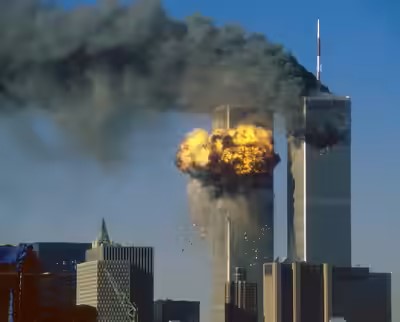
The growing international concerns and changing dimensions in terms of global strategic interests are introducing in the region of South Asia an epicenter of the great games, where the political situation of bordering states like Afghanistan are making the available options less opportunistic for Pakistan to decide where to go and whom to support. Unwillingly or unfortunately after the incident of 9/11 the world politics looked towards Pakistan as a coin of long life without knowing the reservations of its democratic society against war on terror. Under the leadership of a democratic President the United States of America pushed a dictator in Pakistan to legitimize an ambiguous war. It was not easy for Pakistan to jump into this hell but the presence of president Musharraf made it easy for the US to achieve its objectives. It was a step which affected Pakistan’s well-articulated and well-managed policy in the region, particularly for India and Afghanistan. Pakistan’s acceptance and support of the US led war on terror placed a full stop for our future options and opportunities which eventually opened new avenues for India, a state on the waiting list. India had always believed on the inversely proportional relationship for its progress when it comes to Pakistan and as a result we are suffering a lot. Interestingly and amazingly this is not an end but a new start for progressive Pakistan. In this paper I will try to throw some light on the future and possible opportunistic ways for Pakistan to regain its progressive pace to become am ‘Asian Tiger’ by avoiding the traditional conflictual policy with India. For that I will emphasize and explore the causes, character, prospectus, and nature of the conflict in South Asia. For a brief look on the pace of the issue, this paper will also focus on the emergence and the effects of the nuclear environment in South Asia and possible prospects for conflict resolution.
South Asia: Land of the Lost Nations
Being a student of international politics and security studies I believe that everything in politics moves in a circle ‘what goes around, comes around’. From the seventeenth century Muslims’ rule in the region was colonialised by Britain and as a result, on August 17th 1947 it opened a new political chapter in the region, one that would lead to the start of Hindu hegemonic tendencies. 24 years later the politics of discrimination and hegemony found its way to East Pakistan, separating millions of Muslim brothers and sisters and turning the remaining part as the only Pakistan. India did a great job but without knowing that ‘what goes around, comes around’ eventually. Pakistan is not only a country of more than 160 million patriots but also a strategic land of the lost Muslims initially affected by the British colonial era and later by the Hindutva philosophy of politics.
South Asia is a conflict-ridden region. From the very first day India and Pakistan have kept staring at each other eye ball to eye ball. Soon after partition, Pakistan and India fought their first war over the State of Kashmir. Mainly territorial and economic disputes made the relations of India and Pakistan worse throughout the decade of the 50s. The Rann of Kutch was another major dispute which led to armed confrontation between the armed forces of India and Pakistan. The 1965 war was once again fought over the issue of Kashmir. After the 1965 war, although the USSR tried to resolve Indo-Pak differences through dialogues but in long run the Tashkent Accord did not prove fruitful.
The role played by India in the insurgency in East Pakistan and later its attack and dismemberment of Pakistan further blackened the clouds of mistrust and differences. A new dimension, nuclear, was added to the Indo-Pak conflicts after the so-called peaceful nuclear explosion of India in 1974 after which the Bhutto government decided to work on its own nuclear program as well. During the decade of the 70s, especially the later half of 70s and the decade of 80s when USSR invaded Afghanistan, it seemed than the age old dispute over Kashmir has lost its importance but after the USSR withdrawal, the Kashmir episode once again emerged as the root cause of all conflicts between the two.
The politics of the Bharatiya Janata Party (BJP) in the political scenario of India gave strength to rising Hindu fundamentalism and intensified the ideological conflict between Muslim Pakistan and Hindu India. The nuclearization of South Asia in May 1998 added fuel to the fires of hatred, mistrust and rivalry among the two neighboring states. But now more than ever it is required than these two state should solve their disputes and start fresh and anew. This is the call of the day but will it work under the leadership of confused India or not, that is the big question.
- Causes of Conflict in South Asia:
After the British withdrew from the sub-continent, India and Pakistan emerged as newborn states with extreme ideological differences. These ideological differences escalated further in the shape of a permanent enmity between them; this enmity created mistrust and hyper-nationalism/regionalism in people in both sates. All the disputes that arose later were actually the result of many factors. The imbalance of power between the two also created fear and insecurity in the region, especially on the Pakistan side. Some of the factors and explicit causes of conflict in the region can be enumerated as:
- Difference of ideology and religion
- Hyper nationalism
- Mistrust
- Disputes
- Power Imbalance
- Misunderstanding
- Innate enmity
Difference of Ideology & Hyper Nationalism: The difference of ideology is the starting point from where the feelings of bad relations have emerged. However the views from both sides have created further problems for the generation looking for peace in the region. The differences in the national movement and how each one of them defined political freedom are also the reason that has pushed both India and Pakistan to deal with each other through stereotypes. Such lack of knowledge in the two countries about each other is bolstered by hostile propaganda on either side. The Indian occupation of Kashmir, her role in the disintegration of Pakistan and its traditional approach towards the Indian Muslims is supporting the vicious circle of reaction in the future of South Asia. It will continue until India implements the true spirit of its secular constitution which is still nowhere to be seen in politics, especially when it comes to its minorities.
Ideological difference shaped not only the misunderstanding between the two countries but the negative propagation of different factors created feelings of hyper nationalism between peoples; such nationalistic emotion are now the matter of their self-esteem. Looking towards the archives of history we found this self esteem even when negotiating deferent further knocked out in full scale war e.g. failure to fix the border at the mouth of Sir Creek has blocked agreement on the maritime boundary in Arabian Sea thereby preventing exploration of what could be rich offshore deposits of oil and gas. The dispute had led to armed clashes in 1965.1 Another example of self esteem and hyper nationalism we found during the negotiation on Siachen in 1992, when director – general of Indian military intelligence Inder Verma, put paid to Kumar’s efforts who was defence secretary.
…. ‘This is our area, we are fully in control. We are dominating it. How can you ask us to vacate this position?’ He thundered ‘we don’t care either about many or the number of cruelties we suffer. We are going to defend our position on Siachen.’2
To explore the political side of this self-esteem one needs no fact-finding tour as it is very much present in every day politics of India.
Mistrust leading towards Disputes: In an era of globalization, communication, and information technology, around one billion people of India and Pakistan are almost cut off from each other when it comes to developing peaceful relations for the future of South Asia. Regardless of modern interaction in the film and music industries the political attitude of Indian leadership still does not allow the young generation to think independently.
At the moment it is understandable that the conditions in which both countries got independence were based on enmity and mistrust. That extreme hostility resulted in many disputes between the two counties. Disputes caused further tension in the region and a few times resulted in full-scale wars, one of them is Kashmir, which is a ‘flash point’ in South Asia and will continue to hamper efforts towards peace and co-operation in the region.
Power Imbalance & Innate enmity: Hostility between India and Pakistan is mainly due to their ideological differences, Nationalism, mistrust and disputes. The very dominating factor, which is inevitable and is another source of conflict between the two countries, is the quest of ‘balance of power’. All these problems of the region are self-made and animosity is becoming inbuilt in Indo-Pak relations. The feelings of hatred for newly born Pakistan by Hindus, at the time of independence announced that they would try to unite the sub-continent again as they lost their ‘Gao-MATA’. They also claimed that Pakistan is a fragile state and soon it would be united with India. Naturally Pakistan perceived this scenario and thoughts of Hindus as a threat to its sovereignty and security and it started perceiving India as an enemy, which was obvious at that time as India is still a bigger state than Pakistan. So Pakistan has a natural fear of security vis-à-vis India and this insecurity has led Pakistan to join western alliances to strengthen its military capabilities. So the innate enmity gets stronger day by day.
Misunderstandings: This is another factor which shaped the nature and character of conflicts in the region. Due to mistrust, innate enmity, ideological differences, etc, various misunderstandings were created between India and Pakistan, for example:
a) India has always claimed that its military strategy or program is related to China but in practical terms its forces are on the Pakistani border.
b) India tries to justify its nuclear capability by mentioning Chinese nuclear program but Pakistan perceives that the Indian nuclear program is against Pakistan.
c) India refused to sign NPT, CTBT, by asserting on global arms control but in reality India has escalated the arms race in the region. Obviously Pakistan has never accepted the Indian viewpoint and believes that India wants to increase its nuclear stockpile.
There are many examples that can be quoted to explain the ongoing misunderstanding between India and Pakistan but the important issue is not the events, it is the behavior, which is not allowing both sides to avoid such useless confrontation. To explore the conflict we need to understand its character and nature.
- Character and Nature of Conflicts in South Asia
Since birth, there has been innate enmity between India and Pakistan. Ideological differences and mistrust created more animosity between the two states. The most important characteristic of the India – Pakistan conflict is its persistence. The resolution of specific disputes did not lead to peace; new disputes arose to take the place of those that were resolved. The Indus River system dispute, probably one of the most dangerous disputes between India and Pakistan, was resolved successfully in 1960. The serious territorial dispute over the Rann of Kutch was successfully settled in the mid 1960s. The Tashkent and Simla agreement, which ended the 1965 and 1971 wars respectively, were expected to provide the basis for a lasting peace in South Asia, but this did not happen. Also the salience of some disputes waxed and waned – between 1965 and 1989 the dispute over Kashmir seemed to disappear from the India – Pakistan agenda, other issues like the Bangladesh rebellion, nuclear weapons, conventional arms race, Siachen dispute, and so on took pride of place. By the early 1990s Kashmir had replaced the other issues as the most important dispute between the two countries. This suggests that the specific disputes are only symptoms of a deeper conflict between India and Pakistan, maybe because of behavior, ideology, religion, or something else.
The power imbalance between the two neighbours is also a major reason of conflict between the two countries of south Asia. Siachen charts out different reasons for this conflict but if examined closely one realizes that the very nature of conflict in South Asia lies in the religious, cultural, and historical differences between the two major nations of South Asia i.e. Muslims and Hindus. These key differences led to confrontation and disputes in South Asia. The mistrust due to these differences also led to military confrontation between them in 1948, 1965 and 1971. In short, one can only say that the nature of conflict between India and Pakistan is basically the clash of ideas (religious, cultural, and historical) and that all disputes, confrontations and conflicts are off shoots of it.
- Emergence of Nuclear Environment in South Asia
South Asia is one area in which security issues are regional in nature, but the involvement of great powers on different occasions has directly affected military balance and introduced many complications. Interestingly, even the withdrawal of the great powers from the region also radically influenced the military balance. In a strange sense, both the involvement and withdrawal increased insecurity in the region. While India feels threatened by China and to a much lesser extent by Pakistan, the main source of threat for all other South Asians is deemed to be India’s ambition to act as hegemony in the region. Undoubtedly India is the dominant power in the region and in consequence its policies deeply affect the security of its neighbors. While it may be true that most security problems are often the products of global, regional and domestic developments, the major source of security problems in South Asia are the security pursuits of the countries in the region.
For many years both India and Pakistan maintained an ambiguous nuclear posture. Neither of them has wanted to give up the nuclear option. From time to time the two countries gave various arguments in support of the nuclear option. In 1974, India detonated its first nuclear device code named “Smiling Buddha”. This nuclear test added a new and more complex dimension to the already complicated security scenario in South Asia.
Pakistan’s response to the Indian explosion was a mixture of frustration and aspiration. Reacting to the Indian nuclear explosion, the then Pakistani Prime Minister Zulfiqar Ali Bhutto expressed the determination to quickly match the Indian accomplishment and stressed that the people of Pakistan would neither accept Indian hegemony nor succumb to its nuclear balk mail. Pakistan also declared that it would not compromise its position on the right of the people of Kashmir to decide their own future. Bhutto had repeatedly expressed the need for Pakistan to acquire nuclear capability even prior to assuming the office of Prime Minister. The two decisive factors which spurred Pakistan’s quest for nuclear capability were the dismemberment of East Pakistan in 1971 and the Indian nuclear explosion of 1974. Thus Pakistan’s determination to acquire nuclear capability was begun by India and Pakistan took up the challenge. Two additional factors further facilitated Pakistan’s plan:
i) First, the muted reaction of the great powers to the Indian explosion in Rajasthan in 1974 which encouraged India to continue to expand and enlarge its nuclear programme.
ii) Second, the growing gap between the conventional capabilities of India and Pakistan was also an important factor.
For years, both India and Pakistan remained ambiguous about their progress in acquisition of nuclear technology for military purposes. However, it was India that conducted the series of nuclear explosions in May 1998, which in turn forced Pakistan’s decision-makers to follow suit. The massive allocation of resources to defence, the canvassing to secure a permanent seat at the United Nations Security Council, and acquiring nuclear weapon status, all fit in the strategy devised to attain the status of a great power. Several Indians earnestly believe that the acquisition of nuclear weapon status, that includes the possession of appropriate delivery system, would bring international attention and recognition, which in turn would enhance Indian’s international prestige on the one hand and facilitate its entry into the UN Security Council as a permanent member on the other.
Regardless of the great status which India is looking for herself, the Indian nuclear explosions radically altered the security scenario in the region and the Pakistani policy makers highlighted the need to remedy the situation. With the existing imbalance in conventional arms, the Pakistani decision became somewhat understandable because as compared to India, the development of nuclear and missile technology by Pakistan is the product of compelling military security concerns. The establishment of nuclear deterrence is viewed by many as a stabilizing factor.
4. Effect of Nuclearization on Conflicts in South Asia
India and Pakistan conducted nuclear explosions in May 1998. With this both the countries have moved away from a policy of ambiguity to a strategy of deterrence. Both also stress the need for minimum deterrence but they now recognize each other’s ability to inflict unacceptable damage and this is strengthening the minimum deterrence relationship between them. The inherent danger related to their earlier ambiguous position has been effectively removed. Both recognize that neither of them is in possession of an “impregnable” air defence system. India is undeniably equipped with formidable conventional military capabilities, but the advent of nuclear weapons has in many ways, diminished the importance of conventional weapons, eroding India’s claims to superiority in defence. Compared to India, Pakistan’s nuclear weapons capability is small but in the nuclear deterrence equation numbers do not really play too significant a role.
As matter of fact, this mutual deterrence has been in place for quite sometime, though one finds different description of it. Some have called it ‘non-weaponized’ deterrence while others look upon it as deterrence based on capabilities. Many dangerous situation such as in 1986-87 (Brasstacks), the crisis of 1990 (related to the uprising in Kashmir), the Kargil affair, 2002-03 Military Standoff, and recent tensions over Mumbai Terror 2008 did not lead to the outbreak of a full fledged war, primarily because of awareness of each other’s nuclear capabilities.
Despite the complexities of Indo-Pak relations, the nuclearization of the two countries has generated a sense of urgency for improving Indo-Pakistan relations for the greater good of the two nations. As mentioned above, many factors have further convinced the two that the time has to come to resolve their outstanding disputes. Since the nuclear explosion of May 1998, most developments have been on the right track. Admittedly there have been seen some set backs, but the spirit of the process has not at all been derailed except in the Mumbai case but it is good that everything seems to be once again on track. Even outsiders recognize that there have to be confidence – building measures, better communication between civilian military experts, bus lines across the border, trading in energy and even the Kashmir issue. India needs Pakistan to grow economically, regionally, and internationally. Pakistan should exploit this opportunity for better relationship with India without sacrificing its national interest on Kashmir and other core issues.
5. Prospects of Conflict Resolution of Nuclear South Asia
The intriguing thing is that even after having recognized that a positive start has been made by both neighbours in the recent meeting at Sharm-ul-Sheikh in Egypt, the world community has not yet taken the desired steps to strengthen the peace process and also bring these two countries within an overall disarmament framework. The following steps are the dire need to facilitate the ongoing regional peace process but also to bring India and Pakistan into the arms control efforts.
i) Encourage India and Pakistan to adopt more confidence building measure (CBMs)
What needs to be stressed is not just the introduction of additional CBMs, but that those CBMs that are introduced would stabilize the nuclear stature of India and Pakistan and make the region a nuclear safe zone. Secondly, efforts should be directed towards the sincere application of existing CBMs which so far has not been impressive at all. India and Pakistan should remember that CBMs cannot resolve conflict by themselves; these can only replace an environment of mistrust and suspicion with trust and harmony, provided steps are taken on a reciprocal basis. Confidence – building will remove irritants and insecurities which are prevailing at a popular level in India and in Pakistan.
ii) Induct India and Pakistan in the fold of collective disarmament efforts
For creating conditions favorable for talks, it is essential that India and Pakistan agree upon meaningful arms control measures, both conventional and nuclear. This is essential for international security. Already both have been continuously demonstrating signs of willingness to go along with the international community, if the USA wants to lead the efforts. By denying recognition to the existing realities things are unlikely to improve. Efforts should be made to stop the production of nuclear – tipped missiles. In fact India and Pakistan should be given technological assistance to develop more effective mechanisms to control the risks of nuclear war, improve their command and control systems, enhance transparency, introduce verification and resolve their outstanding disputes.
iii) Intensify efforts to resolve the Kashmir dispute
To lessen tensions between India and Pakistan, the international community must intensify efforts to resolve the Kashmir dispute. Ever since the Simla agreement was signed, which stipulated the settlement of India – Pakistan disputes through bilateral negotiation, the international community has been stressing that the Kashmir issue must be resolved bilaterally. However, the world must realize that if a dispute has not been solved for the last 60 years, it is the responsibility of the international community to look into it and to at least try to impress upon the two countries to engage in constructive dialogue. Pakistan has indeed gone out of its way to accept both bilateral as well as multilateral approaches. For the first time, the United States President Mr. Barrack Obama, during his election campaigns and after joining office devoted attention to the Kashmir issue but this still needs a visible and tangible plan of action to urge the two countries to work collectively towards its resolution. Such efforts also need to be undertaken at other multilateral forums. In the ultimate analysis, the resolution of regional disputes is the only sure way to reduce the chance of nuclear exchanges.
iv) Realistic Approach is Required
It is time the international community stopped judging India’s and Pakistan’s behavior on the basis of their interaction during the last 60 years of their independent existence, during which they fought three wars and faced many crises. It needs to be stressed that even those wars and crises were perhaps most restrained encounters. The total ammunition used in all three Indo-Pakistan wars would be at the bottom of the list of all the wars that have taken place since the end of the Second World War. Also the total number of bombs dropped on Vietnam by the United States would alone out number any exchange of bombings between India and Pakistan. On the contrary, the world community should not only take into consideration the legitimate security concerns of both India and Pakistan, but also should look at the discriminatory aspects of the nuclear regime and try to make it more generally acceptable. Punitive restraint measures are unlikely to bring about desired results, whereas a more realistic approach would elicit a better response. Proving Pakistan a failed state, or an irresponsible nuclear state will be completely useless and counterproductive. What the international community should focus on is a timely assistance to Pakistan to support its technology for peaceful usages, which is a dire need of Pakistan.
Concluding Remarks
South Asia, from the very first day suffered from the arch rivalry of its two main countries i.e. Pakistan and India. Mistrust that was created at the time of partition led to the age long rivalry and confrontation between the two. The rivalry between India and Pakistan took a new turn in May 1998 when the BJP led Hindu fundamentalist government decided to go nuclear and after the successful tests in May 1998 proudly claimed that India is now a nuclear weapon state and its neighbors have to reshape accordingly. Pakistan waited for international reaction which was lukewarm. As a last resort Pakistan decided to follow suit and it tested its nuclear devices in May 28, and 30, 1998. This added new dimensions to the Indo-Pak rivalry nuclear dimension and the specter of destruction loomed large over South Asia. But at the same time, due to the nuclear deterrence factor, the chances of a full-scale war have been minimized – the Kargil episode is a prime example.
The question which know arises is what will be the nature of any future conflict in South Asia. Experts do agree that due to the nuclear factor the leadership of the two countries will not go for a large scale war in which the possibility of using the nuclear weapon might be imminent – facts like zero warning time strengthen this argument. Therefore, conflicts in South Asia will mainly remain of low intensity but to save the region from destruction of wars, initiatives for establishing ever lasting peace are required.
The ideological differences, mistrusts, disputes, misunderstandings and innate enmity should be addressed to avoid further confrontation, so that the Indo-Pak generation should focus on the development of the region rather than enmity. Factors like imbalance of power should not be considered as the main characteristic of the conflict between the two countries, which will ultimately vanish from the surface of South Asia. We should make our history soft where the series of events which shaped the relationship between India and Pakistan will help us to achieve the nature and character of a peaceful environment in the region. To strengthen the measure towards conflict resolution efforts in the region, Pakistan should play its due role to support the Muslims of India while negotiating trade and cultural opportunities as a responsible regional state. In terms of India and Pakistan both states are equally involved in the regional politics. India and Pakistan have to live in this region forever and if they will be labeled as ‘primary’ or ‘secondary’ powers of the region then the people of South Asia will suffer. Pakistan has the capacity to convince Indians because the politics of Pakistan is not complex like India’s but the lack of willingness needs to be channelized with progressive solutions, so that the equal representation of regional sources should not be disturbed by India at any cost. This is a time to decide the future of South Asia otherwise India and Pakistan will lose everything in the end and the ‘Great Games” will shape their future.
End Notes
1. For more details please see, “No Headway in Indo-Pak takes on Sir Creek”, The Time of India, New Delhi, November, 1998.
2. Please see for more details. Sharma, Prnay, “Siachen War of Worlds Sting India”, The Telegraph, Calcutta, November 1998.