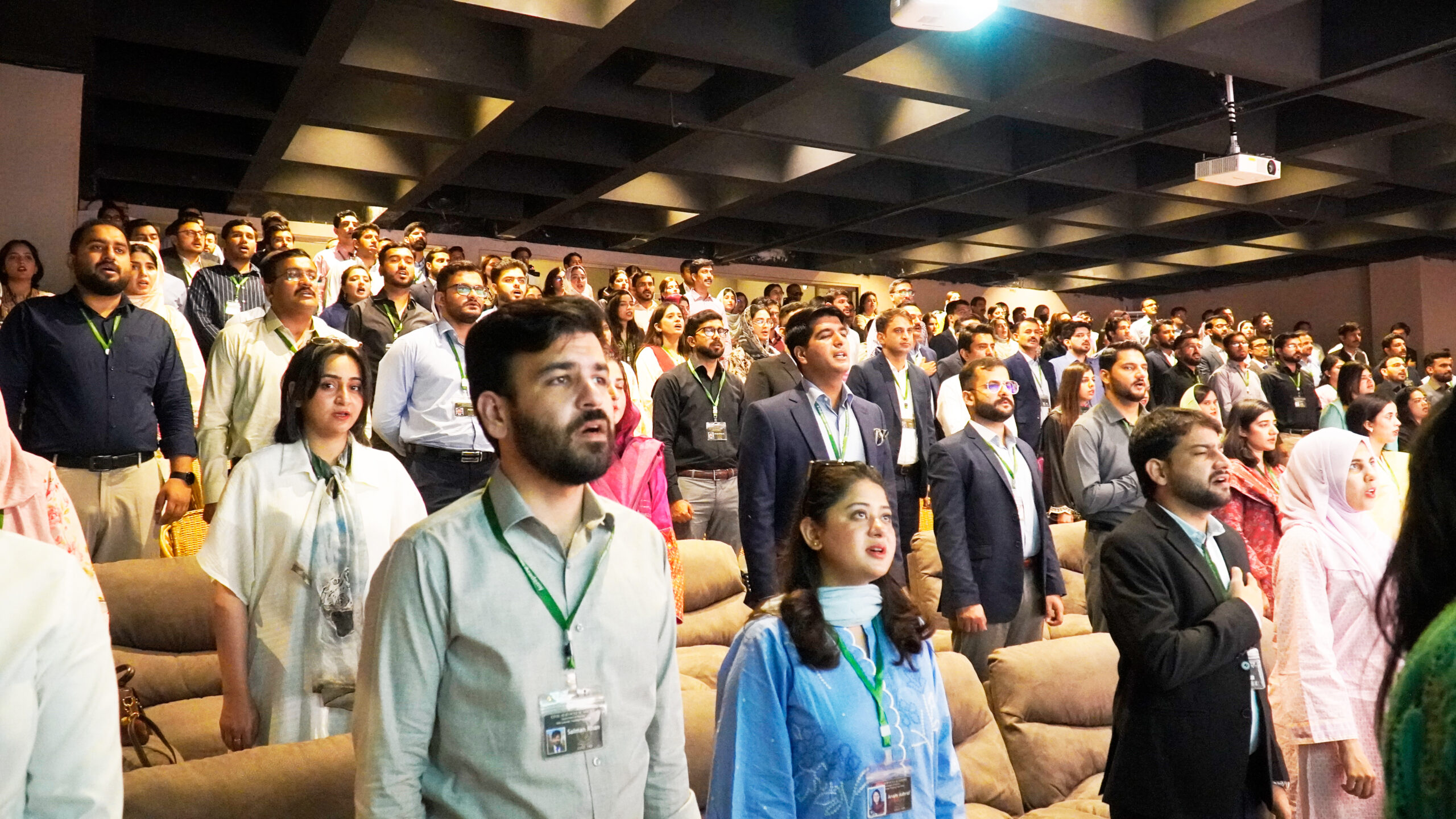
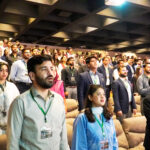
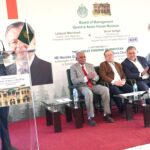
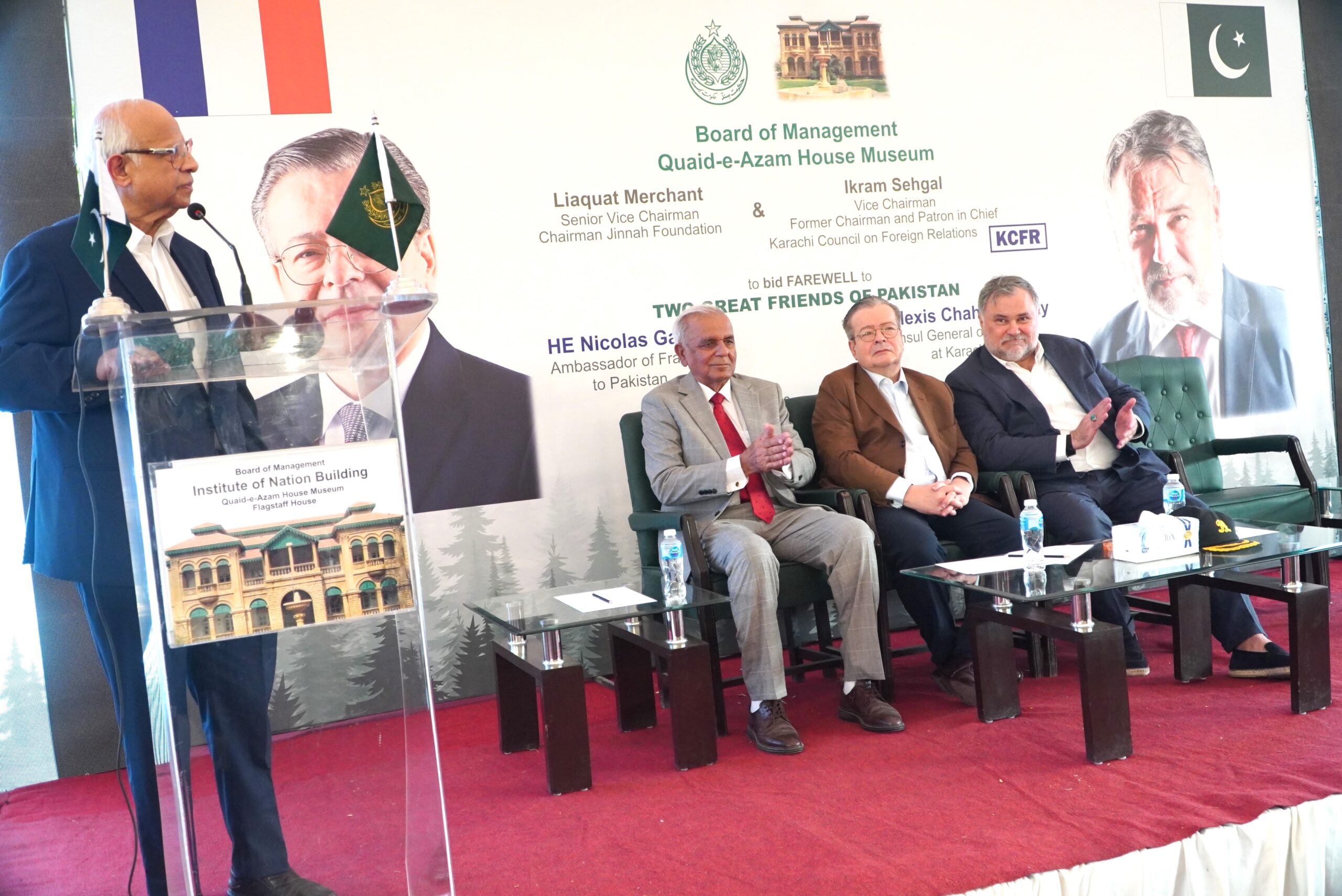
A farewell reception was hosted at the Quaid-e-Azam House Museum in Karachi on August 25, 2026, in honour of HE Nicolas Galey, Ambassador of France to Pakistan, and HE Alexis Chahtahtinsky, Consul General of France in Karachi, as they prepare to conclude their respective assignments in Pakistan. The event, hosted by Mr Liaquat Merchant, Senior Vice Chairman, Board of Management, Quaid-e-Azam House Museum, and Ikram Sehgal, Vice Chairman, Board of Management and Patron-in-Chief of Karachi Council on Foreign Relations (KCFR), brought together members of the diplomatic corps, academia, business community and students to acknowledge the two diplomats as longstanding friends of Pakistan and to highlight their contributions towards strengthening Franco-Pakistani relations. The gathering also provided an opportunity to reflect on the longstanding ties between Pakistan and France, the importance of Karachi in Pakistan’s economic and diplomatic landscape, and the evolving role of Pakistan in regional and international affairs.
Cdre (Retd) Sadeed A Malik, Secretary General, Board of Management, Quaid-e-Azam House Museum: Quaid-e-Azam House is much like the house of Charles de Gaulle in his hometown of Colombey-les-Deux-Églises, where he was born and where he had a home in which he lived until his passing. This house was constructed and purchased by Quaid-e-Azam in 1943. He intended to spend his retirement here, but unfortunately, that never happened. After his retirement, his sister, Fatima Jinnah, moved here and lived in this house until her death.
HE Nicolas Galey, Ambassador of France to Pakistan: This is a historic house, and I would like to thank you and Ikram for choosing this place for this event. The occasion is, unfortunately, a little sad for several reasons. One is that the Consul General, Alexis Chahtahtinsky, and I are about to leave this country after four years for him and nearly five years for me. What is also regrettable, and this is part of the difficult budgetary times facing all countries, is that it has been decided to close the Consulate General of France in Karachi, which, as far as I know, has been open since 1976. So, it is also a sad reason for us to be here at a time when both of us are about to leave. But it is also a great occasion to be in Karachi once again. I have come here many times, and it is always a great pleasure to be in Karachi. Maybe those who know Islamabad will understand why. It is a very different city, and it really demonstrates the diversity of this country and the vitality of Karachi, this huge city, where, even in only four and a half years, I have seen so many things changing and improving. So, even though the occasion is somewhat sad, it is once again a pleasure to be here.
I would also like to recognize and thank the members of the Consular Corps who are present here from Japan, Qatar, Germany, and perhaps others whom I have not had the opportunity to meet. Thank you very much for being here and for, I would say, supporting the French Consul General at this moment, when he has so many things to do before closing the offices and premises. I am not going to bother you with a long speech about nearly five years in Pakistan, during which so many things have happened, including here in Karachi when I was posted here. But I would like to concentrate a little on this city and pay tribute to the great work Alexis has been doing here with a very small team. I think he has shown that even a very small team can have a very significant impact on the city and its society. I would also like to recognize Emmanuel Breurec, the current Director of Alliance Française de Karachi. Of course, the Alliance is not closing, so it will remain our kind of flagship in Karachi. Thank you again, Alexis, and all your partners, for all the work you have been doing here to strengthen Franco-Pakistani relations. One point on which I think we can take a little pride is that we have restored the Franco-Pakistani Chamber of Commerce, which is based here. Although, of course, its activities cover the entire country, the Pakistan-France Business Alliance (PFBA) has an important role to play. I would once again like to thank Alexis for the work he has been doing with the current Chairman of PFBA, Humayun Akhlaq.
I thank the Pakistani people here in Karachi, in Sindh, and all over the country for the great time we have had. Pakistan, when I was appointed here, did not have the same image and reputation internationally as it has gained now, thanks in particular to the great diplomatic efforts made by Pakistan in recent months regarding the Iran-US conflict. These efforts are ongoing, as the Field Marshal was in Tehran yesterday, and the Minister of Interior was there a little earlier. Let us hope that, at the end of the day, these very valuable efforts by Pakistan will succeed. But they have already succeeded, first of all, in helping achieve a kind of ceasefire in that part of the world, but also in making Pakistan a truly influential country in this very complicated conflict. I think this should be recognized, and it is indeed recognized by the international community, including the French government. Thank you, Ikram, for organizing this event and for bringing us once again to this beautiful and historic house.
Cdre (Retd) Sadeed A Malik: I now request HE Alexis Chahtahtinsky to come and address the gathering. He is a regular visitor to this house. He’s been here several times, and he has given addresses. And when we learned that he was to depart from here, we thought we should give him a farewell.
HE Alexis Chahtahtinsky, Consul General of France, Karachi: I am very honored, moved, and thankful to my dear friend, Ikram Sehgal, for having organized, together with his team, this farewell here at Jinnah House on behalf of the KCFR, which is one of the best, probably the best, think tanks not only in this city but perhaps in the whole of Pakistan. We have had many opportunities to reflect on international affairs over the last few years at various events organized either at Jinnah House or at other venues. So, thank you very much for that. I am deeply moved and honored that this event is being organized to bid farewell to our French Ambassador.
The first point I would like to make is that I think it was mentioned that both my Ambassador and I are, of course, true friends, great friends, of Pakistan. I think that is definitely true for both my Ambassador and me. I even have the privilege of being not just a friend of Pakistan, but an old friend of Pakistan, because my first visit to Pakistan was back in 1983, when I was not even a diplomat. I was still a student at that time. It was good that I visited Pakistan early on because, as a diplomat, it is a bit more difficult to move around the country. You need special authorization, which, depending on the political situation, is not always granted. I wanted to visit the northern areas in July, but unfortunately, it was not possible. However, I have been there many times in the past, so I am not frustrated. It is a privilege to have visited Pakistan on and off over the last 40 years. I hope that these last days of my stay here in Karachi will not be the last time I visit your beautiful country.
The second point is that these have indeed been four memorable years for me. I have really enjoyed my stay in Karachi. Karachi, as our Ambassador mentioned, is a very vibrant city. It used to be Pakistan’s first capital until 1954. It is still, to a large extent, Pakistan’s economic capital, with institutions such as the State Bank of Pakistan and others, including the Civil Aviation Authority and airport authorities, still based here. There is also a very vibrant business community and a large number of companies. Indeed, Karachi is the gateway to Pakistan. It has the biggest port in this country, and most of what is imported into or exported from Pakistan goes through Karachi. So, this is a great place for doing business and also a great place for social life, which I have enjoyed very much. I have enjoyed being here, but I also have to say thank you to my Ambassador and his team at the Embassy in Islamabad because I was privileged that they came so many times to visit me here in Karachi. They were not just visiting me; they were visiting this place, experiencing Karachi, and participating in various meetings. This shows, first, that they saw an interest in doing so, which is great, and second, it made my life more interesting. It is also good that they were not afraid because, for good or bad reasons, this place has had a reputation for being a dangerous city. Like any big city, of course, you may have problems related to crime. The reality is that over the last at least 10, 12, or 13 years, the level of crime has lowered in Karachi.
Sometimes people from other embassies would be afraid of visiting Karachi. Actually, they are wrong. They should come, and they should come more often. It is always a logistical challenge, but it can be managed. So, I have to say that I was very privileged, and I want to seize this opportunity to thank my Ambassador, who has been visiting me regularly over the last four years, as well as his entire team, in particular, but not only, the Head of the Economic Section, who has already departed for Paris. I would also like to thank our Defence Attaché, our Attaché for Security Cooperation, and our consular officers, who have been coming here on a regular basis. These have been four memorable years, and I will keep a special place in my heart for this vibrant city of Karachi.
My last point is that, indeed, since we are here with KCFR, we have had so many opportunities, including during the Karachi Literature Festival, to reflect on the international situation and on the various conflicts taking place around the world. This includes not only what happened between Pakistan and a neighboring country last year, but also the major crisis that unfolded since February 28 in the Gulf, particularly the conflict between Iran and the United States. I have to say that I am very glad to see that Pakistan is now very much on the world map, thanks to the very commendable mediation efforts that are still ongoing to bring about a ceasefire and try to achieve a settlement to this crisis. The whole world is definitely grateful to Pakistan for its role. This is a very different Pakistan from the one we are living in now compared with the situation four years ago when I arrived, when the country was, for good or bad reasons, in a very difficult state. Its reputation at that time was not the best. Whenever you mentioned Pakistan in Europe, people would think of terrorism or crime. Terrorism is still an issue, although it is being curbed, and crime has become much less of a problem, which is good. But, first and foremost, Pakistan has been able to reposition itself as a peacemaker. In the past, the perception abroad was more that Pakistan was part of the problem. Now, thanks to its remarkable diplomatic efforts, Pakistan is increasingly perceived as part of the solution. I think that is a great achievement, and it bodes well for the future.
I am personally sure that this country has a great future. There are a couple of “ifs,” of course. If this country manages to successfully educate its very young population, that will be the first major challenge. Then, of course, taking care of all health-related issues will be the second challenge. But I am sure you are going to be able to do that and that you will be successful. I think demographics, yes, are a burden for you, but they are also a great opportunity. You will be among the five most populous nations, definitely among the ten most populous nations in the world by the middle of the 21st century. Pakistan is therefore definitely going to be one of the leading nations, not just in Asia but in the world. I am sure that you have a bright future, and I wish you well.
Cdre (Retd) Sadeed A Malik: Now I request our Vice Chairman, Board of Management, Patron-in-Chief and former Chairman of Karachi Council on Foreign Relations (KCFR), Ikram Sehgal, for his concluding remarks.
Ikram Sehgal, Vice Chairman Quaid-e-Azam Museum Institute of Nation Building, Patron-in-Chief KCFR, Co-Chairman Pathfinder Group: Excellency, I would first like to recount that France was the first non-Muslim nation to recognize Pakistan. Even though we established diplomatic relations in 1951, that remains a historical fact. Secondly, whenever we were in real trouble and bereft of the means to defend ourselves, it was France that came to our rescue. I would like to start with Cdre Sadeed Malik, who was among the first to go to France, where he studied and trained before joining the Daphné-class submarines and taking command of them. In fact, he became the first commander of one of these submarines and later commanded the fleet as well. The Daphné-class submarines were much later followed by the Agosta 90B submarines. But at that time, nobody was giving us weapons. So, it was really courageous of France to support us at that time. Then, of course, there was the Air Force: Mirage III and Mirage V aircraft, the upgrading of the Mirage V aircraft, and the ROSE Project. People do not know that the Exocet missile was first used in combat by Pakistan, and we had the first access to the Exocet missiles. By the way, during the 1965 war, we also captured a squadron or more of AMX-13 tanks from the Indians, and we used that squadron for three or four years. That squadron did play a part. So, we had a whole range of support and cooperation, followed, of course, by the assistance we received in the nuclear field in different ways.
I would say, in short, that you really know a friend when you need a friend. France was a real friend to us when we needed it, and there may have been hiccups along the way. I genuinely feel sorry that France is closing down this Consulate at a time when, economically and commercially, it should not have done so. With what is happening in the Persian Gulf, the Strait of Hormuz, and the Bab-el-Mandeb, the seacoast of Pakistan is becoming of great geostrategic importance. If you can have Djibouti, where there are four competing powers with naval bases, then you could have another port where oil tank farms could be established. Huge container vessels and bulk carriers would not necessarily have to go into the Gulf; they could come out and transfer their cargo to smaller vessels, which could then transport it onward. At this time, I think this is precisely when the French Consulate needed to be here. But it is your choice. As you said, you have to balance your economic considerations and decide where you have to close down and where you have to open up. However, I do feel that this was the time when both Pakistan and France could have taken advantage of the great relationship that we have.
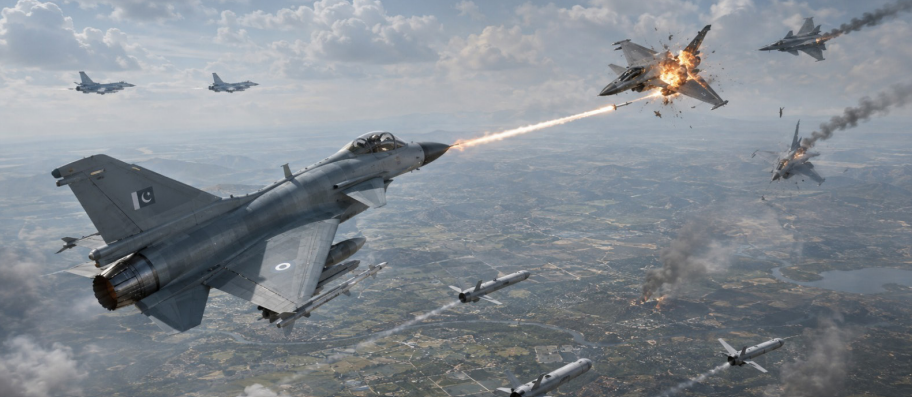
One of the reasons for the conflict of May 9, 2025 – which you have heard about, when, I am sorry to say, several Rafales were shot down – was related in part to French technology and expertise. Nobody knows enough about the ROSE Project, through which we upgraded our aircraft at Kamra base. Kamra became what it is today because of French assistance. The ROSE Project was undertaken with what was then Snecma; I think that was the name of the company. Of course, later, in 2007, the company became known as Safran. The upgrading of the Mirage III and Mirage V aircraft, and the knowledge and expertise that our engineers acquired through the ROSE Project, helped transform Kamra. The French engineers and experts who came here helped us rebuild and upgrade our aircraft. Until today, you will be surprised to know that in almost every country in the world, Mirage III and Mirage V aircraft have been retired, grounded, or scrapped, except in Pakistan. Their upgraded versions still fly and still fly lethally. So, Excellency, excuse me for being undiplomatic, but I believe this is the wrong time to close down the diplomatic post here. It is a post of real consequence, both for France and for Pakistan.
I would say that to you; we look forward to the future. Pakistan, as you know, has played a central role in the region. I used to go to Washington about four years ago, and I was told, about “Pakistan Fatigue” and how it was time to “Forget Pakistan.” Now, they need Pakistan again which they seem to do every 10 years or so. I think that, with the geopolitical changes that have taken place and what is happening in the region, and if you look at the new alliances that are emerging, Pakistan has a very important role to play. I also believe that regional relationships are entering a new phase.
His Excellency, the Bangladeshi Deputy High Commissioner, is here, and I have been telling him, as well as others, for the last 30 years: Pakistan and Bangladesh are two countries but one nation. We should not get caught up in long-term agreements and complicated arrangements. We should simply remove the visa restrictions, introduce visas on arrival, and eliminate tariffs. And if Bangladesh joins the Mecca Pact, then an attack against them will be an attack against us. So, I think these are very historic moments, and they provide an opportunity to rethink and strengthen relationships across the region.
I am very grateful to the staff of the “Institute of Nation Building”, the Quaid-e-Azam House Museum, and to Cdre Sadeed Malik for working so hard to make this event possible. I would also like to thank Gaity Khurram and Ms Nadira Panjwani Chairperson KCFR. I thank them wholeheartedly for supporting this initiative. I would also like to thank all my staff who have worked hard to make this event a success and to make it an occasion through which we can give both HE Nicolas Galey and HE Alexis Chahtahtinsky a warm and memorable farewell. Please consider this your home, and whenever you come back, you will find us as welcoming as we are in sending you off today.