


Introduction
Part I of this article has appeared on pages 48 to 54 in the April 2011 issue of DEFNECE JOURNAL. In Part II some of the major events from 1922 to 1941 are being highlighted in chronological order, as under:
Re-organization – Indian Regiments
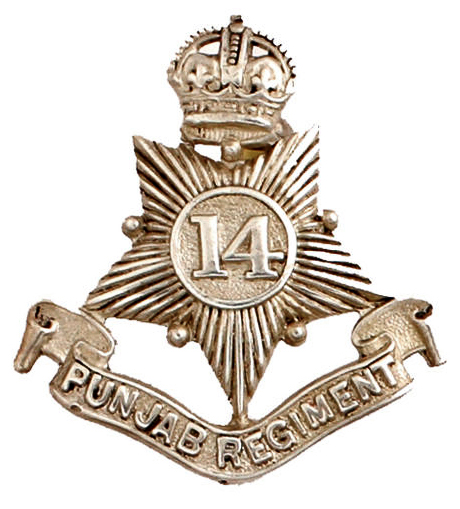
In 1922 Army HQs ordered a complete re-organization of all the Indian Regiments. The First Great War had revealed many defects in the old system of reinforcement. Each regiment had it own depot. The fast scale of casualties, the need to raise new battalions, replacement of casualties from service battalions and with new recruits had led to the virtual breakdown of the prevailing regimental depot system. Therefore it was decided to group regiments together in five and sixes, one regiment to be responsible for training the recruits and dispatch reinforcements to the active battalions to complete their strength. The Indian Army Regiments were reorganized in order of seniority from the date of raising into the following 19 groups, each with its own Regiment Centre.
1st Punjab Regiment *
2nd Punjab Regiment
3rd Madras Regiment
4th Bombay Grenadiers
5th Mahratta Light Infantry
6th Rajputana Rifles
7th Rajput Regiment
8th Punjab Regiment *
9th Jats
10th Baluch Regiment *
11th Sikh Regiment
12th Frontier Force Regiment *
13th Frontier Force Rifles *
14th Punjab Regiment *
15th Punjab Regiment *
16th Punjab Regiment *
17th Dogra Regiment
18th Garhwal Regiment
19th Hyderabad Regiment
- Transferred to the Pakistan Army during 1947.
The 16th Punjab Regiment consisted of the following re-designated Battalions:
30 Punjabis – 1st Battalion – 1/16
31 Punjabis – 2nd Battalion – 2/16
33rd Punjabis – 3rd Battalion – 3/16
4th Bhopal Infantry – 4th Battalion – 4/16
46th Punjabis – 10th (Training) Battalion – 16 Punjab Centre
The class composition of all the 16th Group Battalions was 50% Punjabi Muslims, 25% Sikh and 25% Dogra.
The mess kit, scarlet jacket with white facings, mess vest white with four small buttons, overalls blue with scarlet welt ¼” wide. Wellingtons with box spurs for mounted officers.
The Regimental Centre was established at MULTAN. Col R.B. GRAHAM from 31 PUNJABIS (2/16 Punjab) was posted as the Commandant of the Centre. It was no easy task to changeover to a new concept and to convert individual loyalty from the old battalions to the new group. Many British officers often agitated to get away to their own battalions whereas some kept on marking time to go on pension. But with the passing of time the direction of the Army HQs was accomplished. Gradually spirit de corps prevailed and soon the 16th Punjab Group was well netted with healthy competitive spirit.
On 20th October 1922 Jem GHEBA KHAN was wounded by two ruffians whom he tried to catch single handed. Early during 1923 the Battalion was sent to DAG for annual training.
The abduction of Miss ELLIS by AJAIB KHAN
In May 1923 the Battalion was ordered to form part of KOHAT Column BOSI KHEL tribe of KOHAT Pass had granted refuge to AJAIB KHAN and his gang who had killed the wife of Major ELLIS and abducted Miss ELLIS. AJAIB KHAN and member of his gang were involved in many criminal acts and were wanted for trial.
At 0200 hours on 14 April 1923 AJAIB KHAN and his Afridi companions stealthily entered KOHAT Cantonment and entered the house of Major ELLIS. The house was situated only one hundred yards away from the Flag Staff House. Every house in the cantonment was looked after by the Chowkidar and patrolling by armed guard was also carried out. That night Major ELLIS was out of station on duty. His wife and 17 year old daughter Miss ELLIS were sleeping in one room. Mrs. ELLIS tried to resist the intruders but was stabbed with a dagger and was killed and Miss ELLIS was carried out of the well guarded cantonment. For most of the journey to TIRAH Miss ELLIS was carried on a cot. They travelled during dark hours and remained hidden during the day in caves. Finally they reached KHANKE BAZAR.
On the morning of 14th April the dead body of Mrs. ELLIS and the absence of Miss ELLIS was discovered. Many fighting patrols were sent out but no trace was found. Miss ELLIS was safe and sound in KHANKE BAZAR. This daring action was carried out because AJAIB KHAN and his companions wanted to be exonerated of all cases against them. After lot of parleys, on 21st April Miss ELLIS was handed over to the political officers of TIRAH.
According to Miss ELLIS she was treated kindly during the journey and stay in KHANKE BAZAR, and was looked after as a special guest. The fort of AJAIB KHAN was situated in the KOHAT Pass about a mile from the KOHAT-PESHAWAR road. After about 50 years of her abduction Miss ELLIS visited the ADAMKHEL Pass to recount her adventure. I had visited the house of Major ELLIS during 1961 in KOHAT cantonment and also saw the fort of AJAIB KHAN from a distance.
Duties – JAMRUD
During Nov 1923 Maj Gen CASSELS (later C-in-C Indian Army. His GSO II was Maj – later FM AUCHINLECK who had taken over the C-in-C ship from Gen CASSELS during 1941) tested the Battalion for the BARRET cup and earned third position in the entire military district.
On 9th Dec 1923 the Battalion relieved 1/8 Punjab at JAMRUD and took over the following duties:
- SHAHGAI – 1 VCO and 49 other ranks
- Mile 3 WINDING Post – 2 NCOs and 15 men
- KACHA GHARI – 1 VCO and 28 men
In addition 10 picquets had to be garrisoned by night Around JAMRUD. At the same time 200 men were held in readiness in case AJAIB KHAN made any attempt on PESHAWAR. After some time he surrendered to the AFGHANS.
Move to MESOPOTAMIA
Early in 1925 men were granted 3½ month leave (furlough) to proceed to MESOPOTAMIA. On 1st March 1925 the Battalion entrained at JAMRUD for KARACHI enroute to BASRA. The Battalion embarked on the ship named VARSOVA and landed at BASRA. On 5th March occupied the lines at MAKINA. A company was sent to SHAIBA as guard to the RAF squadron. In July two platoons under Lieut JONES (the CO in 1946-47, a very affectionate of CO DOSOLAH) to MOHAMERRA to quell rioting amongst the Iranians.
In Oct and Nov 1924 the Battalion moved to MOSUL with a company in SHERGAT (ASHUR-AL SHARQUAT). During the winter of 1925-26 the Battalion was in a dangerous situation as the TURKS had moved two divisions up to the border to support their claim to MOSUL. In the event of war the Battalion was ordered to take up a position covering MOSUL and keep three days supplies. D Company commenced its march from SHERGAT to MOSUL, left at 0500 hours and arrived at MOSUL at 2012 hours, thus covering 69 miles in 63 ¼ hours with every man and follower in the ranks, a fine example of endurance.
On 1st September 1926 Capt M.D.W. BIRD caught a SALMON fish with a 2 ½ inch white metal hook weighing 80 lbs and 57 ½ inches long, from the River TIGRIS; it was a record.
Early in 1927 the Battalion was taken up into the air by troop-carrying planes for a practice flight.
Move to SAUGOR
The Battalion left Baghdad on 17th March enroute to SAUGOR where it arrived on 28th March. Hardly had the Battalion settled down in SAUGOR when two companies were ordered to PACHMARHI to provide guard and working parties at the Small Arms School where they remained until June 1929. In July companies were re-organized into 3 rifle companies, each 2 platoons PM, 1 Sikh, 1 Dogra and one MG Company.
During 1930 on the 2nd January the Battalion left SAUGOR to march to MHOW; the itinerary was as follows:
| 3th January | RAHATGHAR | 14th January | KAJURI |
| 4th January | Halt | 15th January | SEHORC |
| 5th January | BAGROD | 16th January | AMLAI |
| 6th January | GARISHPUR | 17th January | ASHTA |
| 7th January | Halt | 18th January | Halt |
| 8th January | KHERI | 19th January | DODI |
| 9th January | BHILSA | 20th January | DAULATPUR |
| 10th January | SALAMATPUR | 21st January | BAURASA |
| 11th January | DEWANGANG | 22nd January | DEWAS |
| 12th January | BHOPAL | 23rd January | DAKACHIA |
| 13th January | Halt | 24th January | INDORE |
| 25th January | MHOW |
The total distance was 233 miles covered in 21 days. For most of the way the route was through jungles and many graves of British troops could be seen on the wayside; they were well preserved. The Battalion was lavishly entertained at BHOPAL by H.H. the Nawab.
The Battalion took part in the MHOW Brigade exercises and returned to SAUGOR by train on 24th February.
During June, July, August and September there was unrest in the city of SAUGOR and on the request of the Deputy Commissioner the Battalion carried out a flag march through the city. Large crowds turned out to see the troops and there was no incident; the unrest subsided.
Jamadar DALEL KHAN won Sword of Honour – Move to RAZMAK\
On 16th November Jamadar DALEL KHAN was presented with the Sword of Honour at KITCHENER College, NOWGONG. He was the first Indian Officer (VCO) to win it. On 23rd November the Battalion entrained for RAZMAK. As the route passed through part of the recruiting area, many pensioners came to see the Battalion. At this time it decided to recruit men from the SHAHPUR district. On the march up from BANNU to RAZMAK the Battalion had the pleasure of meeting the 1st Battalion (1/16 PUNJAB) at IDAK. This was the first occasion on which the two Battalions had met. The Battalion arrived in RAZMAK on 4th December.
The Battalion was accommodate in tents but made a bit comfortable by having mud walls, known as WANA huts. In RAZMAK hosetops and short puttees were first taken into use. In March 1931 the Battalion took part in inter-brigade manoeuvres at IDAK.
Death of Colonel of the Battalion
In May 1931 Gen HENERAY WATKINS, Colonel of the Battalion died. He had joined the Battalion in 1881 and commanded it from 1902 to 1903. He was appointed Colonel of the Battalion in 1908. During the First Great War (1914-18) he commanded the LAHORE Division. During May the Battalion accompanied the brigade to LADHA where it stayed from 18th to 27th making various recees towards KANIGURAM with a view to settling the alignment of the new RAZMAK-WANA road. The MAHSUDS were particularly friendly. In September the officers mess was sniped but there were no casualties. In October the SHOGI TORI KHELS, having opposed a gasht of the TOCHI Scouts, were heavily fined and in order to enforce the fine ‘RAZCOL’ (RAZMAK Column) moved out on Oct 1st marching to DAMDIL on the 2nd.
Advance down the KHAISORA started in the early hours of the 3rd. Two companies were attached to the 2/4 Gurkhas. Five picquets were occupied in the unknown hills during dark hours, but no trace of the SHOGIKHEL was found. At BICHEKASHKAI a walled enclosure was found to be occupied by about 30 SHOGIKHEL. A platoon under a VCO charged the place but the tribesmen had retired. The camp was sniped that night but next day the SHOGIKHEL submitted the fine. On 6th Oct the Battalion marched back but the route was extremely arduous.
Gen WALTER LESLIE appointed Col of the Battalion
In November 1931 Lieut Gen Sir WALTER LESLIE KCB, KBE, CMG, DSO was appointed Colonel of the BATTALION. He had joined the Battalion during 1900.
At the WAZIRISTAN District Meeting held at BANNU in January 1931 the Battalion won the cross country race but lost the final of the wrestling by 1 point. The Battalion was 4th out of 14 units competing for the Best Unit Cup. In July 1932 the Battalion was selected to try out the Shakarpara ration. For four days and nights the men had no other food and they worked very hard during the period. The WAZIRISTAN District Commander praised the spirit of hearty cooperation among the men of the Battalion. He congratulated them upon their powers of endurance and determination to get the best results from the test.
On 26 November 1933 Lieut Gen Sir WALTER LESLIE, the Adjutant General of the Indian Army visited the Battalion as Colonel of 2/16 Punjab.
During May 1933 communal tension spiked and on 2nd June a demonstration march by the troops was made through SHAHJAHANPUR city. Information was circulated that troops were going to support the police for restoring order. The Collector M. SAPRU (son of Sir TEJ BAHADUR SAPRU, a famous Indian leader) conveyed his thanks to the Battalion for this cooperation and for the positive effect their action had on the police. On 16th October B Company moved to SHAHJAHANPUR where it remained for a year.
In November 1933 Sir WALTER LESLIE against visited the Battalion and congratulated the troops on their performance.
During January 1934 news was received that No. 6231 Naik GHULAM MOHAMMAD, son of Subedar KARAM KHAN had been selected as a Gentleman Cadet at the IMA DEHRADUN. He was the first to be selected for the college from the Regiment. During 1951 he was promoted Lieut Col and commanded 2/16 Punjab and subsequently retired as a Brigadier.
Flag Marches
In October 1934 the Battalion moved to BANKURA for the suppression of terrorism. There the troops were accommodated in matting huts and was very congested. On 22nd November the battalion went out on flag march visiting NAKRAKONDA, HETAMPUR, BADRESWAR, SURI, SULTANPUR, AHMEDPUR, CHAUHATA, LABHPUR, OLKUNDA, SAINTHIA, MOLLARPUR, RAMPURHAT, NAIHATTI, PAIKER, MURARI and BOLPER better known by the name of SHANTI NIKETAN where the great poet and reformer, RAMINDRANATH TAGORE had his university. TAGORE has won the NOBEL Prize for literature and his university was visited by all the British and Indian officers and some paid a very interesting visit to TAGORE’s Rural Uplift Centre at SURRAL. Av various places demonstrations were given by the troops. The band appeared in full dress, there were mock battles and firing against brick walls. Making a hole in a 20 inch thick brick wall by MG or LMG caused considerable surprise. The army was now not treated with suspicion and troops were well received by the people.
On 4th January 1935 A and B Companies moved by train to BOGRA and RAJSHAHI respectively. On 11th January A Company prevented a large fire from spreading which had broken out in BOGRA city. The troops earned the commendation of the Brigade Commander and the locals. On 15th January house searches were carried out in BOGRA, NOAGAON, MAHDEPUR and NATOR. Some gun powder, daggers and anti-government literature was found. From the middle of February A Company was employed in the PATNA district flag marching and giving demonstrations, the Company returned to BANKURA on 1st March. B Company had also carried out searches of various houses in RAJSHAHI and PATHIA.
On 1st February 1936 demonstrations with live ammunition were carried out before over 5000 spectators. His Excellency the Governor of BENGAL visited BANKURA on the 4th and 5th of February and was presented a Guard of Honour by the Battalion. During March the first three Vickers Berthier (machine guns) were received and in June the remaining 9 were also received and all the Lewis Gun sections were converted to V.B. Sections.
On 22nd April 1936 A Company moved to MIDNAPUR and relieved the 2nd Battalion Royal Garhwal Rifles. The Battalion usually sent out detachments of a platoon strength each into MIDNAPUR district for carrying out flag marches. The most interesting column of No. 7 Platoon had used train, steamer, bullock carts, small country boats and civilian lorries as means of transport for carrying out flag marches. The later half of the month of July was spent in practicing for the guards required in DELHI. The Battalion left MIDNAPUR and arrived in DELHI on 11th October. The following guards were provided:
1. Viceroy’s House: 1 VCO, 3 NCOs, 21 Sepoys and 1 bugler C-in-C’s House: 2 NCOs, 9 sepoys and 1 bugler
2. Blue lungis and white garters were taken into use for all ceremonial parades on arrival in DELHI.
After the Proclamation parade on 14th December 1936 for King George VI, the following letter was received from Brig G.R. MAINWARIN Comd the DELHI Brigade area:
“I thought I would just write to say how much impressed I was with the turnout, smartness and efficiency of your troops on the Proclamation parade this morning. An unrehearsed parade is always difficult, but this morning’s work was in my opinion, equal in every way to parades for which much practice has been put in. It was more satisfactory to me, and I am sure will be to all of you to hear the remarks of one or two very senior generals at AHQ who were present and were particularly struck with the performance of the officers and men, massed bands and trumpeters of the regiment on parade.”
On 1st January 1937 the Battalion took part in the usual parade. It was held in DELHI between the Red Fort and the Jamia Masjid. A large and very noisy crowd attended. As the parade was held 13 miles from the barracks the troops moved by train which entailed marching at about 0600 hours and retiring at 1530 hours. On the 2nd February the Ceremonial Guard mounting was watched by General Lord BADEN POWELL. The Chief Scout was very impressed with the parade and the band and wished to congratulate all ranks on that very fine performance.
Before leaving DELHI, His Excellency the Commander-in-Chief addressed the following letter to the Commandant:
“As I am leaving DELHI today on tour and will not return, I write to thank you for the smart guards your Battalion has supplied me with during the past winter. They have always been very well turned out and soldier-like and are a credit to the Indian Army. Please convey my thanks to all concerned.”
On 18th April 1937 the Subedar Major of the Battalion went to ENGLAND with the Coronation detachment. In July Band master ADALATZAR who had serve for many years with the Battalion went on pension. The Director of Music to the Viceroy trained a Havildar as Band Master and in addition took a personal interest in the training of the band. The Battalion was lucky in securing the season’s engagement for playing in Connaught Circus on Saturdays, two broadcasting engagement and several others.
In November 1937 the Battalion took part in manoeuvres against the 3rd Cavalry Brigade. The Battalion detrained at NARELA Station at 1800 hours and by 2030 hours was in position 3 ½ miles away.
Success in some sports
The Battalion participated in the DELHI Olympic Sports with three men only and the results were as follows:
1. 9 miles Marathon – 1st position
2. 9 miles Marathon – 2nd position
3. 800 metres – 3rd position
4. 1500 metres – 2nd position
5. 3000 metres – 2nd position
6. Putting the weight – 2nd position
In July 1938 orders were received to reorganize into four companies of 3 platoons each. The support company was reduced in strength, renamed the Carrier Platoon and absorbed in the HQ Company. The Battalion also carried out trials of the VICKERS BERTHIER Guns on tripod mounting.
On 29th October 1938 a sports meeting was held which was won by the Battalion with 39 points. On 11th November the Battalion furnished a guard of honour for the Armistic Parade. The Viceroy and the C-in-C commented on the steadiness of the troops.
The Battalion went into camp at BADSHAH PUR with the rest of the brigade from 9th to 21st January 1939. On arrival on the 9th after a 17 miles march the Battalion was greeted with these remarks from another unit, “You marched in as though you had only come one mile”.
Throughout the year the band was very much in demand. In April a start was made with modernisation. One officer with 7 NCOs proceeded to the driving and maintenance course and 30 NCOs and sepoys went to the MT training battalion to be trained as drivers.
In August a party of NCOs left for SINGAPORE for various duties in connection with the Indian Brigade there.
In September 1939 war broke out and all ranks were recalled from leave. On orders the Battalion moved to LUCKNOW on 4th October. In December it took part in brigade training. Everyone and everything was dispersed and concealed. Track discipline was introduced.
On the final day of the exercise the Battalion pursued the 1/3rd Gurkhas from BIJNAUR to LUCKNOW and seized one of the three bridges over the canal before the Gurkhas could get to it. Shortly afterwards C Company swam the canal and secured a second footing on the other side. The District Commander Major Gen NICHOLSON said “And that is all I have to say, except that I should like to give the 2/16 a special pat on the back. They used not only their feet but also their brains.”
With the start of the New Year (1940) more time was devoted to MT training.
Col F.M. MOORE joined the Battalion from the FF Regt in January 1940 and took over command in April. The Battalion received 39×15 cwt trucks and 5×30 cwt lorries. In August 157 men were transferred to 5/16 Punjab, the expansion of the Indian Army had commenced. On 9th September the Battalion arrived at POONA, the mobilisation station.
In October 1940 the Battalion moved as part of the 6th Indian Infantry Brigade at POONA. It occupied the accommodation vacated by 4/16 Punjab which moved off to the Middle East in a brigade commanded by an old 2/16 Punjab officer, Brig HAROLD R. BRIGGS (later Maj Gen BRIGGS DSO – commanded the famous 5th Indian Division in BURMA front from 16 November 1943 to 11 July 1944).
Move to MALAYA
During the later half of October the Battalion embarked, as part of the Force “Abnormal”, in HMT SANTHIA at BOMBAY and arrived at PENANG (MALAYA). From there moved by train to IPOH and during January 1941 the Battalion moved to TANJONG PAO and later to ARAU. One Company was sent to the railway station PEDONG – BESAR.
Col TYRREL was sent to India because AHQ India had ruled that he was too old to command an active battalion. He was a very affectionate CO and had served with the Battalion since 1922. Col MOORE had also left to command a brigade in India. Col LARKIN from 1/16 Punjab took over the command. Training was seriously handicapped by restriction on cross country movements to avoid damage to rubber trees. Medical authorities had put a stop to night operations for fear of malaria.
Situation
The MALAYA Peninsula is about 450 miles long and its width varies from 200 to 60 miles. Most of the hilly terrain was covered with thick jungle. Movement was possible on the two coastal plains. There were few strategic roads which crossed the central hilly area. From JITRA (North MALAYA) to the South and North (SIAM) the main communication of road and railway was of strategic importance for the defence of MALAYA.
| In December 1941 the main force under Gen PERCIVAL, for the defence of MALAYA, consisted of the following troops: 1. 3rd Indian Corps (Lieut Gen HEATH) a. 9th Indian Infantry Division 8th Indian Infantry Brigade 22nd Indian Infantry Brigade b. 11th Indian Infantry Division6th Indian Infantry Brigade 15th Indian Infantry Brigade c. Corps Reserve – 28th Infantry Brigade d. 8th Australian Division – two brigades e. SINGAPORE Fortress Troops 1st MALAYAN Infantry Brigade 2nd Loyals1st Malaya Regiment2nd Malayan Infantry Brigade |
Subsequently 44th and 45th Indian Infantry and 18th British Division also arrived to join MALAYA command. There were 4 Field Artillery Regiments, one Mountain Regiment, one Anti Tank Regiment, 1st Indian Cavalry Regiment (with no horses or tanks) and 5 Field Companies of Sappers and Miners available in supporting role. Only some squadrons of old aircraft were available to support the ground forces. Naval forces were inadequate to guard the long coast (east and west) of MALAYA.
Japanese forces available for the Invasion
Gen YAMASHITA was the commander of the 25th Army. It comprised the 5th, 18th and Imperial Guard Division and 3rd Tank Group consisting of four tank regiments. Each Japanese division consisted of 12 battalions. The total strength of 25th Army was 125000 (a number of whom never landed) against the MALAYAN British Force of about 80000.
The Japanese forces had sufficient support of artillery and of many squadrons of aircraft. The Japanese tank strength is worthy of note as the British Force entirely lacked armour. The dispersion of the British forces down the Peninsula however gave the Japanese forces the opportunity of defeating them in detail. So this comparison has little validity.
Operation MATADOR
It was generally argued that the best way to counter an overland attack was to seal off the land approach by capturing a part of SINGORA and holding the SINGORA-PATANI (THAILAND or SIAM) area on the East coast. Operation MATADOR was planned in which II Division in a lightning move was to seize the vital area. For MATADOR to succeed II Division had to capture SINGORA and PATANI before any strong force of the Japanese landed there. But the chief obstacles to the plan were political, because the British were reluctant to infringe upon the THAI neutrality. Therefore the political obstacles proved decisive and MATADOR was never ordered.
II Division was given the task of defending the air fields at ALOR STAR and SUNGEI PATANI situated on the western coast. A defensive position at JITRA was selected and orders were given for another to be prepared at GURUN to the south.