



Introduction
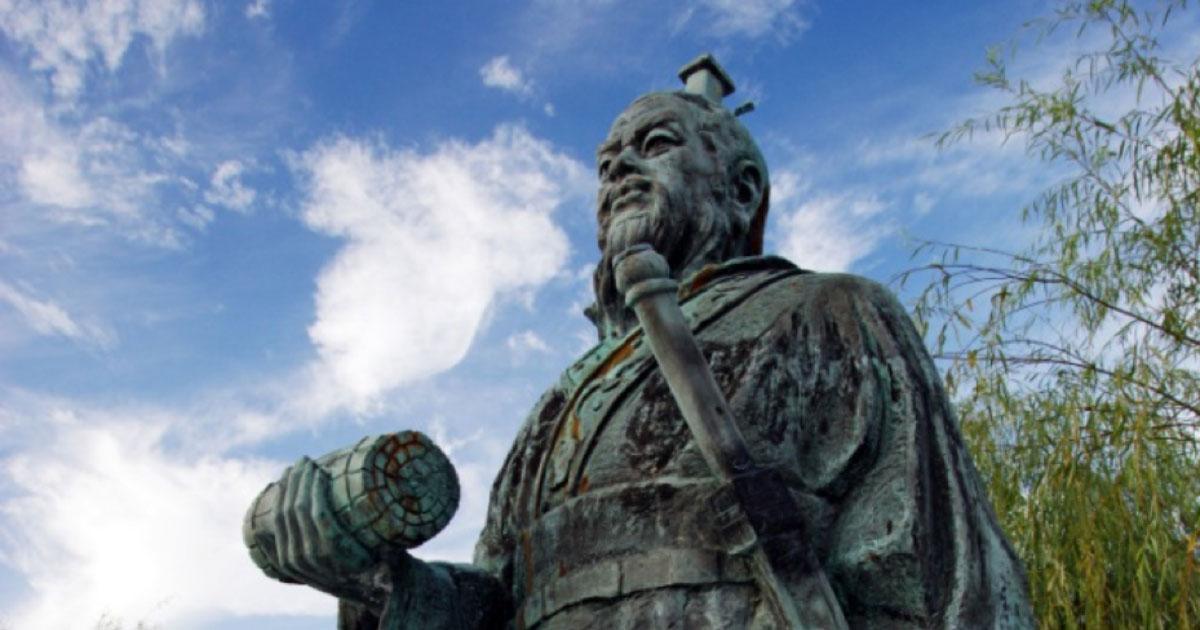
The ART OF WAR was written by SUN TZU about two and a half thousand years ago in CHINA. He wrote only 13 chapters on various theories of war, its principles, strategy, factors influencing the conduct of war/battle, etc. It provided the main doctrine for Chinese warfare and heavily influenced the Japanese as well. It is said that this little book was NAPOLEON’s key to success. It was only when he failed to follow SUN TZU’s rules that he was defeated.
In the present time the Chinese leader MAO intimately studied the Art of War during his struggle to lead the Communist take over of China. The VIET MINH leader GIAP also followed the guidance during both the First and Second INDO CHINA wars and won many battles.
In our institutions the classic works of CLAUSEWITZ, FULLER, LIDDELHART and other great thinkers and strategists are avidly read and followed by students of military history and those preparing for professional advancement. In the institutions of our armed forces the name of SUN TZU and his book ART OF WAR is known, but how much is being derived and taught is not known.
How SUN TZU was appointed General
There is an interesting story as to how SUN TZU has appointed General. He was a native of OHI State. The Art of War brought him to the notice of HOLU, King of WU. HOLU said to him, ‘I have carefully pursued your thirteen chapters. May I submit your theory of managing soldiers to single test?’ To which SUN TZU replied, “You may”. The King asked, “May the test be applied to women?” Consequently arrangements were made to bring 180 ladies of the palace. SUN TZU divided them into companies and placed one of the King’s favourite concubines at the head of each. He then made them all take spears in their hands and addressed them thus. “I presume you know the difference between front and back, right hand and left hand”? On affirmative reply from the ladies SUN TZU went on. “When I say eyes front, you must look straight ahead. When I say left turn, you must face towards your left hand. When I say right turn you must face right around towards the back.”
The word of command having thus been explained, he set up to the and battle axes in order to begin the drill. Then to the sound of drums he gave the girls the order ‘right turn’ but the girls only burst out laughing. He then said, “if words of command are not clear and distinct, if orders of command are not understood the general is to blame. But if the orders are clear and the soldiers disobey them it is the fault of the officers.” So saying he ordered the leaders of the two Companies to be beheaded. When the King saw that his favourite concubines were about to be executed, he was greatly alarmed and sent down the following message: “We are now quite satisfied to our general’s ability to handle troops. It is our wish that these two concubines not be beheaded”. SUN TZU replied, “Having once received His Majesty’s commission to be general of his forces there are certain commands of His Majesty which acting in that capacity, I am unable to accept.” Accordingly and immediately he had the two leaders beheaded and installed the pair next in order as leaders in their place. The drum was sounded for the drill once more. The girls went through all the evolutions with perfect accuracy and precision, not venturing to utter a sound.
Then SUN TZU said, “Sire, your soldiers are ready for your Majesty’s inspection. They can be put to any use that their sovereign may desire. Bid them go through fire and water and they will now not disobey” After that the King saw that SUN TZU was one who knew how to handle an army and appointed him General in the West. SUN TZU defeated the CHU State and forced his way into YING, the capital to the north and he put fear into the States of CHI and CHIN. For almost two decades the armies of WU were victorious over their hereditary enemies.
Some Comments
LIDDLEHARD wrote, “Among all the military thinkers of the past only CLAUSEWITZ is comparable and even he is more dated than SUN TZU — SUN TZU has clearer vision, more profound insight and eternal freshness”. The Art of War is simple, readable and appropriate for every military classroom and soldiers’ pack.
According to FULLER the famous book of CLAUSEWITZ ‘On War’ is incomplete and unrevised – it is largely a jumble of essays, memoranda and notes set together in no precise form. It is prolix, repetitive, full of platitudes and truism and at places extradictory and highly involved
Selected Sayings of SUN TZU
In this article some selected sayings of SUN TZU are being listed for the readers of military history and those preparing for professional advancement. This is likely to inculcate interest in the ART OF WAR.
Laying Plans
The Art of War is of vital importance to the State. It is a matter of life and death, a road either to safety or to ruin, which can on no account be neglected.
The Art of War, then, is governed by five constant factors viz (1) Moral Law (2) Heaven (3) Earth (4) the Commander and (5) Method and discipline.
The Moral Law causes people to be in complete accord with their ruler, so that they will follow him regardless of their lives, undismayed by any danger.
Heaven signifies night and day, cold and heat, times and seasons.
Earth comprises of distances, great and small, danger and security, open ground and narrow passes, the chances of life and death.
The Commander stands for the virtues of wisdom, sincerity, benevolence, courage and strictness.
By Method and Discipline are to be understood the marshalling of the army in its proper sub-divisions, the gradation of rank among the officers, the maintenance of roads by which supplies may reach the army and the control of military expenditure.
These five heads should be familiar to every general; he who knows them will be victorious, he who knows them not will fail.
Therefore in your deliberations, when working to determine military conditions, let them be made the basis of a comparison, in this wise:
1. Which of the two sovereigns is involved with the Moral Law?
2. Which of the two generals has more ability?
3. With whom lie the advantages derived from Heaven and Earth?
4. On which side is discipline most rigorously enforced?
5. Which army is stronger?
6. On which side are officers and men more highly trained?
7. In which army is there the greater consistency, both in reward and punishment?
By means of these seven considerations I can forecast victory or defeat. The general that harkens to my counsel and acts upon it will conquer – let such a one be retained in command. The general that harkens not to my counsel nor acts upon it, will suffer defeat – let such a one be dismissed.
According as circumstances are favourable, one should modify one’s plans.
All warfare is based on deception. Hence, when able to attack, we must seem unable, when using our forces, we must seem inactive, when we are near we must make the enemy believe we are far away and when far away, we must make him believe we are near.
Hold out baits to entice the enemy. Feign disorder and crush him.
If he is secure at all points, be prepared for him. If he is superior in strength, evade him.
If your opponent is of choleric temper, seek to irritate him. Pretend to be weak, that he may grow arrogant.
The good tactician plays with his adversary as a cat plays with a mouse, first feigning weakness and immobility and then suddenly pouncing upon him.
If he is taking his ease, give him no rest. If his forces are united, separate them.
Attack him when he is unprepared, appear where you are not expected.
These military devises, leading to victory, must not be divulged beforehand.
Now the general who wins in battle makes many calculations in his temple ere the battle is fought. The general who loses a battle makes but few calculations before hand.
Waging War
In the operations of war where there are in the field a thousand swift chariots, as many heavy chariots and a hundred thousand mail-clad soldiers with provisions enough to carry them a thousand li (about ¾ mile) the expenditure at home and at the front, including entertainment of guests, small items such as glue and paint, and sums spent on chariots and armour, will reach the total of a thousand ounces of silver per day. Such is the cost of raising an army of 100000 men.
When you engage in actual fighting, if victory is long in coming, the men’s weapons will grow dull and their ardour will be dampened. If you lay siege to a town, you will exhaust your strength.
Again, if the campaign is protracted, the resources of the State will not be equal to the strain.
Now, when your weapons are dulled, your ardour damped, your strength exhausted and your treasure spent, other chieftains will spring up to take advantage of your extremity. Then no man, however wise, will be able to avert the consequences that must ensue.
Thus, though we have heard of stupid haste in war, cleverness has never been seen associated with long delays.
There is no instance of a country having benefited from prolonged warfare.
It is only one who is thoroughly acquainted with the evils of war that can thoroughly understand the profitable way of carrying it on.
The skilful soldier does not raise second levy, neither are his supply wagons loaded more than twice.
Bring war material with you from home, but forage on the enemy. Thus the army will have food enough for its needs.
Poverty of the State exchequer causes an army to be maintained by contributions from a distance. Contributing to maintain an army at a distance cause the people’s substance to be drained away.
When their substance is drained away, the peasantry will be afflicted by heavy exactions.
With this loss of substance and exhaustion of strength, the homes of the people will be stripped bare and three-tenths of their incomes will be dissipated, while government expenses for broken chariots, worn out horses, breast plates and helmets, bows and arrows, spears and shields, draught oxen and heavy wagons will amount to four-tenths of its total revenue.
Hence a wise general makes a point of foraging on the enemy. One cartload of the enemy’s provisions equivalent to twenty of one’s own and like wise a single picul of his provender is equivalent to twenty from one’s own side.
Now in order to kill the enemy, our men must be roused to anger, that there may be advantage from defeating the enemy, they must have their rewards.
Therefore in chariot fighting, when ten or more chariots have been taken should be rewarded who took the first. Our own flags should be substituted for those of the enemy, and chariots mingled and used in conjunction with ours. The captured soldiers should be kindly treated and kept.
This is called using the conquered foe to augment one’s own strength.
In war, let your great object be victory, one lengthy campaign.
Thus it may be known that leader of armies is arbiter of the people’s fate, the man on whom it depends whether the nation shall be in peace or in peril.
Attack by Startagem
In the Art of War, the best thing of all is to take enemy’s country whole and intact, to shatter and destroy it is not so good. So, too, it is better to capture an army entire than to destroy it, to capture a regiment, a detachment or a company entire than to destroy it.
Hence to fight and conquer in all your battles is not supreme excellence; supreme excellence consists in breaking the enemy’s resistance without fighting.
Thus the highest form of generalship is to baulk the enemy’s plans, the next best is to present the junction of the enemy’s forces.
The rule is, not to besiege wall cities if it can possibly be avoided.
The general, unable to control his irritation, will launch his men to the assault like swarming ants, with the result that one-third of his men are slain, while the town still remains untaken; such are the disastrous effects of a siege.
Therefore the skilful leader subdues the enemy’s troops without any fighting, he captures their cities without laying siege to them, he overthrows their kingdom without lengthy operations in the field.
With his forces intact he will dispute the mastery of the Empire, and thus, without losing a man, his triumph will be complete.
It is the rule in war, if our forces are ten to the enemy’s one, to surround him, if five to one, to attack him, if twice as numerous to divide our enemy into two. If exactly matched, one can offer battle. If attackers and attacked are equally matched in strength, only the able general will fight. If slightly inferior in numbers, we can avoid the enemy, if quite unequal in every way, we can flee from him.
Hence, though an obstinate fight may be made by a small force, in the end it must be captured by the larger force.
There are three ways in which a ruler can bring misfortune upon his army. 1) By commanding the army to advance or to retreat, being ignorant of the fact that it cannot obey. This is called hobbling the army. 2) By attempting to govern an army in the same way as he administers a kingdom, being ignorant of the conditions which obtain in an army. This causes restlessness in the soldier’s mind. 3) By employing the officers of his army without discrimination. He is not careful in using the right man in the right place.
But when the army is restless and distrustful, trouble is sure to come from the other feudal princes. This is simply bringing anarchy into the army and flinging victory away. Thus we may know there are five essentials for victory; 1) He will win who knows when to fight and when not to fight; 2) He will win who knows how to handle both superior and inferior forces; 3) He will win whose army is intimated by the same throughout all its ranks; 4) He will win who prepared himself, waits to take the enemy unprepared and 5) He will win who has military capacity and is not interfered with by the sovereign.
Hence the saying, ‘If you know the enemy and know yourself, you need not fear the result of a hundred battles. If you know yourself but not the enemy for every victory gained you will also suffer a defeat. If you know neither, the army nor yourself, you will succumb in every battle.
Knowing the enemy enables you to take the offensive, knowing yourself enables you to stand on the defensive. Attack is the secret of defence, defence is the planning of an attack.