

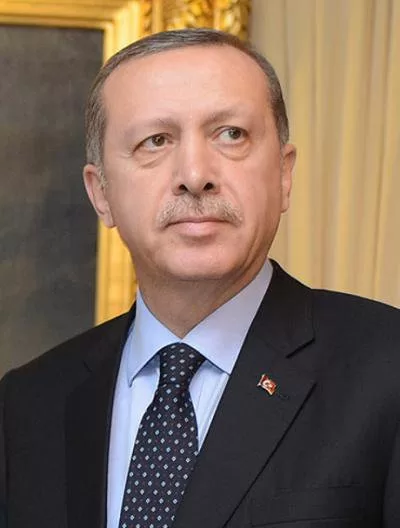
Most recently, the Turkish PM Recep Tayyip Erdogan has introduced a number of reforms relating to political rights, party organization, and propaganda in non-Turkish languages. It has already started hot debate in the country. The government defends it as another giant step (silent revolution) towards further democratization process while opposition labels it loll-pop to please the protests on the roads. Nevertheless, it has multiplier socio-economic, geo-political and geo-strategic implications.
According to the Prime Minister the democratization package is consists of legal and administrative measurements/policies and now the election system has been opened to debate within the framework of the legal arrangement. He opened three different systems of elections to debate as to how the new election system will be. The reforms offer three options for the electoral system, which will be decided based on public support and political parties’ preferences: a majoritarian system with the current 10 percent threshold lowered to 5 percent retention of the current system; or a majoritarian system that would divide Turkey into 550 electoral districts and eliminate election thresholds.
He said further that the democratization package will give the opportunity to launch election campaigns and propaganda in different languages and dialects, noting that preventing the fulfillment of religious faith will be punished as violation of basic right and freedoms. It further enhances the participation of regional political parties and factions in the main stream politics. Political parties will only need to obtain 3 percent of the vote to qualify for state financial assistance. The current requirement is 7 percent.
It consolidates the concept of democracy at gross-root. It encourages national consensus among the different stake holders. It would provide an opportunity to minorities to speak for their legitimate political, social and economic rights. It further increases the role of independent media, opposition and different watchdog organizations in the country. It would impart the elements of accountability, transparency and more tolerance among the ranks of political parties and personalities.
Education in Kurdish is one of the most important issues among the reforms. For the further promotion of regional languages and dialects, Prime Minister Erdoğan went on to say that some letters such as W,X and Q which are not within the presently used alphabet will be used and legal arrangements will be made to pave the way for their use. Previously, there was plenty imprisonment on the use of W, Q and X letters used widely in Kurdish. They have been excluded from keyboards, and violation of their use has been punishable by two to six months in jail.
He said whatever is necessary for education in different languages and dialects in private schools to be established will be done and noted the legal barriers standing in the way of changing village names will be lifted and the Nevşehir University will be re-named as Hacı Bektaş University. It shows the strong commitment of the PM and his government towards social development especially in the field of education. It also stresses the need to have multi-cultural and multi-linguistic approach the arena of complex corporate world where profits become first.
Talking on the different administrative measures/mechanisms already introduced in the said democratization package the PM said further that administrative arrangements in the package will be changed through circulars and regulations. Moreover, administrative arrangements will involve lifting the ban on wearing headscarf in public offices and taking the student oath in primary schools as well as the opening of Roman language and institute and returning the Mor Gabriel monastery to the Orthodox. It is now decided that all legal barriers impeding the return of minority foundations’ assets are to be removed. The assets of Greeks and Armenians were confiscated by a decree passed by the Republican People’s Party in 1936. A later decree, passed in 2011, enabled the return of these assets to foundations.
He said the package is going to underpin Turkey’s stability and it will neither be the first nor the last of forthcoming amendments and updates. It appears that the ruling party in Turkey has decided to win the hearts of many minorities especially Kurds for achieving greater national reconciliation in the country which would bring high levels of socio-economic prosperity, geo-political harmony and the last but not the least, geo-strategic stability in the system.
On his part, Turkish Foreign Minister Ahmet Davutoglu has praised the democratization package. He said, “We aim for a stronger Turkey with the democratization package announced by the prime minister. These steps were out of reach 10 years ago.”
Chairman of the Union of Chambers and Commodity Exchanges of Turkey (TOBB) Rifat Hisarciklioglu said that democratization package would support settlement of the democratic culture in Turkey. He said it institutionalize Turkish democracy. He stressed that the democratization package was an important step to cover the areas, which were needed and demanded by public. It should be completed with a new constitution, adding, “in this way, the corporate infrastructure of democratization package will be completed.”
| Different Political Parties | Augments |
| Pro-Kurdish Peace and Democracy Party | Proposals, presented by Prime Minister Tayyip Erdogan, are not enough to satisfy Kurdish militants who this month halted their withdrawal from Turkish territory. |
| Kurdistan Workers Party (PKK) | It is also not satisfied with the democratization package. According to it Turkey’s human rights record has crippled the economy in the mainly Kurdish southeast of the country. More than 40,000 people have been killed in fighting since 1984. |

Many pro-Kurdish parties said the announced measures in the recently announced democratization package are short of our expectations. “The package does not have the capacity to overcome blockages in the peace process.” Terming the proposed reform on mother tongue instruction in schools as ineffective and insufficient as this would only apply to private fee-paying institutions. They reiterated their demand to eliminate the vote threshold entirely was not overcome.
After the ongoing Snowden and Julian Assange episodes on the international information scene, the democratization package announced that legal protection of personal data will be enhanced. A 2010 constitutional amendment referendum provided constitutional guarantees for the protection of personal data, but a draft law on the protection of personal data will soon be brought before parliament and makes it impossible for “irrelevant individuals” to share the private data of citizens.
Critical analysis of this democratization package shows that allowing election campaigns to be conducted in languages other than Turkish and decriminalizing the use of Kurdish letters not found in the Turkish alphabet would be game changer for the Kurdish community in the country. Moreover, ban on all primary school students in state schools to recite a deeply nationalistic vow at the start of each week, which begins with the words: “I am a Turk” would definitely win many hearts fighting on the mountains for a specific social, culture recognition and of course economic stake and survival in the days to come.
Many administrative arrangements are mentioned in the recently announced democratization package which would further brighten the greater political participation of the Kurdish political parties and factions in the Turkish Parliament. In a major policy speech, Erdogan said parliament would debate whether to reduce the threshold for a political party to enter parliament to 5 percent of the national vote, or even eliminate the barrier completely, and introduce a “narrowing” of the current constituency system. Previously, the current 10 percent threshold, among the highest in the world, has kept pro-Kurdish groupings outside of parliament and has been one of the main grievances of Turkey’s Kurds who make up around a fifth of the country’s 76 million population. On the contrary with the threshold removed, BDP’s deputies would increase substantially. The package also would lower the percentage of votes needed to qualify for parties to get treasury assistance to 3 percent this would provide treasury assistance to the BDP.
Furthermore, Erdogan said his “democratization package” would also allow for education in languages other than Turkish at non-state schools, another long-held demand by Kurdish politicians. Having political party co-chairs would be legalized. Political parties would henceforth be allowed have not more than two co-chairs. This, too, is a step favoring the BDP, which is the only party with co-chairs. They would now be officially recognized.
The PM sincerely initiated a strategic move in the current democratization package proposing reforms to restrictions on the Islamic head scarf, saying women employees would be allowed to cover their heads at state institutions except in the military and security services, and for judges and prosecutors. It would increase greater role of women in the public-private sectors. It would minimize the chances of gender discrimination in the society at large. Low employment enrollments of the females have been on the basic weakness in the Turkish economy which is now hopefully rectified after this democratization package.
The PM has already eased the ban on head scarves at universities and religious schools, drawing criticism from secularists who see the government pushing an Islamic agenda. But is not a burning issue in the country.
Democratization package upholds that no one can be legally subjected to discrimination because of language, race, nationality or beliefs. A governmental body to combat discrimination will be established. Roma citizens will benefit significantly by the elimination of discriminatory regulations targeting them. It is a giant step towards rationalism, globalization 3.0 and respect of the humanity rather than the humans belonging to different sects, races and cultures. It would surely lessen the spirits of hatred, conspiracy and confrontation.
The Prime Minister said the state would return land belonging to Mor Gabriel, the world’s oldest Syriac monastery in southeastern Turkey. Some 20,000 Syriac Christians live in Turkey, mostly in Istanbul, having fled their ancient homeland for economic and security reasons. It is another strategic move in order to win the hearts of millions of Christians living in the country and in the region which could enforce its case of EU membership in the days to come. It would also promote communal harmony and peace in the country. It would start national dialogue for achieving greater levels of tolerance, political rights, conflict resolution and above all socio-economic sustainability.
Conclusion
The 21 points democratization package is a silent revolution which would definitely enhances its regional and international political influence. It would open a window of serious dialogue between the government an many Kurdish political parties and factions mainly (PKK & BDP). It would eradicate spirits of hatred among the different communities and cultures living in the country. It would enhance better standing among the different civilizations living side by side for centuries in the country.