
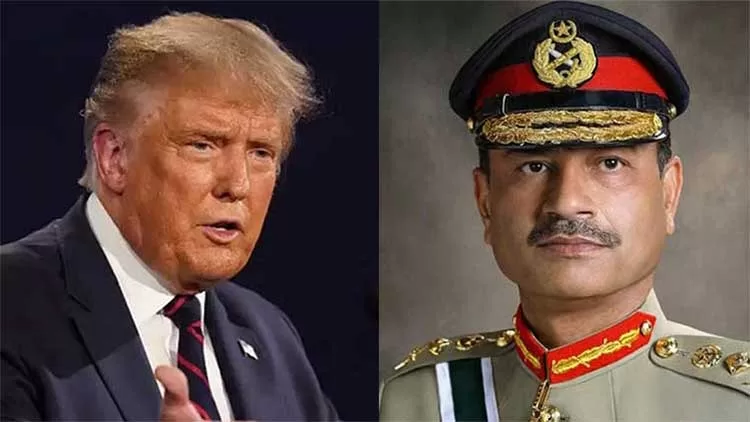
In June 2025, Field Marshal Gen Syed Asim Munir was welcomed to the White House by President Donald Trump. This marked the first such high-level meeting between a Pakistani military chief not holding the Head of State office and the U.S. President. This event was more than a diplomatic formality – it was a symbolic recalibration of Pakistan’s global standing and (then) Gen Asim Munir’s quiet resolve during the May 2025 border crisis with India. His measured and confident leadership in coping and containing the crisis engineered by India through its oft-used “false flag” strategy won international acclaim and recognition for Pakistan. As a mature nuclear state that values restraint over recklessness, Asim Munir chose reasoned deterrence when provoked, not impulsive retaliation. Moreover, his composure and vision are beginning to extend beyond military leadership. He is increasingly being viewed as a leader capable of brokering peace in broader regional conflicts, including the escalating Iran-Israel crisis.
Pakistan not only outfought India on the battlefield but also destroyed its moral and diplomatic posture. No longer just reacting, but proactively positioning itself aggressively as a central player in security dimensions. On the economic forum, Pakistan is offering rare earth minerals and collaborating on crypto policy.
The Trump-Munir meeting was not merely symbolic, it changed Pakistan’s usual “transactional” into a transformational relationship with the US. India’s bogus claim of victory was thus graphically shown to be a blatant Modi lie. Modi should learn from Bollywood in fabricating falsehoods. The Meeting sent an unambiguous message that in the shifting balance of power, Pakistan (not India) is pivotal in the region for today’s strategic equation. India’s media and political elite failed in their promoting a long-standing false narrative of South Asian dominance, the White House meeting was a shock for them. For the Gulf States of the region, prone to Indian propaganda, watching numerous Bollywood movies extolling India’s military dominance over Pakistan, the morning of May 10 was a stunning wake-up call. The SIX-HOUR war punctured India’s hot air balloon with Pakistan emerging in perception as a major player in the regional and global power politics, like Israel did after the SIX DAY WAR of June 1967.
The White House meeting also effectively sidelined the absent civilian framework, dashing the hopes of those advocating for democratic consolidation. Suddenly, the anti-khaki political leaders attacking the Armed Forces on every conceivable occasion started talking about being satisfied with the “hybrid” nature of governance. People conveniently forget that after the assassination of Shaheed-i-Millat PM Liaquat Ali Khan, a hybrid governance has always been in place in various forms since 1951 in Pakistan, being replaced most of the time by totalitarian rule. Political dominance, to an extent, has only been possible from 1940 to 1951, then from 1972 to 1977, 1994 to 1998 and then for a short time from 2008 to 2010. Every time a politician has tried to dominate hybrid governance, he or she has come to political grief. Ms Benazir tried it in 1990 while Nawaz Sharif tried it in 1993, 1999 and then again in 2018. However, if politicians are now publicly expressing their “satisfaction” with the hybrid situation, this is an excellent development. Freed of the push and pull of trying to democratize “governance” the country can progress. This is a “reset,” a scenario where the political players are accepting that military oversight overshadows electoral choice.
Asim Munir’s greatest achievement is that promotions and postings within the Army have been more on merit across the board over the past 2 years. This gives a positive signal, particularly within the military, that capability and performance matter over nepotism and favouritism. Previously, those having merit climbed the ladder only by displaying loyalty to the boss in the Zia and Musharraf tenures, and to an extent during successive incumbencies.
With technology becoming an integral part of evolving business landscape, businesses are changing the way they operate. Soon all jobs will require leveraging some form of data therefore the need for upskilling has become paramount. Upskilling refers to the process of improving an individual’s skills and knowledge, often by learning new technologies, to keep up with the demands of the changing industry. In the current landscape where, powerful new technologies such as ChatGPT and DALL-E are emerging to the forefront, tech skilling may just be the answer to many of our social and economic problems.
The National AI Policy of Pakistan represents a significant step toward leveraging artificial intelligence (AI) as a driver of economic growth, governance reform and societal progress. At its core, the policy delineates an ambitious strategy and inclusive framework that would allow Pakistan to participate vigorously in developing and utilising AI technologies. To ensure success, it must address the many critical gaps in implementation, regulatory oversight and ethical governance.
The Agence Francaise De Development (AFD) published a report in February this year ranking Pakistan 98th out of 194 countries on its Artificial Intelligence Investment Potential Index (AIIPI) 2025 and highlighted deficiencies in human capital and infrastructure as among the main factors holding the nation back. Taking into consideration was the economic environment, governance, digital and physical infrastructure, data governance and security and statistical performance, to assign each country a score that indicates their AI investment potential.
At the heart of Pakistan’s digital transformation powered by artificial intelligence (AI), lies its most powerful youth resource. They drive AI innovation but there still remains a significant skills gap. Having a median age under 20, Pakistan’s population is overwhelmingly young and digitally connected. While Internet access is rapidly expanding, freelancing, coding bootcamps, and AI courses are mushrooming across urban centers. But the workforce largely lacks the specialized training needed to compete globally in AI, compounded by the absence of adequate infrastructure to capture, store and process data, holding back AI applications from reaching their full potential in the Pakistani context.
Most experts point to a lack of skills in Pakistan which holds the country back in terms of AI optimisation and institutional factors like gaps between industry and academia and a lack of quality research in both. There is also some consensus on the fact that there is more work and investment to be done in terms of AI implementation, using established global models like ChatGPT or DeepSeek to make AI products. Then there is in the actual development of the technology itself.
Information Communication Technology (ICT) export remittances reached $3.223 billion in 2024, and in the first nine months of the current financial year, they grew by an impressive 28% yearon-year. The sector, requiring virtually no imported raw materials apart from computers, channels the majority of its export earnings into the national trade surplus. In FY2023-24, this surplus amounted to $2.827 billion — approximately 88% of total ICT remittances. While these figures may appear quite significant to some, much has to be done if Pakistan wants to build on this success and capture a meaningful share of the global digital services market. It must look outward as other successful countries are doing. For example, the United Arab Emirates (UAE) exported over $$48 billion in digital services in 2023 — more than fifteen times Pakistan’s current ICT export volume. Unfortunately, Pakistan has opted out of the ITA, one of the world’s most successful digital trade agreements, whose membership has grown to 86 countries accounting for over 97% of global digital trade. The only requirement for membership is to eliminate tariffs on IT products — yet Pakistan remains among the few countries, mostly from Africa, that continue to forgo the long-term gains for nominal tariff revenues.
With the domestic landscape, the important event was the Presentation of the Federal Budget amid the civil society’s usual hue and cry. The Federal Budget 2025–26, while bold on paper with Rs 14.3 trillion in revenue targets and a projected 4.2% GDP growth, failed to inspire confidence among the citizens. The current expenditure amounts to Rs. 17.6 trillion, and the major chunk is of debt servicing, i.e. Rs. 8.2 trillion (a cycle of borrowing and repayments to finance other expenditures). Pakistan’s budget unjustly relies on indirect taxation, placing an unnecessary burden on the struggling salaried classes and worsening brain drain. Increased taxes on solar panel imports and e-commerce threaten innovation and jeopardise small businesses dependent on digital platforms. While the budget offers minor reforms, it fails to provide meaningful relief or create an investment-friendly environment. The slight reduction in the Super Tax does not address the urgent need for its elimination, risking further harm to investments.
Though the government pledges to reform loss-making state-owned enterprises and finalize PIA and Roosevelt Hotel transactions, the mixed reactions from analysts and the Overseas Investors Chamber of Commerce highlight an urgent need for a comprehensive overhaul of tax structures to enhance competitiveness and attract foreign investment. The youth bulge and lack of skill development are other neglected sectors.
The future lies in human capital and technological advancement, yet the government slashed funding for higher education, the IT and Telecom division and the Science and Technology Division. Even the Climate Change Division’s budget is reduced, when the country is included in the list of the most vulnerable and ill-prepared countries. Senator Sherry Rehman has rightly termed this a “strategic mistake,” warning that the cuts weaken Pakistan’s credibility in global climate negotiations and securing funding.
There is minimal relief for salaried workers. A new digital transaction levies are projected to generate Rs 64 billion, but the problem is these taxes are imposed on gross revenue rather than profits, creating a substantial challenge for startups and e-commerce platforms that operate on thin margins. Tariff cuts were skewed in favour of industrial elites. Together, these choices reinforce the perception that Pakistan’s fiscal planning continues to serve the influential few rather than fostering inclusive growth. This disconnect is most striking in Pakistan’s digital landscape, a key to true prosperity, yet remains hampered by fragmented policy, limited infrastructure, and underdeveloped human capital. The youth-driven digital economy is promising, exports soared to $3.2 billion in FY2024, yet the growth pales in comparison to regional peers like the UAE digital exports amount to $48 billion. The National AI Policy is ambitious, but it is still a work in progress. The policy envisions AI as a driver of economic growth and social progress, but a lack of infrastructure and regulation are reasons for delay in implementation and its impacts. Pakistan currently ranks 98th out of 194 countries on the Artificial Intelligence Investment Potential Index (AIIPI) 2025, primarily due to its inadequate computing power, shortage of specialized AI talent, and limited investment in research and development. The struggle is real, as the total data center capacity of Pakistan is approximately 20 MW, which is insufficient to support modern AI models or large-scale digital services. This forces an overreliance on foreign cloud platforms, compromises data sovereignty, and limits the development of indigenous AI applications. Additionally, chronic energy shortages and poor digital connectivity, particularly in rural areas, further compound these challenges.
While a young, digitally connected population is a strength, the absence of specialized AI training, weak industry-academia linkages, and outdated curricula keep the workforce from being globally competitive. Pakistan continues to graduate generalists when the world demands data scientists, machine learning engineers, and cybersecurity analysts. Another reason that hinders access to cutting-edge technology in Pakistan is its decision to stay outside the WTO’s Information Technology Agreement, which eliminates tariffs on 97% of global digital trade.
Pakistan needs to harness its digital potential by shifting from planning to execution. This requires massive investment in digital infrastructure, data centers, broadband expansion, and renewable energy expansion for tech facilities. The country’s AI and tech landscape demands a coordinated, well-funded strategy that connects youth innovation with infrastructure and regulatory support. To accelerate digital transformation, Pakistan must invest in comprehensive upskilling initiatives focused on emerging fields like AI, machine learning, cybersecurity, and digital ethics through strong industry-academia collaboration. Simultaneously, policy incentives for digital exports, such as joining the Information Technology Agreement (ITA) and reducing digital trade barriers, are essential to enhance global competitiveness. Equally critical is the establishment of ethical and inclusive digital governance frameworks to ensure that AI technologies serve the broader public good and do not reinforce existing socio-economic disparities.
Pakistan is recognised in the world for its resilience, and it is the right time to understand its evolving international profile, translate its success into economic integration and increase regional and global partnerships. At this pivotal moment, Pakistan must choose whether to ride the wave of international recognition or retreat into insular policy comfort zones. This can be done by translating diplomatic capital into domestic reform, which requires efficient governance as a prerequisite.
The 2025–26 budget, while ambitious in appearance, missed a vital opportunity to invest in the critical sectors that could secure long-term growth and inclusion. The digital domain, particularly AI, offers Pakistan a once-in-a-generation chance to leapfrog into the future, but only if the country devises progressive policies and ensures implementation. Pakistan needs inclusive policies, strategic investments, and visionary leadership. In an era where diplomacy and digital progress go hand in hand, Pakistan’s true strength will lie not just in its alliances abroad but in its ability to build a just, informed, and innovative society at home.
I am taking the liberty of re-producing with thanks as Annexure to the Editorial a self-explanatory article by Iqbal Latif, a Bangladeshi aeronautical engineer, “THE WAR CLOUDS ARE OVER”. Coming from Bangladesh this is a tremendous tribute to the Pakistan Armed Forces and to Field Marshal Syed Asim Munir.
Annexure to The Editorial Courtesy and with Thanks to Iqbal Latif Bangladesh the war clouds are over
Power, when untested, is sacred. But when flaunted without necessity, it risks revealing its limits. This is the fundamental rule of deterrence: a strong leader should never swing the stick — unless the blow is guaranteed to land cleanly.
Mr. Modi, had the big stick. He held the advantage of ambiguity, the fear of overwhelming force, the global image of India rising. But he chose to wield it — not to strike with precision, but to signal bravado. And in doing so, he revealed its hollowness. Now the enemy does not fear the stick. Now the world has seen that India’s air power can be checked. And Pakistan — the very state your doctrine aimed to erase — has emerged not weakened, but awakened. This isn’t just a strategic backfire. It’s a moment that history will mark: the point where India lost leverage not through defeat but through overreach.
This was never just a skirmish. It was a full-blown attempt to redraw the map of perception and power. But India’s move meant to dominate — ended up exposing its own limits. The Indian Air Force, long believed to be superior, was tested—and checked. The stick was swung to break Pakistan. Instead, the stick snapped mid-air.
Modi’s deeper game was clear
1. Push Pakistan to overreact, maybe even reach for the nuclear button.
2. Turn that into global isolation.
3. Destroy Pakistan’s credibility
But Pakistan didn’t blink. It stood tall — with precision, calm, and strategic clarity. Backed by Chinese ISR, radar coverage, and missile networks, it turned what could’ve been a rout into a regional rebalancing.
1. The Rafale myth evaporated.
2. INS Vikrant quietly backed off.
3. And the psychological edge India’s biggest weapon was lost.
This was about testing the stick. And in the process, India exposed its own hand and broke its illusion of supremacy. The Indian Air Force, once believed to be untouchable, has now been probed, measured, and countered. The entire framework of conventional superiority, long cultivated for a day like this, has collapsed in public view.
1. Now, the myth is shattered.
2. The psychological edge is gone.
3. And the dream of Akhand Bharat — an idea pushed with chest-thumping nationalism is dead in the water.
Pakistan’s Tryst with History: From Last-Ditch Fantasies to Strategic Rebirth
Last night will be remembered not for what happened—but for what didn’t. The “fall of Islamabad,” the “destruction of Karachi Port,” the “arrest of General Asim Munir” —all blared across Indian media in a last-ditch attempt to simulate victory, to manufacture a psychological coup. But it failed. And in that failure, a new reality was born.
Today, Modi looks north and sees a resurgent alliance — Pakistan and China, closer than ever. This was Pakistan’s tryst with history:
an existential moment met with poise and precision. What India once mocked as “flying iron pipes” have now redefined deterrence. Pakistan has delivered one of the most sophisticated demonstrations of layered defense and real-time coordination in modern South Asian history. And now, as India’s arrogance is subdued, a new era begins — one of less pride, more humility. The Arab world will no longer look at Modi with the same admiration. And neither will Trump, or the West. Because they’ve seen the truth:
1. Pakistan stands at the confluence of the Karakoram, Silk Road, Wagah, Khyber, and Torkham.
2. It holds not just geography — but the key to stability across a region of 2.8 billion people.
3. The strategic map has shifted.
4. And so has the gaze of the world.
Strategic Forecast: Modi’s Miscalculation and the Rise of a New Balance of Power
What began as a carefully orchestrated display of strength is now unraveling into a textbook case of strategic miscalculation. Modi’s vision was clear:
1. Assert dominance, humiliate Pakistan swiftly, and reinforce India’s regional supremacy. The plan relied heavily on air power superiority, built around Rafale jets, INS Vikrant, satellite intelligence, and political bravado.
2. For Modi, the war was 99% on — just waiting for a clean knockout blow.
But that illusion shattered the moment Indian jets entered contested airspace. The collapse of air supremacy wasn’t caused by brute force—it came from something far more sophisticated: deep, real-time coordination between Pakistan and China. From day one, the Pakistan Air Force had more than radar—it had eyes in orbit. Chinese ISR satellites, Saab Erieye AWACS, and the PL-15 long-range air-to-air missile created a net through which Indian jets could not fly undetected.
The moment India mobilized its forces —concentrating nearly two-thirds of its aerial punch across forward “Tiger” bases Pakistan was watching. The PAD (Passive Air Defense) systems were quietly tracking. Once IAF fighters took off, only those that released payloads were met with pinpoint retaliation. And the Rafale pilots?
According to multiple reports, they never even saw the missile.
That’s what happens when a PL-15 is guided by an AWACS from beyond detection range — it becomes a ghost that kills before it’s seen. This was no dogfight. This was an ambush by networked warfare.
Even at sea, the illusion crumbled. The INS Vikrant, India’s flagship carrier, reportedly had to retreat after being locked by a Pakistani P-3C Orion — a strategic humiliation delivered not with missiles, but with radar and restraint. It signaled a new deterrent reality: India can be seen. And tracked.
And stopped. Modi’s dream of swift annihilation of “obliterating Pakistan,” fragmenting it, drying its rivers, destroying its cities has now been reduced to a distant fantasy.
Geopolitical Fallout
Pakistan, long painted as a “failing state,” has emerged as a credible counterweight.
Not an economic giant, not a second fiddle— but a nation that has successfully held the Indian Air Force in check, and proved its ability to defend both land and sky through precision, not scale. This wasn’t just a tactical shift. It was a psychological rupture.
The global Islamic bloc once ambivalent is watching with new interest. Because in modern warfare, respect isn’t earned through slogans. It’s earned through deterrence. Even Indian media, which staged an absurd night of nationalistic euphoria — claiming Islamabad was captured, Asim Munir arrested, Karachi Port destroyed — was forced to wake up in the morning to shame and deletion.
From Zee News to Times Now, fantasy collapsed into silence. Influencers apologized. Tweets were scrubbed. Even veteran voices within India called for accountability.
My Prediction
1. Modi will roll back. Not because he wants to. But because now, he has no other choice.
2. What was once imagined as a clean surgical strike has now become a technical, political, and doctrinal defeat.
3. The India-Pakistan conflict is no longer unilateral.
4. It is now a regional balance of power, shaped not by theatrics, but by the deep military integration of the Pakistan-China alliance.
This wasn’t just a setback for Modi. This was a strategic gift to Pakistan — hand delivered by the very man who sought its collapse. He pushed it to happen. And now, it has happened.
The veil has been lifted. The balance has shifted. The myth has died.
Modi — the man once looked up to as the architect of New India, the assertive leader commanding global attention—will now find himself shadowed by a rising counterweight. Pakistan, once dismissed as a struggling state, now enjoys implicit strategic backing from China’s Western Theater Command, which in any future confrontation will guarantee Pakistan’s territorial integrity. This shifts the balance of power permanently.
The fantasy of Akhand Bharat has evaporated. That muscular posturing is gone.
It’s time Indians acknowledge a truth their media won’t say aloud: Pakistan is no longer the Pakistan of the past. Just watch the composure of the PAF today— calm, precise, and confident.
That is not the demeanor of a “failed state.” That is the posture of a nation that has held the line—and redrawn it.
Let’s foster peace by first recognizing and respecting each other’s skills and expertise. It’s important that we approach one another with kindness and avoid any form of arrogance or ignorance.