
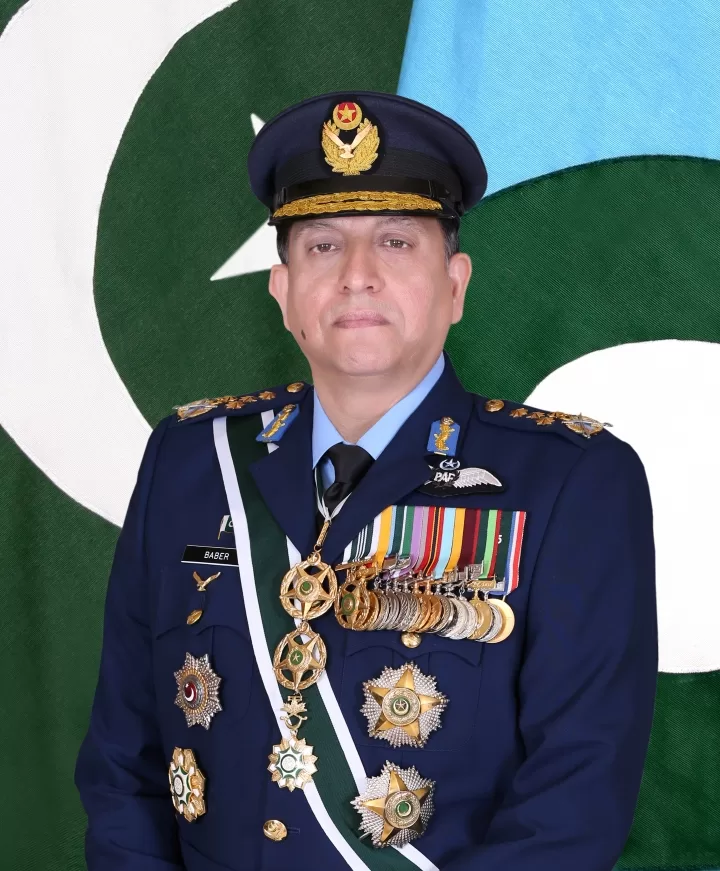
In the crucible of South Asian geopolitics, where tensions simmer and rivalries run deep, military capabilities of nations are often put to the test. The recent military standoff between Pakistan and India has underscored the complex dynamics of power and deterrence in the region. At the heart of Pakistan’s response to this evolving security landscape lies Pakistan Air Force, which has recalibrated its strategies and operational frameworks under its current leadership. Air Chief Marshal Zaheer Ahmed Baber Sidhu’s role as the principal architect of PAF’s Multi Domain Operations campaign has been pivotal in redefining the nature of deterrence in South Asia. His foresight in addressing contemporary warfare challenges has not only fortified Pakistan’s military stance, but it has also positioned the country as a significant player in regional and global geopolitics.
Deterrence is not merely a tactic; it is an intricate framework that encompasses Military Capabilities, Leadership, Technology and Strategic Vision. In South Asia, the military balance has been historically fragile, influenced by both conventional and non- conventional threats. PAF, grappling with the dual pressures of a rapidly evolving Indian military and the need for modernization while prioritising self-reliance, recognized that merely maintaining parity would not suffice. A proactive and aggressive recalibration of strategies was imperative.
Marka-e-Haq served as a clarion call for PAF. While both Pakistan and India possess formidable military assets, the outcome of this historic military standoff highlighted that the true differentiator lay not just in equipment numbers or technological sophistication, but in innovative leadership and strategic thinking. Air Chief Marshal Sidhu’s ascent within PAF has been marked by a profound understanding of the multidimensional nature of modern warfare. He possesses an uncanny ability to foresee emerging threats and adapt strategies accordingly. His tenure has been characterized by an unwavering commitment to integrating smart induction programs and the operationalization of niche technologies, aimed at elevating PAF’s capabilities to meet not just the present but future challenges as well. His clear strategic vision encompasses the understanding that conventional warfare is no longer the only consideration. The integration of space, cyber, artificial intelligence, electronic warfare and unmanned systems into the broader operational framework exemplifies his embrace of a multi-domain approach. This foresight has positioned PAF as a formidable force capable of achieving decisive outcomes on varied fronts.
One of the hallmark features of ACM Sidhu’s tenure has been PAF’s commitment to smart inductions of niche capabilities, alongside focused indigenisation for sustainable force development. Recognizing that technological superiority is a key determinant of victory, he has ensured that PAF not only acquires advanced systems but does so in a manner that is timely and relevant to its operational needs. The incorporation of advanced fighter jets, sophisticated radar systems, cutting-edge drone technology and integration of cyber & space capabilities showcases a paradigm shift that dispels older notions of air power as just aerial capability. PAF’s move towards a leaner yet more powerful force reflects an understanding of resource constraints while maximizing operational impact. This strategic melding of technology and air power was integral to the PAF’s response in Operation Zarb-e-Karar, enabling it to project strength and capability beyond its conventional framework.
Pakistan Air Force has not only embraced niche technologies but has also excelled in their operationalization in record time. The swift integration of these indigenous and collaborative technologies into the existing operational framework has significantly enhanced PAF’s deterrent posture. The rapid deployment of next-generation combat capabilities during the recent standoff emphasized PAF’s agility and readiness. This was not merely a demonstration of advanced weaponry; it signaled a new era of air power that is as much about strategic foresight, speed and responsiveness as it is about firepower.
The synergistic application of PAF’s capabilities, stemming from its leadership’s vision, manifests in the force’s ability to work seamlessly across various domains. This interconnected approach is crucial in modern conflict scenarios, where air, land and sea forces must operate in concert to achieve optimal outcomes.
PAF’s strategic recalibration has introduced a new understanding that victories are secured not only through direct confrontations but through demonstrating a credible threat which led to India asking for a cease fire. The ability to maintain air superiority while conducting integrated operations across multiple domains provided Pakistan with a tangible edge in its recent conflict with India. PAF leadership’s adept handling of operational scenarios during the recent military standoff not only defended national airspace but altered perceptions of Pakistan’s military efficacy, elevating its stature within the international hierarchy. The mantra propagated by the adversary that Pakistan is an unreliable partner has been challenged by showcasing a modernized force capable of deterrence, crisis management and operational success.
The recalibration of deterrence by the Pakistan Air Force, under the discerning leadership of ACM Zaheer Ahmed Baber Sidhu, highlights a critical turning point in South Asian military dynamics. The integration of smart technologies, an unwavering commitment to operational excellence and a strategic approach to conflict have collectively fortified Pakistan’s military stance. In an era where the complexities of warfare are ever-evolving, PAF has responded with a clarity of purpose and a tenacity that is commendable. As the pendulum of power swings, it will be the strategies forged in this period of recalibration that will define the future of deterrence in South Asia, reshaping the contours of conflict and diplomacy for years to come.