

There has been a paradigm shift in the Arabian Peninsula’s security calculus since Iran and Israel fought tooth-andnail for a drawdown conflict. The realpolitik intention of Washington and Tel Aviv was to bring Tehran on its knees and, somehow, engineer a regime change, but that did not materialize. Iran has emerged stronger at home, irrespective of severe socio-political fault-lines, and is looked upon by the global community as a resilient power.
The change in security perspective is that Israel and its intelligentsia now also view the northeastern coastal tiny emirate of Qatar as a thorn in the eye, and are skeptical of its foreign, domestic and defence narrative. This is no surprise change of heart but one that has simmered over the period of decades, and instantly surfaced as Doha exhibited some stateof-the-art diplomacy by wooing its adversary Iran that was out to obliterate it in self-defence by firing ballistic missiles on its territory.
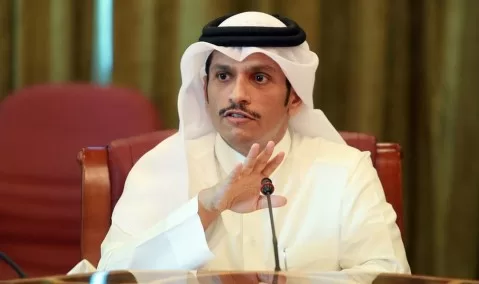
Tehran was duly acting in self-defence under Article 51 of the UN Charter as US Army’s Centcom bases in Qatar were used to bomb the Islamic Republic, and a retaliatory attack on the host state was inevitable. The win-win proportion, however, was that both Iran and Qatar were articulate enough to get on the hotline, and make each other realize that the existential moment for them, and the region at large, has arrived and only a pause in warfare from the aggressors (Israel & US) can help make a difference. The rest is history as Qatar’s Prime Minister Sheikh Mohammed bin Abdulrahman Al Thani secured Tehran’s nod to the US proposal for a ceasefire, and subsequently a shut-up call from White House to the belligerent Zionists made the difference.
Was it a favour to Qatar from Iran? Yes, indeed. It fore-warned Qatar of an attack on the 6-acre Al Udeid air-base, wherein Doha had invested more than $8billion. It is also the third-largest arms purchaser in the world (2020– 2024) and the second-largest buyer of American weapons globally.
The attack on Qatari soil represents the first stateto-state military action in the Gulf since Iraq’s 1990 invasion of Kuwait, instantly hardening public opinion in the richest Gulf state against Iran in the long run.
This is where the plot thickens as the new understanding between the Persian-Arab duos, despite serious security upheavals, is now irritating the Jewish state. It has every reason to see a broader homogeneity between the GCC and Iran, and that too as China’s mediation for a thaw is imbibed in its roots. A landmark Op-Ed by Elazar Gabay in the ‘The Times of Israel’ titled ‘Qatar: Israel’s next real enemy after Iran’, has literally exposed the thinking in Jerusalem, and the way forward the hawks in the Jewish state are contemplating for the region.
The figuring out of Qatar, obviously, has many reasons and its strength in terms of economy; socio-political influence on militants that span from Hamas to Houthis, and from the Taliban to many of the Shia proxies too; its double-edged diplomacy through big-ticket investments in Europe and the United States; and last but not least its passion for political-Islamic indoctrination.
That is almost like a charge-sheet against the prospective peninsula state, Qatar, and many of its hallmarks are corresponding to what Iran was and is, even after being battered in the 12-day war of attrition with its sworn adversaries. The only difference is that Doha has no heart for a nuclear device, and is least interested in arming itself on its own in the presence of a US security umbrella on its soil. That is where the irritation begins for Israel, which is busy micro-scoping Doha as the next lethal target.
Yoel Guzansky, a senior researcher and head of the Gulf Program at the Institute for National Security Studies (INSS) and a non-resident Scholar at the Middle East Institute in Washington, D.C., questions Israel’s dilemma regarding Qatar, and in his elaborate paper writes that it “stems from the fact that while Qatar has long undermined Israeli interests, its policies, at times, have simultaneously served other Israeli interests.” His referral is towards the special relationship that Qatar enjoys with the United States.
Qatar, despite being a non-entity in tangible terms of territory and population, has muscles that have made it indispensable on the world stage. They are its media outreach (Al Jazeera) and soft power (finance and diplomatic mediation).
Doha is not armed with militias and missiles, and has a sophisticated image in the comity of nations in terms of its magnanimity, vision for mega-investments in energy, education, industry, real estate (abroad), technology and communications (with one of the world’s best airline, Qatar Airways), passion to host international summits and sport galas (hosted 2022 FIFA World Cup).
This is what makes it relevant for Israel to see the Arab state playing both ends, and emerging as a power to be reckoned with. Last but not least, the US and Qatar have robust economic ties with over 120 US companies operating in the peninsula.
Israel alleges Qatar has emerged as the biggest soft power with its tendency to “finance terrorism” (read helping proxies and militias) and shaping a global narrative against the West and Israel through its epoch-making television channel, Al Jazeera. The Doha-based telecast is unmatched and no media-house worldwide has been able to undo its influence.
Al Jazeera was primarily responsible for spreading the Arab Spring in 2010, hundreds of hours of direct showcasing from El-Tahrir Square in Cairo that changed the Arab street for all times to come in terms of political awakening, and cast an existential threat to mon archies and kingdoms in Middle East and North Africa.
Now as Israel believes that it has cowed down Iran; taken out its air defence systems; sabotaged to a great extent its nuclear installations, especially in Fordow as claimed by President Trump himself as he flew Stealth bombers; exterminated Hezbollah; taken out almost all of the pro-Iran proxies in the Mideast; and literally pushed to the wall the Islamic Revolutionary Guards Corps (IRGC), now is the time to take on Qatar! The point of argument is that Israel despite its military, technological and political clout over the world at large, as almostall of the modern inventions in this Artificial Intelligence age belong to the Jews, it feels nervous that its soft power is not compatible to Doha’s and this is where the new war of nerves is in the making. Qatar’s undeniable asset is its wealth from natural gas (about 13% of the world’s total), and that helps it control the geo-economics of the region and beyond. It has the world’s third largest proven natural gas reserves, and is the third-largest exporter of natural gas. It exports approximately 77 million tons of LNG per year, with plans to expand production to over 126 million tons by 2027.Qatar’s Sovereign Wealth Fund and the Qatar Investment Authority, to just name a few, are estimated to be worth hundreds of billions of dollars, which translates into one of the highest GDP per capita figures globally and the richest Arab nation.
With this leverage, Doha has struck a special chord with all of the major powers of the world, including the United States, and that is what bothers Israel – an allied ally of Washington D.C. Tel Aviv is now assessing, as endorsed by Gabay and other analysts, that Qatar’s ballgame on both sides, i.e. funding ideologies and militias that undermine both American and Israeli interests and at the same time being host to the biggest US military base in the region, makes it more bigger than its profile and inevitably a threat to the security-scared Jewish state.
Israel, thus, under a new thinking wants to push for the relocation of key military assets to Israeli soil. A Centcom base in Israel would tantamount to a mini-Pentagon under Zionist control, and that too on the heels of immense political influence that Jewish financiers exert over American society and, especially, the Presidential candidates. There is a catch-22 situation too. Doha diplomacy is too smart and it has a vision to deal with its allies and adversaries.
Dr Ariel Admoni, an expert on Qatar-Israeli affairs, foresees Doha’s relationship with Tel Aviv as a “strategic asset”. He believes that for Doha, the road to Washington runs through Jerusalem. While both the countries established unofficial trade relations since the 1990s, the rupture between them since 2000 has put them on a boil.
Qatar severed ties with Israel in 2009 following Operation Cast Lead, also known as the First Gaza War by Hamas. Since-then, it is a new canvas of animosity wherein the government of Qatar was seen at the vanguard in maneuvering ground realities with Hamas and the likes, and being a perpetual mediator when it comes to Palestine affairs. This aspect of influencing, choreographing, hosting and financing anti-Western proxies had also landed Qatar in troubled waters with its own Gulf Cooperation Council (GCC) allies. The isolation and severing of diplomatic relations it faced at the hands of brotherly Saudi Arabia, Bahrain and the United Arab Emirates in 2017 is a case in point, but goes on to exhibit its versatility in pursuing a vision that Doha feels is ‘pro-Ummah’ and one that can put the dilapidated Muslim world on a balancing pitch with the mighty West and Israel.
Doha’s support to the popularly elected pro-Islamist President Mohammad Morsi, and the Muslim Brotherhood in Egypt, was the tipping point, and inevitably struck a strategic nexus of regional thinking too as Israel and Arab States found themselves in a common denominator as they faced the surge of Islamic movements and proxies at the beck and call of Qatar.
The way forward for Qatar is to diligently continue with its policy of being an honest mediator, especially in the Mideast affairs as it provides a forum for under mined Muslim voices. Its support to Hamas and other pro-Islamic bodies can be further returned by making them relevant with changing times and asserting as a forceful entity in helping them being heard, until and unless the statehood question of Palestine is addressed.
Qatar must leap ahead in its soft-power initiatives and be a great investor in Europe and the US, holding the financial nerve of capitalism for a quid pro quo in geo-political terms for its region. This is what makes Doha a great and inevitable destination for Oval Office and 10-Downing Street. Doha’s compatriots in Abu Dhabi and Riyadh must strike a new congenial equation with their tiny neighbour and stand tall with its as and when Muslim world affairs are in the spotlight.
Al Jazeera, likewise, will always be in the spotlight and Doha must consider opening its offices in Turkey, GCC, Pakistan and the MENA region to cultivate and broaden a narrative on sound-footing of realism and professional reporting in an era of social tweaks and disinformation. Qatar has a moment to seize and the new security puzzle has come as an opportunity in disaster to not only upgrade its defence and foreign policies but also to act as a spokesperson in Muslim world affairs. erson in Muslim world affairs. Tel Aviv, decimated to a great extent at the hands of Tehran, will sooner than later be on terms with Doha.