


And Disaster Relief are Borderless
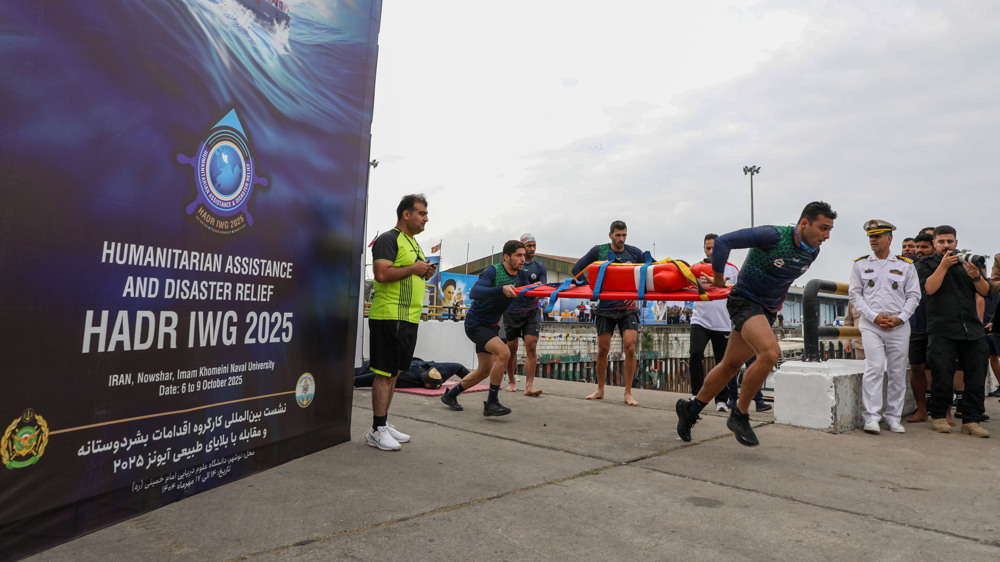
The sea is a common heritage with challenges and opportunities that are there for all. The littorals also understand this fact well and that’s the reason why a need for collaborative arrangements has always been felt. Besides the stress by international organisations under the UN charter and legal frameworks, there are certain regional cooperative mechanisms that forge to bring littorals on the same page and closer to each other especially when disasters at the seas merit so. One such arrangement is Indian Ocean Naval Symposium, instituted in 2008 which projects the necessity to have further collaboration and cooperation between the coastal states of the Indian Ocean. IONS as it is called in short form has all the key countries of the region as its members and it works via several working groups which form the agenda for the Conclave of Chiefs, held biennially. Iran and India co-chair the working group for Humanitarian Assistance and Disaster Relief (HADR). The IONS Working Group meeting, training and workshop was held in the city of Nowshahr, Iran from October 6 to 9, 2025, which was attended by delegates from 13 member countries including Pakistan. During the meet, fruitful discussions were held on how to enhance collaboration between member states to negotiate disaster situations in the area. Pakistan’s efforts and work in HADR was also highlighted on multiple forums.
HADR operations are necessitated because other than man-made disasters, with the effects of the increasing climate change, the frequency of disasters at sea is also increasing. Given the complex nature of disasters these require a comprehensive response, mandating transnational cooperation and assistance for actions that extend beyond a single nation’s jurisdiction for carrying out activities ranging from search and rescue on the high seas to aiding in another nation’s disaster zone.
Natural disasters and humanitarian crises often impact multiple countries or require aid in areas where national capacity is overwhelmed, necessitating cross-border collaboration. This makes it a unique and complex situation requiring coordinated, multinational efforts. The navies are uniquely positioned to provide rapid assistance across vast maritime distances with multi-role support ships designed for HADR providing self-contained and adaptable platforms for comprehensive responses. There is also a dire need for coordination across the board for the success of such operations therefore military HADR operations rely on coordinated efforts with international governmental and non-governmental organizations.
But all this is not voluntary work. The United Nations Convention on the Law of the Sea (UNCLOS), along with the International Convention for the Safety of Life at Sea (SOLAS) and the International Convention on Maritime Search and Rescue (SAR), place mandatory obligation on ships at sea and coastal states to provide aid to any person in distress at sea. The SAR Convention and its amendments establish that rescued people must be brought to a “place of safety” where their basic needs are met and their safety is no longer jeopardized. This critical provision reinforces the trans-boundary nature of maritime rescue, as a ship may need to seek safe harbor in a foreign port.
Also, the principles of humanity, impartiality, and neutrality are central to all humanitarian actions, including maritime HADR. Relief must be provided based on need alone, regardless of nationality or other distinctions, and must be independent of political objectives. With sophisticated ships and aircraft, modern navies are uniquely equipped for large-scale HADR missions beyond their own borders. They provide critical capabilities such as deploying first-response teams and conducting SAR operations, transporting and distributing large volumes of aid, operating where local infrastructure has been damaged or destroyed and providing medical assistance and logistical support.
In regions prone to natural disasters, such as the Indo-Pacific, navies frequently engage in joint exercises to enhance interoperability and standardize operating procedures for HADR. This cooperation creates an institutional framework for swift, coordinated action when a disaster strikes. The rise in climate change-related disasters has made maritime HADR an increasingly important function for regional navies. This expanded role has also introduced a strategic dimension, as nations can enhance their influence and showcase their capabilities through effective humanitarian response. The United Nations Office for the Coordination of Humanitarian Affairs (OCHA) plays a key role in facilitating the use of foreign military and civil defense assets for HADR. Guidelines, such as the Oslo Guidelines, define the framework for such assistance.
While there is a clear legal and ethical obligation to assist, states must navigate the sensitive issue of national sovereignty with caution, especially when military assets from one country operate within another’s territorial waters. Pre-established agreements and clear coordination protocols help to manage these sensitivities.
Complex emergencies, border closures, and administrative barriers can impede the delivery of aid. Establishing frameworks that anticipate these challenges is crucial for a timely and effective response. We can safely conclude that HADR is a humanitarian cause, international law stresses safety of human life, navies have inherent capacity to perform such operations, trans-boundary and sovereignty issues need resolution beforehand, earlier timely preparations are necessary, while preparing of agreements, joint planning as well as joint exercises are mandatory.