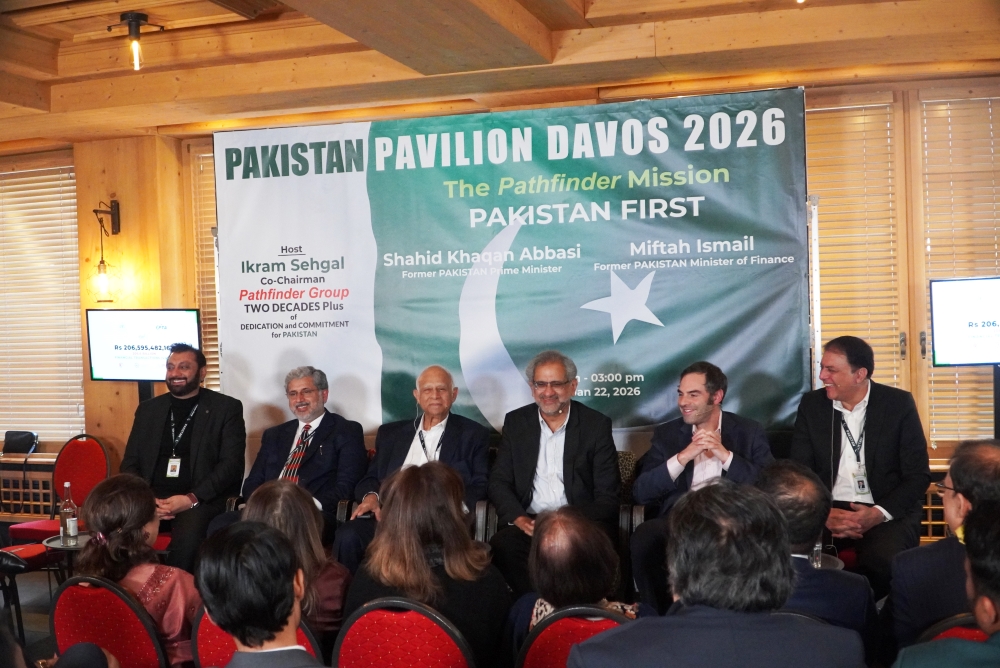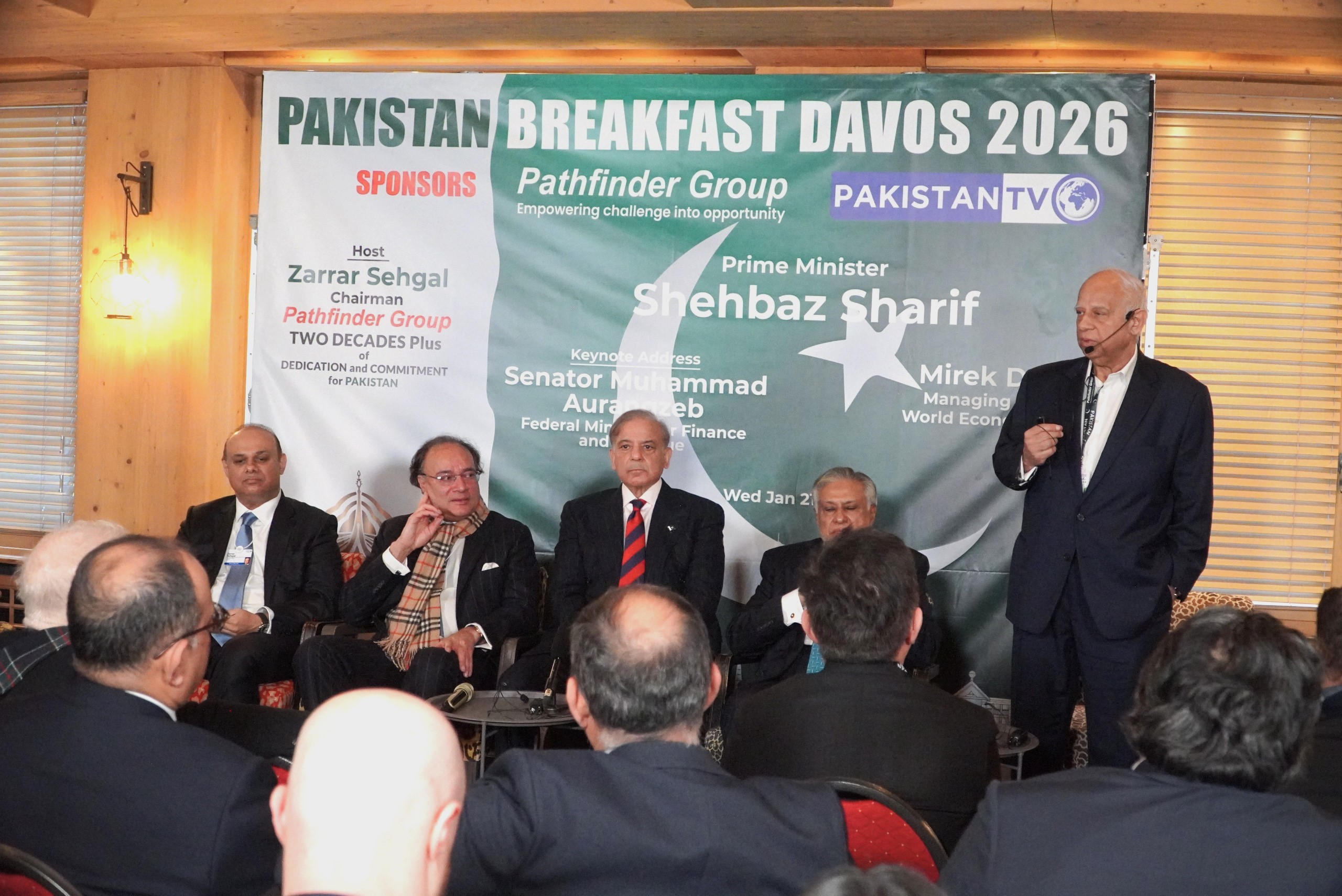

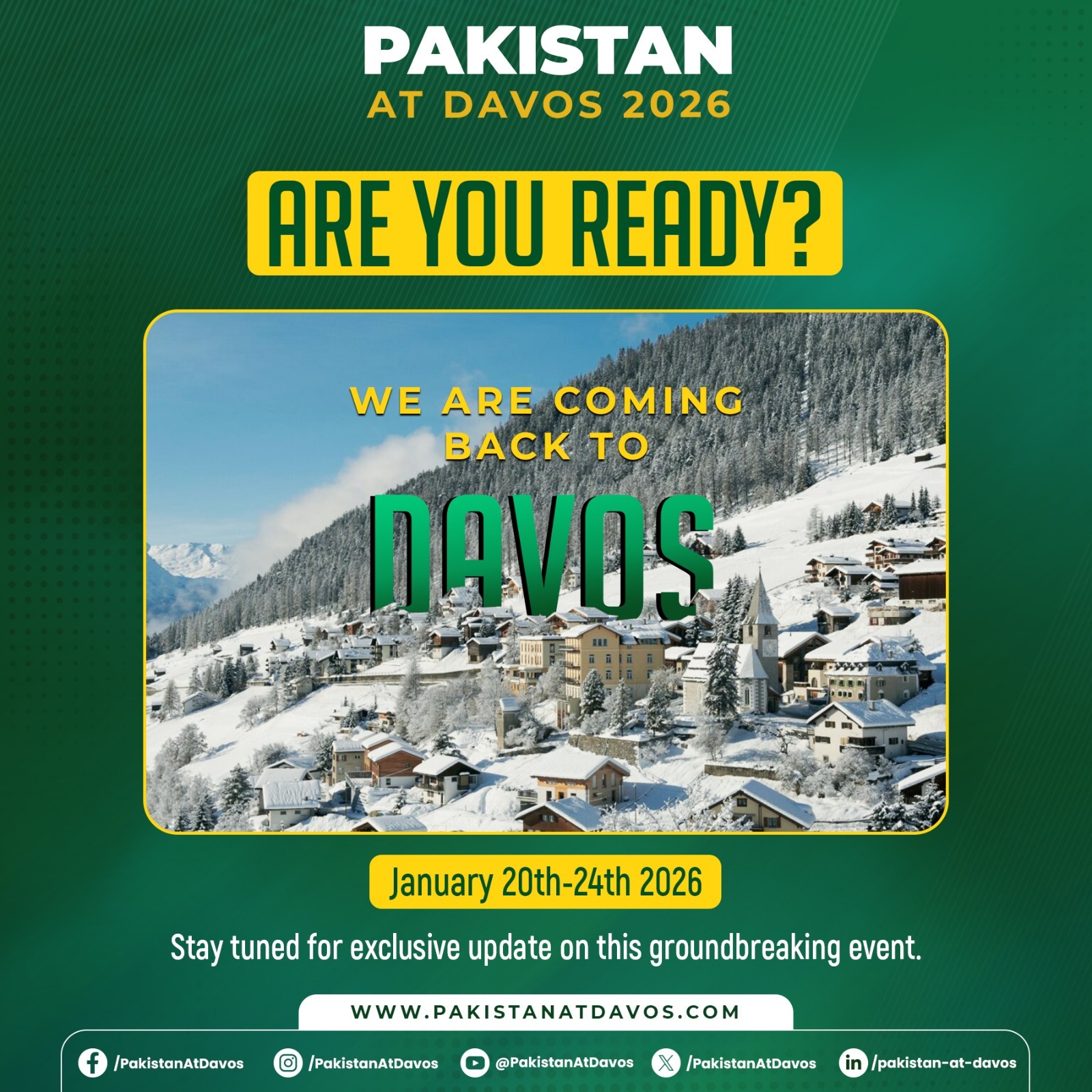
At this time of the year most conversation in Pathfinder Group inevitably revolves around the World Economic Forum (WEF) Annual Conference in Davos. This year 2026 feels different, historic, even transformative. For the very first time, Pakistan will not merely be represented; it will be a totally different experience. With incredible support from the WEF we expect Pakistan to shine at the global platform. Hundreds of government officials, policymakers, business leaders, civil society members, corporate and technology professionals, and some of the finest minds from academia will converge in Davos between 19 and 23 Jan. Showcasing the PAKISTAN PAVILION on the main street of Davos with the first-ever performance of Qawwali, Sufi music and Pakistani food at the Forum will be a moment of pride for Pakistan. Pathfinder is taking seven carefully selected START-UPS to Davos. Chosen after a rigorous competition among more than 200 contenders from across the country is at the heart of the Pakistan effort this year. This has been made possible by the Pathfinder School of Excellence, CITADEL, whose unwavering commitment to innovation, merit, and excellence is redefining Pakistan’s global narrative.
This was clearly reflected in the event organized by the Pathfinder Group’s Enhanced Harmony Division (EHD) and the School of Excellence, CITADEL, on Saturday, Dec 13, 2025, at AmaaniBagh, Angoori, Islamabad (and later in Movenpick Karachi on Saturday Dec 27, 2025). The presentation and panel discussion titled “Bridging Distances of Diversity in Religion and Poverty” and “Bridging Talent, Technology, and Opportunity for a Future-Ready Pakistan” respectively brought together policymakers, academics, private-sector leaders, and students from across Islamabad to deliberate on Pakistan’s social cohesion challenges and its widening innovation and opportunity gaps. The discussions made one truth abundantly clear: innovation cannot thrive in isolation, and economic progress cannot be sustainable without social harmony.
The Pathfinder Enhanced Harmony Division (EHD) plays a critical role in social cohesion through initiatives such as the Providentia Books Foundation, the Pathfinder Interfaith Harmony Initiative, and the Kashmala Family Welfare Center. EHD addresses the moral and social foundations of progress, bridging divides of religion, poverty, and exclusion. A society fractured by inequality and mistrust cannot fully harness its talent. Harmony is not a soft ideal; it is a hard prerequisite for development. Both in Amaanibagh (and Movenpick, Karachi), Brig (Retd) Mujahid Alam did an excellent job presenting EHD’s part preference and future objectives. What made these gatherings truly exceptional, however, was the quality of student engagement. More than 100 students from a dozen or universities participated in the event at both places, their interaction was not only energetic but intellectually rigorous. Their questions and interventions on women’s inclusion, population growth, innovation pathways, and the future of Pakistani youth were refreshingly mature and forward-looking.
It was heartening to witness young minds thinking beyond slogans and grappling seriously with policy, demographics, and opportunity creation. In all honesty, this was one of the most meaningful student interactions Pathfinder has experienced so far, not symbolic engagement, but a genuinely valuable exchange where students were heard, challenged, and encouraged. It reaffirmed my belief that Pakistan’s youth, when given the right platforms, can rise well above the cynicism often associated with them.
The panel discussion that followed reinforced the paradox we must confront honestly: Pakistan is talent-rich but opportunity-poor. We must work together to bridge talent, technology, and opportunity for a “Future-Ready” Pakistan. Our youth possess creativity, resilience, and ambition equal to any in the world, yet too often lack platforms, exposure, and institutional support. Davos, therefore, is not merely a destination; it is a statement. A statement that Pakistan is ready to move from narratives of crisis to narratives of capability, from charity to competitiveness, from apology to aspiration.
I am grateful to the Pathfinder School of Excellence, CITADEL team in particular, AVM Asad Ikram, President CITADEL, who eloquently articulated the linkage between innovation and sustainable growth. He emphasized that Pakistan’s greatest strength lies not in isolated brilliance but in structured ecosystems that convert talent into opportunity. He spoke of innovation as a strategic imperative, one that must be backed by institutions, mentorship, access to capital, and a culture that rewards risk-taking rather than punishing failure. Importantly, he reminded the audience that technology alone does not build nations; values, inclusion, and national cohesion do. Without trust, harmony, and a shared sense of purpose, even the most advanced innovation ecosystems eventually falter.
Pathfinder’s journey from fostering interfaith harmony at home to showcasing innovation on the world’s most influential economic stage reflects a single, coherent vision: a Pakistan that is inclusive at its core and confident on the global stage. If we can bridge hearts at home, we can bridge markets abroad. And if we can convert talent into opportunity, Pakistan’s story at Davos will no longer be an exception but the beginning of a new normal. Yet, no discussion on Pakistan’s future, whether harmony-driven or innovation-led, can remain detached from the security dilemma confronting the country today. In this context, the timely publication of Lt Gen (Retd) Tariq Khan’s pamphlet, Beyond Battle: A Handbook on Counter-Terror Operations in Defence Journal, deserves special appreciation. Drawing upon decades of operational experience, the pamphlet offers a sober, doctrinally grounded examination of terrorism and insurgency, placing Pakistan’s current predicament in both a historical and global context.
Lt Gen Tariq rightly reminds us that Pakistan once stood as a global example in counter-insurgency and counter-terror operations, with its methods studied internationally and institutionalised at training centres. That Pakistan today finds itself labelled as insecure and soft on terrorism raises uncomfortable but necessary questions: What went wrong? Where did continuity break down? Why were hard-earned lessons forgotten? His work highlights that terrorism is not merely a military problem but a whole-of-state challenge, requiring coherence between governance, law enforcement, intelligence, diplomacy, and socio-economic policy.
Particularly compelling is his argument that modern conflict has evolved into low-intensity, proxy-driven warfare, exploiting governance vacuums, social polarisation, and economic fragility. Terrorism, in this framework, becomes both a weapon and a narrative tool, often used selectively in international politics. Pakistan’s vulnerability, as he candidly acknowledges, stems not only from external pressures but also from internal weaknesses in governance, rule of law, and institutional capacity. His insistence on reconnecting with past lessons, to avoid forcing each generation of young officers and citizens to relearn security the hard way, is both timely and urgent.
I believe this pamphlet is not merely a professional handbook for young officers; it is a strategic reflection for policymakers, scholars, and citizens alike. A nation that neglects its security discourse cannot protect its innovation ambitions, nor can it ensure harmony within its borders. Social cohesion, economic opportunity, youth empowerment, and national security are not parallel tracks; they are deeply interlinked.
The intellectual conversations at AmaaniBagh, the energy of our students, Pakistan’s presence at Davos, and the sober warnings contained in Lt Gen Tariq Khan’s work all point to one conclusion: Pakistan’s future will be decided by its ability to think holistically. His reflections remind us that today’s conflicts are fought in fragments, yet their consequences are national. Initiative, clarity, and moral courage at the lowest levels now shape outcomes at the highest.
As Rudyard Kipling so powerfully wrote, when there is nothing left except the will that says “hold on,” that will alone can preserve a nation. For Pakistan, that resolve, anchored in youth, knowledge, innovation, and disciplined security, remains our most valuable strategic asset. I believe in the youth of Pakistan, and I tell them that the path forward exists. What remains is the collective will to walk it.