





Davos, Switzerland, January 22, 2026
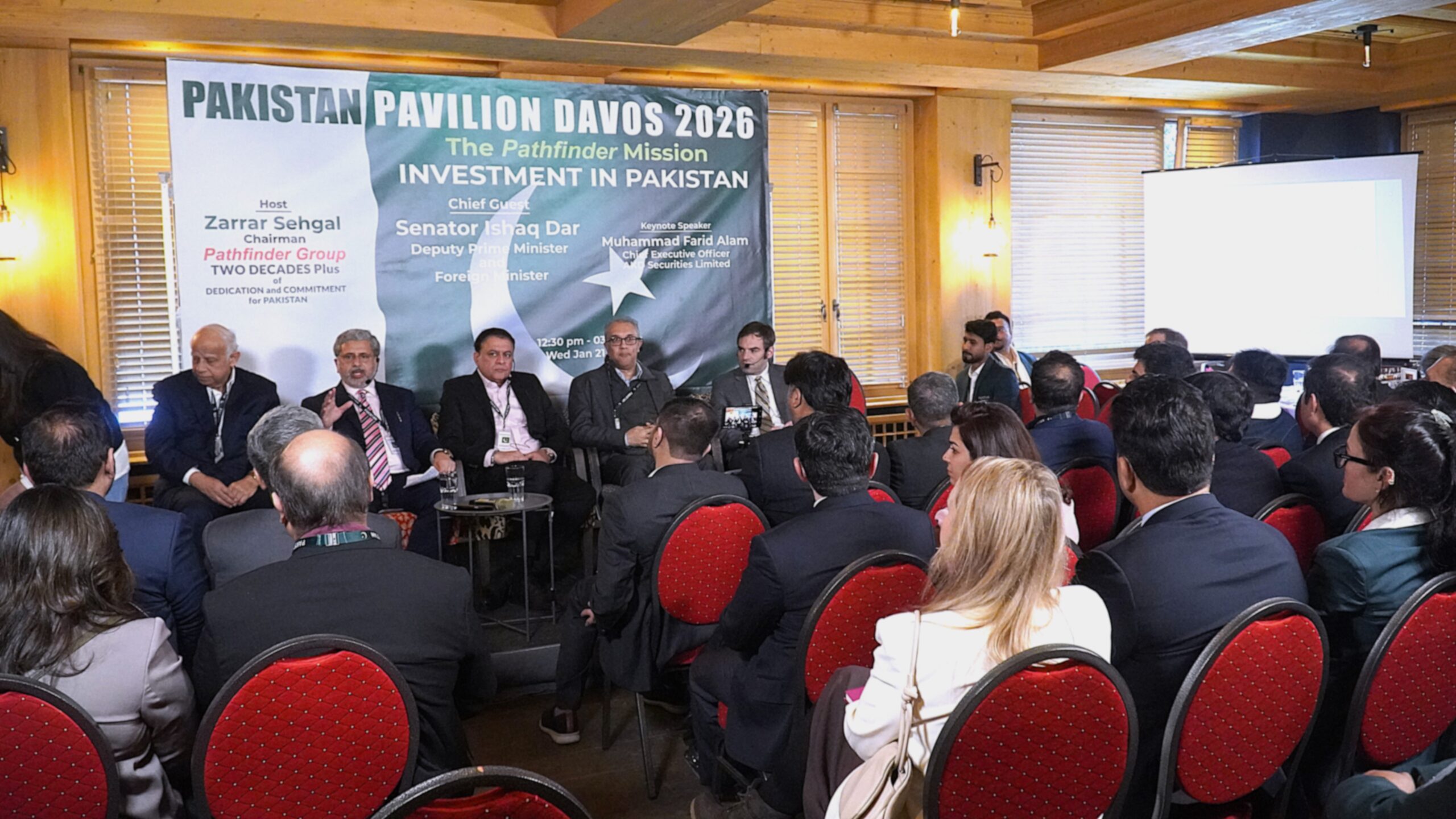
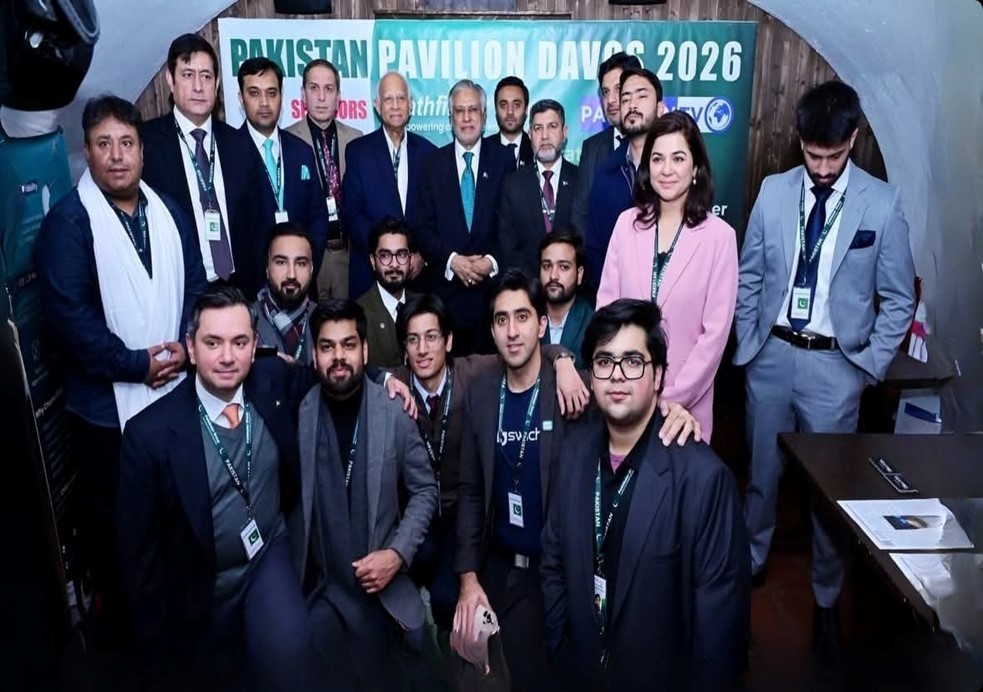
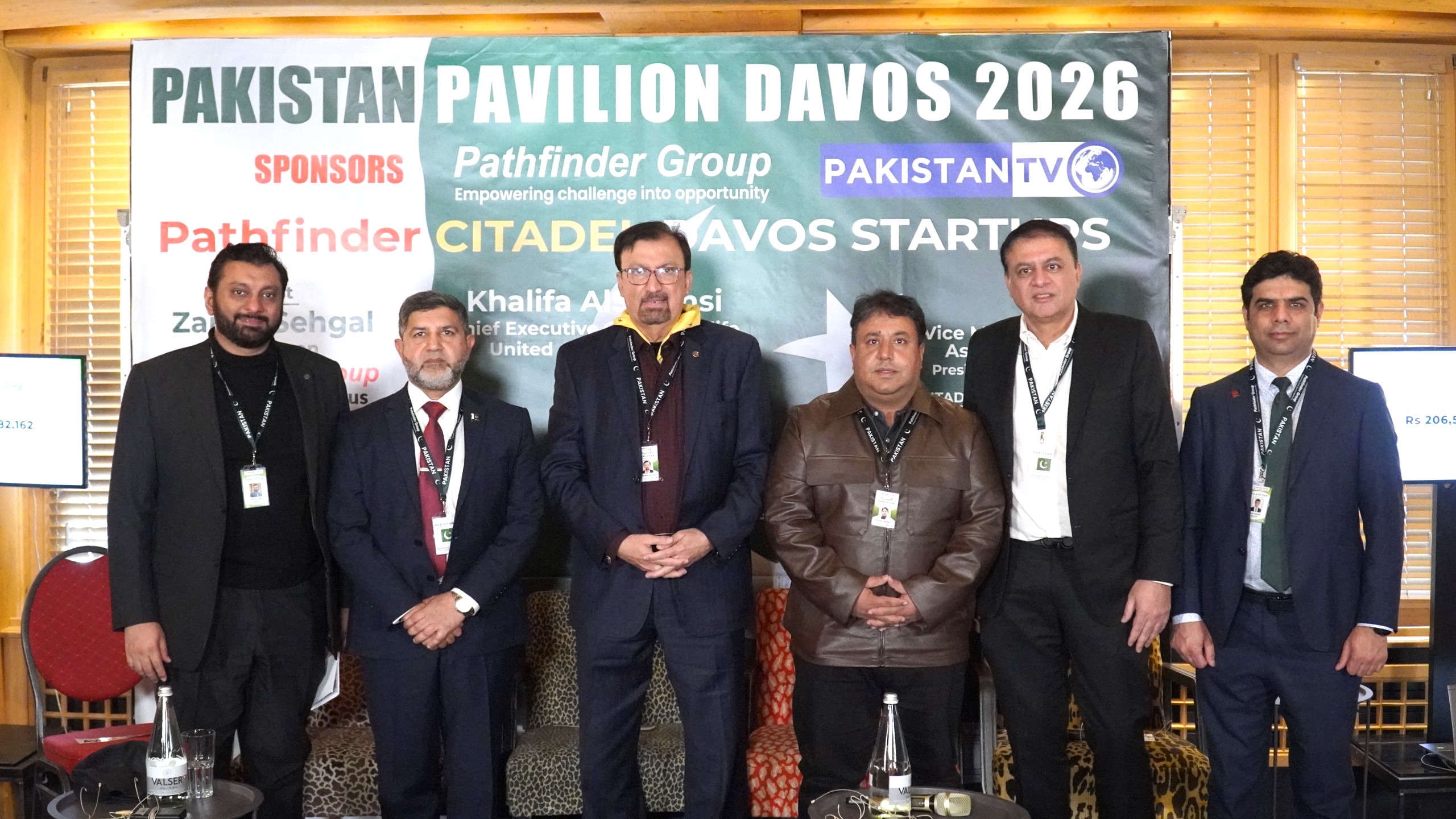
The Pathfinder Group hosted the “Pathfinder CITADEL Start-Up” at the Pakistan Pavilion during the World Economic Forum (WEF) Annual Meeting, Davos 2026, on Thursday, January 22, 2026, from 10:00 a.m. to 11:30 a.m. at the Morosani Posthotel. The event brought together participants, including entrepreneurs, technology professionals, policymakers, and innovation ecosystem leaders.
AVM (Retd) Asad Ikram – President, CITADEL (Host):
Assalam-o-Alaikum, ladies and gentlemen. It is a great privilege to have you all here for this session which I am sure you have been looking forward to. I want to give you a brief rundown of the start-up ecosystem in our country. The reason Pakistan is an ideal destination for start-ups is our demographic strength; we have approximately 140 million creative young minds, there are very few countries in the world that possess that kind of human capital. Furthermore, we are witnessing a rapid surge in digital adoption due to various developments across the nation which presents a massive opportunity. As a country of 240 million people, Pakistan is a significant market and a prime location for problem-solving. In fact, the scale of our challenges translates into a vast opportunity for creating solutions. This allows businesses to build a solid foundation at home before scaling globally. We have already seen this potential realised with companies like Careem, which has Pakistani roots and was acquired by Uber for $3.1 billion. There is also the example of Daraz which was acquired by Alibaba, along with many others. This success is the result of consistent efforts by the government, academia, and various stakeholders within society.
The government operates several incubation centres. Ignite, specifically, has incubation centres in all major cities, where young men and women are trained for a year to bring their ideas to fruition. We also have the Punjab Information Technology Board’s Plan, alongside various business incubation centres within universities. Today, many private organisations are also establishing their own incubation centres. To this, add the Software Technology Parks (STPs) managed by the PSEB and the Special Technology Zones (STZs), all contribute to the vibrant ecosystem we have in the country. Combined with this is our inherent resilience, a quality we have discussed often and one that we live through every day. This makes us one of the strongest groups capable of developing solutions, not just for ourselves, but for the entire world.
With that, I would like to begin by calling our start-ups to the stage. But before I do, let me introduce my team: Sir Khalid Banuri, Farhan, and Imran. We also have a team back home currently working on the next round for the World Economic Forum in Jeddah this April. We have just launched a competition for that, and this time we will include start-ups from other countries as well as Pakistan. This international competition will be conducted by the Pathfinder Group in conjunction with the OIC.
Imran Jattala – Vice President, CITADEL:
Assalam o Alaikum, everyone. I am part of Pathfinder CITADEL. Last year, we organised the CITADEL Davos Start-up Challenge, receiving over 200 applications. Those applicants underwent a rigorous three-stage pitching and final selection process. Eventually, we selected the top eight start-ups, and those eight will be presenting before you today. In no particular order, I will be inviting them one by one. Each of these is a brilliant, amazing, investable, and scalable start-up. All of you present here could potentially be their mentors, partners, or advisers, and you never know, you might even write a check.
I would like to invite our first start-up, Edkasa. It is an ed-tech platform that hosts the most-viewed educational content in Pakistan; in fact, their viewership numbers are even higher than those of the Pakistan Super League (PSL). I would like to invite Annum, the founder of Edkasa.
Annum Sadiq – Co-Founder and Chief Education Officer, Edkasa:
Assalam-o-Alaikum, everybody. I would like to start by thanking Mr Ikram Sehgal for sharing this amazing stage with us and giving us this opportunity. It has indeed been very exciting and inspiring for Pakistan. We have heard the stories from Mr Sehgal and the CEO of inDrive on how much the “why” matters.
I am here today to talk to you about my “why”, the purpose with which we started Edkasa. We consider ourselves “ventures of education”; we are a team of about 140 passionate educators fighting against illiteracy in the country. For my co-founder and me, this is a very personal journey. Education has unlocked incredible opportunities for us. My co-founder, Fahad, is a Harvard graduate with a Master’s in Finance who oversees the corporate side of the business. I have about 18 years of experience in education, and for me, the fact that there are roughly 28 million children out of school in Pakistan is something that gives me sleepless nights. I believe this disparity is extremely unfair to the students of our country.
Let us look at the crisis and the opportunity. There are about 140 million learners in Pakistan between Kindergarten and Grade 12 who require schooling. While this is a crisis, it is also an amazing opportunity because, under the umbrella of public-private partnerships, significant breakthroughs are being made. To walk you through the problem: people lack access to quality education. It is not just an issue of children being out of school; even those attending school are performing poorly. Approximately 77% of students currently in schools are not performing at their expected grade level. For us, this is a two-in-one problem: we must solve for both access and quality. Our solution, which we believe is a breakthrough, has been the focus of our tireless work over the last seven years.
We approach this in three ways. First, we utilise our online digital platform. Students with access to smartphones and the internet can simply download the app and learn through it; we already have close to a million learners on the app. However, we recognise the digital divide; there are not enough smartphones or sufficient internet access for everyone. To address this, we create informal schools. We have worked with the Punjab Rural Support Programme (PRSP), partnering with 250 classrooms where we provided EdTech solutions, managed the facilities, and facilitated live online streaming of English and Mathematics. The third solution, which is very new but highly exciting, involves public-private partnerships. We are in discussions with the government regarding 1,200 schools being outsourced to Edkasa. We have already piloted 60 schools and the results have been truly incredible.
So, here is what we have achieved in the last seven years. Beyond our passion and commitment, our content has garnered three billion views, which, as I mentioned, is more than the PSL. This is a testament to the Pakistani youth’s appetite for learning. When we started Edkasa pre-COVID, critics said nobody in Pakistan would learn without “the stick.” I disagreed. If you provide quality content, people will learn; humans are hardwired for it. The most significant part is that we have proven the quality of our educational delivery. LUMS University conducted a randomised control trial on our classes and found a 150% increase in mathematics skills and a 250% increase in literacy skills after just six months of using Edkasa’s services. This was the validation and the push we needed to approach the government and begin scaling up.
Now, you might be thinking this sounds like an NGO pitch. You may ask, “How do you make money?” Let’s talk about that. Firstly, we are sustainable. We understand that we must be financially sustainable to create a lasting impact. On our proprietary app we utilise a freemium model. Approximately 20% of the content is free to help students understand the platform, which incorporates significant human-centred design. The remaining 80% is behind a paywall with a reasonable fee of about 4,000 rupees per child, per month. Regarding the government projects we have undertaken the state pays us $6 per child per month. This is sufficient to sustain the schools and maintain a margin, as our operations are centralised and managed through technology.
What is next? My experience at Davos has taught me that our vision should not be limited. We have a product that is tested and proven in Pakistan, but its use cases exist globally. When I look at the African market and the fact that the highest number of internally displaced people in history is expected over the next two years, I ask: who will fulfil the educational needs of these refugee communities? It is extremely unfair to leave them behind. I want Edkasa to be in those places, serving those markets. We aspire to have 100 million learners over the next 10 years. Pakistan is just the start; our solution is built for the world. What pushed me most to come to Davos was the conviction that this is the right solution at the right time and the right place. I believe this is the right solution, and the timing is ideal under the umbrella of public-private partnerships. As for the right place, it is Davos, because here we have access to capital and a scalable, proven model. The time is now; let us make the lack of education a problem of the past and focus on the fact that education is a right for every child and should be provided as such. Thank you.
Question from the Audience:
I am not entirely clear on your collaboration with government schools. Do you facilitate their own curriculum, or do you introduce your own materials?
Annum Sadiq – Edkasa
Actually, all the content is aligned with government requirements. We use the materials from the textbook boards that the government has for each particular district. We have covered 22 educational boards already.
Muhammad Fahad Tanveer – Co-Founder & CEO, Edkasa:
That is a really good question. That is exactly why we are taking over government schools; they were not built for inclusion. Since we are able to manage these schools, we can design them as future-ready systems. Inclusion is a major component of this. While the government is cognizant of the need for inclusion and the requirements for it, no one has actually stepped up to execute on that. We excel at execution; we have turned around 50 schools in six months, and as Annum mentioned, we have 1,200 more in the pipeline. That is the journey we are building.
Question from the Audience:
Are you doing anything with The Citizens Foundation (TCF)? My second question is: are you doing anything to customise education for the individual using artificial intelligence, or is that in your plans?
Muhammad Fahad Tanveer – Edkasa:
Great questions. I am good friends with Zia Abbas, who is also a LUMS MBA graduate. Essentially, we are the for-profit version of The Citizens Foundation. What they managed to achieve with 1,400 or 2,000 schools over 30 to 40 years, we have been able to do in about two years. We move at start-up speed. Furthermore, we are building for sustainability rather than relying on donor money; that is our point of differentiation. Whatever they choose not to take on, we are happy to step in, fix, optimise, and generate revenue from.
Annum Sadiq – Edkasa:
Regarding AI, we heard earlier today how important it is for technology to fit the unit economics of ground realities. While we conducted a few pilots, we realised the costs were not fully optimised yet. Currently, we are using AI for grade evaluation and to optimise the user journey within the app. However, I believe many more use cases will emerge over time.
Question from the Audience:
Regarding the content, you mentioned it is provided by the government. Do you take it as is, or do you enhance it?
Annum Sadiq – Edkasa:
The written curriculum comes entirely from the government. However, the “taught curriculum”, which is a subset of it, is ours. We have optimised it to increase user engagement. As for the “tested curriculum,” the metrics for older students follow government standards, but for the younger children we use our own curriculum because we believe it is vital to incorporate critical thinking skills, something the government framework does not currently prioritise.
Question from the Audience:
What is your current ask and valuation, and what was your last round?
Muhammad Fahad Tanveer – Edkasa:
That is a very good question. In the interest of time, perhaps we can have a one-on-one conversation to discuss those details. We can certainly look into the business model later. Out of curiosity, how much have you got?
Question from the Audience:
When you are making a pitch, that should be the first thing you address. What do you want from us? There was no “call to action.”
Annum Sadiq – Edkasa:
That is a great point. Honestly, right now, we are looking for feedback.
Question from the Audience:
My question is: how does your platform ensure data privacy, cybersecurity, and the ethical use of student information?
Muhammad Fahad Tanveer – Edkasa:
We are compliant with all standardised protocols. Regarding data security and privacy, we do not store individualised student data. There is a specific technical reason and methodology behind why we avoid holding such data, which we can certainly discuss in more detail during a one-on-one.
Question from the Audience:
To add a small point: given the current economic situation in Pakistan, do you believe the cost of this platform is a burden, or can parents afford it?
Muhammad Fahad Tanveer – Edkasa:
If a family cannot afford it, they can access the content for free—they just have to watch two ads, much like the YouTube model, which already has millions of viewers in Pakistan.
Imran Jattala – CITADEL: Our next team is the AI Team Force.
Mohib Mirza – Co-Founder, AI Team Force
Good morning and Assalam-o-Alaikum to everyone. We are AI Team Force, and we are building Pakistan’s first AI SDR (Sales Development Representative) platform. Let’s talk about the problem. Right now, I am sure every one of us running a business understands that the only way to grow is to drive sales. How do you conduct sales? You conduct them by reaching out to customers. Currently, businesses either have to hire SDRs (Sales Development Representatives), which can cost between $80,000 and $100,000 per year, or they have to do it themselves using traditional methods. The problem is that, either way, they often bleed money or fail very quickly. Statistics show that start-ups don’t usually fail because they don’t know what product to make; they fail because they don’t know who to sell to or how to reach them. The market is massive. As we look at the agenda for 2026, AI is central. This is a $12 billion global market. While the competitive landscape includes tools like Outreach, Instantly, and Apollo, the gap we are filling is building the first autonomous AI SDR platform specifically for SMEs in Pakistan. I want to highlight a few key features. The most significant is that we own a pool of over 750 million verified leads. We are not just providing the platform; we aren’t just giving you the “wand,” we are giving you the “magic spell” so you can reach out to the right customers at the right time.
Furthermore, our platform is designed so that even a layman can set it up within ten minutes; it doesn’t require a two-month course to understand. Everything is automated by the local models we have deployed, trained, and integrated. Our pricing is simple. As a SaaS start-up, our rates start at $497 and go up to $997, with custom solutions available for enterprise customers. We have already achieved proven execution. A little bit about us: in the past year, my co-founder, Fawad, and I have built and executed scalable start-ups. We developed two microservices that generated $60,000 in revenue and were cash-flow positive within the first six months. We eventually moved on from those products because their scalability was limited, which led us to pivot toward building this AI SDR solution.
The builders behind this are I, Mohib Mirza, and my co-founder, Fawad. I am 20 years old; I dropped out of my MBBS studies at 18 to embark on a journey into AI, learning everything from scratch. I partnered with my cousin, Fawad, who is a serious entrepreneur with over two decades of experience. Together, we bring a powerful synergy to the team. As was mentioned earlier, we need to have an “ask.” We are currently raising funding, so if any of you would like to write a cheque, you know where to find us; we can discuss the details of the raise later.
Our agenda is very clear: we are here to find partners, specifically compliance partners, and anyone who can serve in an advisory or counsel capacity. We are here for investors. We are also looking for business partners; we not only provide direct-to-customer solutions but also integrate with other companies in a white-label capacity. Finally, we are here for customers. Our product is live; if you want to use it, please visit our website and use the code “Davos 2026.”
There are five to ten competitors in this space, mainly venture-backed companies based in San Francisco. You have likely heard of companies like Apollo. The problem with Apollo is that while they have the data, they are an established company, and much of their data is now outdated. They also lack the end-to-end sequences required to ensure you actually reach the people they list, which can make it a bit of a lost cause. Then there are newer companies like Instantly, which we are directly competing with in this space. We also have enterprise-level companies like Gong and Outreach, but they are targeting a very different market than we are. We are focusing on the 10 million-plus “forgotten” SMEs. We are targeting companies like yours and mine. While many of you here represent large enterprises, you understand that this problem is shared by over 10 million SMEs globally. These are the competitors we are up against. As for what differentiates us, assuming that would be the follow-up question, it is not just the data, but the founders themselves. We have a proven execution capability. We aren’t just here claiming our tech is revolutionary; frankly, technology can be replicated. What cannot be replicated is the vision and the drive we bring to the table.
Question from the Audience:
Are your AI models developed in-house, open-source, or integrated via third-party providers? If you use third parties or open-source models, how do you manage dependency risk?
Mohib Mirza – AI Team Force:
We are taking a hybrid approach, though we realise we are still a very early-stage company. At this stage, if we focus solely on having a perfect product, we would never get off the ground. Currently, we rely on open-source models hosted on our own servers, ensuring we maintain full ownership of the data. We do not rely on third-party APIs because, in our experience with European partners, that is a major concern. The end goal, however, is definitely to build our own in-house models.
Question from the Audience: Who are your target customers?
Mohib Mirza – AI Team Force:
Our target customers are B2B and SaaS companies, as well as agencies, essentially companies similar to our own. If you are running an operation with revenue between $1 million and $5 million, or even less, and you rely on cold outreach, this platform is for you. This is a global solution.
Question from the Audience: How do you ensure data quality?
Mohib Mirza – AI Team Force:
The data we provide is verified by multiple sources, which we share transparently. We are currently in the process of becoming fully compliant with both European and global standards. Presently, we use publicly available data that can be independently verified, and the relevant standards and benchmarks are detailed in our deck.
Imran Jattala – CITADEL: We are now moving to our third start-up, one of my favourites, though the list of amazing companies here goes on. This is Swich, a digital payments platform and a globally scalable company.
Shah Aun Hussain – Co-Founder, Swich:
Good morning. We are a payments company that has processed over $600 million in just three years since our inception. Before I discuss the numbers further, let’s delve into the macroeconomic challenges facing a country like Pakistan. Issues such as education, poverty, and unemployment are fundamental problems in emerging markets, and we are excited to be solving for them. If you deep-dive into these issues, you realise most of them stem from a lack of economic uplift. To drive that uplift, you must support the small businesses of the country, the SME sector. What does a small business need? Above all, it needs access to finance and capital to grow. Unfortunately, in a country like Pakistan, banks and financial institutions often do not lend to SMEs. Why? Because they are not sure if the SME will pay them back, they lack data on whether the business has the capacity or ability to repay, because, unfortunately, almost all transactions are currently conducted in cash. This is a significant problem: we have five million SMEs on one side and 250 million people on the other, all using cash as their primary medium of exchange.
We are very excited to place our digital payment solutions between these SMEs and consumers to democratise digital payments in Pakistan. We achieve this through two primary solution sets. First, we serve offline merchants, physical retailers ranging from small “mom-and-pop” stores to the equivalent of Walmart or Tesco. We provide them with a single, interoperable QR code connected to all 36 banks and wallets in the country. Along with that, we offer an Android-powered retail application that has over 10,000 downloads and a 4.9-star rating.
Another area for which we are well-known is our online presence. We have become Pakistan’s favourite payment gateway, serving businesses of all sizes, from major corporations to small independent brands that sell online. We are one of the few platforms to have integrated every payment avenue available in Pakistan, including Visa, MasterCard, UnionPay, Raast, One Bill, and various digital wallets, into a single-window solution for the merchant. As a result, we serve almost all the top-tier merchants in our country, as well as global players such as Temu, Daraz, inDrive, and Yango. In terms of our corporate structure, we maintain several entities in Pakistan, two of which will be fully licensed by 2026.
Additionally, we recently acquired a company in Canada that holds a Money Services Business (MSB) license. This acquisition will allow us to facilitate cross-border payments and open the Pakistan corridor for remittances. We also have an entity in the UAE with live operations that are already profitable as we speak. Our UAE entity has also become a profitable venture under the Swich umbrella. All of this falls under our holding company structure based in Singapore.
Regarding our team, we have a fantastic, dedicated group. I am incredibly proud of them, and while I could go on about why we are the best people to solve this problem, I believe what we have built speaks volumes about our ability. With that, I leave the floor open for questions. Thank you.
Question from the Audience: What is your revenue now?
Shah Aun Hussain – Swich:
We are doing around $7 million in ARR (Annual Recurring Revenue), which is roughly $650,000 a month. We are currently determining the size of the funding round we will be opening, but it will be worth of $10 million.
Question: What security protocols are deployed, and how are they managed?
Shah Aun Hussain – Swich:
We adhere to PCI DSS compliance, which is the global standard followed by Visa, Mastercard, UnionPay, and all major payment platforms. We were recently awarded our compliance certificate following extensive global audits. This ensures our security measures meet international benchmarks. The certification process costs around $100,000, and we are fully certified. All our audits are complete, and all security protocols are now firmly in place.
Question: How is your platform different from other FinTech’s?
Shah Aun Hussain, Co-Founder, Swich:
It is very different, and there is a clear reason why we have been able to capture the market while most others have not. Most banks and fintech focused only on “fancy” products like credit and debit cards, Visa, and Mastercard. However, their penetration is extremely low in Pakistan. In contrast, wallet penetration is extremely high; we have over 100 million wallet accounts in our country. We were among the first to integrate wallets and all other payment avenues into a single-window solution. This provides immense utility for both merchants and consumers.
Imran Jattala – CITADEL: All right, thank you. Good job, Team ‘Swich.’ Best wishes. Moving from fintech to health-tech, our next start-up is EKKO. This health-tech platform has developed a device to assist people with disabilities.
Ismail Nasir, Co-Founder, EKKO:
Good morning, ladies and gentlemen. Thank you to CITADEL and the Pathfinder Group for giving us this opportunity. Every parent wants to hear their child say their first words, “Mom” or “Dad.” But for millions of parents with children suffering from speech disorders, those first words are painfully delayed or may never come without help. Like Noor, a curious four-year-old who loves to play and explore, but she does not speak. Her parents were told she needed regular speech therapy, but the nearest therapist was hours away, and each session cost more than they could afford. It is not just about Noor’s silence today; it is about a lifetime of missed opportunities. Sadly, this is the reality for millions of people.
Globally, over 170 million people suffer from speech-related disorders. The problem starts very early; today, one out of 12 children worldwide is affected by speech delays. Conventional speech therapy requires trained professionals, recurrent clinical visits, and high costs. While digital tools exist, most fail to identify early-stage developmental delays or remain too dependent on therapists. There is a massive accessibility gap. This is where EKKO comes in: a game-changer in early speech intervention. EKKO is a portable device integrated with a data platform, providing parents and therapists with a solution that is low-cost, has no side effects, and can be used at home to complement professional care when needed.
At the heart of EKKO is a combination of simple hardware and intuitive software. The device delivers controlled vibrational waves targeting oral motor pathways crucial for speech production, while our AI-backed data platform guides parents to optimise the therapy. Since our prototyping phase, we have raised approximately $32,000 through grants and have secured seven IPs. We have partnered with 14 clinics in Pakistan and sold over 350 devices. Currently, we are onboarding six to ten new users every month, with a target of reaching 900,000 users over the next five years.
Our primary customers are parents of children with speech disorders, healthcare providers, and individual therapists. We reach our audience through B2B partnerships with pathologists, directly through our own platform, and via regional distributors. Our revenue model consists of two streams: a one-time hardware purchase for the device and a subscription model for our platform.
We are currently retailing the EKKO Portable for $200, with the mobile application provided free of charge to drive both affordability and long-term engagement. Regarding our go-to-market strategy, we have completed phase one. Once we receive global regulatory approvals, we will scale up operations to target major international regions. Looking at the competitive landscape, we see two extremes: on one end are low-cost digital apps that lack clinical depth; on the other are high-priced augmentative and alternative communication devices ranging from $4,000 to $16,000. These prices make such tools inaccessible to the average person, especially in emerging markets. EKKO delivers the best of both worlds: clinical efficacy and affordability.
We are looking to expand into the Middle East, Africa, and eventually Europe over the next five years. To that end, we are here to raise $500,000 for 10% equity in EKKO. The majority of these funds will be allocated toward global regulatory approvals and further clinical trials. According to our financial forecast, we hope to achieve break-even within the next 14 months and move toward profitability. Our team comprises professionals from both the medical and business sectors, supported by advisors from the clinical domain. EKKO has already won multiple awards, including the prestigious Microsoft Imagine Cup and the Autumn Bellow Project. We are here today to find visionary partners and investors who share our mission: giving children like Noor a chance to find their voice. Thank you very much.
Question from the Audience: Does the device utilise AI models?
Ismail Nasir – EKKO:
Yes, we utilise our data system to collect therapy results, which are then shared with the therapist. This allows the professional to monitor whether the therapy is proceeding according to plan or if adjustments are required every two weeks. This results in an individualised, custom-made therapy plan sent directly to the parents’ app by the therapist.
Question: So, the process is not fully automated, then?
Ismail Nasir – EKKO: No, it is not 100% automated yet.
Question: Thank you. It was a good presentation; I really enjoyed it. Who is the competition in the market, and if there is any, what makes you different? Secondly, as my colleague asked one of the previous contenders, how do you ensure the security and privacy of data, especially when dealing with young children?
Ismail Nasir – EKKO:
Those are very important questions. We do not have any direct competitors because our work is based on neurocognitive transmission theory, a very recent development. We researched and developed our device and product according to that theory and have since patented it. We do, however, have indirect competitors, such as the digital applications on phones that parents often use, and other Augmentative and Alternative Communication (AAC) devices. These are usually placed on the patient’s face to help them articulate what they are trying to say and speak out loud. Regarding data security, our platform and all our operations are managed in-house. We have implemented a dedicated layer of cybersecurity to ensure the absolute privacy of patient data. Thank you.
Imran Jattala – CITADEL: Thank you very much, EKKO. Our next start-up is Edversity. It is an EdTech platform doing amazing things in the education sectors of Pakistan and Saudi Arabia.
Saad Ghufran Siddiqui – Founder, Edversity:
Thank you. Assalam-o-Alaikum and hello to everyone. Welcome to Edversity. Our mission is to bring the next one billion people into the tech sector. Developers, developers, and developers. Everyone is talking about Artificial Intelligence, Blockchain, and Web 3.0, but few know how they will source the software engineers and the talent required to develop these technologies. According to Forbes, there is currently a shortfall of four million software engineers in the US market alone. Entrepreneur magazine states that the developer shortage crisis could devastate the entire tech workforce, and the world seemingly has no solution.
On the other hand, traditional education is not preparing graduates for today’s needs; degrees are simply not producing employable talent. Take, for example, Mahmud, a graduate of a Pakistani university earning $300 a month, compared to our student who, after completing a software development program at Edversity, is now earning $2,500 a month. Across Pakistan and the Middle East, there are about 120 million young minds unable to find jobs, primarily due to a lack of skills. This is because the skills taught in our educational institutions are either obsolete or prohibitively expensive.
Edversity turns learners into job-ready tech talent faster by working with the top 1% of industry experts. Our learning streams include the School of Generative AI, the School of Blockchain and Web3, and the School of Emerging Technologies. All these programs are designed in collaboration with the industry and are accredited by Pearson and, in Pakistan, by the National Vocational and Technical Training Commission (NAVTTC). We are bridging the gap between academia and industry with AI, personalising education through the support of artificial intelligence. Our competitive advantage over platforms like Coursera, Udemy, and other education providers is our localised content. In Pakistan, we deliver all content in the Urdu language, and in Saudi Arabia, we provide it in Arabic, which results in 95% faster and more efficient learning. We are not simply selling courses or education; we are delivering career-driven objectives. We provide personalised mentorship because we believe that one size does not fit all. We also offer placement opportunities, with 250 companies integrated into our student portal offering jobs and internships to our graduates.
To date, we have trained 12,500 students. Our placement partners include companies such as Elixir, Turing, Microsoft, Careem, and Unilever. Financially, we have generated $186,000 in revenue. We have also trained 4,800 women professionals, and our course completion rate stands at 82%, which is significantly higher than most educational institutions in Pakistan. We are recognised across multiple platforms and have received the Prime Minister’s award for the number one e-learning platform in Pakistan. In addition, we have received the Commonwealth Excellence Award, and I recently had the opportunity to pitch Edversity to Bill Gates in Saudi Arabia.
Our business model includes masterclasses and specialised three-to-six-month programs. We also deliver B2B partner programs, providing upskilling and reskilling for corporates; we have already conducted such programs for financial institutions like UBL. These are some of our featured clients and customers: we work with SAB (Saudi Awwal Bank) and The Garage, the Garage Academy is powered by Edversity. We also maintain partnerships with both the Pakistani and Saudi governments. We have over a thousand verified reviews on LinkedIn, Instagram, and Facebook, where students detail how these programs benefit them and help them secure jobs after completion. We are currently raising $500,000 to fuel our growth in the MENA region, which will help us achieve $6 million in ARR within the next five years. This investment will be directed toward product and curriculum development, market expansion, technology, human resources, and partnerships.
I previously served at Coursera, and we now have an amazing team of technologists, professionals, and brilliant Gen Z talent. We are proudly serving Saudi Arabia and Pakistan, working with the Saudi government while operating at full capacity on the D2C consumer side in Pakistan. We are not just building an education platform; we are building the next economy. We are building the next education unicorn. Thank you. I am now open for questions.
Question from the Audience: What is the customer acquisition cost?
Saad Ghufran Siddiqui – Edversity: The customer acquisition cost is around $15 to $18 per customer.
Question from the Audience: I am not sure if I missed this, but do these qualifications lead to any specific credentials or certifications?
Saad Ghufran Siddiqui – Edversity:
Yes. All of our programs are affiliated with and accredited by Pearson. Furthermore, all programs are certified by the relevant governments. In Pakistan, we are certified by the national authority responsible for vocational verification, and in Saudi Arabia, we are verified by the Saudi Digital Academy, which provides official recognition for our programs.
Question from the Audience: How often is the course content updated to keep pace with industry changes?
Saad Ghufran Siddiqui – Edversity:
This is a very relevant question. Technology evolves rapidly, and programs must be updated constantly to remain useful. To achieve our goals, we collaborate directly with the industry. At Edversity, there are no traditional academic teachers; instead, each program is taught by an industry expert who is actively working in their field and using the relevant skills. Since our instructors are practitioners rather than conventional teachers, they ensure that the curriculum stays updated and aligned with current industry standards. To achieve our goals, we collaborate directly with the industry. At Edversity, there are no traditional academic teachers; instead, each program is taught by an industry expert who is actively working in their field and using the relevant skills. Since our instructors are practitioners rather than conventional teachers, they ensure that the curriculum stays updated and aligned with current industry standards.
Question: Are there also universities involved or connected with your platform?
Saad Ghufran Siddiqui, Founder, Edversity:
Yes, we are connected with FAST University and COMSATS in Pakistan, as well as King Fahd University and Princess Norah University in Saudi Arabia. In total, we have established approximately 32 partnerships with various universities.
Question: You mentioned you previously worked with Coursera which offers many university programs. Is Edversity following that same track?
Saad Ghufran Siddiqui, Founder, Edversity:
Not exactly. The fundamental issue with Coursera is that almost all of its content is designed for the international market and is not localised for the Pakistani market. We differentiate ourselves by providing localised content that specifically addresses regional needs. While working with Coursera, I noticed a significant disconnect: 85% of their students were not completing their courses, largely due to a massive language barrier. Furthermore, because Coursera relies primarily on pre-recorded content, the programs often fail to keep pace with shifting industry demands. At Edversity, we ensure all our content is current.
Imran Jattala – CITADEL:
Our next team is a health-tech platform called ‘AiBL’. This is personally my favourite start-up, as they are working toward a fundamental social cause. I urge everyone who can support “AiBL” to do so, because they are helping a great number of people.
Hussnain Khan, Founder, AiBL:
Today, I stand before you not just as the founder of AiBL but as a living testimony of unwavering determination. My journey began with my struggle; I was born in 2001 with a disability and faced many challenges. However, instead of letting these obstacles hold me back, they fuelled my determination to turn adversity into opportunity. While working on this idea, I realised this was not just my problem. According to the World Health Organisation (WHO), 16% of the world’s population lives with some form of disability. It is estimated that approximately one million people globally undergo amputations every year due to diabetes and other medical conditions. We are developing a solution that enhances mobility by extracting data from the muscles and using that data to control a prosthetic model. A person with an amputation simply wears the prosthetic and can walk like a normal person.
As you can see in the video, this is our very first prototype; the individual is simply thinking about extending or flexing his knee, and the device responds. We have continuously improved our design and methodology. We have now built a second version, which we successfully tested with a patient named Haris, who is a 10th-grade student who underwent an amputation, simply by thinking about moving his knee; the intelligent leg moves accordingly. We have also developed a foot with a unique design that follows the human gait cycle exactly. When we move naturally, we push off with our toe first before taking the next step; our device replicates this human gait cycle perfectly.
We have now completed two products and are currently at the stage of seeking funds to finalise a commercial version. Afterwards, Inshallah, we will move to serial manufacturing. The lower-limb prosthetic market represents a significant portion of the total global prosthetic industry. We are currently targeting hospitals and rehab centres, and we are developing our product to ensure it has significant export potential. We also recently won the National Championship Award from Ignite.
We had the opportunity to represent our start-up on Shark Tank Pakistan, where we received offers from the sharks. We also represented our start-up at GITEX, where we were incubated under the Nomo Social Incubator program and became eligible for funding of 200,000 Dirhams. Regarding the competitive landscape, there is only one other start-up in Pakistan, Bioniks working on these issues. However, we are the only ones in Pakistan working on active, intelligent lower-limb prosthetics. While Össur and Otto Bock are the global giants in this industry, their prosthetics cost approximately $100,000. We are here to seek research collaborations to develop a commercialised product and achieve necessary certifications.
We are also looking for grants and investment. Our mission is perfectly aligned with the UN Sustainable Development Goals, specifically SDGs 3, 8, 9, and 10. We have an incredible team behind this project, including myself as a computer engineer, a mechatronics engineer, and an expert who guides us on the autonomy and signal processing required to facilitate patient movement. Finally, I would like to thank you all and invite you to join us on this journey to enhance mobility so that patients living with disabilities can walk again. Thank you.
Question: What is the specific “ask” for funding?
Hussnain Khan, Founder, AiBL: We are looking for $50,000 against 7% equity to build our commercial product.
Question: What kind of nerve capabilities must a patient have for your solution to work, and what is the cost?
Hussnain Khan, Founder, AiBL:
Currently, we are working with amputees. As long as the person’s muscles remain active after amputation, we can capture those muscle signals and use them to actuate the motors. This allows any individual with an amputation to wear the prosthetic. We are aiming to make this as low-cost as possible, targeting a price point of approximately $15,000.
Imran Jattala – CITADEL:
Our next start-up is a corporate venture called MyMediport, part of the Pathfinder Group. Our colleague from the US was supposed to present it today, but since he was unable to fly in, Salman Ali will be presenting on behalf of Ali Shah.
Salman Ali, representing MyMediport:
Assalam o Alaikum, consider the situation in Pakistan, particularly within the low-income segment. Many people, especially women, face significant medical issues but lack any sort of centralised data repository or electronic records. They rely on physical pieces of paper, which are easily lost. Consequently, when they visit a doctor, they are often told to repeat tests they may have done only a month prior, simply because the previous results are missing. This leads to redundant costs and unnecessary financial strain. Even in my own case, though I have been diagnosed with various conditions throughout my life, I do not have a consolidated electronic record of my history. This lack of patient data interoperability is a pervasive problem in Pakistan; most people simply do not have their medical records electronically available.
Unlike some European nations, we in Pakistan lack a centralised electronic health record (EHR) system with interoperable data. Imagine being able to visit any doctor and, when asked for your history, simply saying, “Here is my app; I am granting you access.” The doctor could then review every previous diagnosis and treatment to provide an informed consultation. This addresses the primary problem we face in Pakistan. We have built a platform where, with the patient’s consent, medical data can be shared with any healthcare professional. Users can pull their records from various hospitals or clinics. When a doctor makes a new recommendation, that information is pushed to the app, creating a comprehensive history of visits and treatments. The app can even scan physical test results using OCR (Optical Character Recognition) to digitise the data. This provides the physician with a clear view of the patient’s prior medication consumption and medical history.
This leads us to a critical question for our health institutions: why are the large hospitals in Pakistan not sharing this data? This is the hurdle we are working to overcome. There are several reasons for this. First, there is currently no interoperable system in place. Second, it is a matter of trust. Patient data is extremely sensitive; no one wants their personal health information exposed to unauthorised parties. Therefore, any platform must be highly capable, secure, and certified according to international security standards. While we often discuss large institutions, we must also consider smaller clinics and hospitals that lack electronic systems or the right technological solutions. This represents a significant opportunity, and that is where MyMediport comes in. MyMediport is a platform serving both B2B and B2C customers. Medical institutions and hospitals can sign up and integrate their records, regardless of the different standards they may use. Our system is designed to be capable of integrating with various data standards; we can ingest the data they provide and host it securely. At the user level, patients can log in to access their records from the institutions where they have been treated. This data is then consolidated onto their personal profile. A patient can now go to any doctor and say, “Here is my profile; please review it and suggest what needs to be done.” To facilitate this, we have developed two separate portals, one for doctors and one for patients, with mobile applications available for both. A critical point of pride for this platform is that it is HiTrust certified, HIPAA compliant, and GDPR compliant. To our knowledge, it is the only system available that carries all three of these certifications.
We are currently in the initial stages in Pakistan and are working hard to bring more institutions on board. The benefits are clear: for patients, it means no longer having to repeat expensive tests. For insurance companies, having access to electronic data allows for more accurate premium assessments and the ability to verify if a claim is valid based on a patient’s history. For doctors, it eliminates the need for physical records and reduces the administrative burden on staff. Furthermore, with integrated AI, the system can analyse historical data and current symptoms to suggest potential diagnoses and solution sets. While we are in an early stage, we are focused on scaling and onboarding more institutions. What are we looking for? We are looking for partnerships with institutions, third-party data providers, and medical service providers. We are also seeking experienced mentors to help make this product more scalable and adaptable to new use cases. Thank you.
Question from the Audience: Regarding product compliance, how do you ensure that hospitals possess the necessary interface to share their APIs and integrate securely with your system?
Salman Ali – MyMediport:
We have our own proprietary integration, “Swich.” This Swich is not only PCI certified, but its architecture is governed by rigorous security standards to ensure the code cannot be injected or hacked. Furthermore, our infrastructure is verified and validated by PwC. We engaged PwC specifically to validate our infrastructure as well as our data compliance. Because we hold HiTrust, HIPAA, and GDPR certifications, we must maintain and renew these standards through audits on a yearly basis. All necessary protocols are firmly in place.
Question from the Audience: This is a great concept; indeed, it is something the whole world is striving for. However, is there a common ID? Without a unique identifier, you will be forced to integrate institutions one by one.
Salman Ali – MyMediport:
Regarding the ID, and perhaps I didn’t address your point clearly, there is only one way you are identified in the system in Pakistan, and that is your CNIC (Computerised National Identity Card). Your CNIC is essentially your medical passport. Through this ID, you can be identified across every institution. This is the same concept we adapted from the Asaan Mobile Account (AMA), which works on a unique mobile number. In Pakistan, the CNIC is the unique identifier that truly works. We recently had a meeting with the Health Minister, Mustafa Kamal, to discuss implementing this as a national Electronic Health Record (EHR) system in Pakistan, rather than just at a private level. We are looking for mentors, financial institutions, and third-party organisations to collaborate and share data so we can build this out further.
Imran Jattala – CITADEL:
Thank you very much. Ladies and gentlemen, for our final session today, I present a Gen Z-led AI venture studio: Vector AI.
Maaz Ali Nadeem – Co-Founder & CEO, Vector AI:
Assalam-o-Alaikum, I am Maaz Ali Nadeem, alongside my brother, Aman Shah, brother not by blood, but by soul and business. We believe AI transformation is currently broken, and this is a threefold problem. When you hire in-house, whether you are a telco, a bank, or any other enterprise, it takes time, costs money, and requires significant investment in infrastructure. Historically, all of that comes with a proven 76% failure rate. When you turn to consultancies, you are often dealing with slide decks. Please ignore ours; we only created one for the sake of this pitch! But you are talking about decks that take six months to mature, and firms that charge hundreds of thousands, or even millions of dollars for pilots and projects. Even then, you are still facing a 74% failure rate because they lack velocity. Finally, when you hire traditional “dev shops,” they often utilise a 2010 approach to software development because they are not AI-native or AI-aware. Your existing teams remain focused on today’s “fires” rather than worrying about tomorrow’s transformation. What enterprises truly need is something simple: AI-native builders. You don’t just need to win today; you have to win for the next ten years. You need subscription-based teams focused on value-driven, tangible outcomes.
Most importantly, you want people who apply first-principles thinking, unburdened by institutional baggage. That is where Vector AI comes in. If I were to explain it in a single line, we represent Gen Z energy operating at start-up speed. We are a venture studio that is AI-aware, AI-native, and AI-focused, enabling your shift from being “AI-absent” to “AI-native.” Our company has four distinct wings. First is AI Research and Development, where we build proprietary AI solutions. I will share more about those in the coming slides. Second, we work on full-stack AI development. This means we build API-first, AI-native platforms and sell them via subscription fees, similar to any service for which you might pay a monthly fee. Third, we specialise in Voice AI automation; we can replace entire call centres. We have replaced a significant number of jobs, and while we aren’t necessarily proud of that, we are creating many new jobs as we progress. Finally, we handle multi-agent orchestrations, where we replace traditional business workflows to optimize for outcomes. How do we work? You subscribe to outcomes, not to hours. We are AI-aware, and our team ships enterprise features at a fraction of traditional cost and time.
By that, I do not mean they are “cheap”; I mean we provide much quicker delivery in terms of getting a product live. We focus on alignment: first and foremost, we co-own success, or failure, though I hope not, with you. We provide cross-services where we build your models and then support, deploy, sustain, and improve them. We are quick to market; your POCs (Proof of Concepts) are delivered in weeks, not months. Ultimately, we co-own and sustain whatever we build alongside you. As I mentioned, I am now going to demonstrate our work at scale, servicing millions of people around the world. First, there is Trilled AI, a partnership project and a voice AI orchestration platform based out of Melbourne. We aren’t just servicing Melbourne; we are powering the largest legal hotline in Australia and the second largest legal hotline in the UK, Stokes Family Law. We also service the largest telecommunications provider in the US, whose name I cannot disclose for confidentiality reasons. Their customer calls are now handled entirely by our AIWA. Currently, they have 1,500 builders on board and 20 enterprises, including the aforementioned telco. We have processed over 2.5 million minutes of calls globally, and we have blocked 268,000 scam calls entering our clients’ systems across the world. That was all in English, which sounds impressive and efficient. But what if you want to say, “Mera naam Maaz Ali hai, main aapka AI assistant hoon”? I just said the same thing in Urdu: “My name is Maaz Ali, I am your AI assistant.” To that end, we are in partnership with Planet Beyond to build sovereign AI models for the 250 million people of our own country who matter. When I speak of this, I am not referring to foreign dependencies. I am talking about complete data sovereignty, where data does not leave your own organisation, let alone the country. To achieve this, we have built “nation-first” technology.
We have developed an Urdu LLM, an Urdu Text-to-Speech system, and Urdu-native RAG (Retrieval-Augmented Generation) models that answer questions directly from your own databases. All of this is supported by compliant deployments. Let me demonstrate how. Our first service is live with Jazz, owned by the VEON Group. Jazz has an interesting brand called Rokx, focused on Gen Z, which, according to their numbers, serves an active user base of eight million. We have integrated a multilingual assistant: you speak in Urdu and receive an answer in Urdu. While it sounds simple, we are talking about full app navigation. If you want to navigate the app, figure out features, or subscribe to specific packages, you simply speak to it. It is a navigator, not just an assistant. On the right side of the slide, which we will assume you can see, is the most significant part: we have already reached two million users.
We are currently piloting a project to serve two million active farmers in Pakistan. By dialing a hotline on their phones, without the need for the internet or any other infrastructure, they can speak to an AI agent about mandi (market) rates for various commodities daily. They receive advisory services on whether to harvest a crop today or how to manage their fields based on weather patterns. For instance, if a farmer is in Sahiwal and it is going to be hot for the next ten days, the AI can advise on the best course of action. If they encounter pests, the AI can suggest exactly which pesticides to use for their specific crop. We are also running a nationwide distance learning program in Pakistan. Previously, each course required two months of recording, editing, and quality assurance. We have replaced that process with one week of end-to-end, AI-generated course delivery.
We are currently working on 25 courses and have already delivered 20, which are accessible to over 20,000 students across both rural and urban settings in Pakistan. Last but not least, and while I am not entirely proud of this, we replaced a 10-member team at an insurance company in Karachi, increasing volume by 12x and improving turnaround time by 33%. We have also powered some of the most significant AI-native co-pilots globally, including several based in Australia. Regarding our goals, I don’t have a specific “ask” for money today; I have an aim. That aim is simple: first, we intend to be active across several global markets. Second, we want to enable AI sovereignty for corporates, institutions, and eventually, governments. We want to support your transition from being “AI-absent” to “AI-native.” We believe AI isn’t scary, but ignoring it certainly is. Finally, our biggest aim is for Vector AI to be a prominent fixture on the Davos Promenade in a few years. We are here to build. If you have any questions, we have just released a newsletter showcasing our recent work; we would love to share it with you. Thank you.
AVM (Retd) Asad Ikram, President CITADEL (Host):
Ladies and gentlemen, I am sure you have enjoyed listening to these start-ups. I would like to open the floor for your takeaways from these pitches. Is there anything in particular that stood out to you?
Audience Member/Participant:
I’ll start. First, the quality of talent coming out of Pakistan is remarkable. It demonstrates the rigor of the process that brought these teams here. It is very exciting to witness the diversity and the potential for real-world impact.
Audience Member/Participant:
I agree, everyone did a fantastic job. It was vital for us to be here and showcase our potential, especially considering the strong representation from our neighbouring countries. We have a significant challenge ahead of us, but we have demonstrated that Pakistan’s start-up ecosystem is ready to compete on the global stage.
In Switzerland, we have many highly qualified individuals, PhDs, and Master’s degree holders from every professional sector who are offering their services globally. I believe we should engage with them on behalf of these start-ups. I have taken the contact details for these entrepreneurs and intend to arrange a session to see how we can best use our capacity to attract investment for them. Thank you so much; we are truly proud of you all.
AVM (Retd) Asad Ikram, President CITADEL (Host):
Thank you. To summarise our takeaways, the first was impact. The second is global ambition. That is what I liked most; it isn’t just about focusing on local solutions, but about going global. As a nation of 250 million people, we must play a significant role on this planet. Another key observation is that all of these start-ups are working toward solutions for society. Whether in EdTech, Fintech, or Healthtech, they are all trying to solve problems that many of us face every day. Finally, if you look at the teams presented today, they are not composed exclusively of one gender; they are diverse. This demonstrates that women are performing an important and equal role in developing these start-ups. These were my primary observations. If anyone noticed something else that I might have missed, please do let us know.
Audience Member/Participant:
I want to point out that if you look back five years ago, Pakistan was still largely focused on building web and mobile apps, which is now considered old-school technology. Today, we saw these entrepreneurs building modern Gen AI-based applications. Some of the work they are doing with Agentic AI is exactly what is currently in progress at AWS; we are very focused on Agentic AI this year. You see it featured on the Promenade and you heard the founders discuss it today. It is vital to continue developing these technologies. What we witnessed today is the exact leap forward that we are seeing with the talent coming out of Pakistan. I absolutely encourage everyone to support and help these start-up founders.
One suggestion I would offer, especially for the investors in the audience, is to perhaps standardise a couple of slides for the founders to clearly display their Customer Acquisition Cost (CAC), Lifetime Value (LTV), and similar metrics. Standardising this data allows an investor’s eyes to go to the same spot every time, making the evaluation process much easier. As they say, it’s like dating; you want to reach a “no” quickly if it is not a fit. That is just a bit of feedback for the founders, but overall, I am totally impressed with the work they have done and the direction in which we are heading.
AVM (Retd) Asad Ikram, President CITADEL (Host): Thank you very much, and let’s have a round of applause for the start-ups.