


How the Indian Ocean Can Bring Pakistan’s and Srilanka’s Maritime Futures Together
To Sri Lanka, the Indian Ocean isn’t just a body of water— it is a strategic highway that has defined its history and will define its future. Given the global shipping lanes, Sri Lanka’s location has made its maritime industry a primary driver of the country’s economic development, job creation, and global partnerships. However, with the increasing geopolitical and economic importance of Sri Lanka’s Indian Ocean, Pakistan needs to ensure that our maritime vision broadens to include regions beyond our immediate national interests. Sri Lanka is one such obvious, albeit untapped, partner.
In the late19th century, the British Boundary Commission separated Gwadar, a vital communication route connecting the Indian Subcontinent and the Middle East. It was crucial to the movement of spices, dates, ivory, and slaves from East Africa and the Arabian Peninsula to Central Asia. The coastal Makrān region, where Gwatar and Gwadar are situated has not yet been thoroughly studied by scientists.
The Indian Ocean Region (IOR) and the South China Sea (SCS) are pivotal in 21st-century geopolitics, with significant influences from major powers like Pakistan, China, and India. The IOR has transformed from a “neglected ocean” to a crucial area for political, strategic, and economic engagements, as regional powers enhance their naval capabilities. The US naval base at Diego Garcia aims to protect US interests, and the “Asia Pivot” strategy has altered the regional balance, creating apprehensions in Pakistan and China over the growing Indo-US collaboration.
Maritime diplomacy and resilience
The waters of the Indian Ocean are of immense value not only from an economic perspective but also from a diplomatic and socially unifying perspective.
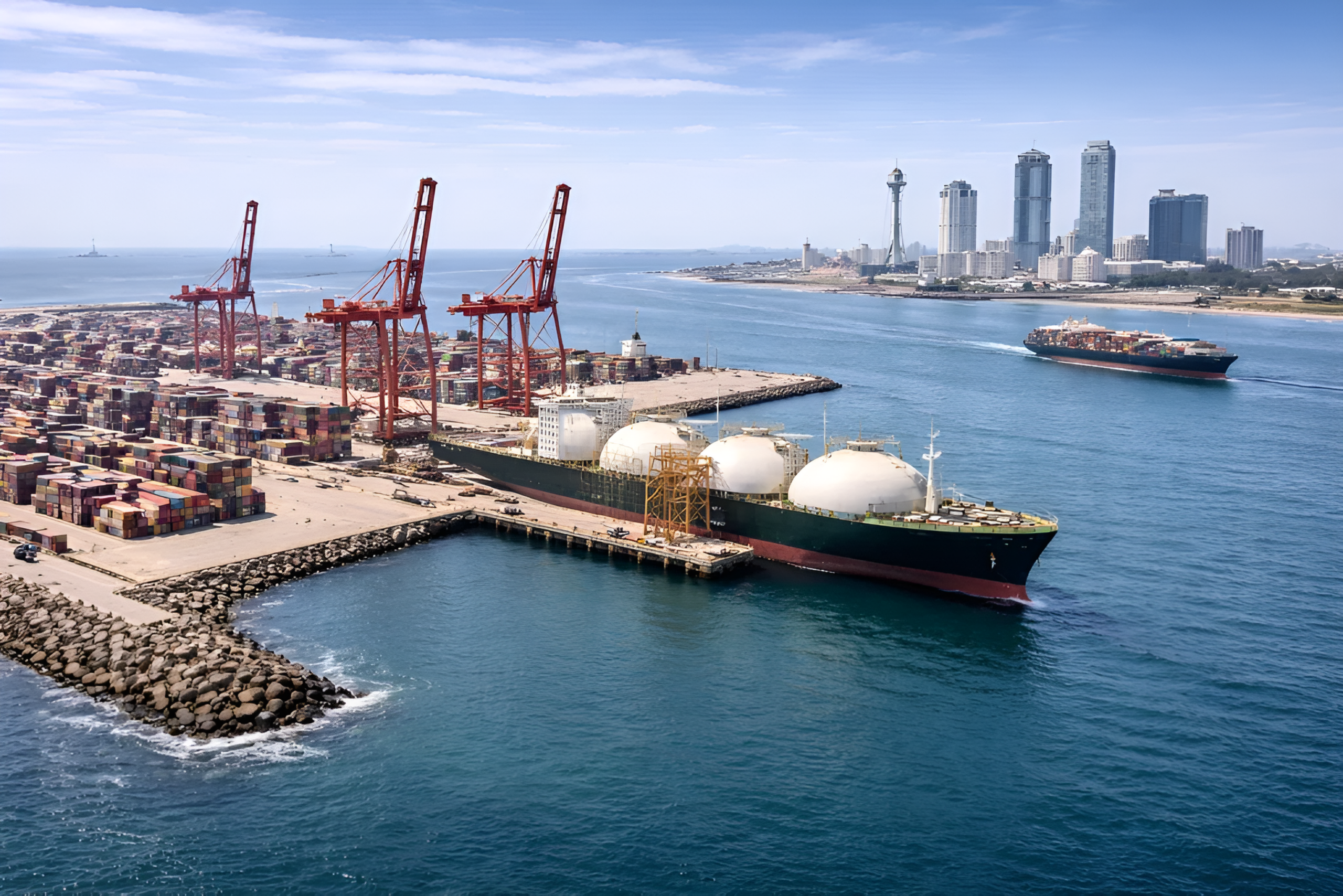
The Indian Ocean connects Sri Lanka and Pakistan. We can consider the ports of both Sri Lanka and Pakistan as geographic economic connectors. From the port of Colombo and its associated ports to Gwadar and Karachi, there is potential for trade, logistics, and regional partnerships. These ports are also situated along some of the most important trade routes across the globe. Sri Lanka is gaining access to Central Asian markets and increasing commerce with Pakistan through the China-Pakistan Economic Corridor (CPEC). Despite its continuous economic crises and bank defaults, the country maintains optimism by highlighting prosperity through the Gwadar-Colombo port link. Internal changes and backing from the IMF are being negotiated. The need for better commercial facilitation within the SAARC area is highlighted by the standstill of trade that followed the 2005 Sri Lanka-Pakistan Free trade Agreement (FTA). In order to strengthen bilateral economic ties, the KCCI (Karachi Chamber of Commerce & Industry) President promoted cooperation in the fields of energy and textiles, a currency swap to alleviate dollar shortages, and improved air and sea links.
Bilateral Maritime cooperation and resilience
The World Bank, with support from the South Asia Water Initiative, has launched an analytical study to assess the sources of land- and marine-based plastics affecting seas and coastal environments in South Asia. This initiative aims to provide evidence-based baseline assessments of Abandoned, Lost, and Discarded Fishing Gear (ALDFG) for Bangladesh, the Maldives, Pakistan, and Sri Lanka. Targeting policy makers, the private sector, NGOs, and practitioners involved in marine pollution and fisheries, the study outlines specific objectives for tackling ALDFG issues in the region. Pakistan has committed to providing phased and ongoing aid to Sri Lanka in the wake of Cyclone Ditwah, which resulted in significant devastation. The aim is to support relief, rehabilitation and long-term reconstruction efforts. Pakistan’s Maritime Affairs Minister Muhammad Junaid Anwar Chaudhry stated that assistance would go beyond immediate needs. focusing on rebuilding and infrastructure development, reflecting Pakistan’s deep ties and regional responsibilities towards Sri Lanka. Additionally, the Pakistan Navy is actively involved in relief operations, and both nations are discussing enhanced maritime coordination and disaster-response strategies for future climate resilience.
Defense Minister Khawaja Muhammad Asif stressed the significance of maritime security during a ceremony for the Pakistan Navy on 10 Feb 2025, highlighting the need for collective action to address global challenges. He emphasized dialogue and cooperation for mutual benefit at the Aman Dialogue, a two-day event with global naval leaders discussing maritime threats and collaborative security. Admiral Naveed Ashraf pointed out the value of shared experiences among nations, while Senator Mushahid Hussain Syed praised the Pakistan Navy’s efforts in fostering collaboration and awareness of the blue economy, with discussions covering maritime cooperation, security, and technology’s role in safety.
The agreements between Sri Lanka and Pakistan aim to enhance cooperation in areas such as disaster management, sports, shipping, atomic energy, anti-narcotics, and education. Sri Lankan Prime Minister Sirisena projected a rise in bilateral trade to $1 billion annually and noted recent Pakistani investments, including a $1 million grant for housing displaced persons and a $200 million credit line. Both leaders pledged to strengthen tourism and diplomatic ties, reflecting their historical solidarity with Pakistani Prime Minister Nawaz emphasizing the significance of their relationship and shared views on regional issues.
Strategic maritime integration and Ocean Stewardship: future endeavors
The strategic importance of the Indian Ocean is not lost on Pakistan and Sri Lanka. For Pakistan, the Port of Gwadar and the China Pakistan Economic Corridor are gateways to Western China and Central Asia. From the perspective of Sri Lanka, the ports of Colombo and Hambantota are already growing as strategic maritime hubs for Asia and reducing Africa’s Sea mile. Together, the maritime and economic potential of the Indian Ocean unites both Sri Lanka and Pakistan
The ports of Sri Lanka, from a social perspective, employ workers from across all religions and ethnicities. This social cohesion is critical for both the economic prospects of the trade routes and Pakistan maritime partnerships. The Indian Ocean, with its expanding sea trade, can reduce social inequality and improve cohesion across the region, and move Sri Lanka into a new position of social economic integration and cooperation
Global initiatives suggest that the Indian Ocean is becoming the main focus region for interstate relations. Smaller maritime nations, such as Sri Lanka and Pakistan, can no longer adopt an isolationist position. The boundaries of the Indian Ocean, as described by the United Nations Convention on the Law of the Sea (UNCLOS) and other bilateral treaties, will become less important as more cooperative frameworks are developed. Conclusively, the transition from border enforcement to ocean stewardship is no longer an option but a necessity. The Indian Ocean is a corridor of commerce and cooperation, and substantive trade relations between the countries of the corridor can lead to a more positive trade balance for all parties involved. The Indian Ocean will unite the region economically, stabilize the region as a whole, and create a maritime destiny for all partner countries.
Stakes and Strategies in the Indo-Pacific regions
Sea Lines of Communications (SLOCs) are central to strategic dynamics in Southeast Asia, influenced by superpowers securing assets in the Indian and Pacific Oceans and addressing nontraditional national power elements like semiconductors and alliances. Evaluates the strategic adaptations of littoral states, including Pakistan, India, and China, focusing on their maritime interests and vulnerabilities in SLOCs, driven by economic and military modernization. It highlights India’s SAGAR strategy and naval operations in the Indian Ocean, as well as China-Pakistan-India submarine advancements and Indo-US security partnerships. The findings suggest that Pakistan must reassess its naval strategies in light of emerging challenges and consider a more significant presence in Indian Ocean SLOC politics to mitigate strategic competition impacts from the Pacific. The Indian Ocean and Pakistan will further enhance Sri Lanka’s position as a regional maritime hub and will provide Pakistan and Sri Lanka sustainable economic growth along with increased regional stability by utilizing their synergistic adjunct port facilities, dominant positions on the trade routes, and mutual maritime defense and sustainable ocean governance, Pakistan and Sri Lanka will be able to eliminate the predicaments the Indian Ocean currently presents for the global political balance. To continue on the same path, Pakistani and Sri Lankan countries must institutionalize their friendship at sea through the creation of an Indian Ocean cooperation system which is structured by emphasizing on facilitating trade, port connectivity, and maritime security. Resilience maintenance can be created by regular navy discussions, joint disaster-response exercises and joint blue-economy projects. The network of shipping, Karachi, Colombo and Hambantota would be connected by the effective shipping network, computerized custom system, and the involvement of the business sector, which would open the regional value chain and revive the frozen ties between trade relations. Shared ocean stewardship- responding to climate hazards, marine pollution, and sustainable fisheries are also equally important. Once the strategic vision and the economic pragmatism collide, the Indian Ocean that has been the source of confrontation can turn out to be the way of coexistence and harmony between the two nations.