


In an era defined by accelerating complexity and deepening global fragmentation, the need for a trusted and impartial platform for meaningful dialogue has becomeindispensable. From volatile geopolitical realignments to systemic economic and societal risks, rebuilding trust today demands broader perspectives and a willingness to engage positively across the various divides. Convened under the theme “A Spirit of Dialogue,” the 56th Annual Meeting of the World Economic Forum (WEF) in DAVOS, responds directly to this moment. The Global Risks Report 2026, drawing on insights from more than 1,300 global leaders and experts, underscores the severity of the current landscape. Geoeconomic confrontation has emerged as the most significant near-term risk, followed closely by interstate conflict, societal polarization, extreme weather events, and the corrosive impact of a constant barrage of misinformation and disinformation. It is as if Kautilya has come back to haunt the world thousands of years later. In fact his principal disciple in the present world, Indian PM Narendra Modi and hate-all colleagues around him practices Kautilya’s preachings today to an extent one is aghast that some good and affluent muslim nations seem to ignore to the peril of the muslims in India. this. While these immediate threats dominate the global agenda, longer-term risks, particularly environmental degradation, biodiversity loss, and critical changes to Earth systems, remain profound and unresolved
What makes this convergence especially destabilizing is the pace of technological acceleration. Rapid advances are reshaping economies and societies even as institutions struggle to adapt. Immediate geopolitical and economic pressures are now colliding with longer-term structural challenges, producing complex knock-on effects that demand collective foresight, coordinated action, and sustained global dialogue.
Against this canvas, a key focus of the deliberations in DAVOS has been the paradigm shift in technology, from Artificial Intelligence and Quantum Computing to next-generation Biotechnology and Energy Systems, reshaping how we live and work while creating new engines of growth. Ensuring that these innovations contribute to resilient and equitable progress, particularly across emerging markets, remains one of the defining policy challenges of our time.
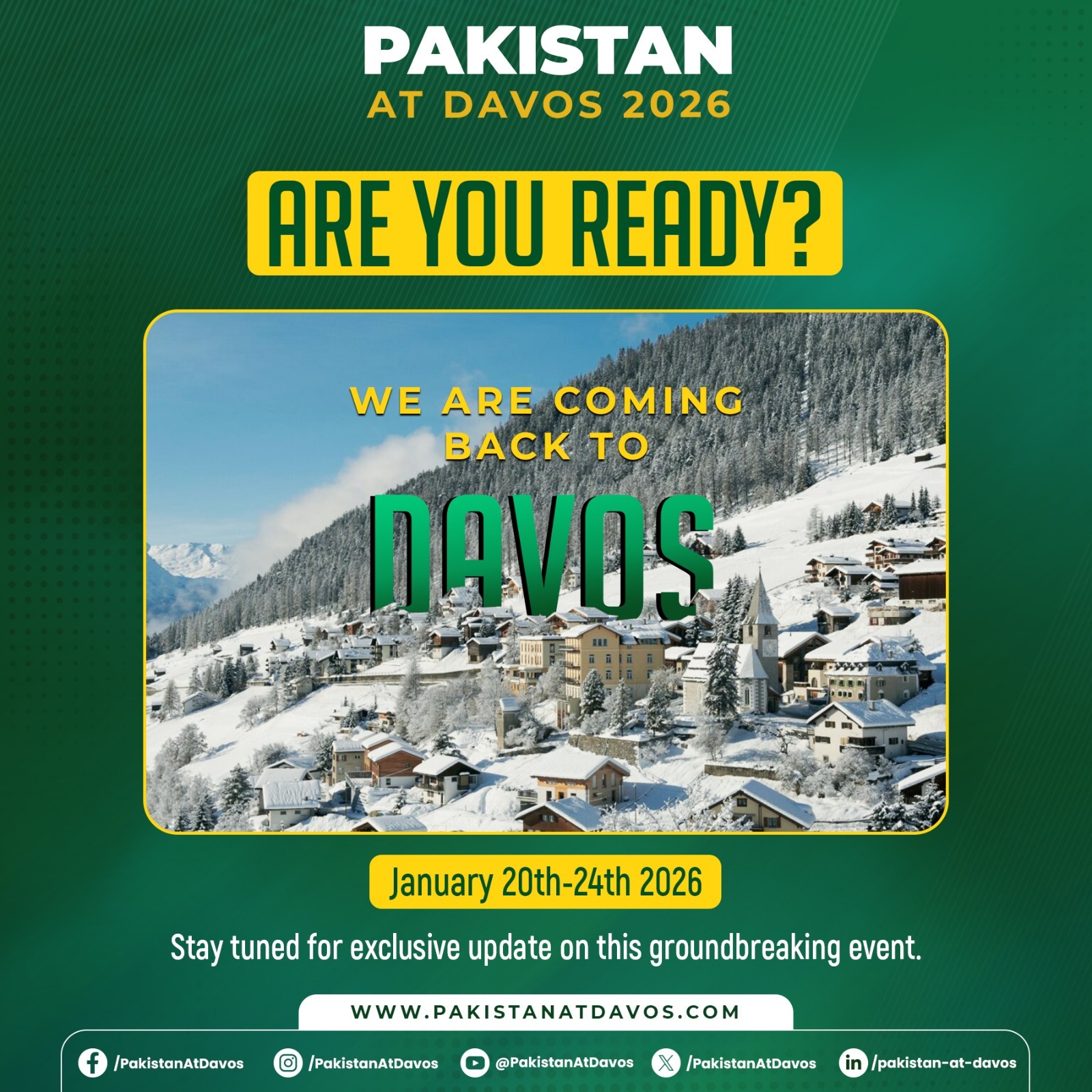
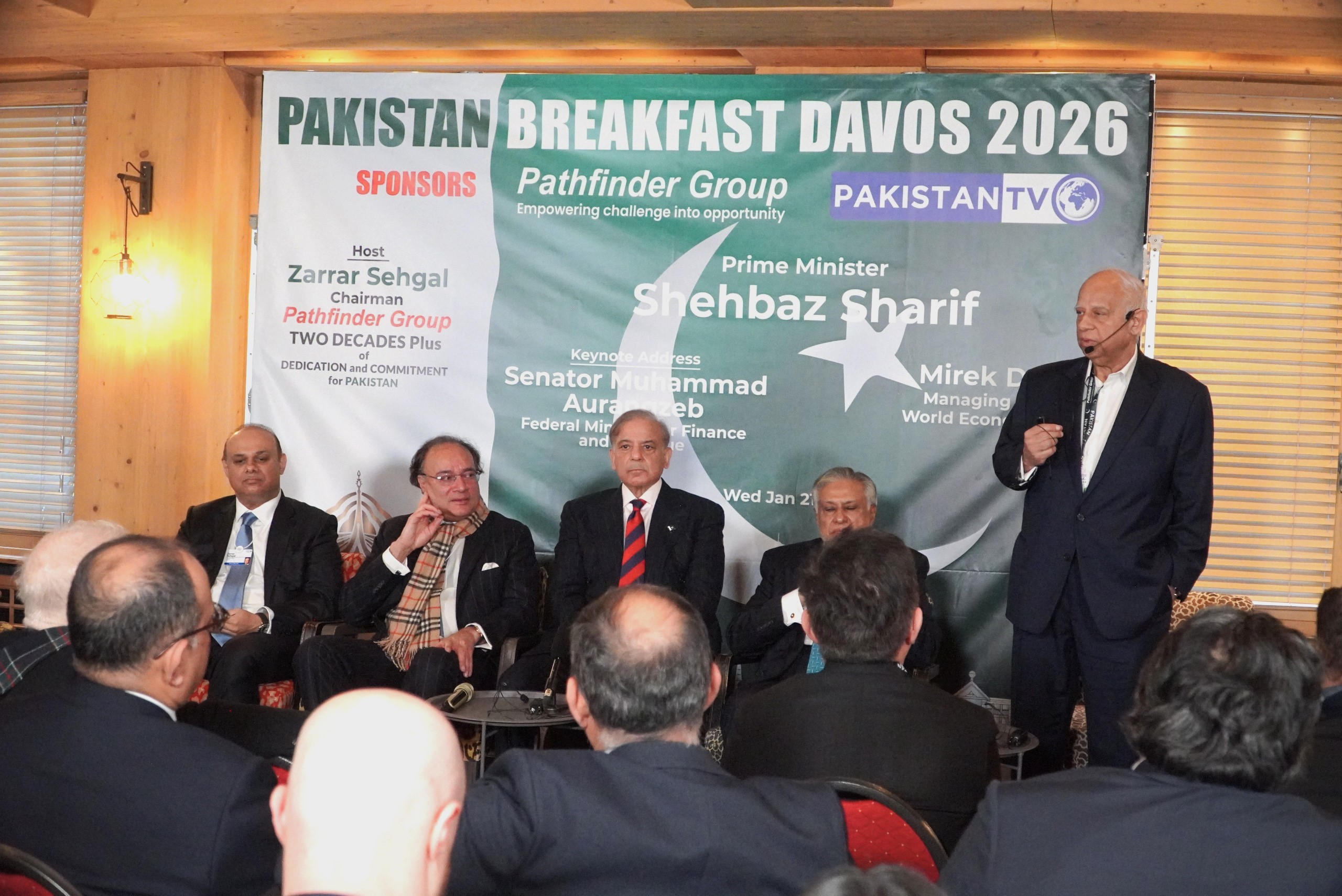
For Pathfinder Group, the WEF Annual Summit in DAVOS is more than a forum; it is a decades-long commitment to promote the image of Pakistan. More than 30 years of our Group’s representation at the WEF, and for 21 consecutive years, we have hosted the trademark “PAKISTAN BREAKFAST”. This event has grown into a remarkable institution, serving as a high-level platform where Pakistan’s Heads of State and government engage directly with global counterparts, investors, policymakers, international institutions, and decision-makers to project our national narrative. This sustained interaction has helped ensure that Pakistan’s narrative at DAVOS remains institutional rather than episodic, anchored in national interest rather than political cycles.
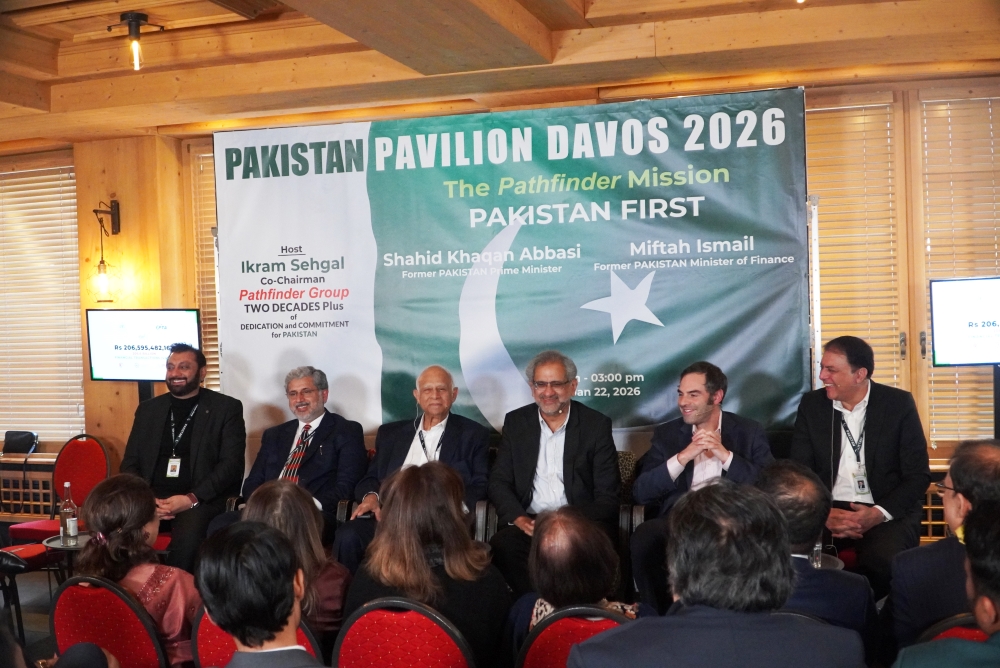
This year’s PAKISTAN BREAKFAST reflected the gravity of the global moment. Discussions were sober, pragmatic, and focused on long-term trajectories rather than short-term optics. The presence of Prime Minister Mian Muhammad Shehbaz Sharif brought added substance and seriousness to the occasion. His candor and recognition of real issues resonated with the audience. Speaking at the PAKISTAN PAVILION, he emphasized that Pakistan’s engagement with the world must be grounded in responsibility and realism. He addressed the difficult economic choices his government had undertaken, emphasizing that stabilization was a necessary foundation rather than an achievement in itself. Fiscal discipline, reform of state institutions, and improved governance were presented as unavoidable if Pakistan is to break free from recurring cycles of crisis.
Economic realism was further reinforced through the comprehensive presentation by Federal Minister for Revenue & Finance Muhammad Aurangzeb. Drawing on his experience in global finance, he outlined Pakistan’s recent macroeconomic progress, declining inflation, easing interest rates, stabilized foreign exchange reserves, and renewed engagement with international financial institutions. Reform, he stressed, must be institutional rather than personality-driven, embedded within systems capable of surviving political transitions. To give an even balance of the broad spectrum of the situation in Pakistan, Pathfinder Group invited former PM Shahid Khaqan Abbasi. He gave an informed presentation of the challenges facing Pakistan and the potential of our youth to overcome these challenges. The dialogue taken into account to Pakistan’s longer-term strategic assets. Considerable attention was paid to Pakistan’s mineral potential at a time when global supply chains for critical minerals are being actively restructured. Copper, gold, lithium, and rare earth elements have become strategic commodities shaping industrial policy and geopolitical alignments. Projects such as Reko Diq were discussed not only in terms of revenue generation but as gateways to deeper integration into global manufacturing and technology ecosystems. There was broad consensus that governance, transparency, and regulatory clarity will ultimately determine whether this potential translates into lasting national benefit.
I express my sincere gratitude to all those who contributed to making this year’s PAKISTAN BREAKFAST and six other events at DAVOS both meaningful and memorable. I am especially thankful to Mirek Dušek, Managing Director, Chief Business Officer and Head of Global Programming at the World Economic Forum, for his continued engagement and for upholding DAVOS as a credible platform for principled dialogue. My appreciation also goes to Ross Perot Jr., Chairman of the Perot Group of Companies, whose constant presence over the past 12 years of the PAKISTAN PAVILION as well as insights added depth and perspective to the discussions.
On a more personal note, I am deeply grateful to my family, particularly Zarrar Sehgal, my son, for hosting the event with the same grace and professionalism as he has done over the years. No wonder that for the last decade or so all LEGAL magazines and newspapers in the US and UK count him as among the finest lawyers in the world. My family’s support behind the scenes is a constant source of strength and pride. I also extend my sincere thanks to the Honourable Prime Minister of Pakistan, Deputy Prime Minister (DPM) and Foreign Minister (FM), Ishaq Dar, Federal Minister for Finance and Revenue, Muhammad Aurangzeb, for their leadership, presence and clear articulation of Pakisan’s economic direction at a critical juncture.
This year, Pakistan’s engagement at DAVOS moved decisively beyond dialogue into demonstration, marking a defining moment where innovation, youth and national ambition converged on a global stage. Pathfinder School of Excellence, CITADEL, has taken a cohort of eight exceptional Pakistani StartUps to pitch on the global stage at the PAKISTAN PAVILION. In his inauguration of the StartUps at PAKISTAN PAVILION, the DPM and FM Senator Mohammad Ishaq Dar correctly emphasized that the dynamism of these StartUps is the key to our socio-economic development.
At CITADEL we believe our mission is to bridge academia and industry, enabling our youth to not just compete, but to surpass global expectations. These innovators were selected through a rigorous nationwide challenge, proving that Pakistan’s greatest strength lies in its talented youth. The eight StartUps, EDKASA, AI Teamforce, SWICH, EKKO, Edversity, AiBl, My Mediport, and AI Vector, are developing cutting-edge, AI-driven solutions across education technology, health technology, environmental management, and workforce optimisation. These StartUps are not merely “AI-powered” in name; they are utilizing Artificial Intelligence as foundational infrastructure to solve critical, real-world issues. Particularly noteworthy are the health-sector innovations, which are not only commercially viable but also address critical structural challenges through the intelligent application of AI.
I am immensely proud of these StartUps, which are addressing sensitive issues with unmatched technical precision. As global investors at DAVOS now judge emerging markets on execution rather than just potential, these StartUps represent our “escape velocity.” They are investor-ready, compliant, and demonstrably improving margins and accuracy through localized AI solutions. These young enterprises demonstrate that Pakistan is not merely a consumer of global technology trends but an emerging contributor to frontier innovation. In a world increasingly defined by knowledge economies and digital transformation, such representation at DAVOS matters. The challenge, as stressed at DAVOS, is ensuring that these technologies are not monopolized by advanced economies but are adapted, localized and scaled across emerging markets facing the sharpest risks. Pakistan’s economy is entering global value chains despite physical and political constraints. It is in this context that Pakistan’s presence at the WEF assumes strategic significance. By projecting indigenous innovation, Pakistan signals that it seeks to confront its vulnerabilities not through dependency, but through capability.
By engaging diverse voices, connecting complex global challenges and remaining decisively future-oriented, DAVOS offers not merely diagnosis but direction. This time, I was particularly struck by how DAVOS is serving Pakistan simultaneously as a mirror and a platform. A mirror that reflects, with unforgiving clarity, the scale of our internal challenges, and a platform that allows us to demonstrate our true potential. In this time of polycrisis, under sustained security, economic and environmental pressures, Pakistan can still offer credible, technology-driven solutions aligned with global priorities. My faith in the youth of this country is stronger than ever. As foreign experts at WEF consistently acknowledge the resilience of Pakistanis, I am convinced that our foremost responsibility is to provide an enabling environment in which this resilient nation, especially its young talent, can translate perseverance into progress.
At a moment when the world is recalibrating around geoeconomic competition, technological disruption and environmental urgency, Pakistan is steadily asserting itself as a hub of technology-led entrepreneurship. The way forward now rests squarely with Pakistan’s private sector and its approach to youth development. Sustained investment in skills, technology incubation and industry–academia linkages is essential to convert raw talent into globally competitive capability. If businesses move beyond short-term gains to nurture innovation, mentor young entrepreneurs and align workforce skills with emerging technologies, Pakistan can transform its demographic strength into a lasting economic advantage. This is not merely a moment of opportunity; it is a call to build the future through foresight, partnership and purposeful investment in our youth.