
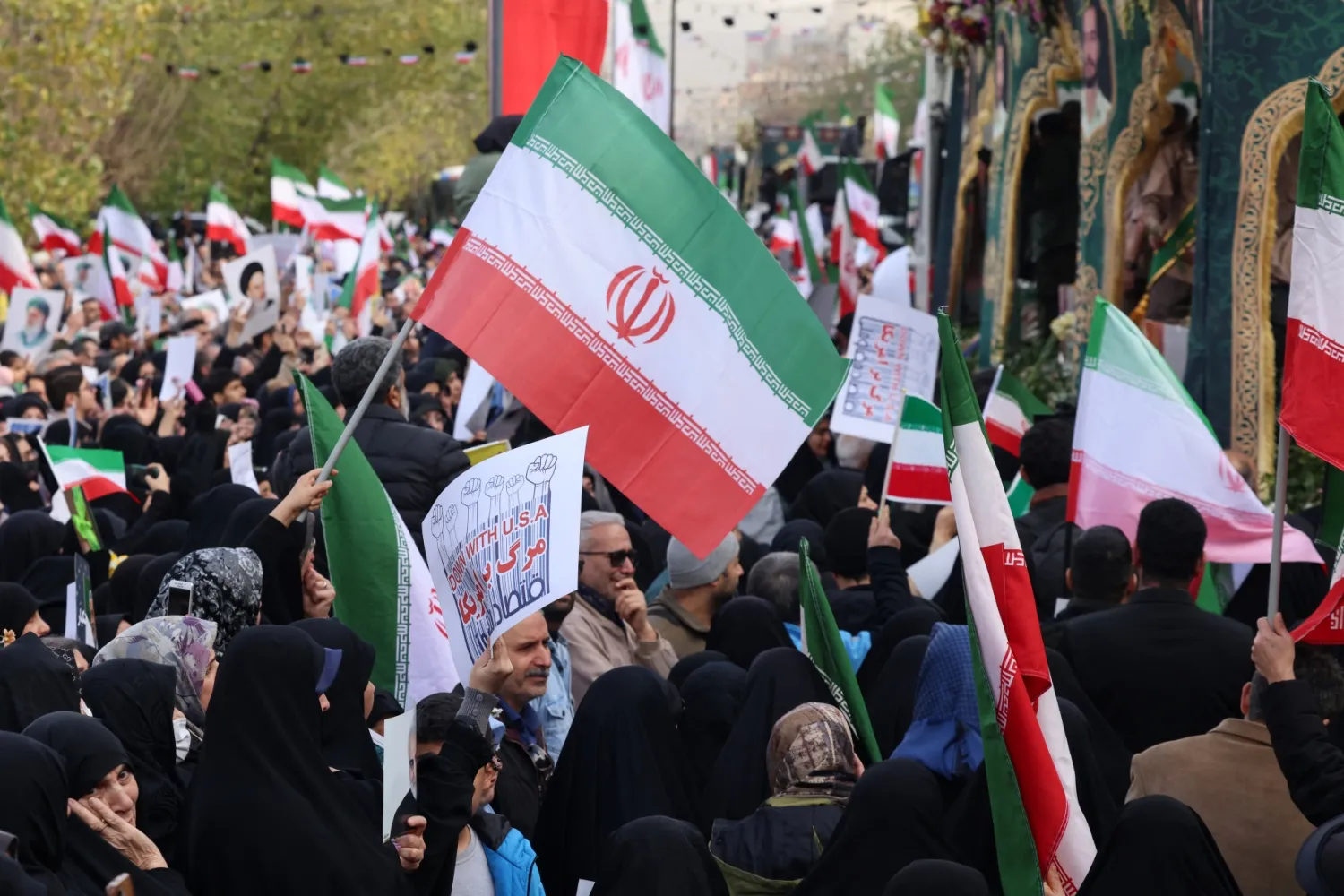
The Islamic Republic is back from the brink. Yet, it is in the woods of uncertainty, coupled with inherent domestic revulsion and fear of a plausible aggression. The uprising in December was economic-centric, though. It is laudable, nonetheless, that the government this time around handled the crisis with more sagacity and openly admitted its governance flaws that has pushed an enterprising nation of 90 million into the abyss of degeneration and chaos. There is hardly anything more that the system in vogue can do to address the grievances of the masses until and unless it is able to pull itself out of pestering sanctions. Opening up to the outside world by becoming a part and parcel of capitalist fiefdom, and striking a nexus with the United States are indispensable challenges. Will Iran take that one step back and three steps forward without compromising on its revolutionary zeal is a million-dollar question? The agitations across the length and breadth of Iran made one thing clear i.e. the people are not very happy with reigning socio-political and economic parameters of the state. Inflation at 42%; a dipping growth rate of below 3%; the dollar-riyal convertibility at an all-time devastating low – dropping to 56% in the last six months; unemployment at 22% and the consumer price index slumping by 34% per annum, along with purchasing power slashing to 50% are too horrible statistics to be ignored. Yet, it is home to more than $78 billion revenue from oil. This is so because the country is under a trade embargo and unable to become part of sprawling geo-economics as its ambitious nuclear program acts as an impediment. Yet, repeated attempts by Washington and Tel Aviv to engineer a ‘regime change’ have met with failures. That goes to the strength of the Islamic Republic. The 12 days war was a faux pas for Israel and its patron, the United States. Likewise, efforts to stir unrest through espionage, infiltration of Mossad agents, and change of loyalties in the rank and file of civil-military bureaucracy, as well as resorting to vandalism against national institutions and even sacrosanct religious sites, have failed. An overwhelming majority of the masses are with the Islamic edifice of the revolution, and cry for an organic change and not one that is synthetic.
This tangible aspect of the revolution, nevertheless, demands some auto-correction. And that cannot be delayed any further. The first and foremost is to listen to the masses; reorient the body-fabric with more relaxations, enhance per capita spending on the masses, desist from mushrooming proxies in the region, and avoid fomenting a paranoid vision of the Republic, and augment it with pluralism. The people are neither anti-Islamic, nor are they disloyal to the system in vogue, per se. All that they demand is valuing their fundamental rights, enabling them to cherish their civilizational liberties and becoming a component of the international system. That is national evolution at its best, and cannot be obstructed in an age of tech-savvy liberties. The latest unrest on the streets of Iran was a déjà vu for many as for the first time after 1979, the businesspeople were up in arms.It was reminiscent of the ‘Bazaar uprising’ that led to the downfall of the Shah of Iran.
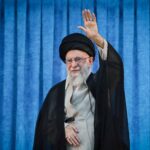
The people want a better deal and their grievances to be addressed holistically, and not dumped and ignored by terming them as irrational, un-Islamic or foreign-doctored. President Masoud Pezeshkian’s generous offer to dole out subsidies to the tune of more than $20 billion is worth appreciating. Similarly, the Supreme Leader Syed Ali Khamenei, too, led from the front as he galvanized a traumatized nation towards national glory and self-respect, evident from millions pouring out on the streets in the first week of January. That was public deterrence leading to a thaw with the agitators. An opportunity, indeed, for the ruling politburo to ‘create’ new syllabus; ‘amend’ the outdated stuff and ‘replace’ the rhetoric with substance.
The prevalent power syndrome and hierarchy necessitates a rethought if Iran has to respond to genuine public aspirations. The elected strata, especially the Presidency and the Parliament are in need of being made more responsive and their mandate extended with unbridled empowerment. It goes to the credit of the 1979 Revolution that Iran is the only country in the region that is ‘democratic’ in essence, and has gone to ballot, be it war or peace. But ironically the power dispensation is in the hands of a coterie of ‘inner circle’ that hold sway over resources and decision-making.
The Islamic Revolutionary Guard Corps (IRGC), a supra-military elite and the Supreme Leader are at the pinnacle of the power pyramid. Though their services are laudable in nation-building, it has somehow bred discontent to a greater extent among the peripheries. This is where some indigenous rectification is desired to take the Republic to new heights of stability and survival.
It is also necessary here to introspect as to how the duo of the United States and Israel are instrumental in destabilizing Iran. That is more relevant in understanding the modus operandi at work as the sole superpower is out on misadventures to invade Greenland, stage a political coup in Venezuela, bring down the last of the Bohemian Socialist dispensation in Cuba, make Columbia and Mexico fall in line, and mastermind a ‘regime change’ in Iran. John Mearsheimer, the legendary American political scientist and a scholar of repute in realism believes that great powers dominate the international system and they constantly engage in security competition with each other, which sometimes leads to war.
He has aptly summarized what’s going on in Iran by spelling out a four-pointer theory as to how regime-change is materialized.
They are: Sanctions to break a country’s economy; fuel protests; foment massive disinformation campaign and military action. All the four were made use of against Iran, and still the Republic is on its feet; that is owing to the resilience of the people of Iran and a committed leadership, notwithstanding ills in its body-politics. Mearsheimer, thus, concludes that “nothing is organic” and the revulsion is synthetic to the core.
What’s next? How can Iran after repeatedly surviving political, military and economic onslaughts for the last five decades chalk out a course of action for it?
The answer is more and more engagement with the outside world, especially the West and the United States. Foreign Minister Abbas Araghchi did a noble deed by assuring the world comity that Tehran will not ‘execute’ alleged spies caught in the midst of the uprising. That stuck the right chords and semblance prevailed.
That is what is desired, and desisting from brinkmanship is the way to go. Enough of playing to the gallery by the revolutionaries for domestic consumption which have weakened it from inside-out. Tehran luckily has a new aura of congeniality with its Arab neighbours. Irrespective of power dynamics as the Persian Empire had always been at odds with the Arab Kingdoms, as well as with the Ottomans in Turkey, the new era has stirred a common denominator of reconciliation in regional affairs. The fact is that Iran is no longer in a position to assert itself as its muscles in the form of Hezbollah in Lebanon and the Assad regime in Syria stand obliterated, and so is the case with militias elsewhere in Iraq and Yemen that are compromised to a great extent.
The Chinese rapprochement to bring Riyadh and Tehran closer has worked wonders, and a new relationship of trust, confidence and reconciliation is in the making. Iran must bank on it and address irritants with GCC and Arab states in all sincerity. Tehran’s decision not to close the Strait of Hormuz during the June 2024 war with Israel and not to weaponize oil has won it credibility.
The way forward is a single-pronged goal: have a têteà-tête with the United States. The impulsive incumbent at the White House is always eager for a deal, as long as it serves American interests and he is in the limelight for a good reason. Of course, there is always a give and take in realpolitik. Khamenei must take a leap forward and send in his best liberal brains to negotiate at the State Department.
Iran has done that previously and was successful in clinching a nuclear deal with President Barack Obama’s administration. That is in need of being emulated. To quote Mearsheimer again, “… there’s no question that a nuclear-armed Iran would bring instability to the region, because nuclear weapons are weapons of peace. They’re weapons of deterrence.”
Tehran along with its allies in Europe, as well as China and Russia, can talk from a position of strength. Iran has always been receptive to IAEA inspections of its nuclear facilities, and is a signatory to the Nuclear Non-Proliferation Treaty (NPT). Unlike Israel, which shields hundreds of nuclear weapons, the Islamic Republic has shunned the synopsis of making a bomb, and reiterates that enrichment is for peaceful scientific purposes. Once this lacunae is addressed, Iran can assert for a quid pro quo on Palestinian Statehood by offering to go neutral against Israel in lieu for an independent state of Palestine.
To pull up the socks, let Tehran start at home with a Grand National Dialogue promising to amend the Constitution, and then push-back on the global stage by furnishing guarantees of stability and adaptability in its foreign policy. That is the way to go to “protect, consolidate and flourish” the Islamic Republic.
Dr Ali Shariati, the iconic thinker and scholar, wrote: “I would rather walk in the street thinking about God than sit in the mosque thinking about my shoes.” Maybe there is a lesson in disguise for those at the helm. Time to open up and get talking!