




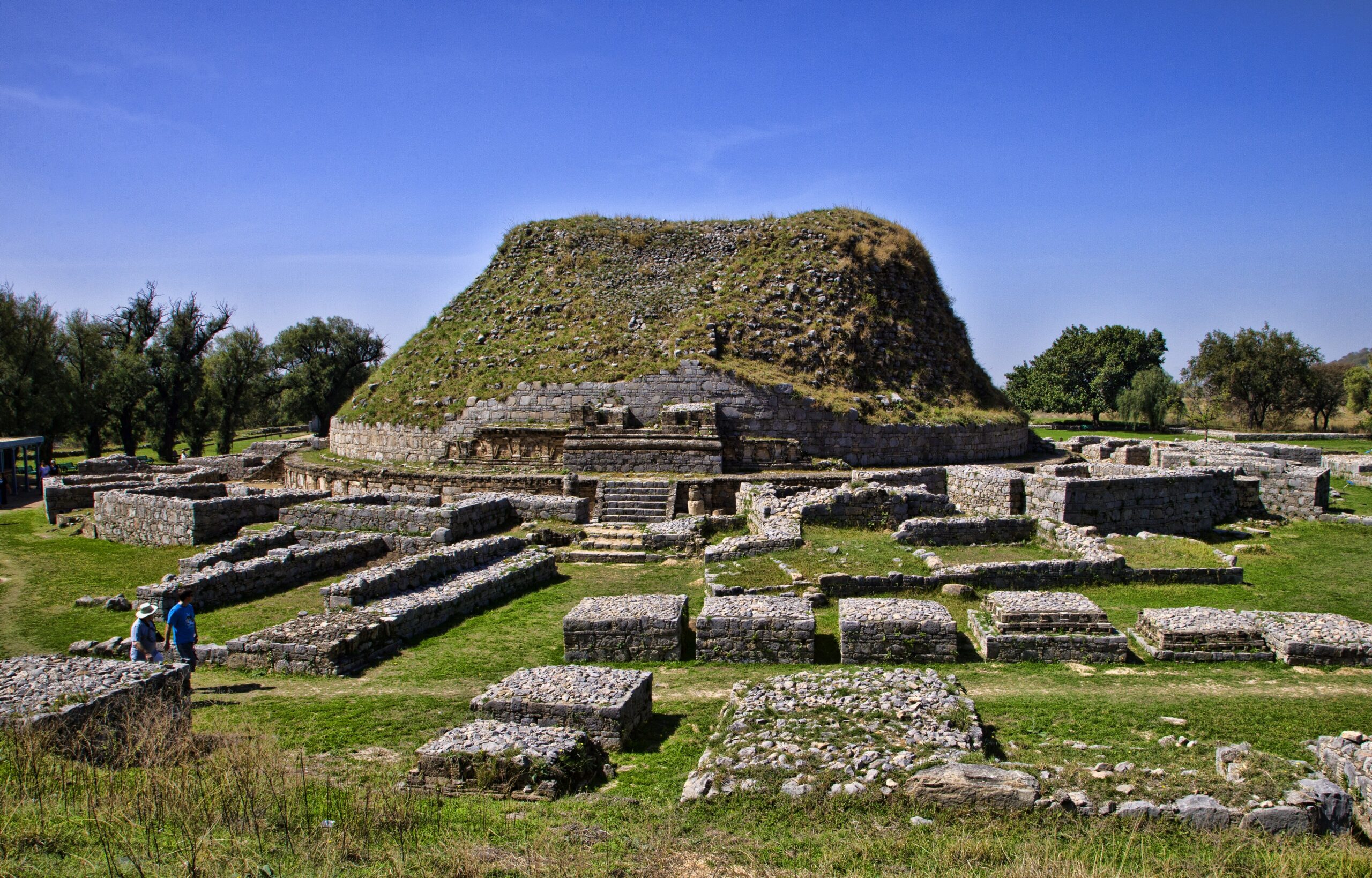
The Lost University of the Ancient World
In Pakistan, nestled amidst the picturesque hills of Taxila, lies the cradle of one of the ancient world’s best known centers of learning. For over a millennium, from as early as 700 BCE, this decentralized, guru centric hub of knowledge known as Takshashila stood as the “Ivy League” of the ancient world. It drew merchants, scholars, and rulers to a Silk Road crossroads that linked India, Central Asia, and the Near East.1
Although often described as the world’s first university in later retellings, Takshashila did not function like a single campus with centralized administration in the Nalanda sense.2 Instruction was organized around master teachers who housed and trained pupils in their own establishments, and the city’s position at the junction of great trade routes explains its cosmopolitan character.
The city’s name appears in ancient literature and travelogues with multiple explanations. One tradition connects it to Taksha, the son of Bharata in the Ramayana and Mahabharata.
A Buddhist pilgrim, Faxian, glossed “Takshasila” as “the severed head,” explaining a local Jataka tale in which the Bodhisattva sacrificed his head for a starving creature.3
These are etymologies of faith and memory rather than philology, but they show how deeply the place lived in the imagination. Greek sources underline Taxila’s stature. When Alexander’s forces marched through in 326 BCE, Arrian records that he arrived at Taxila, a large and prosperous city, the largest of those situated between the Indus and Hydaspes, governed by a ruler whom the Greeks called Taxiles.4
The Teacher’s Touch:
A Standard of Unparalleled Excellence The academic standard at Takshashila rested on the authority and reputation of the guru. Each master teacher set admissions, curriculum, and completion standards, and students lived in the preceptor’s household. Completion depended on demonstrated mastery rather than on standardized examinations or degrees. The real credential was the guru’s name and the student’s performance in public life. This picture stresses the guru household model rather than a centralized campus.2 Accounts also describe facilities that later tradition associates with Takshashila, such as an observatory for astronomical research and a great library known as Dharma Gunj.
The Impossible Entrance Exam
Gaining admission was, by every traditional account, a trial of mind and character. Later narratives speak of only three in ten aspirants winning a place, and many presenting themselves at roughly sixteen years of age after years of home or ‘asrama’ study. The test unfolded as a searching, face to face appraisal by the guru: quickfire questions across scripture and grammar; demonstrations of memory and reasoning; practical problems in arithmetic, measurement, or simple contracts; and, not least, an assessment of humility, stamina, and willingness to live simply in the teacher’s household. Letters of introduction from former preceptors were prized, but they were no guarantee; a sharp mind and steady discipline mattered most. Applicants arrived from the farthest reaches of the trade routes that converged on Taxila, north from the high valleys of Gandhara, west from Bactria and Babylonia, south from the Indus plain, and, in later tradition, even from Greece, Syria, and China, drawn by the promise of exacting training and the renown of particular masters. To be chosen was to be counted among the best of the best, and to accept a place was to enter a binding apprenticeship that demanded total effort.
Fees appear in these accounts, sometimes set at a thousand coins, yet the door did not close on talent without means. Work study was common in the guru’s household, deferred payment was permitted, and in some cases a gifted student was taught out of charity, on equal terms with wealthier peers. The ethic was unequivocal: merit and discipline weighed more than pedigree or purse, and selection rested animal handlers, porters, and carters earned wages on every arrival and departure. with the guru who staked his name on every pupil he admitted.
The Economic Engine of Gandhara
At its peak, Taxila hosted more than 10,500 students, many from distant lands, and their daily needs set the city humming. Boarding in guru households required steady flows of grain, milk, ghee, fruit, and firewood. Scribes, copyists, and book sellers supplied palm leaf manuscripts and inks. Clothiers and cobblers outfitted students and teachers. Stonemasons, carpenters, and metalworkers maintained hostels and lecture spaces, while potters, oil pressers, and perfumers met the ordinary comforts of life. Caravans and pack trains brought paper substitutes, dyes, metals, and medicines; animal handlers, porters, and carters earned wages on every arrival and departure.
Spending by students and faculty circulated through markets, guilds, and temples, enlarging the tax base and paying for roads, wells, and drainage that served both residents and travelers. Fee income and gifts to teachers created endowments in kind, which were spent locally on food and building repairs. Work study models meant that even poor but able students contributed labor to farms, kitchens, and copying rooms, tying education to the everyday economy. The presence of trained physicians and surgeons improved public health and workforce reliability. The growth of surveying, account keeping, and coin assay skills professionalized revenue offices in the district. As graduates took posts in courts and administration, they drew further resources toward the city, stabilized trade by enforcing weights and measures, arbitrated guild disputes, and supervised irrigation and road maintenance in the hinterland. In this way a scholastic center became a development engine: it concentrated human capital, multiplied local livelihoods, and pushed out improvements in law, finance, and infrastructure across Gandhara. That was true at Taxila and remains true in modern university towns, and the city’s prosperity at a strategic crossroads and its cultural vitality over many centuries support this picture.1,2
A Curriculum That Covered the World
Takshashila’s studies were broad and intentionally practical. Instruction combined memorization, recitation, debate, commentary, and hands on apprenticeship. Below is a fuller picture of the syllabus and the typical contents taught by guru lineages in and around Taxila.
Core literary studies (sruti and smrti)
Rig, Yajur, Sama, and Atharva Veda with selected Samhita passages; Brahmana and Aranyaka sections for ritual logic and symbolism; Upanisads for metaphysics and ethics; Itihasa and Puraṇa selections for social ideals, royal conduct, and moral exempla; Dharmasutra and early Dharmashastra topics such as inheritance, contracts, evidence, and judicial procedure.
Language, grammar, and philology
Systematic study of Paṇini’s method: varṇa inventory and pratyahara notation; sandhi rules; samasa (compounding); krdanta and taddhita derivation; karaka theory of syntax; paribhasa meta rules; treatment of exceptions and conflict resolution; nirukta (etymology) for difficult words; chandas (prosody) including gayatri, tristubh, jagati; basic alankara sastra (figures of speech) and kavya reading for style. 5
Logic and debate (nyaya and vada)
Means of knowledge
(pramaṇa): perception, inference, comparison, testimony; forms of inference and fallacies; anvaya vyatireka analysis; debate formats such as purva paksa and siddhanta; courtroom style reasoning for dispute resolution.
Buddhist studies
Vinaya for monastic discipline; Sutra reading and mnemonic methods; Abhidharma categories of mind and phenomena; Gandharan scholastic commentaries; introduction to emerging Mahayana themes
in the region; comparative exercises with Brahmanical logic and ethics.
Mathematics and astronomy (ganita and jyotisa)
Place value arithmetic and the four operations; fractions and rule of three for trade; mensuration and geometry drawing on Sulbasutra techniques; basic algebraic procedures used in surveying; calendrics, naksatra cycles, intercalation, and ritual timing; observation practice with shadow lengths, gnomons, and water clocks.
Medicine and surgery (ayurveda and salya tantra)
Dosa dhatu mala framework; agni and srotas theory; diagnostic modules (nidana) for fevers, respiratory and digestive conditions; pharmacology (dravya guna) and formulation practice; chikitsa protocols including diet, lifestyle, and procedures; surgical basics preserved in classical handbooks: instruments, incision and suturing methods, wound care, fracture management; medical ethics, patient consent, and roles of physician, patient, and nurse.
Statecraft, law, and administration
Theories of the state (saptanga model); mandala theory of international relations; intelligence, espionage, and counter intelligence; revenue and land assessment; regulation of trade, guilds, and prices; coinage and weights; urban governance and public works; courts, evidence, punishment proportionality, and appellate review.6,9
Military science (dhanurveda)
Archery, sword and spear drills; chariotry, cavalry, elephant corps basics; formations such as vyūha patterns; siegecraft and fortification principles; logistics, camp hygiene, rations, and march discipline; battlefield signaling and messengers; rules of engagement and treatment of prisoners.
Commerce and public finance
Book keeping methods; double entry style tallies used by guilds; tolls and customs; caravan logistics and risk sharing; contracts of partnership and agency; maritime and riverine trade etiquette; dispute mediation between merchants.
Agriculture, land, and environment
Monsoon calendars and sowing windows; soil classification; crop rotation; irrigation channels and tanks; orchard and forest management; land measurement with cords and poles; boundary markers and their legal protection
Architecture and crafts (silpa and vastu)
Town planning grids and site selection; foundations and proportion systems; carpentry, stonework, and brick geometry; metallurgy and mining basics; textiles and dyeing; ceramics and glazing; gemology and assaying.
Fine arts
Music theory and practice; raga and tala basics; vocal and instrumental instruction; dance and gesture vocabulary; dramaturgy per Naṭya sastra tradition; painting techniques, pigments, and mural planning.
Esoteric and astral sciences
Jyotiṣa for horoscopic casting as culturally practiced; omen literature and calendrical elections; mantra recitation discipline; study of auspicious and inauspicious times for ritual and public acts.
Languages and cross cultural study
Sanskrit as the scholastic medium; Prakrits and Gandhari for administration and commerce; exposure to neighboring scripts; practical language work for foreign students, including Greek or Aramaic where needed for diplomacy and trade.
Assessment and pedagogy
Oral recitations, memory tests, problem cases in law and medicine, practical demonstrations in surgery or surveying, debate before peers, and the guru’s final approval in place of a formal degree.
Far Ahead of Its Time:
A Comparison with the West
The purpose of this comparison is to show where Takshashila was genuinely ahead of its time. Read against Greek and Roman models, Taxila’s ecosystem shows greater breadth, tighter linkage to real-world professions, and a cosmopolitan reach that few Mediterranean schools matched in the same era
Breadth and integration
Takshashila taught sacred texts, grammar, logic, law, medicine, mathematics, statecraft, military science, crafts, and arts under one civic umbrella. Greek education was often distributed across tutors, gymnasia, and small schools, with advanced philosophical study in circles such as the Academy and Lyceum.2,7 The Takshashila model integrated the literary, scientific, and vocational into one training pipeline that prepared students for courts, clinics, treasury offices, and embassies
Applied mastery instead of display
Completion at Takshashila depended on demonstrable competence attested by the guru, followed by service in administration, justice, finance, and medicine.
Greek civic life prized rhetorical display and public debate as proof of education, with fewer built-in pathways from schooling to state service outside rhetoric and lawcourts. Takshashila’s assessment culture was therefore more explicitly outcome-focused.2
Administrative and legal training at scale
Statecraft and public administration were core, not elective. Students learned revenue systems, audits, espionage, price regulation, and public works alongside jurisprudence and evidence rules, themes later codified in the Arthasastra. By comparison, Greek curricula centralised rhetoric and philosophy, and only later, in Hellenistic contexts, did bureaucratic training become prominent.
Cosmopolitan intake and multilingualism
Situated on Silk Road routes, Taxila drew learners across Asia and the Mediterranean and trained them in Sanskrit, Prakrits, Gandhari, and practical foreign languages for diplomacy and trade. Greek centres were international within the Aegean and Hellenistic worlds, but Takshashila’s position in a pan-Asian trade nexus produced earlier and more systematic exposure to cross-cultural administration.
Pedagogy that combined memory, debate, and apprenticeship
The guru household fused oral mastery with commentary, disputation, and hands-on practice in surveying, surgery, and accounting. The Lyceum pioneered organised research and a library culture in Athens,7 yet Takshashila’s apprenticeship model prioritised deployable skills across more sectors of civic life in a single instructional setting.
Knowledge infrastructure serving policy and economy
Tradition associates Takshashila with extensive collections and observational practice, while the city itself functioned as a laboratory where students engaged merchants, guilds, courts, and provincial offices. The feedback loop between study and statecraft was unusually tight for the period
Result: a more comprehensive higher-learning ecology
Greek and Roman schooling produced profound philosophy, mathematics, and literature. Takshashila, read on its own terms, surpassed its Western counterparts in integrating the humanities with governance, law, medicine, and commerce, in connecting study to appointment, and in leveraging a Silk Road metropolis to train functionaries for a multiethnic world.1,2,7
The Graduates Who Changed the World
Takshashila’s reputation travelled with its people. Tradition and later historiography connect the city and its guru lineages to several figures whose work shaped politics, language, medicine, and law. Below are the headline names with concise notes on what they did afterward and why it mattered.
Chanakya (Kauṭilya), strategist and teacher of statecraft
After Taxila, he recruited and trained Chandragupta, guided the overthrow of the Nandas, and helped design the early Mauryan state. His teaching is preserved in the Arthasastra, a compendium on governance, law, taxation, finance, and intelligence. Signature contributions include the saptanga theory of the state, the mandala model for foreign policy, layered revenue and audit systems, anti-corruption controls, road and irrigation policy, and the use of a professional intelligence service.6,9
Chandragupta Maurya, empire builder
Trained in courtcraft and military science, he founded the Mauryan Empire and integrated regions from the northwest to the Gangetic plain. After unification he created a road network that linked Pataliputra to Taxila, standardized weights and measures, promoted coinage and regulated markets, appointed provincial governors, and negotiated a diplomatic settlement with Seleucus. His administrative footprint made Taxila a key provincial and commercial center.4,2
Pāṇini, grammarian of the Gandhara–Taxila world
Associated by tradition with the region, he codified Sanskrit in the Astadhyayi, nearly 4,000 rules that stabilized the language of learning, ritual, and law. The work shaped philology, lexicography, and scholastic method. Its rule based analysis influenced later Indian logic and, in modern times, has been read as a precursor to formal language theory.5
Jivaka Komarabhacca, physician and surgeon
Said to have studied medicine at Taxila for many years, he later served as personal physician to King Bimbisara and attended the Buddha. Accounts credit him with surgical practice such as abscess drainage and fracture care, the running of charitable clinics, and a systematic approach to case taking, diet, and convalescence. His career exemplifies how Taxila trained clinicians who worked at royal courts and in monastic communities.
Charaka, clinician and medical editor
Remembered for the Charaka Samhita, he is linked to Kashmir and to practice under the Kushans. The Saṃhita set out a clinical method grounded in observation and reason, organized nosology, pharmacology, and therapeutics, and emphasized an ethical triad of physician, patient, and nurse, along with consent and restraint. Graduates in this line staffed courts, urban dispensaries, and teaching clinics.
Typical career tracks for Taxila trained students. 2
● Diplomats, translators, and envoys who managed treaties and cross border trade.
● Guild leaders and merchants who organized caravans, credit, and risk sharing.
● Revenue officers, surveyors, and coin assayers who ran fiscal administration.
● Judges, arbiters, and legal scribes who handled evidence and procedure.
● Military officers who planned logistics, fortification, and field formations.
● Physicians and surgeons who served courts, guilds, monasteries, and caravan towns.
● Teachers and commentators who maintained lineages in grammar, logic, and ritual.

A Complex and Contested Decline
Taxila did not disappear overnight.2 Archaeology and later pilgrim accounts point to a long unravelling: trade pathways shifted, courts and classrooms thinned, and invasions returned in uneasy cycles. Layer by layer the record darkens: kiln ash over abandoned floors, coins hoarded and never reclaimed, foundations quarried to feed humbler towns. Monasteries that once hosted debate dwindled to a handful of novices; guild halls fell quiet as caravans chose safer roads. Inscriptions falter in the epigraphic record, and the city’s fine stone appears reused in village shrines, a quiet testament to dispersal rather than sudden catastrophe. Many standard references note that Hunnic incursions in the fifth to sixth centuries contributed to the city’s ruin, although the precise mechanisms and timing remain debated in scholarship.2 Better to see the Huns as one blow among several, a cold season within a climate already cooling, and to recognize a slow accretion of losses, fiscal strain, shifting trade, and waning patronage, a cumulative decline rather than a single fall. Yet even in the dimness, embers endured in nearby settlements and in the manuscripts and methods that traveled with teachers and merchants, ensuring that Taxila’s mind outlived its walls.
The Enduring Legacy
Today the ruins of Takshashila, a UNESCO World Heritage Site, stand like wind carved monuments, reminding us of an intellectual culture that forged rigor, ethics, and practical wisdom.8 Set upon the Silk Road, it braided languages and faiths into scholarship, and its name traveled wherever its alumni served. Later centers of learning, including Nalanda, took up its methods and ideals, and we inherit its charge to join learning with the public good. As excavations deepen, as manuscripts are edited with fresh eyes, and as new inscriptions come to light, the prestige of Takshashila will only grow clearer, its renown rising from stone and story, and its glory increasing with every season of research.
References
UNESCO Silk Roads Programme. “Taxila.” Accessed January 12, 2026. https://en.unesco.org/silkroad/silk-road-themes/world-heritage-sites/taxila.
“Taxila.” Encyclopaedia Britannica. Last modified 2025. Accessed January 12, 2026. https://www.britannica.com/place/Taxila.
Faxian. A Record of Buddhist Kingdoms. Translated by James Legge. Oxford: Clarendon Press, 1886. Online edition, Project Gutenberg. Accessed January 12, 2026. https://www.gutenberg.org/ebooks/2124
Arrian. Anabasis of Alexander. Translated by P. A. Brunt. Cambridge, MA: Harvard University Press, 1976–1983, 5.3–5.4
“Ashtadhyayi.” Encyclopaedia Britannica. Last modified 2025. Accessed January 12, 2026. https://www.britannica.com/topic/Ashtadhyayi.
“Artha-shastra.” Encyclopaedia Britannica. Last modified 2025. Accessed January 12, 2026. https://www.britannica.com/topic/Artha-shastra.
Hall, Edith. “Aristotle’s Lyceum.” Lecture, Gresham College, London, May 30, 2019. Accessed January 12, 2026. https://www.gresham.ac.uk/watch-now/aristotles-lyceum
UNESCO World Heritage Centre. “Taxila.” Accessed January 12, 2026. https://whc.unesco.org/en/list/139/
Olivelle, Patrick, trans. King, Governance, and Law in Ancient India: Kautilya’s Arthashastra. Oxford: Oxford University Press, 2013