




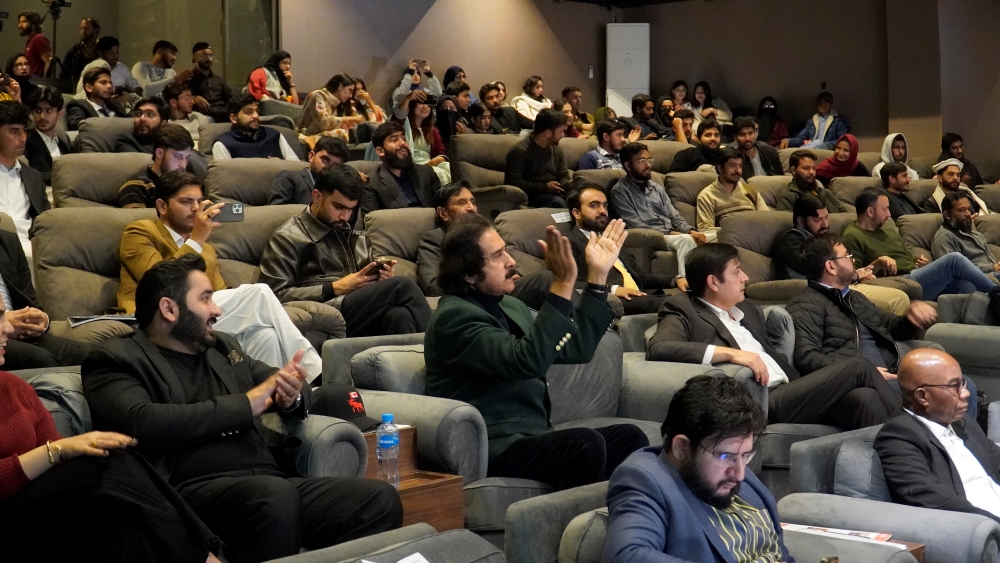
Second Session: Jeddah 2026 and Beyond,
The Spring DAVOS Pathfinder CITADEL Startup Challenge
Dr Salma Malik – Associate Professor of DSS, QAU
We are now starting the SECOND, very interesting part of today’s SESSION, which is JEDDAH 2026 and Beyond: The Spring DAVOS Pathfinder CITADEL STARTUP CHALLENGE. I will introduce them as they come, Sarah Tims and Uzair Alvi. But before that, I must introduce the esteemed Jury Panel. All of them are independent of CITADEL to ensure transparent and independent evaluation of the STARTUPs. The Jury Panel consists of (1) Dr M Usman PhD (Computer Science), AI Consultant, TechAQuest, Director, Pakistan Software Testing Board (ISTQB-affiliated) and Industrial Advisory Board member across universities, with 15+ years of R&D and industry expertise. (2) Mr Noman Waseem CEO Supreme Technocrafts Aviation Services, Strategic project and business leader with strong cross-functional execution capabilities, delivering mission-critical goals, commercializing innovations on time and driving KPI performance with sharp analytical and organizational expertise. (3) Mr Amir Zahoor Co-Founder RemoteWell and EPTeck, Assistant Professor, FAST National University of Computer & Emerging Sciences and 2012 MGA GOLD Achievement Award recipient. (4) Prof Dr Saif Ullah Awan Professor, Electrical Engineering Department, National University of Sciences and Technology (NUST), Corporate Advisor Council member of Digital Future of Pakistan and Director CTD & Seminar at NUST CEME and (5) Dr Danish Hussain PhD, Associate Professor, National University of Sciences and Technology (NUST),work on novel Atomic Force Microscopy (AFM)-based Nanorobotics systems and methods for sidewall imaging earned him the prestigious Best Doctoral Dissertation Award from Harbin Institute of Technology in 2018.
To introduce the JEDDAH STARTUP CHALLENGE 2026, we have with us two very enterprising “silent leaders” of the CITADEL team: Sarah Tims and Uzair Alvi. Currently, Sarah is working with the Pathfinder CITADEL to focus on driving STARTUP ecosystem growth, acceleration initiatives, and global innovation positioning. Previously, she served in leadership roles at the National Incubation Centre for Aerospace Technology (NICAT), where she led national innovative programmes, strategic partnerships and ecosystem development initiatives that have supported Pakistan’s emerging aerospace and deep tech landscape.
Her career spans STARTUPs, international media projects, US-based training operations, large-scale tech and innovation events, and enterprise client engagement. She is known for combining strategic thinking with hands-on execution, building high-performance teams, and delivering high-impact programmes in fast-paced environments. A huge round of applause for Sarah.
Our second manager from CITADEL is Uzair Alvi, who has over 14 years of diverse professional experience. He is a seasoned professional with a strong track record in entrepreneurship, management, business development, marketing, project management, administration, and resource mobilisation. Known for delivering impact-driven results, Uzair has successfully planned and executed numerous projects on time and within budget, consistently exceeding organisational expectations. And there is more to come. An accomplished stakeholder relationship and business development expert, Uzair has served as a senior manager at the Offices of Research, Innovation, and Commercialisation (ORICs) of leading Pakistani universities, effectively bridging the gap between academia and industry. His work has strengthened collaborations with industry leaders, government bodies, and funding agencies while supporting commercialisation, innovation, research and technologies. Finally, as a resource mobilisation expert and specialist, Uzair has secured over PKR 100 million in funding and grants for research and prototype development initiatives. He has also facilitated large-scale recruitment drives and career fairs, successfully placing thousands of students and graduates into industry roles. He is a proactive, detail-oriented problem solver and collaborative team player. We couldn’t have better people to represent this STARTUP initiative.
Sarah Tims (Moderator):
That was really, really top-notch. I don’t think I even think that highly of myself. I’m just going to stand up where I can see everyone and engage with you as well. Welcome, everyone. To begin, we are just going to go over our slides. You’ve heard what DAVOS was like; so, we’re bringing up a new CHALLENGE for our upcoming STARTUPs. We have launched and successfully received so many applications, and we’re going to tell you about that whole journey.
Regarding the JEDDAH STARTUP CHALLENGE, I think some of you are familiar with it. For those of you who are not: global collaboration is where JEDDAH comes in. We will be expecting over a thousand international companies joining there. The ecosystem is going to be even larger than DAVOS, and we want Pakistan to shine there. This initiative brings in another roadmap for Pakistan and the journey that goes along with it. As you can see on our slide, we launched our applications on the 19th of January. We closed the applications with the collaboration of COMSTECH and OIC countries, who gave us the platform to reach out. We closed those on approximately the 10th of February. Now, I won’t tell you what our numbers are; that’s what I’m leaving for him right now. But the verticals in which we received applications were tremendous. As you can see, AI, ML, Fintech, wherever deep tech is taking over, we’ve taken them in.
Uzair Alvi:
We have received an overwhelming response. We reached out to OIC countries, Pakistani National Incubation Centres (NICs), ecosystem developers and universities. In total, we received 337 applications, of which 54 were INTERNATIONAL and 283 were NATIONAL. Sixteen countries have participated, starting from Pakistan, Azerbaijan, Afghanistan, Bangladesh, Saudi Arabia, Egypt, Indonesia, Turkey, Tunisia, Malaysia, Gambia, Nigeria, the Netherlands, Sweden, the USA, and the UK. It is a very good response to start with.
Sarah Tims (Moderator):
So, the selection criteria were not small. We had two days where we shortlisted over 337 STARTUPs. We took the initiative of deep diving to see who would be our next stars to represent Pakistan. Along with that initiative, we came up with a national shortlisting of 74 and an international shortlisting of 13. Ten of those STARTUPs are pitching here today in front of you to show you what they bring. FIVE are international, and FIVE are local. Along with that, over the course of the next few days, we’re going to initiate our first online screening as well. We’re going to have our final pitches on the 28th. We’re giving that gap—if anyone wants to know why, link up with me later.
Uzair Alvi:
After we have selected the STARTUPs to take to JEDDAH, we will run a cohort similar to DAVOS, covering Investor Readiness, Pitch Mastery, Business Scaling, Global Positioning, and Impact Sustainability. This cycle will run from March to April. I guess that’s all from our side.
Sarah Tims (Moderator):
I think, in short, we’re going to be the chicken hens taking care of these eggs until they hatch in JEDDAH. Yes, let’s go ahead and start with that. The first STARTUP pitching online is going to be Digital 360. They are pitching all the way from Malaysia.
Mohamad Rahimi (Digital 360):
Assalam-o-Alaikum and good evening, everyone. My name is Mohammad Rahimi, and I am representing Malaysia and my university, UTM (University of Technology Malaysia). Today, I would like to present our proposal to revitalise digital event management through the JMS Jury Management System. To provide some background on our company, we have six co-founders, with me serving as the CEO. The problem we are addressing is the “manual trap” that many event organisers encounter. Why does the traditional method fail? Many organisers, particularly those managing conferences and innovation competitions, still rely heavily on manual methods. This approach typically fails due to several reasons: (1) High manpower requirements, often needing more than 20 or 30 staff members to manage all processes. (2) Operational chaos that arises from disjointed tools like Google Forms. (3) The human cost of handling everything manually. (4) A poor experience for users, particularly regarding certificate distribution.
Our solution is the comprehensive “JMS Core” system, which integrates multiple processes. JMS Core includes four applications: “Register” for participant registration, “i-Jury” for the judging process, “My Secretariat” for secretariat management, and “Supplier” for the virtual aspects of events. This system is versatile and can be applied to both online and in-person events. Let me give you a brief overview of our applications. First, we have “Register,” which participants will use to sign up. Next is “i-Jury,” which provides precise evaluation tools for judges. Then we have “Supplier,” a virtual exhibition hall for participants to connect with potential investors and more. Additionally, we offer automatic disbursement of results and certificates. One of the key benefits of our product is its ability to reduce staffing needs from 80 to just 2.
We have also established deep integration with various applications, including YouTube, Telegram, Facebook, WhatsApp, and multiple payment gateways. In terms of market potential, the global market for our product is valued at around 1 trillion USD, and the Malaysian market alone is approximately 300 million USD. As for our traction and financial validation, we have surpassed a cumulative income of over 1 million Malaysian Ringgit, which is about 17 million PKR.
We offer three flexible business models: joint ventures, licensing, or self-organised structures. Our product also supports national initiatives and digital transformation efforts. We have made connections around the world, serving more than 100000 users and partnering strategically with organisations from Malaysia, Thailand, Myanmar, India, Yemen, and more. Assalam-o-Alaikum.
Dr M Usman (Judge):
I would like to know what the evaluation parameters are, how customers have rated your product, and what their feedback is.
Mohamad Rahimi:
We have successfully managed between 15 and 20 events each year. Our customers have rated us highly because our system simplifies engagement, particularly between organisers and participants. Previously, one of the main challenges we faced at events was ensuring effective communication between organisers and attendees. Our product effectively addresses this issue, facilitating interaction not only between participants but also with judges. We have received excellent evaluations from participants, judges and our strategic partners.
Dr M Usman (Judge):
Could you provide the specific financial figures generated from sales?
Mohamad Rahimi:
The cumulative figures begin from 2022 and are audited, as we are registered with the Malaysian Register of Companies (ROC). Consequently, every year we receive a detailed statement.
Mr Noman Waseem (Judge):
Assalam-o-Alaikum. Have you created a retention chart for clients from 2020?
Mohamad Rahimi:
We have two methods of communication with our customers: B2B and B2C. In the B2B sector, we typically work with around 15 to 20 clients, who are primarily event organisers. In contrast, B2C refers to our interaction with approximately 100,000 users. For each event, we usually see around 10,000 to 15,000 participants. Throughout the year, we manage about 10 to 50 events. Using our system, we typically require only two or three staff members to handle each event. However, for face-to-face events, we may need more than just two or three staff members.
Prof Dr Saif Ullah Awan (Judge):
What is your unique advantage compared to other competitors for this product?
Mohamad Rahimi:
We currently offer one of the most comprehensive solutions for managing hybrid events—either online or in-person—available in Malaysia. As a result, we have gained numerous customers, particularly from schools, universities, and government organisations. Our platform integrates with various social media platforms and online payment systems, which enhances engagement with participants and our co-organisers.
Prof Dr Saif ullah Awan (Judge):
How much additional funding do you need to ensure the long-term scalability of the product?
Mohamad Rahimi:
We are currently seeking an additional $100,000 to $200,000 for the global market. At this moment, our focus is on the Malaysian market, but we are exploring opportunities in the global market.
Sarah Tims (Moderator):
The next STARTUP is ReNile, coming to us all the way from Egypt.
Mayar Hatem (ReNile): Hello everyone, I’m the Business Developer at ReNile, and today we’ll discuss how ReNile can transform agriculture in the region. According to the FAO, the global population is expected to reach 9.6 billion by 2050, necessitating a 50% increase in food production. However, how can we achieve this if we continue using traditional agricultural methods and lose 50% of our water due to leaks and over-irrigation? This is where ReNile comes in. We offer a comprehensive farm operational system that begins with a monitoring system.
This system collects data on various factors affecting the farm, including water, air, and soil conditions. It sends alerts to farmers if any issues arise. Additionally, our predictive system forecasts potential diseases and other anomalies. At the top of this structure is our farm management system, which records all farm operations and helps farmers assess their unit economics. As a deep-tech company, we rely on sensors placed in the fields to collect data, with all processing occurring at the edge. This approach is particularly beneficial for farms that lack internet connectivity.
Currently, we serve around 400 clients across Egypt, North Africa, the Gulf region and Europe, helping them reduce their operational costs by 20%. Initially, we grew through word-of-mouth referrals among farmers, but we have recently shifted to working with distributors to enter new markets. While we originally focused on hardware sales and monthly subscriptions, we’ve transitioned to an innovative pay-as-you-go business model. This model reduces capital expenditure (CAPEX) for farmers, allowing them to pay only the monthly subscription fee. Our founders, the CEO and CTO, Ibrahim, have been recognised as “30 Under 30” honorees.
Our team is diverse, including environmental engineers, agricultural engineers, business and marketing experts, as well as embedded and IoT engineers. Compared to our competitors, ReNile stands out as the only local hardware producer in the market, offering an Arabic interface and support for other customised languages. Our database is specifically tailored to the MENA region. In this funding round, we are seeking $1 million in seed funding for 10% equity. We have already secured 20% of this equity in the past two weeks from investors in Saudi Arabia. We plan to use these funds for marketing and sales activities focused on our pay-as-you-go model in North Africa. Our timeline includes launching a dashboard and mobile app with AI integration by 2026. By 2027, we aim to provide more insights and market intelligence, and by 2028, we will introduce yield optimisation tools.
Dr M Usman (Judge):
Assalam-o-Alaikum. I am also part of the agri-tech industry, and I operate a flour mill. My concern is that this market is quite traditional. How many farms have you applied your product to? What is the adoption rate, and what feedback have you received from farmers regarding your product?
Mayar Hatem (ReNile):
We have two main types of clients: agribusinesses and small holder farmers. For smallholder farmers, we face challenges due to the high capital expenditure (CAPEX) required for hardware. To address this, we offer a “pay-as-you-go” model, which eliminates the need for upfront CAPEX and allows them to pay only a monthly subscription fee. Additionally, we have developed our dashboard in Arabic to make it more accessible for them. We also integrate our dashboard with Telegram and WhatsApp, ensuring that they don’t need to be highly skilled in advanced technology to use it effectively. On the other hand, agribusinesses are more established and often compete with mature rivals. However, we have a competitive advantage because we offer our services at a much lower cost.
Dr M Usman (Judge):
What are the effects of adopting your application, and what benefits can be observed in the “before and after” phase?
Mayar Hatem (ReNile):
Are you referring to the impact of our solutions? We achieve a 30% reduction in energy usage. Additionally, we save 10% on water and fertiliser costs, which leads to a decrease in greenhouse gas emissions and carbon dioxide released from the farm. To calculate these savings, we compare the bills from before our system was implemented to the costs after deployment.
Mr Amir Zahoor (Judge):
Very important sector of agriculture, which is foundational to many industries. How long have you been in this industry? How many customers do you currently serve, and what are the financial figures associated with those customers? With around 570 million family farms globally, a critical aspect to consider is water usage and resource optimisation. Can you elaborate on your current customers, the time required for your services, and how scalable your operations are? It would be helpful if you could provide the names of your customers along with relevant financial data.
Mayar Hatem (ReNile):
Since we started, we have had about 400 and currently we have around 50 in the pipeline. These prospects are diverse, coming from Saudi Arabia and Egypt—our two emerging markets. What was the other question? My financial numbers??
Mr Amir Zahoor (Judge):
Yes, that’s correct. You mentioned a $750 cost for one hardware device, along with a $5 monthly subscription fee. I’m considering the number of acres that the hardware device actually covers and what its functions are.
Mayar Hatem (ReNile):
Our hardware coverage spans approximately 17 square kilometres, equivalent to about 4,200 acres. This coverage applies to weather stations as well as soil sensors, which cover a similar area.
Ms Sarah Tims (Moderator):
The next STARTUP pitching is Arogga, all the way from Bangladesh.
Rosina Mazumder (Arogga):
We are building the number one digital healthcare platform in Bangladesh. Before I explain the problem, we are trying to solve. The healthcare system in Bangladesh is struggling. More than 50% of the population lacks access to affordable healthcare. Over 30% of the medicines in circulation are counterfeit, and there is just one doctor for every 1,900 patients. If you live outside the city of Dhaka, access to healthcare drops dramatically. For millions of families, obtaining medicine is not just inconvenient; it’s often uncertain. This uncertainty can cost money and, in some cases, lives. To address these issues, we are creating an integrated platform with four key services: a pharmacy, a lab testing facility, doctor consultations and insurance. Instead of fragmented healthcare solutions across multiple platforms, we aim to provide everything in one digital experience. We believe that healthcare should be trusted, accessible, and seamless. This isn’t just a theoretical concept; we have experienced significant growth. We scaled from $0.5 million in revenue in 2021 to $23.4 million in 2025, representing a more than 200% growth rate. We built our business with capital efficiency, utilising a centralised warehouse, nationwide fulfilment, and a strong technological foundation. Our disciplined scaling approach resulted in $23.4 million in revenue from 2.4 million registered users. Impressively, 80% of our customers return, providing us with consistent monthly revenue. We are the third-largest e-commerce platform in Bangladesh, arguably second only to Daraz. This high retention rate indicates that we are a trusted brand—customers return each month for chronic care, prescriptions, and essentials, demonstrating real product-market fit.
Bangladesh has a population of 180 million people, with 50% of them online, and 70% under the age of 35. As the economy moves toward a trillion-dollar valuation, there is currently no dominant player in the digital healthcare space. While every major category in Bangladesh has a leader, healthcare does not. Our vision is clear: to build the country’s end-to-end healthcare ecosystem. We started with the pharmacy, added lab testing, and will soon launch doctor consultations, followed by insurance. Each vertical complements the others, increasing retention, margins and lifetime value. This is not merely expansion; it’s about integration. Our team consists of four individuals from diverse backgrounds, including investment banking in the West, consulting, operations and technology in Bangladesh and other regions. We know how to scale a business effectively.
Our roadmap is straightforward: to dominate the market. We aim to scale, integrate, and lead. From our current revenue of $23.4 million in 2025, we plan to reach $280 million by 2030. We are building sustainably, with profit built into our model. We are scaling with this vision in mind and have raised $8.4 million from various investors worldwide.
Dr M Usman (Judge):
I hope there won’t be any access issues in urban areas. However, how is your product addressing rural areas and remote locations where there is no Wi-Fi access, especially for those who are not tech-savvy? Urban areas present many more opportunities than rural ones; could you please elaborate?
Rosina Mazumder (Arogga):
We provide delivery services throughout Bangladesh, from top to bottom. In cities, we utilise our own network, and outside urban areas, we partner with third-party logistics companies like Steadfast and others. We offer access to our services through the internet, either via our app or through phone calls. This means anyone with a mobile phone can reach us. These are the two main methods of access we provide. In rural areas, the network connectivity is quite different from that in other countries.
It’s important to note that we have a population of 180 million, which is larger than that of Russia, all within a landmass that is only 1% of Russia’s size. This makes us a very densely populated region.
Prof Dr Saif Ullah Awan (Judge):
What is your business model, and how do you plan to scale it to a mass audience?
Rosina Mazumder (Arogga):
Our business model primarily revolves around being an online pharmacy, but we have now expanded to include lab testing and doctor consultations, as highlighted in my pitch. This approach creates a digital “one platform” entry point for our patient base, allowing them to access various services and seamlessly complete their needs. We have experienced rapid growth and are currently in an expansion phase. Last year, our revenue reached $23.4 million, and we anticipate scaling up to approximately $280 million by 2030. We are progressing well in our growth trajectory.
Mr Amir Zahoor (Judge):
The revenue figure is quite promising at $23.5 million. What is the actual profit from this amount? What are your costs?
Rosina Mazumder (Arogga):
We have a gross margin of 24%, which amounts to approximately $5.6 million. The net margin from our operations is about $2.4 million. We are very close to being profitable. Last December, we nearly reached EBITDA positivity; however, after raising some funds in January, we are once again using cash to support our growth.
Sarah Tims (Moderator):
This is our last international STARTUP pitching right now: Waychit, all the way from The Gambia.
Hassan Yousaf (Waychitt):
Gambia has 26 different payment methods, resulting in a fragmented payment ecosystem. Imagine a merchant with 24 QR codes on their desk, trying to manage multiple payment methods. For customers, this means having to download a separate app for each payment option. But what if there were one app that could handle everything?
Our solution allows merchants to accept payments regardless of the customer’s chosen method, while also enabling customers to pay using whatever payment method is most convenient for them. Additionally, we develop last-mile technology. Instead of needing hundreds of apps on their phones for business transactions, merchants can rely on a single app that provides access to everything they need. For consumers, this means having one app that encompasses all payment options—essentially, the only app required for all functionalities. For merchants, we not only facilitate payment acceptance but also offer POS hardware and software on a subscription basis to automate their entire operational process from end to end.
Not long ago, many businesses relied on physical books to record sales and transactions. Now, they can manage everything from their phones—seeing real-time sales data, tracking profits and accepting payments through multiple methods, including international options. The timing is excellent for us due to the surge in mobile money usage. Previously, only 10% of the population was banked; now, nearly half are using some form of digital payment service or wallet. The government is also promoting digitisation efforts. Services that once required in-person visits to fill out forms are now moving online. Currently, we offer a variety of features within our app, including solutions for the oil marketing sector. We focus on sectors that have the highest transaction volumes—mission-critical sectors that are essential rather than optional.
By starting in these areas, we have established interconnections among different sectors. This approach has led to exceptional growth for us. In 2025, we experienced a 432% year-over-year growth, with a total transaction volume of approximately 1.2 million. While this number may seem low, it’s important to note that Gambia has a population of around 3 million people. Consequently, our growth rate has been impressive. Our business model is straightforward; we anticipate breaking even within 10 months based on our projections. We currently operate in Gambia, with plans to expand to countries that share a similar psychographic profile and then to the rest of West Africa by 2028. In terms of competition, our relationship with existing wallets is not one of direct competition. Instead, we enhance our users’ access to additional services. Our competitive advantage lies in our deep local integrations; we develop proprietary technology that allows us to connect directly with these existing payment systems.
Dr M Usman (Judge):
Hasan, how do you manage risks associated with data security and privacy?
Hassan Yousaf (Waychitt):
I previously managed a software company called Aset, where we expanded our customer base worldwide, particularly across Europe. Consequently, our operations are designed to comply with GDPR and meet the highest security standards. In the realms of finance and technology, we prioritise building systems that are resilient and secure from the ground up. To mitigate risks, we adhere to strict security standards that ensure compliance. In fact, when it comes to our infrastructure needs, we focus on security and resilience above all else.
Prof Dr Saif ullah Awan (Judge):
Will you need to obtain a government license?
Hassan Yousaf (Waychitt):
Currently, we do not hold any funds, so we do not require specific licensing like that of a wallet or a bank. This is a very new market, but we are actively communicating with the Central Bank to develop a regulatory framework that aligns with our objectives. We are closely involved with the Central Bank, and our interests align strategically with their goals for financial inclusion.
Dr Salma Malik:
I would also like to extend my gratitude to all our entrepreneurs who presented their STARTUP pitches today. Before I invite our esteemed chief guest to address the audience, I want to acknowledge and express my appreciation for the presence of His Excellency Uz. Mohamed Thoha, the High Commissioner of the Maldives to Pakistan, along with several colleagues from the COMSTECH secretariat. They chose to be with us on this Valentine’s Day instead of spending it with their loved ones at home, and I hope they will be richly rewarded for their commitment. It is an honour for me to welcome a globally recognised scholar and leader in science diplomacy, our distinguished chief guest for this session, His Excellency Prof Dr Iqbal Choudhary. He has received some of the highest civil awards in Pakistan, including the Hilal-i-Imtiaz, Sitara-i-Imtiaz, and Tamgha-i-Imtiaz. Additionally, he is a proud laureate of the Mustafa (PBUH) Prize, one of the most prestigious international awards in science and technology within the Muslim world. Currently, Dr Iqbal Choudhary serves as the Coordinator General of COMSTECH, the Standing Committee on Scientific and Technological Cooperation of the Organisation of Islamic Cooperation. Ladies and gentlemen, please join me in welcoming His Excellency, Prof Dr Iqbal Choudhary.
Prof Dr Iqbal Choudhary (Chief Guest):
Assalam-o-Alaikum, Ikram Sehgal is my personal inspiration. His personality has contributed so much to this country—he is a silent hero, someone who has given so much to our nation. I must mention that my father gave me your first book about a decade ago, and it was an absolute phenomenon. It revealed to me the courage, patriotism, and essence of a person who has since become a hero of mine. Air Commodore (Retd) Khalid Banuri, Air Commodore (Retd) Farhan, Excellencies, Ambassadors of different countries, distinguished panel of judges, ladies and gentlemen, and perhaps most importantly, these bright and talented individuals from Pakistan.” I would like to begin my brief remarks by expressing my gratitude to this wonderful emblem of Cornell University, where I spent five years of my life from 1986 to about 1991. Ithaca, with its beautiful gorges and hanging bridges, is a place I hold dear. This institution has given me so much.
Let me introduce my colleagues who are here with me: Macaka from Gabon, Adnanas from Somalia, Fatima from Niger, Dr Ismila from Senegal, Zen from Mauritania, Rakib from Bangladesh, and Roco from Benin. Of course, there are many more, but I wanted to highlight that my worldview has expanded significantly since I took on the responsibility of overseeing the science, technology, and higher education sectors in the Organisation of Islamic Cooperation (OIC). The OIC comprises fifty-seven countries across four continents. Did you know that there are OIC member countries in South America, such as Guyana and Suriname? The vast expanse of Muslim lands is nearly unbroken; flying from one end to the other would result in the longest flight, about 23 hours. I remember flying from Islamabad to Mauritania, which took around 13 or 14 hours.
This presents a huge creative potential among younger people. I recently read that 64% of our population is below the age of 30. According to OIC statistics, approximately 1.2 billion people in the OIC region are under 30. I often emphasise that these young individuals are our true assets. We have shifted our focus from the economic value of fixed assets—such as land and gold—to intellectual capital. These brilliant young minds are what we need to invest in. This is precisely what this organisation is elegantly accomplishing under the leadership of AVM (Retd) Asad Ikram. I am truly impressed by how they have expanded their vision from Pakistan to the OIC. In a year or two, Insha’Allah, we will reach the milestone of supporting about 100 young STARTUPs. This is the roadmap we are defining. Intellectual capital is our greatest asset. With a total of 2.6 billion Muslims worldwide and 1.9 billion in the OIC region, representing one-fourth of humanity, we have an extraordinary opportunity to uplift them through science, technology, higher education, and innovation. Organisations like Pathfinder CITADEL are well-positioned to guide us on this journey toward prosperity by harnessing our intellectual capital.
Ladies and gentlemen, we live in a world that is rapidly changing. I’ll tell you that many of you will live to celebrate your 90th birthday at the workplace. Many of you will also reach 100 years of life while remaining productive. So, you are a generation moving towards a future that offers many prospects and the possibility of a healthy life. You also have the tremendous opportunity to benefit from the “demographic winter.” To their bad luck, and to our good luck, their population is declining at a rate of 0.3% to 0.35% every year. From Scandinavia to Western Europe, from East Asia to many countries of the world, even China, they are depopulating. I have seen villages in Japan empty. Now I see places in China where you see no one. In Scandinavia, through my numerous visits, I haven’t found any babies or children. So, this population is rapidly ageing, and that ageing reflects the fact that innovation potential decreases. Remember, studies show that creativity and innovation are related to age—not directly, but inversely. Younger people are more creative and more innovative. As we age, it decreases. It is our responsibility to unleash that potential. Let me assure you that this “innovation capital” will relocate. It will come to countries like ours, where we have this amazing young population. Let me assure you that you will be the future leaders, and Insha’Allah, that process has already started. This is extremely important news, so get ready for it. But also, kindly remember that you face many challenges. You face challenges, as Yuval Harari mentioned in his book; he said there is going to be a population of “useless individuals.” It doesn’t mean useless in terms of their intellectual or societal value, but useless because they will not be employable, as machines will be able to do this work much better than them. You don’t want to be among those. Remember that in 21 Lessons for the 21st Century, the same author said that intellectual pursuit is going to change forever.
Universities today offer one-off teaching. Universities prepare you for the industry of today, inculcating knowledge and skills which may not be useful for the future. Remember, you have to be emotionally stable. You need to be flexible. You need to be adaptable. Remember that you will be changing your professions and your fields at least three times. You need to reinvent yourself multiple times on multiple occasions. You will be a nomad in a vast knowledge landscape, carrying your tent on your shoulder, looking for opportunities, new professions and skills. So, remember that you have to be flexible; your acquired knowledge is, at best, good for your first job. That’s it. Finish. After that, your flexibility, your intellectual vigour, your analytical skills, your critical thinking, and—most importantly—your soft skills are extremely important for you to survive.
Remember that the world is going to be extremely unpredictable. Technology is moving at such a dizzying pace that it will overwhelm many of you. So, you need to be emotionally stable. Also, remember that there is a vacuum coming forward. This innovation, which you see today, is going to deplete in its own definition. Innovation of a new kind will emerge, which will not depend on physical resources but on intellectual capital. You are so nicely placed in this country where development will be driven not by wealth, but by intellectual capital—and this is exactly what we would like to achieve, Insha’Allah. Kindly appreciate this initiative. Someone has really thought about it. We have many organisations and incubators, but here is a private individual with great patriotism; his heart is in this country, and he is trying to do so many good things. You keep reading about the wonderful things his family is trying to do and I am just so absolutely appreciative. I am, and will always be, Sir, so indebted to you for the wonderful work you have done for the country.
Dr Salma Malik:
A true leader doesn’t just point the way; they illuminate the path from ideas to action, from dialogue to direction. Today has served as a powerful reminder of what visionary leadership and collaboration can achieve. It is my honour to invite a leader who has consistently transformed vision into momentum and strategy into impact. I would like to welcome back Ikram Sehgal, Co-Chairman of Pathfinder Group—a visionary leader and patriot whose commitment to Pakistan’s progress continues to inspire generations.
Ikram Sehgal, Co-Chairman Pathfinder Group:
Dr Iqbal, we should form a mutual admiration society because I truly owe you a debt of gratitude— first for your kind words and second for having followed your remarkable achievements in your field and beyond over the years. COMSTECH is a reality because of you. While it existed before, mere existence was not enough; you transformed it into something substantial. I would say it is divine providence that has brought us together. I hope and pray that our teams, both at COMSTECH and at CITADEL, can collaborate for the benefit of our people, primarily in Pakistan, but extending to the entire Ummah. I am excited to share some good news: Pathfinder Group’s Virtual Remittance Gateway (VRG) has just been granted observer status with the Digital Cooperation Organisation (DCO). This makes us the only Pakistani company to receive such recognition. This organisation consists of sixteen countries, grouped by Saudi Arabia, and the Ministry of Planning and Finance is working to promote it. So, we are already making progress in uniting our efforts. Insha’Allah, given our plans for JEDDAH, it is remarkable to see all this technology coming together.
I must give credit to my IT team for ensuring everything is operational. Once again, I want to emphasise: the future is yours if you dare to seize it. If you are hesitant and do not reach out for it, it will pass you by and leave you behind. Let me remind you that we often speak of Dr Abdus Salam and others, but Dr Iqbal is equally significant for Pakistan. I truly believe that we must make the most of his potential. Fortunately for us, he is in a position where he contributes not only to Pakistan but to the entire Ummah.
Dr Salma Malik:
We have several more STARTUPs in the audience. Sarah, please take over and present the Pakistani STARTUPs you have with you.
Sarah Tims (Moderator):
We’re going to continue with the Islamabad STARTUP pitches. NerdFlow is an AI-powered operating system.
Khawaja Muqeet (NerdFlow):
Assalam-o-Alaikum. I want to start by discussing a common misconception among business owners: many believe that their biggest risk comes from competition. However, the real threat to a business is work slipping through the cracks. When that happens, customers leave. In fact, 32% of customers abandon a business after just one bad experience, and 90% expect immediate responses. When a company’s operations are managed manually, follow-ups can be delayed, messages missed, and human errors can occur. That’s when the cracks appear, and companies begin to falter.
My name is Khawaja Muqeet, and I am the co-founder of NerdFlow. At NerdFlow, we have developed an AI infrastructure that integrates with a company’s operational framework. We’re not just creating AI agents; we are deploying an AI team that learns from your operations and understands your business just as well as you do. NerdFlow One is your 24/7 AI workforce. It handles late-night calls and manages customer messages, allowing you to focus on growing your business while it takes care of operational tasks. NerdFlow One connects with a company’s core departments, from sales to recruitment, and everything ties back to a central point of truth that we call NerdFlow Autopilot. This AI operating system connects with every department and maintains comprehensive knowledge about each area, all aligned with one central truth. Our goal is to save on operational costs. For instance, if we can save just one hour per person in a team of 50, that results in 2,500 hours saved per year. If you extrapolate that across millions of teams around the world, it represents significant potential unlocked. Our business model is transparent and straightforward, operating on a subscription basis. Companies only pay for what they actually use, promoting organic growth with a pay-as-you-go structure. You don’t pay for what you don’t need.
We’ve experienced strong traction in the last nine months, generating over $120,000 in net revenue. We are proud to have worked with excellent clients such as British Airways, WCW, and Extreme Action Park, among others. Currently, we have over 40 paying clients who utilise our services and products. Our operations are primarily based in the United States and the United Kingdom.
Dr M Usman (Judge):
I am a great admirer of NerdFlow. When will it be fully ready? Additionally, I am looking forward to the local financials. Is NerdFlow expensive or not?
Khawaja Muqeet:
NerdFlow incurs significant expenses, primarily due to our reliance on AI operations, which represent our highest cost. However, over the past nine months, we have built our client base and have successfully bootstrapped our business. As a result, we are experiencing consistent and gradual growth.
Prof Dr Saif Ullah Awan:
I have a question: how will your technical side be protected? Many individuals are working on these agents, so how will the system be defended from a technical perspective?
Khawaja Muqeet:
That’s a great point because AI is very much a race right now. Everyone is striving towards the same objective. You’ve probably heard discussions about AI being a bubble that is ready to burst. This is why major companies are increasingly investing in AI. NerdFlow’s advantage lies in our ability to operate quickly. We are learning directly from our respective industries. Our agents have been deployed with billion-dollar companies in the US and with British Airways in the UK. By working with these companies, our agents are gaining insights into effective customer service practices. We are not just generic AI agents; we are specifically designed based on the best practices of these industries.
Mr Amir Zahoor:
I have a quick question: you claimed $120,000 in nine months. What is the breakdown between Pakistani clients and international clients?
Khawaja Muqeet:
No, we haven’t focused on national clients. Instead, we have primarily targeted international clients so far.
Mr Amir Zahoor:
So, based mostly in Europe or in the US?
Khawaja Muqeet:
I am based in the US, originally from New York. We initially targeted the US market and gradually expanded to the UK market.
Sarah Tims (Moderator):
Amazing, NerdFlow guys. What an amazing initiative here. We’re going to call upon ExamBites, a Netflix for education.
Mohammad Mamoon Sharif (ExamBites):
Hello, Assalam-o-Alaikum. I am Mohammad Mamoon Sharif, the founder of ExamBites. At ExamBites, we are creating something similar to Netflix for education. The challenge we face is that today’s students often struggle with concentration due to distractions from platforms like TikTok, Instagram, and Reels. Their attention span has decreased to around eight seconds. Additionally, it costs nearly $100 per month to send a child to a mid-tier school, yet 53% of students fail their matriculation exams. This situation is broken. Our solution engages students with 2D and 3D bite-sized animated videos. This approach is 30 times more affordable, and we utilise an AI and machine learning recommendation engine to offer personalised learning experiences. So, how does the application work?
Users sign up, select a subject, and then choose a topic. The platform is designed for students in the 9th and 10th grades, as well as first and second years of higher education. Essentially, it combines a Learning Management System (LMS) with a Content Management System (CMS), along with AI recommendations that identify students’ strengths and weaknesses. We have created videos in-house to make learning engaging. After each video, there’s a quiz that collects 21 data points regarding your learning progress. We track whether you watched the video and how accurately you answered the questions. Given my two master’s degrees in Data Sciences, we analyse this data, categorise it into strong and weak areas, and assess retention levels. This allows us to provide tailored recommendations. Imagine if a doctor prescribed the same medication to everyone—that would be a disaster. This is similar to what happens in many classrooms, and we are working to change it.
As I mentioned earlier, we perform student profiling to identify strengths and weaknesses, delivering recommendations similar to those seen on Netflix. We also incorporate games into our platform. I see there’s a younger audience here, and you likely use Snapchat and enjoy streaks. We have a streak feature that encourages you to engage with our application, solve quizzes, and earn prizes. Moreover, we provide parents with insights into their child’s performance, as they are often the ones investing in their education. There is also a small parent app that presents real-time feedback on learning progress, while teachers receive detailed analytical reports.
We offer our service directly to consumers at $5 per student per month, or we can sell to schools, which involves a one-time white-labeling fee plus $2 per student per month. There is a significant market opportunity, as around 5 million students in Pakistan have internet access.
Dr M Usman (Judge):
Can your system replace teachers?
Mohammad Mamoon Sharif:
Our system provides teachers with valuable insights. A teacher may not remember the specific mistakes a student made three weeks ago, but our system retains that information. This allows teachers to identify and group students based on their strengths and weaknesses. Instead of saying, “You are weak in Physics,” I can say, “You are struggling with a specific topic.” Teachers benefit from these insights, which enhance their ability to support students effectively. Our system is currently used by over 25,000 students in some of Pakistan’s largest education networks, including the Superior Group of Colleges and the Apex Group, and we are expanding internationally.
Mr Amir Zahoor:
What is the current enrollment of students and schools on your platform, and what revenue is being generated at this moment?
Mohammad Mamoon Sharif:
In the third quarter of 2025, we had approximately 10,000 students using our application, and this increased to 13,000 in the fourth quarter. For the current quarter, we are targeting 25,000 students, and we anticipate reaching 40,000 by the end of the second quarter of 2026. Our application is currently being utilised by the Superior Group of Colleges, which is the second-largest education network in Pakistan. To date, we have generated over PKR 50 million and are in the process of scaling our operations. We launched our initiative back in 2019, so it’s been about six or seven years since we started.
Dr Danish Hussain (Judge):
To ensure long-term success for your STARTUP, will there be a feedback loop that allows both teachers and students to enhance content generation?
Mohammad Mamoon Sharif:
All content is created by teachers. They evaluate it, and we have a feedback mechanism where you can share your insights.
Ms Sarah Tims (Moderator):
Now, our next STARTUP is Digital Chotu.
Muhammad Atif (Digital Chotu):
Our product is called Chotu. The name “Chotu” reflects its purpose: it handles all the queues that no one else can manage. In Pakistan, 92% of retailers are offline, which amount to 20 million registered retailers. This is not by choice, but rather due to the challenges they face. These challenges can be grouped into three main segments: (1) Retailer Side: Retailers struggle with high commissions that they cannot afford, and they face difficulties with complex inventory management systems. Many of these retailers are technologically challenged and find it hard to operate sophisticated technologies. (2) Customer Side: Pakistani consumers are price-conscious and prioritize affordability. If prices are too high, they are less likely to make a purchase. (3) STARTUP Space: Numerous STARTUPs attempt to solve these issues in various ways, but they often fail because they approach the problem from a similar perspective.
We have a solution. We are rethinking and redefining how commerce will function in the near future. Introducing Chotu—a voice-enabled platform that operates on a “demand-first” model, where customer demand drives fulfilment by local retailers. Here’s how it works: If I am a customer, I can place an order by saying, “I need milky bread, I need one litre of milk,” in any language—be it Pashto, Seraiki, Hindko, or Punjabi. The order is automatically converted and sent to nearby retailers. They will place their bids, and then the customer can accept a bid. Once that’s done, the order will be delivered. Regarding market potential, we are looking at a $74 billion market, with 92% of activity happening offline. If we can transition just 2% of this market online, that represents a potential of $1.5 billion. This indicates significant traction in this sector. Our goal is to simplify the process for retailers, avoiding complicated commission structures.
Dr M Usman (Judge):
Digital Chotu versus current market e-commerce apps?
Muhammad Atif (Digital Chotu):
We are not a delivery app. We are not a dark store. We are changing the mechanism of how commerce is going to work. Right now, there are marketplaces where you see a list of shops, select the shop, find the product, and add it to the cart. But on our platform, we are connecting the customers with the local retailers, and it will be voice-enabled.
You don’t need to be a tech-savvy person. You just need to say in your own language—say, in Pashto—”I want a milky bread,” and it will land with different nearby retailers. We are using the beauty of AI and voice technology to make this happen.
Mr Amir Zahoor:
So, what kind of challenges do you face in the market? Because the retailers are not very educated, there are a lot of challenges to adopting it. Your numbers are very aggressive, very high numbers you talk about. So, what’s the real challenge in the market?
Muhammad Atif (Digital Chotu):
There are basically two real challenges in Pakistan. One is on the retailer side: they are not tech-savvy. We are solving that problem by removing all the complex technology stuff. Secondly, we are removing inventory management from it. Thirdly, we are making it easy for them by introducing a subscription model. They don’t understand complex commission mechanisms for these two products; we charge this percentage for those five products.” We’re making a flat subscription base: $7 per month.
Ms Sarah Tims (Moderator):
I would like to request EcoGen, a female-led STARTUP
Hafsa Syed (EcoGen):
Assalam-o-Alaikum, everyone. My name is Hafsa Syed, and I am the founder of EcoGen. EcoGen is a recycling and waste management STARTUP focused on addressing the food waste crisis. Every year, 48 billion tons of food are wasted, much of which is disposed of illegally. Out of this, 20 million tons not only contribute to carbon dioxide and greenhouse gas emissions but also result in illegal dumping, for which the government has begun imposing fines. We believe this problem can be tackled by systematising the food waste management process. Our approach involves properly sorting waste, recycling it, and generating ESG reports according to UN standards to measure the carbon footprint generated and reduced for future reference. Here’s how our app works: First, users identify the type of waste they have—whether it is organic or inorganic—using an AI model. After the waste is identified, the chatbot provides guidelines on how to properly recycle the sorted materials.
Additionally, we offer a carbon footprint tracking system that can be implemented based on specific needs. Using carbon footprint calculations, organisations, entities, households, food chains, and housing societies can work toward sustainability and strive for zero waste emissions. This proactive approach can help them avoid hefty fines associated with illegal dumping or potentially have those fines waived. The market for our services is growing, and we offer three subscription models: a SaaS subscription, hardware solutions, and premium services for carbon credit certifications. Our current focus is on penetrating the Saudi market. After our experience in Saudi Arabia last year, we gained valuable insights into its specific needs. Food waste generation is significantly higher there compared to Pakistan, which is still in the early stages of awareness around this issue, and we are actively working on raising that awareness as well. This is a brief overview of our team, and we are backed by several organisations supporting our mission.
Prof Dr Saif Ullah Awan:
Who will your customer be?
Hafsa Syed:
My target customers are organisations, specifically municipalities.
Prof Dr Saif ullah Awan:
Do you have the technology to measure the carbon footprint?
Hafsa Syed:
We have built the carbon footprint calculation device that I showed you.
Mr Amir Zahoor:
Can you demonstrate the technology so we can quickly understand the product you are offering and how it works??
Hafsa Syed:
First, the app is designed for understanding and identification. It collects real-time data on the amount of waste generated.
Mr Amir Zahoor:
Where should we place this device? Should we throw it in the trash?
Hafsa Syed:
Yes, the devices will be integrated into the buckets.
Mr Amir Zahoor: Are there specific sensors designed to detect whether an item is food, plastic, or glass?
Hafsa Syed:
This device has sensors that collect data to identify the carbon footprint—specifically, the amount of carbon dioxide generated and how much is reduced through recycling. This device’s purpose is to calculate the carbon footprint.
Mr Amir Zahoor:
In terms of civic sense, do people in Pakistan sort their garbage? What kind of tendencies do you observe??
Hafsa Syed:
I want to go to JEDDAH and engage at the municipality level to implement it there. In Pakistan, it is time to introduce it.
Mr Noman Waseem (Judge):
Who will be responsible for validating carbon emission points or carbon credits?
Hafsa Syed:
We are not moving towards that model. For carbon credit certification, we can assist organisations in validating their processes through proper UN standards—not AI.
Ms Sarah Tims (Moderator):
I would like to invite our final STARTUP to pitch: Leobran. Arooj.
Arooj Wasim (Leobran Limited):
Assalam-o-Alaikum. I am Arooj Wasim, the founder of Leobran Limited. Today, I am excited to present “Weather Sense,” a web application that offers real-time weather monitoring and climate change simulations along with advisories. Pakistan is one of the top five countries facing climate-related disasters, including fog, smog, cloudbursts, heat strokes, droughts, and floods. Current weather apps often rely on foreign sources and offer limited advisories based on conventional forecasts, leaving communities unprepared for sudden weather changes and vulnerable to significant losses due to the lack of localised, real-time weather intelligence.
This is where Weather Sense steps in. It is an AI-driven platform designed for accurate weather forecasting. Our system detects weather anomalies such as fog, smog, cloudbursts, heat strokes, droughts, and various types of storms. Additionally, it performs weather simulations and generates timely advisories and alerts. Weather Sense is a multi-source platform that protects farmers, urban areas, and citizens by providing real-time alerts. Our service supports the UN Sustainable Development Goals and has been recognised by entities such as the Ministry of IT and Telecommunication (MOIT), Ignite, the National Disaster Management Authority (NDMA), the Sindh Planning Department (SPD) and the World Bank. Our customer base includes agri-tech companies, health-tech organisations, transportation services like airlines and airports, as well as individual citizens and farmers. Our system generates a wide range of weather alerts and advisories. Looking ahead, we aim to develop glacier burst modelling and cross-water flood predictions to further enhance our services.
Mr Amir Zahoor:
“WeatherWalay” is performing exceptionally well; they are collaborating with the National Highway Authority and have established a strong presence. Why aren’t you comparing your value addition to what WeatherWalay is doing in Pakistan? What features do you offer?
Arooj Wasim: Weather Sense provides intraday weather forecasts with updates every 15 minutes. It offers improved accuracy and speed, while also storing local data.
Prof Dr Saif Ullah Awan:
Is this product ready for the market? I mean, is it market-ready, considering that you are receiving live data and so on?
Arooj Wasim:
It is Minimum Viable Product (MVP) ready.
Prof Dr Saif ullah Awan:
How will you communicate? Through satellites? That could complicate your project. Do you have support from SUPARCO for your project?
Team Member (Technical Lead):
Let me address the technical aspects. After we won the prize in the climate change category alongside the Ministry of IT, they reached out to us. We are currently collaborating with them, utilising hyperspectral satellite data. Through the use of AI, we are able to predict moisture levels and other features in these images. Using the satellite images, geographical coordinates, and map data, we can forecast precipitation in specific regions.
Ms Sarah Tims (Moderator):
While the judges are finalising their scores, I would like to conclude today’s SESSION. I want to express my gratitude to everyone for attending and for sharing in the joy of being at DAVOS, as well as embracing the initiative that is being launched in JEDDAH. It has already started and we are committed to seeing it through. As Mr Imran mentioned, Pakistan is now on the map—it has arrived. Yes, Pakistan is here.