





Abstract
Modern armed conflicts are increasingly shaped by a complex interaction between geopolitical rivalry, technological competition, and global economic structures. While traditional explanations of war emphasize territorial disputes, ideological confrontation, and national security imperatives, contemporary research highlights the growing influence of corporate actors and transnational economic interests in shaping the dynamics of modern warfare.
The concept of corporate drivers of global conflict, focusing on how defense industries, energy corporations, technology firms, and private military companies operate within the broader ecosystem of contemporary warfare. Although corporations rarely initiate conflicts independently, their economic incentives, lobbying power, and strategic partnerships with governments can influence defense procurement policies, technological development, and post-conflict reconstruction.
Through selected case studies including the Gaza conflict, Iran–USA–Israel confrontation and the Russia–Ukraine war the study explores how corporate interests intersect with geopolitical tensions and security competition. Particular attention is given to emerging technologies such as artificial intelligence, cyber capabilities, and drone systems that are increasingly developed through public private collaboration.
This evaluates implications for regional security environments, including South Asia. For countries such as Pakistan, understanding the corporate and economic dimensions of global conflict is essential for shaping defense policy, technological development, and diplomatic strategy. By examining the economic structures that operate alongside geopolitical competition, contributes to a deeper understanding of the forces shaping contemporary warfare and global security
Introduction
The nature of warfare in the twenty-first century has evolved beyond traditional state centered conflict driven solely by territorial disputes, ideological confrontation, or national security imperatives. While these factors remain important, contemporary conflicts increasingly unfold within a broader global system shaped by economic globalization, technological competition, and powerful corporate actors. Modern warfare therefore reflects not only geopolitical rivalries among states but also the influence of economic structures that operate alongside political and military decision making.
Globalization has significantly expanded the role of multinational corporations in sectors closely linked to national security. Defense manufacturing companies, energy corporations, advanced technology firms, cyber security providers, and private military contractors now operate within complex networks involving governments, financial institutions, research organizations, and military establishments. These networks form a strategic ecosystem in which corporate technological capabilities, financial resources, and industrial capacity contribute directly to national defense systems and security strategies.
An important analytical framework for understanding this evolving environment is the concept of the political economy of warfare, which examines how economic interests interact with geopolitical competition. In this context, modern conflicts are increasingly embedded within large industrial and financial systems that sustain military production, technological innovation, and post-conflict reconstruction. The global defense sector has become one of the largest industrial systems in the world. According to the Stockholm International Peace Research Institute (SIPRI), global military expenditure exceeded 2.4 trillion dollars in recent years, illustrating the immense economic scale associated with contemporary security competition. Closely related to this framework is the concept of “corporate drivers of conflict.” This concept does not suggest that corporations independently initiate wars or determine national security policy. Rather, it highlights how corporate actors particularly those operating in defense industries, energy markets, advanced technology sectors, and private security services interact with state institutions in ways that shape the broader strategic environment. Through defense procurement systems, technological partnerships, financial investments, and policy advocacy, these corporations influence the industrial and technological foundations upon which modern military power is built.
In many cases, corporate economic interests become closely linked with military modernization programs, technological arms competition, and the reconstruction efforts that follow large-scale conflicts. As governments increase defense spending and invest in emerging technologies such as artificial intelligence, cyber capabilities, autonomous systems, and satellite surveillance, private corporations play an increasingly central role in research, production, and operational support. This interaction has blurred the traditional boundaries between civilian technological innovation and military capability.
This paper therefore examines how corporate interests intersect with contemporary warfare within the broader framework of the global political economy. By analyzing key sectors including defense manufacturing, energy markets, private security services, financial institutions, and emerging military technologies, the study explores how economic incentives and corporate networks interact with geopolitical rivalry. Through selected case studies including the Gaza conflict, the Iran–USA–Israel strategic confrontation, and the Russia–Ukraine war, seeks to illustrate how corporate actors increasingly operate within the modern conflict environment. Understanding these dynamics is essential for explaining the evolving nature of warfare and for assessing the broader forces shaping global security in the twenty-first century.
The Political Economy of Modern Warfare
Economic interests have historically played a central role in warfare. Empires fought to control trade routes, strategic resources, taxation systems, and commercial networks. In the contemporary era, however, globalization has expanded the scale and complexity of economic interests associated with conflict.
Modern warfare now operates within a multifaceted economic framework that includes:
• Defense manufacturing and military procurement
• Energy security and resource competition
• Advanced technological development
• Strategic mineral extraction
• Reconstruction and infrastructure industries
• Private military and security services
Global military expenditure continues to rise as states seek to maintain strategic superiority and technological dominance. Defense industries therefore operate within a highly profitable global market where geopolitical tensions often translate into increased demand for military equipment and technological innovation.
Multinational corporations frequently maintain close relationships with governments through defense contracts, technological partnerships, and policy advocacy. These connections contribute to the development of what many scholars describe as a global war economy, where security policy and economic interests are closely intertwined.
The Military–Industrial Complex
The concept of the military–industrial complex provides one of the most important frameworks for understanding corporate influence within modern warfare. The term describes the close institutional relationship between governments, military establishments, defense contractors, and research institutions responsible for developing advanced military technologies.
Defense corporations depend heavily on government procurement contracts, while governments rely on private industry for innovation, manufacturing capabilities, and technological expertise. This interdependent relationship creates a powerful economic ecosystem surrounding defense production. In many advanced economies, defense corporations also exert influence through lobbying activities, policy advocacy, and participation in strategic advisory forums. In the United States and several NATO countries, major defense contractors maintain close engagement with legislative institutions and defense policy communities. Through research sponsorship, campaign contributions, and advisory roles in defense committees, corporate actors can shape debates surrounding procurement priorities, military modernization programs, and technological development strategies. While governments retain final authority over national security decisions, these interactions demonstrate how corporate interests may indirectly influence the policy environment in which defense planning occurs. Furthermore, the globalization of defense production has created powerful transnational networks linking corporations, subcontractors, research institutions, and technology companies across multiple countries.
These networks encourage continuous innovation and long-term procurement cycles, often tied to major weapons platforms such as fighter aircraft, missile defense systems, and advanced surveillance technologies. As states compete for technological superiority, corporate actors play a critical role in sustaining research, development, and production capacities. This dynamic reinforces the broader military industrial ecosystem in which economic incentives, technological competition, and strategic security considerations become closely interconnected.
Such relationships may encourage:
• Expansion of defense budgets
• Long-term military modernization programs
• Strategic technological competition between major powers
As weapons systems become more technologically sophisticated, private corporations play an increasingly central role in national security planning.
Energy Resources and Strategic Conflict
Energy resources remain one of the most significant economic drivers of geopolitical conflict. Oil and natural gas are essential for industrial development, transportation networks, electricity generation, and military operations.
Regions possessing large energy reserves including the Middle East, Central Asia, and parts of Africa have historically experienced intense geopolitical competition. Control over energy resources provides both economic advantage and strategic leverage.
Conflicts involving energy interests frequently revolve around:
• Control of oil and gas reserves
• Competition over pipeline routes
• Maritime shipping lanes and chokepoints
• Access to international export markets
• Regime change
Strategic waterways such as the Strait of Hormuz, Bab-el-Mandeb, and the South China Sea have therefore become critical focal points of international security.
Private Military and Security Companies
Private military and security companies represent another major corporate actor within modern conflict systems. These companies provide services that were traditionally performed exclusively by national armed forces.
Their activities often include:
• Logistics and operational support
• Base and infrastructure protection
• Intelligence analysis and surveillance
• Training of local security forces
• Protection of convoys and strategic facilities
Private security contractors have operated extensively in conflict zones such as Iraq, Afghanistan, Syria, and several regions of Africa. Their increasing presence illustrates the growing privatization of certain aspects of warfare. The emergence of this industry introduces additional economic incentives into conflict environments, transforming some war zones into long-term markets for security services.
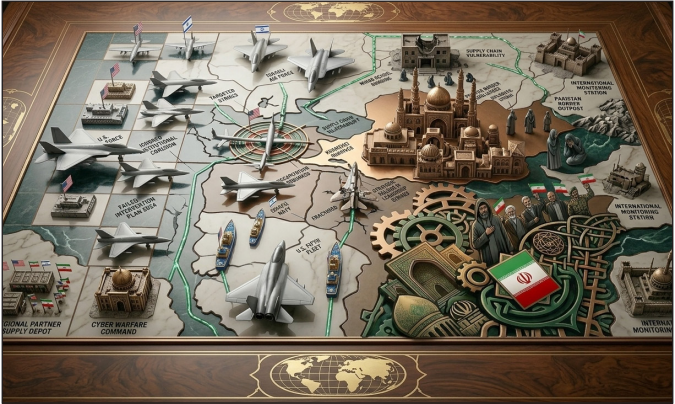
Case Study: Iran–USA–Israel Strategic Rivalry
The strategic confrontation involving Iran, Israel, and the United States represents one of the most complex geopolitical rivalries in the modern Middle East.
The conflict involves multiple dimensions including Iran’s nuclear ambitions, regional power competition, ideological differences, and proxy conflicts across the region. Current escalation, rather wars have included Israeli strikes against Iranian-linked targets, Iranian missile and drone responses, and continued economic sanctions imposed by the United States.
Such tensions have significant implications for corporate actors. Persistent instability in the region has increased demand for advanced defense systems including missile defense platforms, cyber security capabilities, and surveillance technologies. In addition, Iran’s proximity to the Strait of Hormuz, through which a substantial portion of global oil shipments passes, means that any escalation immediately affects global energy markets.
Case Study: The Russia–Ukraine War
The war in Ukraine provides another example of how modern conflict intersects with corporate economic interests. The conflict has produced several major economic effects:
• Expansion of Defense Production
Western military assistance to Ukraine has significantly increased demand for ammunition, missiles, armored vehicles, and air defense systems.
• Energy Market Transformation
European countries have reduced dependence on Russian energy supplies and sought alternative sources, reshaping global energy markets.
• Reconstruction Opportunities
Post-war reconstruction in Ukraine is expected to require hundreds of billions of dollars in infrastructure investment, creating opportunities for international engineering, construction, and financial institutions.
The Gaza War and the Surge in Global Arms Profits
The war in Gaza that began in October 2023 has had far reaching geopolitical, humanitarian, and economic consequences. While the conflict has produced devastating human suffering and regional instability, it has also contributed to a substantial expansion in global arms demand.
The war has become one of several major conflicts alongside the Russia– Ukraine war driving a surge in global military expenditure and arms industry revenues.
According to data released by the Stockholm International Peace Research Institute (SIPRI), the combined revenues of the world’s 100 largest arms producing and military services companies reached a record $679 billion in 2024, representing a 5.9 percent increase compared with the previous year. This surge was largely driven by increased demand resulting from conflicts in Ukraine and Gaza, as well as rising geopolitical tensions worldwide. The expansion of the arms industry during this period highlights how contemporary conflicts generate significant economic activity within defense sectors. As governments increase military spending and accelerate procurement programs, defense manufacturers often experience rapid revenue growth.
a. The Gaza Conflict and Regional Military Demand
The Gaza war intensified long-standing tensions in the Middle East and triggered increased defense preparedness among regional states. Israel’s military operations in Gaza were accompanied by expanded defense production and procurement programs designed to sustain prolonged combat operations. Israel’s defense exports reached approximately $15 billion in 2024, representing a 13 percent increase and the highest level in the country’s history. Much of this growth was driven by global demand for Israeli missile systems, air-defense platforms, drones, and electronic warfare technologies that had been tested in real combat environments. More than half of these defense exports were directed toward European countries, reflecting the growing international demand for advanced missile defense and surveillance technologies. The Gaza conflict therefore served as both a regional security crisis and a catalyst for expanding Israel’s defense industry presence in international markets. At the same time, several Western governments significantly increased military assistance to Israel, including supplies of precision-guided munitions, missile defense interceptors, and advanced surveillance technologies. These developments further strengthened the strategic relationship between Western defense industries and Middle Eastern security dynamics.
b. Global Arms Industry Expansion
The Gaza war coincided with broader global trends of increasing military expenditure. The SIPRI Top 100 arms producers experienced record revenue growth, reaching $679 billion in total arms sales in 2024, the highest figure recorded since the institute began tracking global arms industry data. The distribution of arms revenues illustrates the global structure of the defense industry:
• United States companies: Approximately $334 billion in arms revenues, nearly half of the global total.
• European companies: About $151 billion, reflecting strong growth driven by increased defense spending following the Ukraine war.
• Chinese companies: Approximately $130 billion, representing a major share of global arms production. • Middle Eastern firms: Around $31 billion, reflecting expanding regional defense industries.
• Russia: About $31.2 billion
Major corporations benefiting from the surge in global defense demand include Lockheed Martin, RTX (formerly Raytheon), Northrop Grumman, Boeing, BAE Systems, and several emerging defense firms specializing in drone technologies, cyber warfare systems, and missile defense platforms. The combined effect of the Ukraine war and the Gaza conflict has significantly strengthened the global defense market. According to analysts, European arms imports have also increased sharply as countries modernize their military forces in response to growing security concerns.
c. Technological Innovation and Combat Validation
Another important dimension of the Gaza war is the role of technological demonstration in conflict environments. Modern wars often serve as testing grounds for emerging military technologies, which can subsequently be marketed internationally.
In the Gaza conflict, several advanced systems were extensively used, including:
• AI-assisted surveillance and targeting systems
• Drone and counter-drone technologies
• Precision-guided munitions
• Integrated missile defense systems
• Electronic warfare and cyber capabilities
When such technologies demonstrate operational effectiveness in combat environments, they often generate increased international demand. Defense manufacturers frequently use battlefield performance as evidence of reliability and effectiveness when marketing systems to foreign governments. Consequently, conflicts can inadvertently accelerate the global diffusion of military technologies while simultaneously strengthening the financial position of defense contractors.
d. Ethical and Strategic Concerns
The expansion of the arms industry during periods of active conflict raises important ethical and policy concerns. Critics argue that the global arms trade may create economic incentives that indirectly sustain prolonged conflicts. Although corporations do not directly initiate wars, their economic interests can become closely tied to rising defense expenditures and military procurement cycles. This dynamic has contributed to ongoing debates regarding the regulation of the international arms trade.
Issues such as export controls, transparency in defense procurement, and the humanitarian consequences of weapons transfers remain central topics in international security discussions.
Furthermore, the growing profitability of the defense sector may encourage intensified technological arms competition among major powers. As countries seek to maintain strategic advantage, investment in advanced weapons systems continues to expand, potentially increasing global instability
e. Implications for the Global Security Environment
The Gaza war illustrates how regional conflicts can produce global economic ripple effects across the defense sector. The interaction between warfare, technological innovation, and corporate profit generation highlights the increasingly complex political economy of modern conflict. The current international security environment is characterized by simultaneous conflicts, rising military expenditures, and accelerating technological competition. In such an environment, corporate actors particularly those operating in defense and technology sectors play a growing role in shaping the strategic landscape.
Understanding these dynamics is therefore essential for policymakers seeking to manage the risks associated with prolonged conflict, arms proliferation, and geopolitical competition.
The Emerging Global War Economy, Corporate Networks Behind Modern Conflicts
In recent decades, the global security environment has increasingly evolved into what many scholars describe as a “global war economy.” This concept refers to the interconnected network of economic actors, industries, and financial institutions that operate within and benefit from the broader ecosystem of modern conflict. Unlike earlier eras of warfare that were largely state-driven, contemporary conflicts involve complex interactions between governments, multinational corporations, financial markets, and technological industries.
The global war economy operates through several interconnected sectors including defense manufacturing, energy production, advanced technology development, private security services, and post-conflict reconstruction industries. These sectors collectively form a vast economic structure that interacts closely with geopolitical competition and national security policies.
According to the Stockholm International Peace Research Institute (SIPRI), global military spending reached over $2.7 to $3 trillion in 2024, the highest level ever recorded. This rapid growth reflects the intensification of geopolitical rivalry and the expansion of defense procurement programs across multiple regions.
Increased military spending generates extensive economic activity for defense contractors, technology firms, and supporting industries that supply components, logistics systems, and advanced research capabilities.
a. Defense Corporations and Global Security Markets
Defense corporations represent the most visible component of the global war economy. Companies such as Lockheed Martin, RTX (Raytheon) Northrop Grumman, Boeing, BAE Systems, and General Dynamics dominate global arms production and supply advanced military technologies to governments worldwide.
These corporations operate within highly complex supply chains involving thousands of subcontractors and research institutions. Major weapons systems such as fighter aircraft, missile defense platforms, and naval vessels require collaboration across multiple technological sectors including electronics, artificial intelligence, aerospace engineering, and satellite communications. The concentration of technological expertise within large defense corporations has increased their strategic importance to national security planning. Governments rely heavily on these firms for innovation, manufacturing capacity, and technological development. As a result, defense corporations have become deeply integrated into national security infrastructures.
b. Financial Institutions and Conflict Economies
Large financial institutions also play an important role in the broader war economy. Investment firms, banks, and financial markets provide capital that supports defense production, infrastructure development, and reconstruction projects in post-conflict environments.
Major investment firms such as BlackRock, Vanguard, and State Street hold substantial shares in leading defense contractors. These financial linkages illustrate how global capital markets are connected to the defense sector. While investment institutions do not directly influence military decisions, their financial involvement demonstrates how conflict related industries operate within global economic systems. Post war reconstruction further expands the role of financial institutions. Large-scale rebuilding projects require financing mechanisms involving international development banks, private investment funds, and multinational construction companies.
c. Resource Competition and Strategic Minerals
Modern technologies used in defense systems depend heavily on access to critical minerals such as lithium, cobalt, rare earth elements, and advanced semiconductors. These materials are essential for manufacturing batteries, missile guidance systems, electronic warfare equipment, and satellite technologies. Many of these resources are concentrated in geopolitically sensitive regions, particularly parts of Africa, Central Asia, and South America. Competition for access to these materials has increasingly become a strategic concern for major powers. For example, cobalt deposits in the Democratic Republic of Congo and rare earth minerals in various African and Asian regions are vital for global technological supply chains. Control over these resources has therefore become an important dimension of international economic competition and strategic planning.
d. The Technology Sector and the New Military Innovation Ecosystem
One of the most significant developments in modern warfare is the growing role of civilian technology companies in military innovation. In earlier eras, most defense technologies were developed within government research laboratories or military institutions. Today, however, many breakthrough innovations originate within private technology firms. Companies involved in artificial intelligence, cloud computing, cyber security, satellite imaging, and robotics increasingly collaborate with defense establishments.
Governments often contract private firms to develop advanced software systems, data analytics platforms, and autonomous technologies used in military operations. This emerging technology security nexus has blurred the boundaries between civilian innovation and military applications. Technologies originally designed for commercial use such as artificial intelligence algorithms or satellite imaging systems are frequently adapted for defense purposes.
As a result, the modern battlefield increasingly depends on technological ecosystems that extend far beyond traditional defense industries.
e. Reconstruction Economies After Conflict
Post conflict reconstruction represents another important dimension of the global war economy. After major wars, governments and international organizations typically allocate vast resources toward rebuilding damaged infrastructure, housing, transportation systems, and energy networks. Large multinational construction firms, engineering companies, and consulting firms often compete for reconstruction contracts worth billions of dollars.
Examples include reconstruction programs in Iraq, Afghanistan, Libya, and potentially Ukraine and Gaza in the future. While reconstruction efforts are essential for restoring economic stability in conflict affected regions, they also represent significant commercial opportunities for international corporations.
f. Strategic Implications
The emergence of a global war economy does not mean that corporation’s control international politics. However, it highlights how economic networks increasingly intersect with geopolitical conflict. Corporate actors operate within economic systems that respond directly to security crises, military expenditure, and reconstruction programs. Consequently, modern warfare now involves a broader range of stakeholders than traditional state centered conflict models suggest. Understanding the economic structures behind modern warfare is therefore essential for developing more effective international policies related to conflict prevention, arms control, and global security governance.
Emerging Technologies and the Future of Warfare
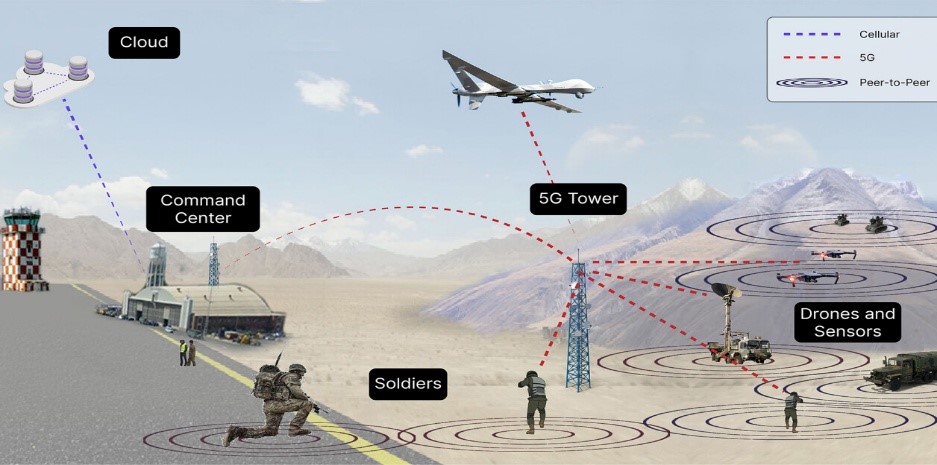
Technological innovation is rapidly transforming the nature of warfare. Modern military operations increasingly rely on advanced technologies developed by private companies in collaboration with government institutions. Key technological domains include:
• Artificial Intelligence
AI systems are used for intelligence analysis, predictive modeling, battlefield surveillance, and operational planning.
• Drone Warfare
Unmanned aerial systems have become central tools for reconnaissance, surveillance, and precision strikes.
• Cyber Warfare
Cyber capabilities allow states to disrupt financial systems, attack infrastructure networks, and conduct information warfare.
These developments illustrate the growing integration of civilian technology industries into national security ecosystems.
The Corporate Agenda
The relationship between corporate interests and global conflict has become an increasingly debated subject within international security studies. Large financial institutions, multinational corporations, and defense manufacturers often operate within economic environments that are indirectly shaped by geopolitical instability.
In particular, the global arms industry benefits from rising military expenditures during periods of heightened international tension. Major defense corporations including Lockheed Martin, RTX (formerly Raytheon), Boeing, Northrop Grumman, and BAE Systems derive a substantial portion of their revenue from government defense contracts. According to data from SIPRI, the world’s largest arms producers generate hundreds of billions rather trillions of dollars in annual sales, reflecting the sustained growth of the global defense market. Conflicts such as the war in Ukraine have significantly increased demand for advanced weapons systems, ammunition production, air defense platforms, and intelligence technologies.
Western governments have provided extensive military assistance to Ukraine, leading to expanded procurement programs and accelerated production cycles within the defense sector.
At the same time, destruction caused by war frequently creates opportunities for large-scale reconstruction projects. International construction firms, engineering companies, financial institutions, and infrastructure developers often compete for post-conflict rebuilding contracts. In Ukraine alone, reconstruction costs are estimated by the World Bank to potentially exceed 400 billion dollars, illustrating the enormous economic stakes associated with post war recovery. While corporate actors do not directly determine the outbreak of wars, their economic interests can influence broader policy environments through lobbying, research partnerships, and strategic investment.
The interaction between corporate incentives and national security policy therefore represents an important dimension of the modern political economy of conflict.
Top major world defense corporations:
| Lockheed Martin (USA) – $68.39 billion in defense revenue (2024) |
| RTX (Raytheon Technologies) (USA) – $43.5 billion in defense revenue (2024) |
| China Aerospace Science and Industry Corporation (CASIC) (China) – $38.71 billion in defense revenue (2024) |
| Northrop Grumman (USA) – $36.6 billion in defense revenue (2024) |
| General Dynamics (USA) – $36.5 billion in defense revenue (2024) |
| BAE Systems (UK) – $32.26 billion in defense revenue (2024) |
| Boeing (USA) – $31.75 billion in defense revenue (2024) |
| China State Shipbuilding Corporation (CSSC) (China) – $22.39 billion in defense revenue (2024) |
| L3Harris Technologies (USA) – $16.98 billion in defense revenue (2024) |
| Thales (France) – part of the top defense companies |
Implications for Pakistan
For Pakistan, understanding the corporate and economic dimensions of global conflict is particularly important for national security planning.
South Asia remains a region of persistent geopolitical rivalry, especially between Pakistan and India. India’s expanding defense procurement programs have created strong commercial relationships with Western and Israeli defense industries. Pakistan must therefore maintain a balance between credible deterrence and sustainable defense modernization.
An important dimension of Pakistan’s strategic environment is the expanding role of international defense industries in South Asia. India has emerged as one of the world’s largest arms importers, maintaining extensive procurement relationships with defense corporations in the United States, Europe, Israel, and Russia.
These partnerships have facilitated India’s acquisition of advanced fighter aircraft, missile defense systems, surveillance platforms, and naval technologies. As a result, South Asia has increasingly become part of the broader global defense market, where corporate actors influence technological diffusion, procurement competition, and regional military modernization trends.
For Pakistan, these developments highlight the importance of strengthening indigenous defense pro duction and technological innovation. Expanding domestic capabilities in areas such as aerospace engineering, drone technology, cyber security, and electronic warfare can reduce dependence on external suppliers while enhancing strategic autonomy.
At the same time, carefully managed international partnerships with friendly countries can support technological advancement and industrial development. Understanding the interaction between corporate defense industries and regional security competition therefore remains essential for Pakistan’s long-term defense planning and strategic stability in South Asia.
Energy security also remains a major strategic concern. Global conflicts affecting energy markets directly impact Pakistan’s economy through fluctuations in oil prices and supply disruptions.
Initiatives such as the China–Pakistan Economic Corridor (CPEC) illustrate how infrastructure development, economic cooperation, and strategic competition intersect in regional geopolitics.
Pakistan’s long-term strategic resilience will depend on strengthening domestic technological capabilities, expanding indigenous defense industries, and maintaining balanced diplomatic relationships.
Conclusion
Modern warfare can no longer be understood solely through traditional geopolitical analysis. Contemporary conflicts emerge from the interaction of national security concerns, economic competition, technological innovation, and corporate influence.
Defense corporations, energy companies, technology firms, and financial institutions increasingly operate within the broader ecosystem of global conflict. Although these actors do not independently initiate wars, their interests can influence how conflicts develop, how military resources are mobilized, and how reconstruction efforts unfold.
The case studies examined in this paper illustrate how geopolitical tensions intersect with economic structures within the globalized security environment.
Recognizing the corporate dimension of warfare is therefore essential for policymakers seeking to manage international security challenges and promote long-term stability.
Future security strategies must address not only traditional geopolitical rivalries but also the economic networks and corporate interests that increasingly shape modern conflict.
Selected References
- International Institute for Strategic Studies (IISS). (2024).
- The Military Balance. World Bank. (2024).
- Ukraine Rapid Damage and Needs Assessment. RAND Corporation. (2023).
- Defense Industry and Global Security Analysis. Stockholm International Peace Research Institute (SIPRI). (2024-25).
- Trends in World Military Expenditure. Center for Strategic and International Studies (CSIS). (2024).
- Global Defense Markets and Strategic Competition. United Nations. (2024).
- Global Military Spending and Security Trends.