




How CITADEL Is Turning Pakistan into a Global Innovation Platform
Innovation is no longer a niche ambition; it is a national strategy that shapes power, resilience, and global relevance. Countries that master innovative tech ecosystems define the future; those that lag become passive participants in it. With the kind of technology on the horizon, lagging behind or being a mere user of the technology is not an option as it directly affects the national security of a country. In the context of our environment, Pakistan stands at a critical inflection point: with 31% graduate unemployment, a demographic window narrowing toward 2040, and a daunting mandate to create 2.5 million jobs annually, the stakes are existential. The challenge goes beyond producing talent—it is about turning talent into enterprise, turning ambition into scale, and converting potential into measurable, lasting economic growth. To seize this moment, Pakistan must accelerate investment in education, foster an entrepreneurial ecosystem that supports risk-taking and export-oriented enterprises, and align public policy with market-driven innovation. By building world-class research, digital infrastructure, and inclusive opportunity, the nation can transform its demographic dividend into a durable engine of productivity, resilience, and global competitiveness.
At the center of this transformation stands Pathfinder CITADEL (Center for Innovation, Technological Advancement, Digital Entrepreneurs & Leadership) an integrated upskill academy, accelerator, consulting innovation ecosystem engineered to defy Pakistan’s “economic gravity” and create sustainable escape velocity. From the commanding global stage of Davos to the fast-rising innovation corridors of Jeddah, CITADEL has moved beyond symbolism into execution. It has begun repositioning Pakistan not as a participant in global innovation, but as a platform for it.
The Davos Moment: Pakistan Steps into Structured Global Innovation
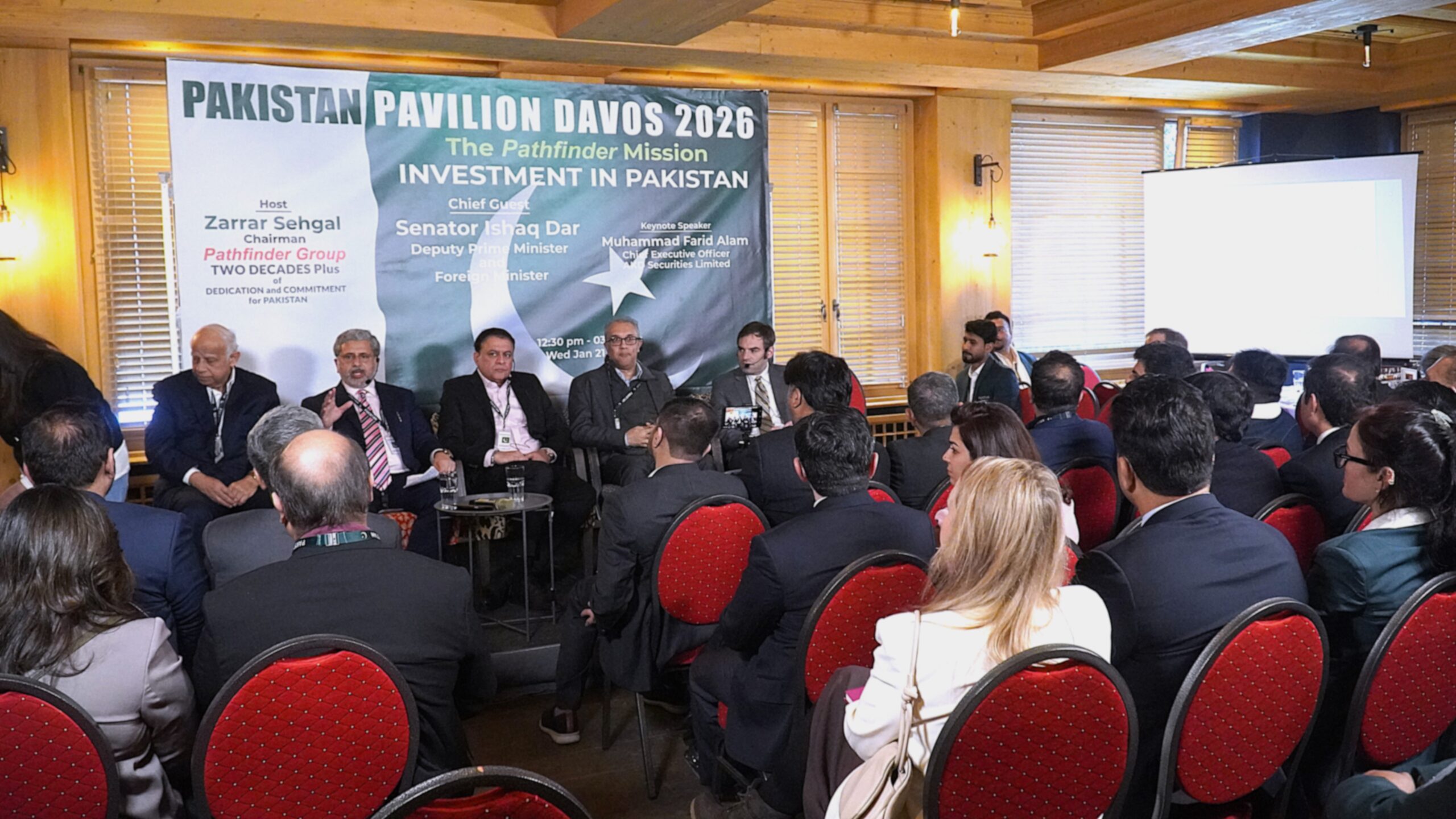
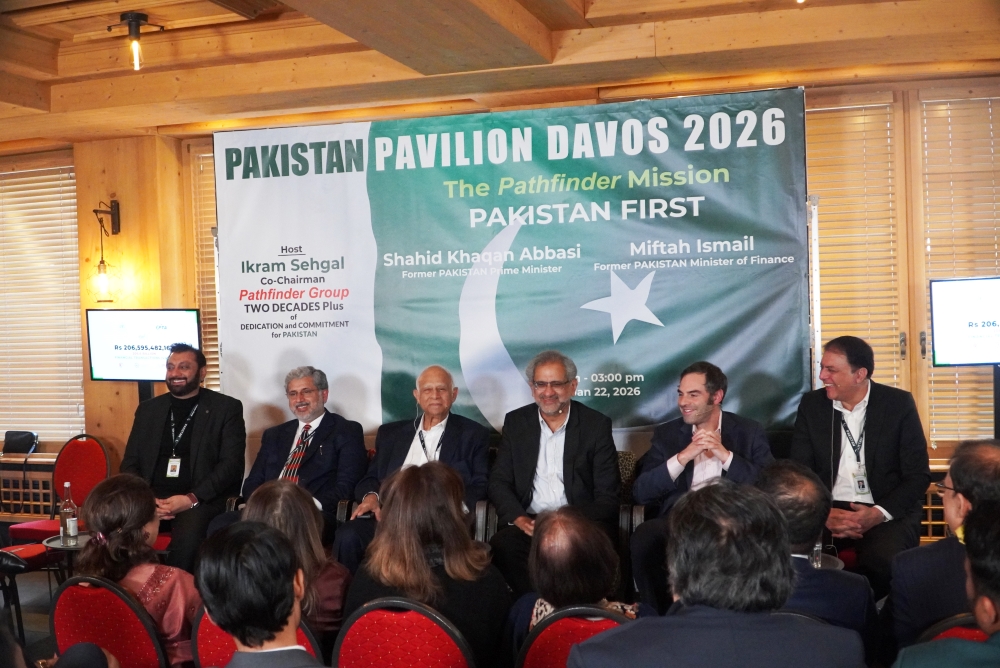
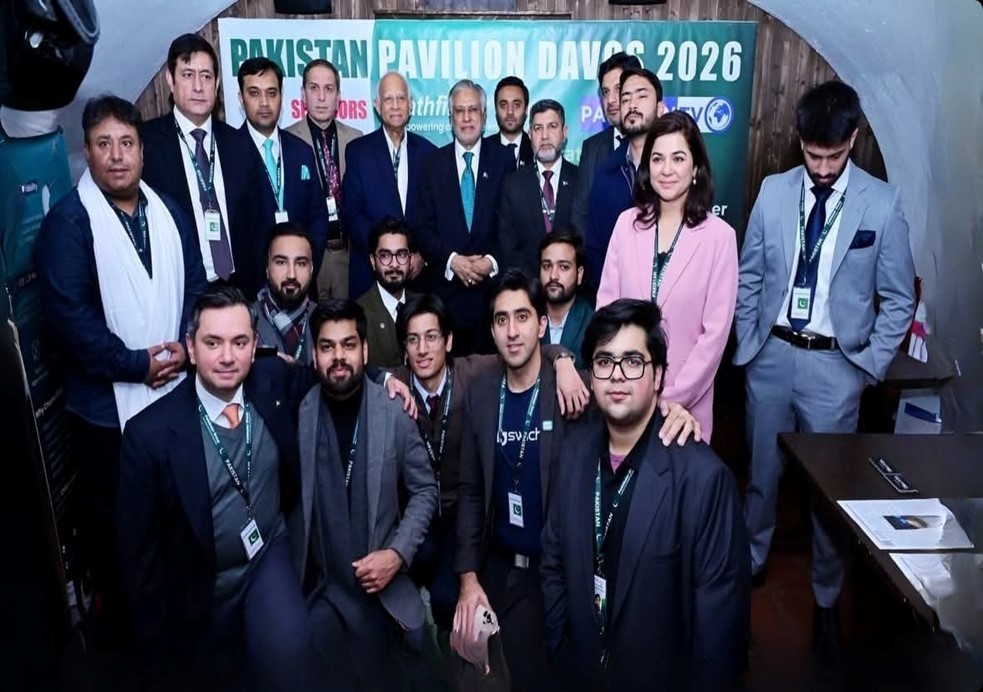
January 2026 marked an electrifying milestone. At the Pakistan Pavilion during the World Economic Forum Annual Meeting in Davos, Pakistan’s innovation narrative shifted from aspiration to articulation.
The CITADEL Davos Startup Challenge 2026 received more than 200 applications from across the country. After rigorous screening, 08 high-potential startups were ultimately selected and mentored to showcase at the Pakistan Pavilion on the sidelines of WEF DOVOS 2026. Not as tokens. Not as observers. But as structured representatives of Pakistan’s emerging capabilities in artificial intelligence, fintech, health technology, climate innovation, and digital education. This was not symbolic participation. It was a curated representation at the highest global forum for economic leadership. The Pakistan Pavilion was inaugurated by the Prime Minister of Pakistan, while the CITADEL Startup Showcase was formally inaugurated by the Deputy Prime Minister & Foreign Minister during DAVOS 2026. This alignment of political leadership and innovation entrepreneurship sent a clear signal: innovation diplomacy is now a national priority. For over two decades, the Pakistan Pavilion at Davos managed by PATHFINDER Group under the visionary leadership of Mr. Ikram Sehgal Co-Chairman Pathfinder Group has projected investment diplomacy and soft power. But 2026 marked a structural evolution. Innovation diplomacy became measurable, scalable, and intentional. The selected founders did not simply attend panels. They engaged with global investors, built partnership pipelines, explored market access pathways, and positioned Pakistani technology solutions within international ecosystems. The credibility gained at Davos was real. But what distinguished CITADEL’s approach was continuity. Davos was not the destination. It was the ignition point.
PATHFINDER CITADEL Jeddah Startup Challenge 2026: Scale, Signal, and International Magnetism
If Davos established credibility, Jeddah demonstrated gravitational pull. On January 19, 2026, building directly on Davos momentum, CITADEL announced the CITADEL Jeddah Startup Challenge 2026 in partnership with OIC-COMSTECH, scheduled during the World Economic Forum Spring Session in Jeddah (22–23 April 2026). However, this time the canvas was expanded from Pakistan to entire OIC region, inviting the tech startups from all the OIC countries. The response was extraordinary. A total of 337 startup applications were received. Out of these 56 applications came from 15 different countries. This statistic marks a paradigm shift. For the first time at this scale, international startups from OIC countries were applying to participate through a Pakistani innovation platform. Pause on that transformation, Pakistan was no longer merely exporting startups to global forums, it is hosting them. Founders from OIC and other countries e.g. Bangladesh, Saudi Arabia, Egypt, Malaysia, Gambia, USA, UK, Sweden & Netherlands engaged alongside Pakistani ventures in structured pitching sessions. The aura was collaborative. The signal was powerful. Pakistan was no longer on the periphery of innovation diplomacy. It was convening it!
From National Ecosystem to International Innovation Hub
The significance of 56 international applications from 15 countries extends far beyond numbers. It represents:
● Trust in Pakistan’s institutional platform credibility
● Recognition of CITADEL as a neutral, execution-driven ecosystem
● The rise of South–South innovation collaboration
● Pakistan’s repositioning within the OIC technological landscape
In a global environment where startup ecosystems compete aggressively for capital, attention, and talent, CITADEL has engineered a differentiated model of collaborative expansion instead of isolated acceleration. By connecting innovators, policymakers, investors, and enterprises across OIC member states, CITADEL is transforming scientific capability into a scalable enterprise. It is creating structured pipelines rather than episodic events.
This cross-border integration strengthens Pakistan’s role as:
● A convening power in the innovation economy
● A bridge between Central Asia, South Asia, and the Middle East
● A sovereign AI advocate
● A regional Deep-Tech accelerator
● A credible international innovation host
Pakistan as a Platform: The Narrative Shift
Perhaps the most powerful transformation of 2026 is narrative repositioning. Pakistan is no longer simply a developing ecosystem seeking validation. It is becoming a platform others seek to access. When international founders from 16 countries apply to participate in a Pakistani-led innovation challenge, the global perception shifts. When Davos conversations continue in Jeddah under Pakistani convening leadership, the positioning shifts. When OIC countries collaborate through Islamabad and Jeddah under structured execution frameworks, the leverage shifts. This is not branding. It is structural repositioning.
CITADEL is enabling Pakistan to function as:
● A digital sovereignty advocate
● A sovereign AI execution hub
● A Tech accelerator
● An OIC innovation bridge
● A global startup platform
This is the new aura of Pakistan’s innovation story – confident, collaborative, and internationally credible.
A Defining Inflection Point
PATHFINDER CITADEL has demonstrated that: Pakistan can compete globally. Pakistan can convene regionally. Pakistan can collaborate internationally. Pakistan can host at scale. In doing so, it has reframed Pakistan’s innovation identity – from emerging ecosystem to structured platform. Startups from International OIC countries and other developed countries are now applying to participate on a Pakistani innovation platform. That is not incremental progress. That is a paradigm shift.
From Visibility to Velocity: Institutionalizing Momentum
On February 14, 2026, policymakers, diplomats, industry leaders, and founders gathered in Islamabad to convert Davos visibility into measurable domestic execution.
CITADEL’s integrated architecture – academy, accelerator, and consulting engine is designed precisely to bridge global exposure with national ecosystem development.
Its 2030 ambition is bold, yet structured:
● Skill 10,000 IT and Sales graduates
● Accelerate 500 startups
● Drive $200 million in measurable economic impact
These are not aspirational slogans. They are quantifiable targets aligned with workforce transformation, startup scaling, AI capability development, and sovereign digital growth. This is how demographic pressure becomes demographic power.
Conclusion
The journey from Davos to Jeddah signals more than participation in two global forums. It signals the emergence of Pakistan as a credible, structured, execution-driven innovation platform. The work continues – across AI, Deep-Tech, digital exports, sovereign systems, startup acceleration, and workforce transformation. For founders seeking scale. For investors seeking emerging markets with structure. For policymakers seeking collaborative growth models. For enterprises pursuing sovereign AI transformation. This is the moment. Pakistan is not merely entering the global innovation conversation. Through CITADEL, it is helping shape it.
Pakistan is no longer entering the global innovation arena – it is becoming the arena.