





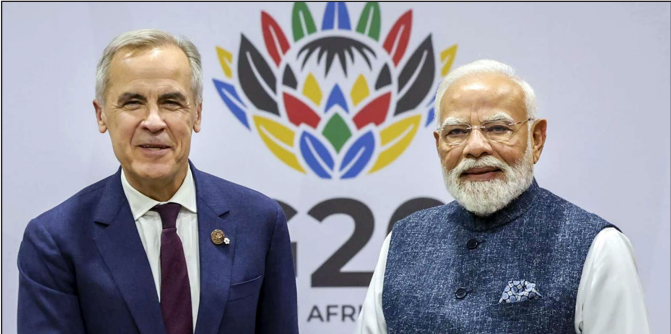
The recently announced Canada-India uranium deal close to $2.8 billion including Cameco’s shipment of uranium over 10 years has also caused dire non-proliferation and regional-stability protests. The foreign minister and the nuclear industry of Canada have been highly excited about the deal. However, the past experience of India makes one think that caution should be taken. Since 1974, India has not signed the Nuclear Non-Proliferation Treaty (NPT), and has had a history of diversion of civilian nuclear material to weapons (most infamously its 1974 bomb test). The effects of that test were the immediate trigger to formation of the Nuclear Suppliers Group and tight export controls. New uranium collaboration now appears to overlook this story. According to the remarks of a senior analyst, providing India with free Uranium would enable India to put aside its indigenous Uranium production towards military needs. Nuclear-armed states (such as India) receive special treatment as non-NPT member undermine the global nonproliferation practices.
Past civilian Nuclear Technology Diversion in India
In 1974, India, under the pretext of a so-called peaceful nuclear explosion, conducted its first nuclear test, in which plutonium manufactured in a reactor supplied by Canada was used. This covert uranium employment enraged Western governments and it was precisely what resulted in the formation of the Nuclear Suppliers Group (NSG) in 1975.
This form of diversion is precisely what the formation of the NSG was meant to avoid. It is based on that precedent that former U.S. officials have stressed that civilian nuclear export to India should receive special vigilance. India is also not a signatory to the NPT or the Fissile Material Cutoff Treaty (FMCT), or permitted itself any full-scope IAEA safeguards on its entire nuclear program. Therefore, such deals as the Cameco one are very awkwardly placed outside the context of international arms control.
According to one expert on proliferation, the Canadian eagerness to sell uranium to India can be interpreted as a sign of an attitude that can be described as that of a tough negotiator on the Indian part, with suppliers being willing to go competitively after the Indian nuclear market, but doing so at the expense of nonproliferation. Unless accompanied by stringent terms, such commerce will be rewarding as opposed to reforming the previous policy of nuclear vagueness and weaponization of civilian material in India.
Chronic Security Lapses in India’s Nuclear Complex.
The history of nuclear security in India has been marked by a phenomenal amount of nuclear incidents since the 1990s up to the present, implying institutional vulnerability. The dozens of cases of fissile or radioactive materials lost, stolen, or smuggled are documented in open-source reporting. For example, in December 2016, Indian officials discovered almost 9 kg of radioactive depleted uranium in the possession of two individuals. In July 2018, Kolkata police caught five men who were allegedly attempting to sell 1 kg of uranium valued at ₹3 crore.
More recently, in May 2021, the Maharashtra anti-terrorism squad arrested two suspects with 7.1 kg of natural uranium. Moreover, in August 2024 Bihar police seized 50 grams of californium-252, an extremely dangerous weapons-grade isotope worth about ₹850 crore.
Meanwhile, Indian nationals have been caught smuggling fissile materials across the borders: in Kathmandu in 2022, two Indians and six Nepalese were arrested with uranium-like material in a car allegedly bought at ₹35 crore per kilogram. These high-profile seizures are not an isolated case; analysts observe a tendency of theft and smuggling. Recent estimates by independent organizations have identified 25 cases (all over 200 kg of fissile and radioactive material) lost or stolen in India since the notorious 1994 case of Domiasiat (Meghalaya) – 2.5 kg of uranium recovered by smugglers.
The number of such violations has led analysts to fear that this is a form of systematic negligence in its nuclear security framework that could result in fissile material being spilled into the foreign black market. Even Indian specialists have called it a sign of systematic laxity in its nuclear security system. India has failed in the policing of its civil and military stocks many times: even simple precautions like regular inventory and background checks seem to be failing regularly. The accruing history is not that of a few anomalies but of a security issue.
U.S. Sanctions Signal Proliferation Risks
United States targeted sanctions also indicate the proliferation history of India. In the last 20 years, the U.S. has blacklisted several Indian organizations and individuals who were involved in shoddy WMD-related exports. As an illustration, the U.S Treasury in 2003 penalized Protech Consultants Pvt. Ltd. on the grounds that it supplied equipment to programs of chemical and biological weapons in Iraq. In the same year, the U.S. also prohibited NEC Engineers Pvt. Ltd. and its president, Hans Raj Shiv, on the basis of making a contribution of knowingly and materially to weapon programs in Iraq; Shiv was already sanctioned in 2002 pursuant to the Iran-Iraq Arms Non-Proliferation Act. In 2004, the State Department declared the sanctions on two Indian nuclear scientists (Dr. C. Surender and Dr. Y.S.R. Prasad) in the Iran Non-Proliferation Act, claiming that they had sold missile-related technology to Iran.
The problem of proliferation by India also appeared even in recent years: in 2007, two Indian citizens, Parthasarathy Sudarshan and Mythili Gopal. Citizens were detained in the United States because they had exported a sensitive missile-guidance computer technology without permission. These sanctions and prosecutions – including transfers to Iraq, Iran, and North Korea, among others highlight the fact that some of the Indian companies and even individuals have violated international regulations and that regulation has, at times, been loose. The new uranium deal, on the other hand, appears to compensate the Indian state and does not bring this aspect of enforcement loopholes and necessitate remedies.
Known Security Breaches at Indian Facilities
The most sensitive nuclear sites have been infiltrated several times. As an example, independent reporting discovered that in 2010-2011 intruders by land and sea broke into the complex at least 25 times.
The plotter of the 2008 terror attacks in Mumbai is infamously reported to have also toured the BARC location before the attack. These breaches resulted in severe design or process failures in the security of critical facilities.
According to authoritative reports, the nuclear regulator (AERB) in India lacks an adequate security system, which is dangerous in terms of proliferation. Practically, it would imply that there is no entirely independent watchdog to see to compliance with best-practice physical security, and internal audit or external inspection by a foreign audit is uncommon. Incidents of security (e.g. theft of radioactive sources, insider attacks, or cyber-attacks) are usually swept under the carpet.
Growing Arsenal and Fissile Stockpiles
In the meantime, the strategic nuclear forces of India have been increasing. India has approximately 180 warheads today, as estimated by the Nuclear Threat Initiative (NTI). According to SIPRI, in 2024, India increased its nuclear capabilities and is currently putting new canister-launched ballistic missiles into operation with multiple warheads in place.
Already, NTI numbers on fissile inventories (0.7 +-0.16 tons of weapon-grade plutonium, and approximately 5.7 tons of HEU) suggest that hundreds more weapons of material are at the disposal of India. In fact, a recent study predicts that India has made enough plutonium to make maybe 130-210 warheads, and will continue to do this. One study quoted in the Bulletin of the Atomic Scientists has even estimated the capacity of more than 1,000 warheads. India may be able to produce plutonium in large quantities as it constructs additional heavy reactors to tap its thorium deposits. In this view, providing India with a guaranteed uranium supply can only wipe out the urge for it to stop or reduce its own fissile material production. It will further destabilize the regional security and weaken the already fragile arms control.
Policy Implications of the Uranium Deal
The deal will compromise international weaponry control. India is a non-NPT and FMCT country sale of uranium is against the spirit of the NPT and that of the Fissile Material Cutoff Treaty (FMCT). While other non-NPT and FMCT have not enjoyed such special treatment (and Canada has generally accepted export laws in relation to it). Critics will point out the double standard: why not treat India in the same way when it openly declares that it is not planning to stop breeding plutonium? The mass exports of uranium will promote arms races in the region. The transaction worsens the issue of safety and security. Canada (and other suppliers) has protocols that seek assurances to secure handling, but the record of India will not augur well with these assurances.
Transporting dozens of tons of Uranium to India, which has lost dozens of kilograms of uranium due to theft or lack of caution, appears to most experts as a precedent. As an example, Canada and other traders (such as Kazakhstan) have traditionally remained quiet despite the officials in India reporting losses of materials, with little details and compensatory action taken. This unresponsive stance on security breaches has been criticized to have harmed the safety of the region. Should there be an incident, a massive theft, a terrorist distraction, the political and human impact would be astute, and the majority of the fault would be vested in the supplier of the material, making the choice to supply the material in the first place. When Canada, which has a good policy of nonproliferation, is ready to trade with India and not attach any strict conditions, then other suppliers will do the same. It undermines the bargaining of those states and organizations that have demanded strict export control. In fact, in 2009, Canadian nonproliferation agencies called on Ottawa to ensure that there must be a kill switch in case of diversion of fissile material or another test.
It seems such appeals have been ignored. The New Deal, in its turn, appears to be concerned with trade and commerce. Such a strategy has the danger of going back to the old tradition of the 1970s: a significant supplier of uranium telling the world that it will sell this stuff to India regardless of what India does with it.
Undermining Arms Control
The sale of uranium to India has far-reaching implications for arms control and nonproliferation. To begin with, by conducting nuclear trade with a non-NPT state in the absence of a fissile-cutoff regime, Canada likely undermines the normative power of the latter. It was specifically stated that NPT does not provide complete nuclear cooperation to such states as India. The Fissile Material Cut-off Treaty (FMCT) is languishing, and India has refused to accept any cut-off. However, India will shortly get heaps of uranium with no promise of stopping its own fissile material production. Critics believe that this is sending an implicit message to other de facto nuclear powers that it is possible to reward big producers with trade deals even without official promises to make them disarm. It creates a bad precedent. Second, the transaction encourages a local arms competition. Pakistan has already threatened the Canada-India pact, stating that it would seek its nuclear build-up in retaliation. In fact, the government of Pakistan sees the increasing arsenal of India as the main force behind the modernization of its nuclear power. The deal, by drastically increasing the availability of fuel to India (thus making the availability of domestically produced uranium in India available to weapons production), in effect brings down the barrier to more bombs being made in India. According to SIPRI and NTI reports, India can reuse its domestic high-grade uranium (which was originally aimed at use in civilian reactors) in weapons manufacturing once the foreign fuel comes. In the existing protection, not many Indian reactors are going to be under IAEA inspection. Plutonium-producing research reactors (e.g. Cirus, Dhruva) would not be under protection. In this way, the imports of uranium would indirectly increase the unsafeguarded plutonium stockpile in India. Pakistan will not fail to observe an increase in the Indian fissile production and counter any such increase with its own production to maintain the regional balance. The dangers are also increased by the fact that South Asia in the past has been among the most unstable nuclear hotspots. The relief that Canada would offer to the civil program of India with good intentions is at the wrong time, when the regional tensions are already high. Third, it is questionable whether this nuclear trade is secure or not. The Canadian government says that it will make India fulfill certain security requirements, but little is known. Considering India has failed to maintain control on several occasions, most specialists are not convinced about India’s preparedness to make sufficient management commitments. All Canadian uranium to be shipped by sea will have to go through several borders and chokepoints.
Previous Indian experience indicates that complex criminal networks or foreign entities may attack such shipments or storage facilities. An instance of this is that in 2003, a militant faction was apprehended with 225 g of processed uranium along the Bangladesh border.
There was another incident of reactor material theft in 2006 at a civilian plant. These incidents, far from being minor or brushed under the carpet, clearly reveal how vulnerable India’s nuclear facilities are. The India–Canada uranium deal further compounds these risks by expanding nuclear activity without adequately addressing the existing safety and security gaps.
Lastly, the agreement leaves a bad precedent for the international standards. Traditionally, Canada has been the proponent of nonproliferation. The sale of uranium to India (not signatory to the NPT, CTBT, and FMCT), which has a history of radioactive material theft and sensitive nuclear facility security breach seems to be ripping apart the fabric of the Nuclear Non-Proliferation regime. It implicitly sanctions India to be a quasi-NWS without fulfilling the requirements of an NWS. This will be a double standard and set a bad precedent for aspiring and rogue nuclear-weapon states. Even states such as Brazil or South Korea may say:
Why do you only reward India? Concisely, the Canada-India agreement might bring in temporary business benefits, but it compromises the long-term objective of enhancing multilateral arms control
Conclusion
With these threats, internal security risks, and history of breach, international institutions, e.g. export control regimes and the UN, must demand that India provide substantial security and nonproliferation assurances. India must also be obliged by the supply agreement in terms of not testing nuclear weapons and the production of more fissile material. Canada ought to include a kill-switch provision: if India holds a nuclear test or restarts its special emphasis fissile material production, it would automatically stop the delivery. Canada and other nations must urge India to agree to other IAEA safeguards on the supplied uranium. This may also be in the form of India voluntarily making its civil reactors subject to complete scope inspections or even undergoing international monitoring of new thorium breeder facilities. Moreover, India must permit third-party audits of its nuclear material accounting on a regular basis. In the absence of such measures, the provision of uranium is virtually the transfer of dozens of kilograms of fissile material to a black box. Canada ought to visibly tighten its own export-control system in regard to this agreement. As an example, give domestic arms regulators increased powers to perform checks of downstream Indian fuel plants that become receivers of Canadian uranium. Close monitoring of the disposal of the uranium (reactors compared to unenriched stockpiles) and verifying end-use should also be done carefully. Canada, simultaneously, must liaise with other supplier states (i.e. Australia, Kazakhstan) in order to have a unified approach to the credentials issue. In case any security incident takes place in India, Canada must insist on an investigation by the IAEA and the findings need to be made public.The Canada-India uranium deal, as it stands today would be a threat to the stability and nonproliferation of the globe and the region in general. With India having a bad history of nuclear diversions, thefts and security lapses Canadian policymakers ought to be in a position to tie sales to tight, verifiable security guarantees. Otherwise, this deal would be fueling the arms race and proliferation, and security threats in the region.