
“More than in any other endeavor, things in war often do not unfold as anticipated.”
Carl von Clausewitz
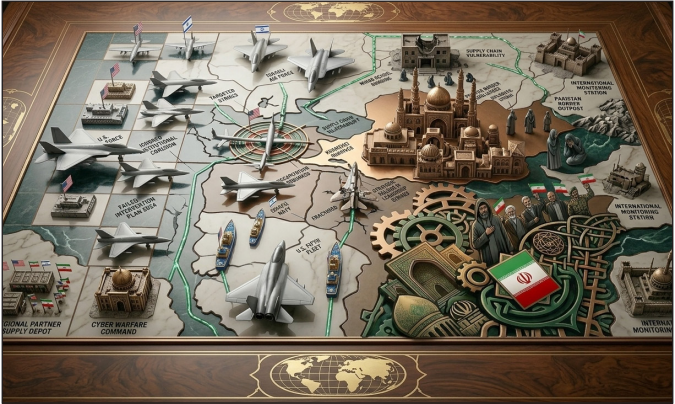
Historically big powers usually overextend and squander resources in peripheral regions at the cost of ignoring core issues at home. The American war on Iran is the latest example of this pattern. The allure of overwhelming military power is seductive, and it is used to try to achieve a political or ideological objective even at the cost of long-term objectives.
No conflict is black and white with only winners and losers. There are many shades of grey. Emerging competitors of great powers get some benefits from the mistakes of others. Disruption of oil and gas shipments are having a major global economic impact. The Russian invasion of Ukraine triggered sanctions of Russian oil exports and Europe switched its gas supply from Russia to Qatar. Forty percent increase in crude oil prices forced the United States to ease sanctions on Russian oil. Qatar has halted its gas supply that increased Europe gas energy market price over seventy percent. It is in Russian interest that conflict prolongs for a few weeks as the energy crunch will force the United States and Europe to ease sanctions on Russian oil and gas exports. It also diverts attention and resources of support for Ukraine. There are credible reports that Russia is providing intelligence information to Iran about targets and it is not surprising as a payback for American target information provided to Ukraine as well as to reap economic benefits from the conflict.
Chinese economic interests suffer from prolongation of the conflict but a few weeks extension provides some advantages on the military front. On the military front, the Chinese are gathering all data about operations including movement time of U.S. assets, radar and signal signatures of weapon systems used, response times and assessment of depth of U.S. military supply chain. More resources for the Middle East conflict mean less for the pacific theatre. Transfer of THAAD air defense system from South Korea and movement of USS Tripoli and 31 Marine Expeditionary Unit from Japan to the Middle East is a welcome sign for China.
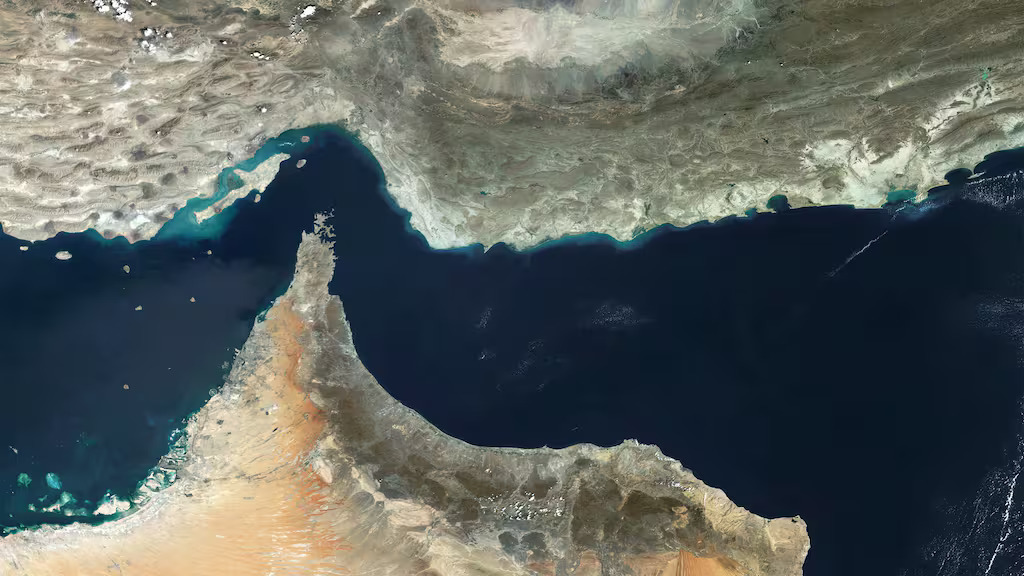
One third of Chinese oil supplies pass through the Strait of Hormuz. China will use three cushions to avoid major disruption. Saudi Arabia is a major exporter of oil to China and use of the east-west pipeline to load it at the port of Yanbu and ship it via Red Sea bypassing the Strait of Hormuz, increased supply from Russia, tacit agreement with Tehran to allow passage of China bound ships and back up of Strategic Petroleum Reserve (SPR). By the end of 2025, China has increased its SPR to 100 days with the goal of doubling it by the end of 2026. With these cushions, China can absorb one-to-three-week prolongation of conflict.
China’s balancing act of trying to portray itself as a mediator keeping good relations with the Gulf countries and Iran can provide medium to long term benefits. Thirty percent of Chinese construction projects are in the Middle East and post-conflict reconstruction in Iran and expansion and exploration of new routes to bypass energy choke points can bring new opportunities for Chinese businesses. China is neither a passive bystander nor an active supporter in this conflict. It acted as a ‘quiet enabler’ when in the summer of 2025, it helped Tehran to delink from U.S. controlled Global Positioning System (GPS) and use Chinese BeiDou satellite constellation for navigation and it is paying dividends in this conflict.
China is securing the economic flank and gathering enormous amounts of information about U.S. weapons systems to gather a database for operational preparedness.
The real wild card in the game is Kharg Island that is fifteen miles from the Iranian coast and the primary export terminal for ninety percent of Iranian oil exports especially to China. Destruction of military installations of Kharg and transfer of 31 Marine Expeditionary Unit from Japan suggests that the U.S. is calculating about this move. Like any other military move, it has its credit side and a debit side.
Occupation of Kharg Island will give Washington a major strategic advantage. It will give Washington a double choke hold over the Iranian economic lifeline as well as control of a major oil supply link to China. This will weaken the Iranian hand and give Washington a big advantage on future negotiations with China. The risk is that Tehran, once convinced of losing it may sabotage some installations and disruption of this vital link can send oil markets in a tailspin. Looking at the Iranian strategy to ‘out crazy the crazy’ and the unexpected decision of attacking the economic lifelines of neighboring Gulf countries, this is not in the realm of the extraordinary.
“War is the realm of uncertainty; three quarters of the factors on which action in war is based are wrapped in a fog of greater or lesser uncertainty.”
Carl von Clausewitz