

Combined effort of Pathfinder Group Task Force
Combined effort of the Pathfinder Group Task Force
Bombings/IEDs
On March 6, Police foiled a major terror plot by neutralising two improvised explosive devices (IEDs) containing over 140 kilograms of explosives in Baka Khel and another eight-kilogram device in Kaki, both in Bannu District, reports ARY News. During drone surveillance, three suspects allegedly trying to detonate the devices remotely opened fire on Police, and after a brief exchange of fire, they escaped into nearby bushes.
On March 7, 2026, three Policemen were killed while 31 people, including five Policemen and 26 civilians, were injured in an improvised explosive device (IED) blast in Rustam Bazaar area of Wana tehsil (revenue unit) in South Waziristan District, reports The Khorasan Diary. According to Police, the explosion occurred when Policemen on routine patrol were present in the area around 5pm. Wana Circle Deputy Superintendent of Police (DSP) Asghar Ali Shah said that the explosive material had been planted at the main entrance of the supermarket and was detonated through a remote control or a timed device.
Miscellaneous
Four terrorists were killed during an intelligence based operation (IBO) by Security Forces (SFs) in Gara Mastan village of Daraban tehsil (revenue unit) in Dera Ismail Khan District on February 23, reports ARY News. According to the Inter-Services Public Relations (ISPR), SFs conducted the operation on reported presence of terrorists. During the conduct of operation, SFs engaged the terrorist’s location and after an intense fire exchange, four terrorists were killed. Weapons and ammunition were recovered from the possession of slain terrorists.
At least three Federal Constabulary (FC) personnel were killed when an ambulance carrying the injured personnel came under a terrorist ambush near Ghole Banda Dam in Badrakhail area of Karak District on February 13, reports Dawn. At least five FC men were injured in the quadcopter attack, while two rescue personnel were also wounded in the ambulance attack, Karak District Police Officer (DPO) added.
At least six people were killed in an armed attack by unidentified assailants in the Dastak area of Panjgur District in Balochistan on February 23, while two vehicles were also set on fire, reports The Express Tribune. According to the Police, the incident took place in the Chaidagi–Dastak area, around 60 kilometres from Panjgur city, near the Iranian border that is allegedly used for informal fuel transportation.
Six Policemen, including a Deputy Superintendent of Police (DSP), and one accused were killed while four others sustained injuries when terrorists ambushed a Police vehicle near Shakardara Road under Lachi Police Station of Kohat District on February 24, reports Dawn.
Three Tehreek-e-Taliban Pakistan (TTP) terrorists were killed in an exchange of fire with Security Forces (SFs) in the Zareefwal Sarband area of Lakki Marwat District on February 24. Security officials stated that among those killed was a ‘commander’ of TTP, identified as Shakir, a resident of Tajazai. Shakir was wanted in five cases by the Counter Terrorism Department (CTD), including facilitation in suicide bombings.
A Police Constable was killed after unidentified assailants opened fire in Mughal Khel village of Wana tehsil (revenue unit) in South Waziristan District on February 24, reports Dawn. According to District Police Officer (DPO) Mohammad Tahir, the assailants carried out a sudden assault in Mughal Khel village, leaving a Constable, identified as Attaullah, critically wounded. He succumbed to his injuries on the spot.
Eight people, including two Afghan women, were killed and three others injured in two separate shootings in Panjgur District of Balochistan on February 23, reports Dawn. The first firing incident took place in Chidgi, some 60km from Panjgur town, where armed motorcyclists, belonging to a banned outfit, opened fire at two vehicles passing through the area. When the guns fell silent, he said, all six people travelling in the two vehicles were dead. Later, the armed men set fire to both vehicles and escaped. The deceased were identified as Haji Dawood, Salim, Abdul Hameed, Haji Shahmir, Gahyas and Mehraj, who were residents of Nukker village, located near the Iranian border.
At least 12 terrorists were killed during an intelligence-based operation (IBO) conducted by Security Forces (SFs) in Mir Ali area of North Waziristan District Pakhtunkhwa on February 24, reports Dawn.
At least 10 terrorists were killed during an intelligence-based operation (IBO) conducted by Security Forces (SFs) in Narmi Khel area of Bannu District on February 24, reports Dawn.
Four Policemen were killed while two other Policemen were wounded when unidentified terrorists opened fire at a patrol party near the Nawai Kallay area of Khar tehsil (revenue unit) in Bajaur District on the evening of February 25, reports Dawn. Khar Police Station House Officer Gul Zada said that the squad was on a routine patrol when unidentified terrorists opened fire on them, he said, adding that four policemen died on the spot while two others were “seriously injured”.
At least eight terrorists were killed during an intelligence-based operation (IBO) conducted by Security Forces (SFs) in Sambaza area of Zhob District on February 24, reports Dawn. “After an intense fire exchange, eight terrorists belonging to Fitna Al Hindustan were successfully neutralised,” the Inter-Services Public Relations (ISPR) said in a statement
Six persons, including an attacker, were killed and four others were injured in a shooting and mortar attack at the house of Abdul Hameed, son of Dad Muhammad, in the Minaz locality of Buleda tehsil (revenue unit) in Kech District on February 25, reports Dawn. Initially, Police said six members of a family, including three children, were killed when assailants opened indiscriminate gunfire and launched a mortar strike. Later, Buleda Deputy Superintendent of Police (DSP) Talal Gichki stated that an attacker was among the six dead in the incident, while four others were injured.
At least 10 terrorists were killed by Security Forces (SFs) during an intelligence-based operation (IBO) conducted in Zhob District on February 25, reports Dawn. In a statement, Inter-Services Public Relations (ISPR) said that after an intelligence-based operation (IBO) in Zhob on February 24, in which eight Indian-sponsored terrorists were killed, security forces conducted a comprehensive sanitisation operation on Wednesday (February 25) to hunt down “hiding khwarij” belonging to Indian proxy Fitna al Khwarij. “During the conduct of the operation, own forces tracked down Khwarij on multiple routes and effectively engaged their locations.
A Police constable was killed when terrorists launched a late-night attack on Mulazai Police Station in Tank District on the night of March 2, reports Dawn. According to the officials, terrorists opened heavy and automatic gunfire on the Police station from two sides on Monday night. Personnel deployed inside the premises retaliated, triggering an intense exchange of fire that continued for some time. Constable Jehanzaib, who was on duty at the time, was critically injured during the assault and succumbed to his injuries later.
On March 5, 12 Tehreek-i-Taliban Pakistan (TTP) terrorists were killed in an intelligence-based operation (IBO) in Harnai District of Balochistan, reports Dawn. Inter-Services Public Relations (ISPR) in its statement said that “During the conduct of [the] operation, [our] own troops effectively engaged the khawarij hideout and after an intense engagement, 12 Indian-sponsored khawarij were sent to hell.”
On March 5, three terrorists associated with Fitna al Hindustan (A State term for the Baloch insurgents) were killed in an intelligence-based operation (IBO) after Security Forces (SFs) tracked the presence of terrorists in Basima tehsil (revenue unit) of Washuk District in Balochistan, reports Dawn. Inter-Services Public Relations (ISPR) confirmed the incident and said that weapons, ammunition and explosives were also recovered from the killed khawarij and terrorists, who remained “actively involved in numerous terrorist activities.
On March 6, 2026, one person was killed while 19 others, including two Security Forces (SFs) personnel, were injured in a suicide attack near Chashma Pul Check Post on the Bannu–Miranshah main road in Miranshah tehsil (revenue unit) Police said that the blast was caused by the detonation of explosives in a vehicle near the checkpost. The Hafiz Gul Bahadur (HGB)-linked Aswad-ul-Khurasan claimed the responsibility of the suicide attack, adding that the bomber was from the Al-Hamid suicide force.
On March 7, five terrorists were killed during an intelligence-based operation (IBO) in Bajaur District, reports Dawn. According to Inter Services Public Relations (ISPR), five terrorists were killed in the district after an intense fire exchange when troops “effectively engaged the khawarij location” during the IBO.
On March 7, three terrorists were killed during an intelligence-based operation (IBO) in Khyber District, reports Dawn. Inter Services Public Relations (ISPR) said that a “relentless counter-terrorism campaign under vision ‘Azm-i-Istehkam’ (as approved by Federal Apex Committee on National Action Plan) by security forces and law enforcement agencies (LEAs) of Pakistan will continue at full pace to wipe out the menace of foreign-sponsored and supported terrorism from the country”.
Pakistan
Combat-related deaths jump 30pc amid wave of suicide attacks, says PICSS
According to monthly statistics released by an Islamabad-based think tank Pakistan Institute for Conflict and Security Studies (PICSS) on March 1, the combat-related fatalities in Pakistan surged by 30 per cent in February 2026, driven by a sharp increase in suicide attacks across the country, reports Dawn. The report by the PICSS documented 470 deaths and 333 injuries during the month. The dead included 96 civilians, 80 Security Forces (SFs) personnel and 294 militants. The number of injured comprised 259 civilians, 50 SF personnel and 24 militants. The figures represent a 74pc surge in the deaths of SF personnel, a 32pc rise in civilian deaths and a 21pc increase in militant deaths compared to the previous month. Violence escalated significantly in the Khyber Pakhtunkhwa (KP) and its merged Districts (erstwhile FATA). The region saw 53 SF personnel and six civilians killed, with an additional 35 SF personnel and 48 civilians injured. The province endured three suicide bombings in February, which killed 17 people, including 14 SF personnel, and injured 20 civilians. According to the report, the surge in attacks in KP led to Pakistan’s cross-border air strikes and subsequent military clashes with Afghanistan. The capital also faced a major attack, with one suicide bombing in the suburbs of the Islamabad Capital Territory (ICT) killing at least 34 people and injuring 165. Another suicide bombing in the Bhakkar District of Punjab killed two Police personnel and injured four others. The eight suicide attacks recorded in the first two months of the year are nearly half the total for all of 2025, when 17 such incidents occurred, a statistic the report called “a dangerous trend of rising suicide bombings.” Security forces also arrested a would-be suicide bomber during the month. In Balochistan, however, the PICSS data showed a visible decline in militant attacks following the launch of a retaliatory operation, “Radd ul Fitna-1,” by SFs early in the month. Security operations in the province killed 176 militants. Overall, PICSS data for the first two months of 2026 shows 831 combat-related deaths, including 536 militants, 169 civilians and 126 SF personnel.
Pakistani airstrikes target three Taliban military sites in Kandahar Province
Pakistani airstrikes targeted three Taliban military sites in Kandahar Province, as cross-border fighting between Pakistan and the Taliban entered its seventh day, reports Amu TV on March 4. It was reported that the strikes hit the Taliban’s air brigade, the third battalion of the Taliban border police, and the 205 Al-Badr Corps, a major Taliban military formation in the province. Separately, in Kandahar, Pakistani strikes in parts of Spin Boldak District killed four people, including three women. The Taliban have not publicly commented on the reported strikes or the civilian casualties.
481 Afghan combatants killed, 696 others injured while 226 check posts and 198 tanks destroyed as Operation ‘Ghazab-Lil-Haq’ enters seventh day
The Federal Information Minister Attaullah Tarar said on March 3 that Pakistani Security Forces (SFs) killed 481 combatants of the Afghan Taliban, 226 check posts destroyed as Operation Ghazab Lil Haq enters seventh day in response to “unprovoked action” from across the Afghan border, reports The Express Tribune. Minister Tarar says 198 tanks, armoured vehicles and artillery guns have also been destroyed during the operation. More than 696 Afghan Taliban combatants injured during the operation.
Providing a summary of the Afghan Taliban regime’s losses as of 4pm on March 4, the Information Minister said 226 check posts had been destroyed and 35 others captured by Pakistani SFs. The Minister added that 56 locations across Afghanistan were effectively targeted by air strikes.On March 3, Security Forces (SFs) foiled the Afghan Taliban’s attempt to infiltrate the border and launch attacks in Balochistan and Khyber Pakhtunkhwa (KP), killing 67 Talban fighters, reports Aaj TV. Federal Information Minister Attaullah Tarar said that Taliban fighters attempted assaults at 16 different locations in northern Balochistan, but SFs responded in time and pushed them back. In a statement posted on X, Tarar said SF foiled attacks in Qila Saifullah, Nushki and Chaman. He said that during clashes in Balochistan, 27 Afghan Taliban fighters were killed and several others wounded. One soldier of the Frontier Corps (FC) was killed, while five personnel were injured. Tarar further stated that an attempt to launch a ground assault in KP was also repulsed, where 40 Afghan Taliban fighters were killed.
Afghanistan – Internal Dynamics
Taliban say they have ‘firmly’ told TTP not to use Afghanistan’s territory against Pakistan
On February 23, Taliban’s Chief Spokesman, Zabihullah Mujahid said that they have “firmly” told Tehreek-e-Taliban Pakistan (TTP) and other groups that they would not be allowed to use Afghanistan’s territory to launch attacks against other countries, reports Amu TV. “We do not allow anyone to use Afghanistan’s soil against others. We have told this to TTP and other sides who would have such an attempt. We have told the Pakistani side too that we will not allow anyone to use our soil,” Mujahid said. “When not even a crate of tomatoes can cross to the other side and a patient cannot go across the border for treatment, how can TTP cross into Pakistan?” he said. “Where are they crossing from? Where is the Pakistani side and where are its border and intelligence forces?”
More than half of 20,000–23,000 terrorist in Afghanistan are foreign nationals, states Russia
On February 23, Russia’s Ministry of Foreign Affairs, in a report on Afghanistan’s military and political situation, stated that conditions in the country remain complex and challenging, with terrorist network activity representing the primary source of instability, reports Hasht-e Subh. In a statement published on its website the ministry said that, according to official estimates, the total number of fighters affiliated with international terrorist groups in Afghanistan ranges between 20,000 and 23,000, more than half of whom are foreign nationals. These groups include ISIS-Khorasan Province (ISKP) with around 3,000 fighters; Tehreek-e-Taliban Pakistan (TTP) with between 5,000 and 7,000; al-Qaeda with 400 to 1,500; the East Turkestan Islamic Movement (ETIM) with 300 to 1,200; the Islamic Movement of Uzbekistan (IMU) (which has rebranded as the “Islamic Party of Turkestan”) with 150 to 500; and Jamaat Ansarullah with 150 to 250 members.
At least 331 Taliban terrorists killed in cross-border operation ‘Ghazab-Lil-Haq’ in Afghanistan, says Pakistan
Pakistan said on February 28 that its Security Forces (SFs) had killed 331 Taliban terrorists in Operation ‘Ghazab-Lil-Haq’ (Wrath for Justice) which was launched on February 26 after what it described as unprovoked cross-border attacks from Afghanistan, reports The Express Tribune. In a statement posted on X, Federal Information Minister Attaullah Tarar said that as of 9am on February 28, at least 331 Afghan Taliban, Tehreek-e-Taliban Pakistan (TTP) fighters and other terrorists had been killed, with more than 500 wounded. He said SFs destroyed 104 Taliban posts, seized 22 others and disabled 163 tanks and armoured personnel carriers. Air strikes were carried out at 37 locations inside Afghanistan, he added.
EU urges Taliban to prevent militant groups from using Afghanistan as a base
On February 28, European Union (EU) urged the Taliban to prevent militant groups from using Afghanistan as a base, warning that rising tensions with Pakistan could have serious regional consequences, reports Afghanistan International. EU expressed concern over escalating tensions between the Taliban and Pakistan, saying Afghan territory must not be used to threaten or attack other countries. The bloc called on the Taliban authorities to take effective action against all militant groups operating in Afghanistan and to ensure the country’s territory is not used against neighbouring states. EU warned that continued tensions could have serious implications for the wider region and urged both sides to de-escalate immediately and halt hostilities.
Afghanistan ranks 181st out of 181 countries in global women’s index
Afghanistan ranked 181st out of 181 countries in the latest global Women, Peace and Security Index, underscoring worsening conditions for women nationwide, reports khaama.com on March 3. Denmark ranked first among 181 countries assessed in the Women, Peace and Security Index, while Afghanistan placed last, according to the latest report by the Georgetown Institute for Women, Peace and Security. The index evaluates countries across 13 indicators measuring women’s inclusion, justice and security, and found that Afghanistan once again ranked 181st with the worst overall performance for women. Among the 10 lowest-ranked countries, including Afghanistan, one in five women reported experiencing intimate partner violence, underscoring persistent abuse in fragile and conflict-affected states.
Taliban’s Criminal Procedure Code for Courts is repressive and authoritarian, asserts Amnesty International
On March 6, in a statement, Amnesty International says it has analyzed the Taliban’s Criminal Procedure Code for Courts and has described the document as repressive and authoritarian, reports Hasht-e Subh. The agency said that the Taliban’s Criminal Procedure Code for Courts targets minority groups with increasingly harsh punishments. The organization emphasized that the Taliban’s document further institutionalizes violence and discrimination against women. According to the organization, the Taliban have permitted the beating of women under such “laws,” to the extent of causing broken bones. The statement says: “The decree also imposes a three-month prison sentence on any woman who regularly visits family members without her husband’s permission and defies the court’s order to return home.” Amnesty International highlighted that the Taliban, through this document, have legitimized slavery and stratified society into distinct classes.
Taliban official threatens to kill Americans with US-supplied weapons
On March 10, Ataullah Zaid, spokesman for the Taliban Governor of Balkh Province, issued the threat on X to kill Americans using weapons seized from US forces, as tensions between Washington and the Taliban escalated following America’s designation of Afghanistan as a state sponsor of wrongful detention, reports Afghanistan International. Writing directly to United States Secretary of State, Marco Rubio, Zaid said: “You once brought us to our knees here. If you wish to do so again, we are ready, and we will give you a devastating response.” He added: “Do not forget that we will kill you with your own weapons, the very weapons we have acquired.” The remarks came a day after the State Department placed Taliban-controlled Afghanistan on its list of governments that wrongfully detain American citizens.
Bangladesh – Internal Dynamics
Jubo Dal leader shot dead in Chattogram District
On February 25, unidentified criminals shot dead Mujib Bhandari, 60, President of a ward unit Jubo Dal of Purbogujara Union, near a shop at Oli Miar Hat in Raozan Upazila (sub-District) of Chattogram District, reports The Daily Star. Balayat Hossain, Assistant Superintendent of Police (Rangunia circle), said armed assailants appeared at the scene and opened fire, leaving Bhandari injured; later declared dead. The motive behind the killing could not be known immediately.
India – Internal Dynamics
NSCN-IM alleges Government of India backing of Kuki militants against Nagas
The National Socialist Council of Nagalim-Isak-Muivah (NSCN-IM) accused the Government of India (GoI) of using Kuki militant groups under Suspension of Operations (SoO) to launch “premeditated violence” against Tangkhul Nagas at Litan in Ukhrul District, Manipur, on February 8, 2026, reports Ukhrul Times on February 24. The outfit alleged that the Assam Rifles (AR) sided with Kuki groups, provided logistical and intelligence support, and violated international humanitarian law, including Common Article 1 of the Geneva Conventions and Article 16 of the International Law Commission on State Responsibility. NSCN-IM further claimed that Kuki National Organisation (KNO) and United People’s Front (UPF) cadres receive stipends from the Union Ministry of Home Affairs (UMHA) while pursuing a separate ‘Kuki homeland’. It warned it would “defend” Naga areas if provoked.
Intelligence agencies raise concerns as global terror outfits shift focus to drone operations
Designated global terror outfits such as Islamic State (IS) and Al-Qaeda are increasingly turning to digital platforms to train not only their core operatives but also affiliated groups active in India’s neighbourhood in drone operations, officials in the security and intelligence establishment said, The New Indian Express reports on February 26. They are getting the know-how to convert commercial UAVs to fit into their scheme of things, the officials added. “The intercepted content allegedly includes instructional manuals, video modules and technical guides designed to equip operatives with the skills to assemble, modify and potentially weaponise commercially available unmanned aerial systems,” an unnamed source said.
Two CoBRA battalion personnel injured during anti-Maoist operations in Jharkhand
Assistant Commandant Ajay Mallick, Commando Battalion for Resolute Action (CoBRA) of the Central Reserve Police Force (CRPF), and one jawan was injured in an Improvised Explosive Device (IED) blast during a search operation being conducted against the Communist Party of India-Maoist (CPI-Maoist) in the Marangponga area of Saranda Forest in West Singhbhum District of Jharkhand on March 1, reports The New Indian Express. “One Assistant Commandant of CoBRA got injured in an IED blast. The injured officer was evacuated to a safer location. After providing first aid, he was airlifted to Ranchi for better treatment,” said Chaibasa Superintendent of Police (SP) Amit Renu, adding “CoBRA jawan who received bullet injuries is being airlifted to Ranchi.”
According to an estimate, around 60-65 Maoists are supposed to be hiding in the Saranda Forest areas, where they have planted thousands of IEDs, which have become a challenge for the
Security Forces
| Monthly Fatalities: The following casualties, related to ongoing insurgencies and acts of terrorism occurred during the period February 20, 2026 to March 16, 2026: | ||||
| Civilian | Indian Security | Terrorist | Total | |
| Manipur | 02 | 00 | 00 | 02 |
| Chhattisgarh | 02 | 00 | 03 | 05 |
| Odisha | 00 | 00 | 03 | 03 |
| Punjab | 01 | 00 | 01 | 02 |
| Telengana | 00 | 00 | 06 | 06 |
| TOTAL | 05 | 00 | 13 | 18 |
International
UN says Israel aims to bring about demographic change in Palestine
Israel’s actions in the occupied West Bank and the Gaza Strip seem aimed at creating “permanent demographic change”, UN rights chief Volker Turk said on Thursday, Feb 27. “Taken together, Israel’s actions appear aimed at making a permanent demographic change in Gaza and the West Bank, raising concerns about ethnic cleansing”, Turk said in a speech before the UN’s Human Rights Council in Geneva.
Turk pointed in particular to an ongoing, year-long Israeli military operation in the West Bank’s north that has caused the displacement of 32,000 Palestinians. Elsewhere in the West Bank, entire Bedouin herder communities have been displaced by increasing harassment and violence from Israeli settlers, including near Mikhmas to the east of Ramallah, and Ras Ein al-Auja, in the Jordan Valley, since the start of the year.
In addition to roughly three million Palestinians, more than 500,000 Israelis live in settlements and outposts in the West Bank, which are considered illegal under international law.
Far-right minister Smotrich vows to encourage ‘emigration’ from Palestinian territories Israel has approved a series of initiatives this month backed by far-right ministers, including launching a process to register land in the West Bank as “state property” and allowing Israelis to purchase land there directly, in a move condemned by several countries as well as Hamas. Israel’s current government has accelerated settlement expansion, approving a record 54 settlements in 2025, according to Israeli settlement watchdog NGO Peace Now.
Israel has occupied the West Bank since 1967.
Oil jumps 10pc on Iran conflict and could spike to $100 a barrel, analysts say
Brent crude jumped 10 per cent to about $80 a barrel over the counter on Sunday, March 01 oil traders said, while analysts predicted that prices could climb as high as $100 after US and Israeli strikes on Iran plunged the Middle East into a new war.
The global oil benchmark has rallied this year and reached $73 a barrel on Friday for its highest since July, buoyed by growing concern over the potential attacks that arrived a day later. Futures trading is closed over the weekend.
“While the military attacks are themselves supportive for oil prices, the key factor here is the closing of the Strait of Hormuz”. said Ajay Parmar, director of energy and refining at ICIS.
Most tanker owners, oil majors and trading houses have suspended crude oil, fuel and liquefied natural gas shipments via the Strait of Hormuz, trade sources said, after Tehran warned ships against moving through the waterway. More than 20pc of global oil is moved through the Strait of Hormuz.
Middle East leaders have warned Washington that a war on Iran could lead to oil prices jumping to more than $100 a barrel, said RBC analyst Helima Croft. Rabobank analysts are slightly less bullish, seeing prices holding above $90 a barrel in the near term. The OPEC+ group of oil producers agreed on Sunday to raise output by 206,000 barrels per day (bpd) from April, a modest increase representing less than 0.2pc of global demand.
The Iran crisis also prompted Asian governments and refiners to assess oil stockpiles and alternative shipping routes and supplies. Kpler analysts said in a webinar on Sunday that India might turn to Russian oil to make up for potential Middle East supply loss.
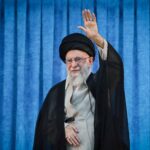
Iran Supreme Leader Ayatollah Khamenei assassinated in US-Israel strikes
Iran’s Supreme Leader Ayatollah Ali Khamenei was assassinated on Saturday, Feb 28 state media confirmed, after the United States and Israel launched the most ambitious attack on Iranian targets in decades. Iranian state media announced Khamenei’s death on Sunday morning.
A senior Israeli official told Reuters earlier that the Iranian leader’s body had been found after a strike, while US President Donald Trump said the United States worked closely with Israel to target the man who led Iran since 1989.
Iran has called the strikes unprovoked and illegal and responded with missiles fired at Israel and at least seven other countries, including Gulf States that host US bases.
In a statement, Iran’s Revolutionary Guards said:
“We have lost a great leader, and we are mourning him, a leader who was unique in terms of purity of spirit, strength of faith, resourcefulness in affairs, courage in the face of the arrogant, and jihad in the path of God.” The Guards also vowed “severe punishment” for the “murderers” and warned that the “most intensive” offensive on Israel and US bases would begin in moments. The hand of revenge of the Iranian nation for a severe, decisive and regrettable punishment for the murderers of the Imam of the Ummah will not let go of them.”
Three sources familiar with the matter said Iranian Defence Minister Amir Nasirzadeh and Revolutionary Guards commander Mohammed Pakpour were among those killed in the attacks.
Pentagon tells Congress no sign that Iran was going to attack US first, sources say
Trump administration officials acknowledged in closed-door briefings with congressional staff on Sunday, March 01 that there was no intelligence suggesting Iran planned to attack United States forces first, two people familiar with the matter said. But Sunday’s remarks to Congress appeared to undercut one of the key arguments for the war made by senior administration officials.
They told reporters the day before that US President Donald Trump decided to launch the attacks in part because of indicators that Iranians might strike US forces in the Middle East “perhaps preemptively”.
Trump, one of the officials said, was not going to “sit back and allow American forces in the region to absorb attacks”.
Pentagon officials briefed Democratic and Republican staff of several national security committees in both the Senate and the House of Representatives for more than 90 minutes on the unfolding US attack in Iran, White House spokesperson Dylan Johnson said earlier.
In the briefings, administration officials emphasised that Iran’s ballistic missiles and proxy forces in the region posed an imminent threat to US interests, but there was no intelligence about Tehran attacking US forces first, the two sources, speaking on condition of anonymity, told Reuters.
Trump said the attack, which is expected to run for weeks, aimed to ensure Iran could not have a nuclear weapon, contain its missile program and eliminate threats to the United States and its allies. He has urged Iranians to rise up and topple the government. Still, Democrats have accused Trump of waging a war of choice and have taken aim at his arguments for abandoning peace talks that mediator Oman said still held promise. Trump has argued, without presenting evidence, that Iran was on track to soon secure the ability to strike the US with a ballistic missile. His missile claim was not backed by US intelligence reports, and appeared to be exaggerated, sources familiar with the reports have told Reuters.
169 killed in South Sudan massacre
At least 169 people have been killed and buried in a mass grave in northern South Sudan, two local officials said on Monday, March 02as the country sees a dramatic increase in violence.
South Sudan, the world’s youngest country, has been beset by civil war, poverty and massive corruption since it was formed in 2011.
The United Nations warns of a return to “all-out civil war” as a power-sharing deal between President Salva Kiir and his long-time rival, Riek Machar, has unravelled over the past year.
The desperately poor east African country also faces chronic ethnic violence and violent cattle-raiding. MSF says 26 members of staff are missing following an air strike on one of its facilities
The latest massacre happened early on Sunday in Abiemnom County near the Sudan border. “A total of 169 bodies have been laid to rest in a mass grave,” Eliza¬beth Achol, health minister in nort¬hern Ruweng administrative area, told this news agency by phone.
Local information minister James Monyluak gave the same toll, saying it included women, children and elderly people and could increase further as more bodies are found.
China warns US AI military use can create ‘Terminator’ world
China warned the United States on Wednesday, March 11 that the excessive use of artificial intelligence (AI) in its military could plunge the world into a Terminator like dystopian future. US President Donald Trump’s administration has sought the unconditional use of AI startups in the military.
The Pentagon has confirmed Elon Musk’s Grok system is cleared for use in a classified setting, and blacklisted Anthropic after it refused to allow its Claude AI model to be used for mass surveillance and autonomous lethal warfare.
“Such choices as the unrestricted application of AI by the military, using AI as a tool to violate the sovereignty of other nations, allowing AI to excessively affect war decisions, and giving algorithms the power to determine life and death, not only erode ethical restraints and accountability in wars, but also risk technological runaway,”
A spokesman for China’s defence ministry, Jiang Bin, said on Wednesday. A dystopia depicted in the American film The Terminator could one day come true,” he said.
The Terminator, released in 1984 and starring Arnold Schwarzenegger, depicts an apocalyptic future in which AI-controlled robots fight humans.
The Pentagon’s row with Anthropic erupted days before the US military strike on Iran.
Claude is the Pentagon’s most widely deployed frontier AI model and the only such model currently operating on the Defence Department’s classified systems.
Anthropic infuriated Pentagon chief Pete Hegseth by insisting its technology should not be used for mass surveillance or fully autonomous weapons systems.
Trump subsequently ordered every federal agency to cease all use of Anthropic’s technology.
Iran vows to keep Hormuz strait blocked as long as war continues
The US continued to put out more mixed signals on March 13, as US President Donald Trump told Fox News that it was possible he would be willing to talk with Tehran, while his Pentagon chief vowed to ramp up strikes against Iran, promising “the most intense day of strikes” yet.
Iran’s forces, however, vowed to fight on, declaring that not one litre of oil would be exported from the Gulf while its war with the United States and Israel continues. The vow came as the US energy secretary claimed, then withdrew a statement saying the navy had escorted commercial ships through the Strait of Hormuz.
Chris Wright posted on X that the US Navy had escorted an oil tanker through the Strait of Hormuz “to ensure oil remains flowing to global markets.” Soon after, he deleted the post for reasons that were unclear, and White House Press Secretary Karoline Leavitt later denied the report.
A day after Trump claimed the war would be “ended soon” in a bid to calm oil markets, the Islamic Revolutionary Gua¬rds Corps (IRGC) also mocked his bid to lessen the economic impact of the war. “It is we who will determine the end of the war,” the IRGC said in a statement carried by Iranian media.
Iran’s foreign minister also said his country was prepared to continue attacks for as long as necessary and ruled out talks.
Abbas Araghchi told US broadcaster PBS News that his country was prepared to continue missile attacks and that negotiations with the United States were no longer on the agenda.
Israel also warned that Israel’s military offensive against Iran was “not done yet”, saying the operation was degrading Iran’s clerical leadership.
However, according to Axios, the US has asked Israel to halt strikes on Iran’s energy infrastructure. Washington sent the message at a senior political level and to IDF Chief of Staff Eyal Zamir.
Meanwhile, Iranian parliamentary speaker Mohammad Bagher Ghalibaf vowed that Tehran will retaliate to US-Israeli strikes with a “proportionate and immediate” response. “No malice will go unanswered, and today we decree the rule of ‘an eye for an eye’; bluntly, without exception,”
Ghalibaf said on X.
South Korea says it can deter threats from North if US shifts weapons to Middle East
South Korea said on March 12 it could deter threats from the North even if the United States relocated some of its military assets to the Middle East amid the war in Iran. Washington, Seoul’s key security ally, stations about 28,500 troops and a range of air and missile defence systems in the South to help deter aggression from the nuclear armed North.
The Washington Post reported this week that the United States was moving parts of its Terminal High Altitude Area Defence (THAAD) system from South Korea to the Middle East,
citing unnamed officials.
“Regardless of whether certain USFK assets are deployed overseas, there is no issue whatsoever with our deterrence posture against North Korea, given the level of our military capabilities,” the defence ministry said in a statement said, referring to the United States Forces Korea command. It declined to confirm the report.
According to Washington Post, US plans to redeploy parts of a missile defence system. The THAAD missile defence system is designed to intercept short, medium and intermediate-range ballistic missiles using hit-to-kill technology.
It was installed in South Korea in 2017, a move that sparked strong protests from China. President Lee Jae Myung has said his government is unhappy with the reported asset move but acknowledged there was little it could do about it.
A presidential official said it was “inappropriate” to comment on questions regarding any military asset redeployment and cautioned against media speculation. “Speculative reports on militarily sensitive matters are undesirable in light of our security interests… and our relations with key Middle Eastern countries,” he said.
North Korea respects Iran’s choice of a new supreme leader, state media said on Wednesday, accusing the US and Israel of undermining regional peace.
Pyongyang, a longstanding US adversary, has previously condemned the US-Israeli attack on Iran as an “illegal act of aggression”. The official said the United States and Israel are
“destroying the regional peace and security foundations and escalating instability worldwide”. The spokesperson accused Washington and Israel of violating Iran’s
“political system and territorial integrity”.
| Current Threat Levels : | ||
| City/Region | Threat Level | |
| Islamabad | Level 2 | ** |
| Karachi | Level 2 | ** |
| Lahore | Level 2 | ** |
| Punjab | Level 2 | ** |
| Khyber Pakhtunkhwa | Level 3 | *** |
| Peshawar | Level 2 | ** |
| Quetta | Level 2 | ** |
| Upper Balochistan | Level 3 | *** |
| Lower Balochistan | Level 2 | ** |
| Upper/ Rural Sindh | Level 2 | ** |
| Gilgit and Northern areas | Level 3 | *** |
| Tribal Areas, Close to Afghan border | Level 3 | *** |
| Index to Threat Level References | |
Threat Level 1 No threat to foreigners although there may be isolated incidents involving petty crime. No security precautions are required. | * |
| Threat Level 2 No specific threat to foreigners, however because of the overall general law & order situation, some security precautions are advised, especially if traveling. | ** |
| Threat Level 3 Indicates that law and order situation is cause for concern and travel should be avoided unless absolutely necessary. Foreigners should rehearse plans for evacuation. | *** |
| Threat Level 4 Indicates complete breakdown of civil administration and law and order leading to possible anarchy. All foreigners remain indoors and confined to their own city. Families and staff not required to be evacuated retaining only a skeleton staff. | **** |
| Threat Level 5 Indicates complete breakdown of law and order, enemy action/hostilities, invasion/ occupation by enemy | ***** |