
‘Whoever controls the flow of Persian Gulf oil has a stranglehold not only on our economy but also on the other countries of the world as well’- Dick Cheney
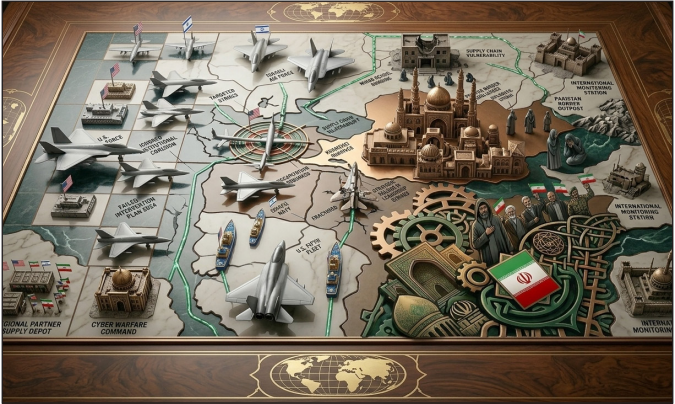
This article was written on the 12 of March 2026 and should be read in continuation of the earlier analysis written on 21 February 2026 – Global Order 1 (The Age of Global Corridors – Pakistan’s relevance). The conflict between the United States, Israel and Iran that began on 28 February 2026 has now entered its third week. While the initial expectation in Western capitals was that the conflict would be short and decisive, the war appears to be evolving into a more complex and potentially protracted confrontation.
Although reliable information is limited due to wartime censorship and information management on all sides, it is increasingly evident that the conflict has not unfolded according to the initial expectations of Washington and Tel Aviv. This was a war of aggression and one of choice initiated by the US-Israeli axis, while it remains a war of survival for the Iranians. This rational is closer to the truth despite the narratives constructed by the US, insinuating, that this was a pre-emptive strike intended to deny Iranian nuclear capability with which they were likely to mount an attack first. The military, economic and geopolitical consequences of the conflict may therefore prove far more significant than originally anticipated. The US-Israeli duo are now in search of finding ways to dismount the tiger they so eagerly climbed on to. This has become a spectacular case where capability could not keep pace with the enthusiasm with which the US-Israeli partnership decided to prosecute this war.
Strategic Miscalculations
A number of miscalculations by the US-Israeli alliance appear to have shaped the early phases of the war.
1. The Regime Change Assumption
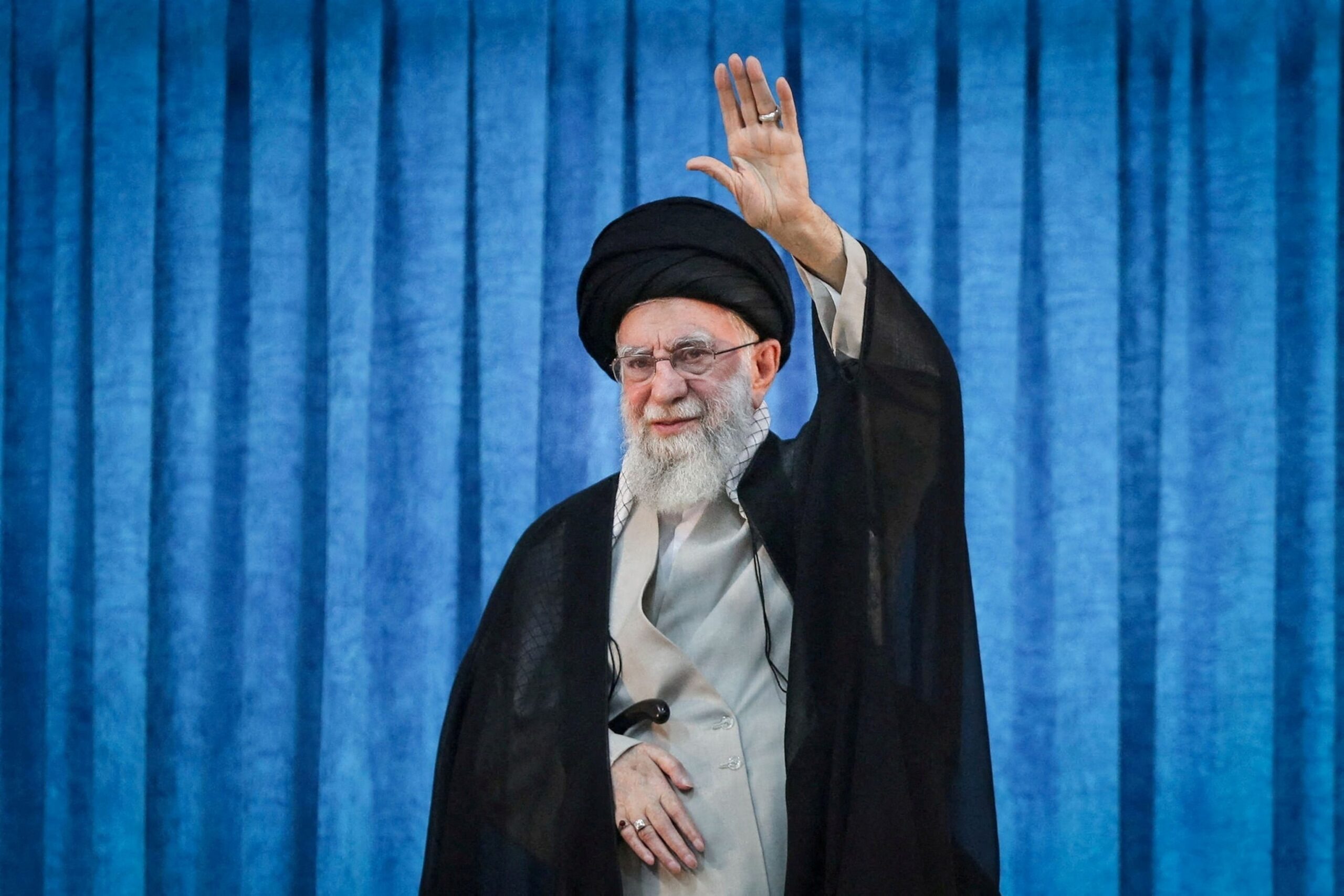
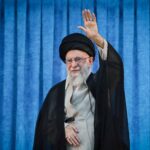
One of the central assumptions behind the strategy of the United States and Israel appears to have been the expectation that the elimination of the Iranian leadership would trigger internal unrest and ultimately produce regime change in Iran. The death of the Supreme Leader, Ali Khamenei, however, appears to have produced the opposite effect. Instead of internal fragmentation, the Iranian political system quickly consolidated around new leadership under Mujtaba Khamenei – the father now lives on through his son. Nationalist sentiment appears to have strengthened domestic cohesion like never before. Historically, external attacks on states with strong nationalist identities often reinforce internal unity rather than provoke collapse. Iran appears to have followed this pattern.
2. Underestimation of Iran’s Missile Capabilities
A second major miscalculation appears to have involved the scale and resilience of Iran’s missile program. Over the past two decades, Iran has invested heavily in ballistic missile production and dispersal infrastructure. Many of these systems are believed to be stored in hardened underground facilities and dispersed across multiple military regions.
Reports also suggest that Iran has increasingly reduced its dependence on Western-controlled navigation systems by integrating China’s BeiDou Navigation Satellite System (BDS), allowing greater autonomy in guidance and targeting systems. The system is based on a constellation of 30 or more satellites and is an alternative to the western Galileo GPS system.
Even if Western air power retains operational superiority, Iran’s strategy appears to rely on saturation attacks and redundancy—allowing missile forces to continue operating even under sustained aerial bombardment. Thus, Iran has built in a strategy of sustainable continuity.
3. The Strategic Leverage of the Strait of Hormuz
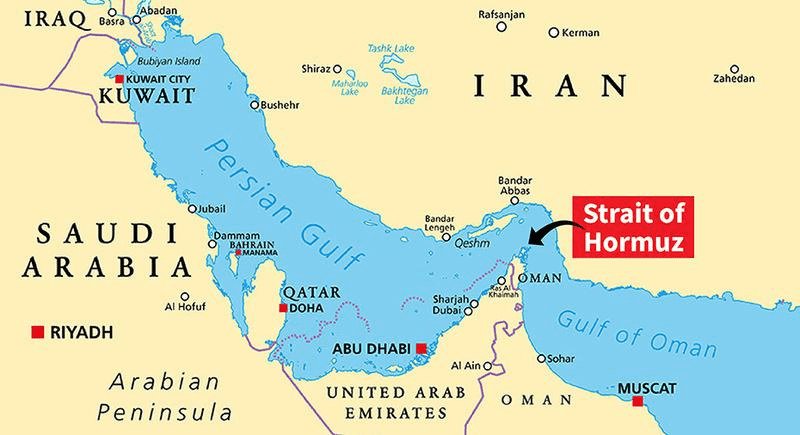
Another factor that may have been underestimated is Iran’s geographic leverage over the Hormuz Strait, through which a substantial portion of the world’s energy supply passes. Even partial disruption of maritime traffic through this narrow waterway can produce significant global economic consequences. Rising energy prices and disruptions to LNG shipments from the Gulf region illustrate how quickly regional conflicts can translate into global economic shocks. In particular, major energy importers and exporters—including the European Union and Africa are likely to reassess their strategic calculations as the conflict continues.
The US has since bombed the Kharg Islands in an attempt to intimidate Iran but so far to no avail. Kharg is an oil distribution hub fed by underground pipes and is critical in loading oil into tankers. The Iranians have since reacted and knocked out US planes in their Saudi base. They have also announced that those countries willing to pay for oil in the Chinese Yuan are free to collect oil from Hormuz. However, what appears to be more ominous is that Iran has also threatened to shut down the Red Sea route with the help of the Houthis by blocking traffic at Bab al Mandab. If this is done it would aggravate the oil crisis even more than what it is presently.
4. Sustainability of the Conflict
The early expectation that Iran would be rapidly be overwhelmed by superior Western air power now appears less certain. Iran’s military doctrine places heavy emphasis on asymmetric warfare, dispersal, and the ability to absorb punishment while continuing to retaliate. While the United States retains overwhelming military superiority overall, prolonged conflict in the region could impose significant political, economic, and military costs on all participants. However, this cost to benefit ratio is heavily tilted in favour of Iran due to the asymmetric nature of the conflict. The question now would be that for how long will the US sustain this cost, which in the first few weeks alone has been reported to amount to $7 billion as the cost of war, without including the cost of damage and loss of infrastructure and assets.
5. Limited Regional Support for the War
Another notable development has been the cautious response of the Gulf States. Countries such as Saudi Arabia, UAE, Qatar, Kuwait and Bahrain appear reluctant to become directly involved in the conflict. Their hesitation reflects both concerns about retaliation and growing uncertainty about long-term security guarantees. This is despite the false flag operations mounted against Turkey, Saudi Arabian refineries and some of the Gulf States allegedly by Mossad and the CIA. These attacks were mounted so as to provoke these states to retaliate against Iran – the ruse failed. The shifting security calculations of Gulf States may prove to be one of the most important geopolitical consequences of the conflict.
6. Over Dependence on Local Dissident Groups
The US-Israeli alliance had wrongly assessed that some dissident groups such as the Kurds, Baluchis, monarchists and Yazidis, etc. could be galvanised into some sort of resistance and thus make up for boots on ground. These groups refused to side with the US because of the precedence already demonstrated in Iraq, Libya and Syria where such groups were used and discarded. Past US attitude towards abandoned allies will work against them in trying to cobble together any meaningful resistance to the Iranian regime.
7. Broadening the Spectrum
The US has started denuding areas of air defence interceptors where they feel the threat is not as high to reinforce Israel. One such sector was South Korea. North Korea, in a bid to test the interception capacity remaining have launched 10 missiles into the South China Sea in the close vicinity of the joint US-Korean Naval exercises. The US has now begun to feel the limit, extent and stretch to resources. In the meanwhile, Israel has cut administrative expenses to appropriate $ 700 million towards the war effort, indicating a resource crunch.
8. Putting Boots on the Ground
If the US puts boots on ground, possible ground-based troop insertions could be (a) seizing Kharg Islands and secure land access to Hormuz Straits. Then we should soon see the 82nd Airborne Division and a Marine Expeditionary Force (MEF) of Division/s Plus getting mobilised with the Marines already enroute (SS Tripoli) landing at a secured beach (b) CIA and Mossad sleeper cells setting in up coordinating communication and guidance centers. Agents on ground would possibly help secure Northern access of Hormuz Straits. Landing outside the Hormuz Straits could possibly involve amphibious landing at or near Pasni and proceeding in the Northern access of Hormuz Straits via the land route via Pakistan to reinforce the ground troops. Pasni (or even Gwadar) is a distinct possibility because it gives a land access closest to Iran and provides a beachhead with an airport that can be upgraded quickly to give a secure logistics access by air and sea outside the Hormuz Straits. (c) A heliport base would be quickly established and an existing operational runway would be either cleared (Jacobabad and even Pasni?) for use or field-constructed (d) Ship holding areas would be designated and concurrently troop concentration and combat resources would be situated into the secured area (e) Ships would bring in logistics and administrative essentials under air cover (f) This process would need at least a month as there are no signs of it being put into place for now.
Any Pakistani collaboration with a US-Israeli effort against Iran would put Pakistan on the wrong side of history. Future reconstruct of regional security would take Pakistan’s stance into consideration and Pakistan would have a lot to lose after being in a prominently winning position so far. Loss of further credibility and reliability would be on the top of the agenda thus creating a break with notion of SCO, BRICS, China and Russia. There is now no need to take up a position against the very ethos of the nation and the country, and nor would it serve Pakistan’s national interest. It would be seen more in the domain of self-interest of an unpopular government. Pakistan must avoid such a venture regardless of the immediate consequences such as, an end to IMF generosity or incurring US displeasure.
Possible Strategic Outcomes
Thus, in light of the US-Israeli alliance failing so far to achieve their goals/objectives, there are three broad scenarios that could emerge from the current confrontation.
First Option: The United States may attempt to declare limited strategic success and gradually de-escalate the conflict through diplomatic channels. Such an outcome would likely require some form of negotiated settlement involving international mediation. It is quite possible that Israel becomes the de-facto rational justifying a ceasefire. The US may be able to save face by stating that the US wanted to terminate further hostilities so as to save Israel from total annihilation or collapse. At this time, it does not appear that Iran would be willing to go along with a unilateral ceasefire and may continue to pursue it ballistic missile strategy till its demands are actually and verifiably met. Iran has so far demanded the following before it is willing to begin any negotiated settlement viz: (1) Iran’s rights to be recognised and their sovereign assertions to be respected. What these rights are to be determined by a mutually acceptable negotiated settlement. (2) Reparations for the damage caused to them in a war they never started. The amount and method for compensation would be another point for negotiations (3) Third party international guarantees that Iran would not be subjected to such hostile actions by the US or Israel in the future. Who the guaranteers are would have to be agreed to by all parties and once again would be a product of negotiated settlement.
Second Option: In the event, a negotiated settlement is not arrived at, the US-Israel may look for escalation through the deployment of largescale ground forces. This remains theoretically possible but appears politically and logistically difficult.
Large-scale military intervention would require extensive preparation and domestic political consensus in the United States. A force of 2500 marines have been despatched since the writing of this paper – this is hardly enough and it appears that the US wants to secure the forward edge of the Iranian coastal belt. This may allow the US some control on the sites from where Kamikaze Drones and guided torpedoes are launched through tunnels. It would facilitate bringing in the US naval assets closer to Iran and Kharg Islands thus facilitating further amphibious operations. If successful, one such objective may be the capture of the Kharg Islands, allowing the US to declare victory leading to a ceasefire. However, the 2500 marines are not nearly enough for such an endeavour and the whole exercise is probably to project a posture of intimidation – which too is not likely to work.
Third Option: If all else fails, but a far more dangerous scenario would involve escalation beyond conventional warfare. Although highly unlikely, the introduction of tactical nuclear weapons would fundamentally transform the conflict and risk wider global escalation involving other major powers. The Chinese and Russian posture here may prevent such an escalation. An ultimatum from either would be a show-stopper.
End State
However, and whenever, this conflict ends, the globe will never be the same after it has concluded. It is possible that the US will withdraw from the bases in the Gulf States thus denuding them from any protection. One of Iran’s conditions to agree to a ceasefire is to have guarantees that there will be no aggression by the US and Israel in the future. This implies that the US empties the bases in the Gulf or else no guarantee has any meaning.
The Abraham Accord will now come under scrutiny and those not on board may prefer to keep away from signing it. Israel, if it survives would have to give up its siege of Gaza and the Two State Doctrine leading to an independent Palestine may start to get traction. All occupied land of Lebanon and Syria may have to be returned. Israel may be subjected to war crime committees and might come under international scrutiny in its future conduct. The Republicans would lose the elections in the mid-term as well as later. This would pave the way for a more rational US foreign policy.
The Gulf States would need to relook at the GCC as well as the OIC, restructure both into a new security paradigm. A new structure would have to be adopted to fill in the absence of the US whch would be inclusive of Iran and may allow access to China and Russia. West Asia would start breaking away from US influence.
Implications for the Global Order
Regardless of how the conflict ultimately ends, it is likely to accelerate an already visible shift in the international system. For several decades following the Cold War, global politics was largely shaped by the dominance of the US. However, the international system today increasingly reflects the emergence of multiple centres of power.
Institutions such as the SCO and BRICS illustrate the growing institutional coordination among emerging powers across Eurasia and the Global South. China’s concept of the Global Security Initiative (GSI) similarly reflects attempts to articulate an alternative framework for international cooperation outside the traditional Western-led institutions. These developments suggest the gradual emergence of a more multipolar international order in which power is distributed among several major regional actors rather than concentrated in a single dominant state. Some of the stipulated values are: (1) Multi-polarity – no hegemon, power would be distributed (2) Financial Independence, using local currencies, BRICS Bank, gold reserves and reduced dollar dependence (3) Regional Security Frameworks that are SCO led to include counter terrorism and joint military exercises (4) Trade Corridors to be developed such as the Belt and Road Initiative as well as Eurasian Land Corridors (5) Technological Autonomy to include AI, 5G, satellite constellations, etc (5) Global South Integration, where Africa, Latin America and Middle East Countries gain autonomous decision making power (6) No state would be permitted to export its ideology.
Pakistan’s Strategic Position
In this evolving geopolitical environment, Pakistan occupies an important strategic position linking South Asia, Central Asia, the Middle East and China. To navigate this transition effectively,
Pakistan may consider several strategic priorities. First, internal political stability and economic reform remain essential for maintaining credibility and influence in regional diplomacy. This alone will remain the central theme to any positive development in Pakistan. Immediate free and fair elections is one option and another is to put in place an all-inclusive national government – doing neither is not an option. Second, Pakistan should continue pursuing balanced relations with both Iran and the Gulf States while avoiding entanglement in regional rivalries. Pakistan must revisit the defence agreement with Saudi Arabia and insert caveats where the agreement may invoke Pakistan’s assistance. These caveats must specify a threat perception, where Pakistan can assist and where it must not. Pakistan must be central to put together Saudi, Iran, Turkey and Pakistan into a new structured West Asia Security Regime. Russia and China to be integrated into the new protocol.
This is a good opportunity for Pakistan to contribute towards regional cohesion, security and development.
Third, economic connectivity projects such as the CPEC could play an increasingly important role in linking regional trade networks across Eurasia
These must be accelerated. Gwadar takes on a new meaning now with the Gulf ports being hit at the moment. Fourth, Pakistan’s operations against
Afghanistan must conclude as quickly as possible. The present policy Pakistan has projected against the TTP, and by association, the TTA appears on sound footing. There must not be any let up, meaningless negotiations or pauses in these operations. Signatures that they are giving results, are first a cooling down of the Taliban-Indian nexus, secondly the TTA’s attempts at solicitation by numerous countries indicating their need to end hostilities, thirdly a reduction in cross border terrorism, fourthly the TTA’s leadership that has gone into hiding and finally TTP’s conciliatory press release. There may be sporadic incidents of heightened violence perpetuated by the TTP but these to be seen as the last-gasp of a dying entity. However, Pakistan must not be a party to any regime change or internal uprising in Afghanistan and just try to get the current Afghan government on board in matters related to TTP.
Finally, Pakistan may find opportunities to contribute to regional security cooperation, maritime stability, and diplomatic mediation among competing regional powers.
Conclusion:
The ongoing conflict between the United States, Israel and Iran may ultimately prove to be more than a regional war. It could represent an important turning point in the broader evolution of the international system.
Whether the conflict leads to negotiated settlement, prolonged confrontation, or wider escalation remains uncertain. What is clear, however, is that the geopolitical landscape of the Middle East and the wider international order is entering a period of significant transformation.
How states respond to these changes will shape the contours of the emerging global order in the years ahead.
‘The world can therefore seize the opportunity (the Persian Gulf Crisis) to fulfil the long-held promise of a New World Order where diverse nations are drawn together in common cause to achieve the universal aspirations of mankind’,
George Bush