It is no secret that Pakistan’s economy is largely informal, unaudited and dictated by lenders. This enigma has been there for decades, compelling the resource-rich, four-seasonal landscape and resilient nation to hang out with a begging bowl, and that too at the mercy of Shakespearian callous donors. They desire a pound of flesh without spilling a drop of blood. This syndrome has led to gangrene. That is so because its civil society lacked an edge over decision-making and Babus or men on the horseback were ‘advertently’ there to call the shots.
Unlike India, Singapore, Malaysia or South Korea, Pakistan failed to cultivate a fabric of economic knitting of its own minds, with the sole exception of Dr Mahbubul Haq. We had parachuted bankers and flimsy corporate-economists to act as broths in the kitchen. Unfortunately, there was no Manmohan Singh, Lee Kuan Yew, Mahathir Muhammad or Lee Kyu-sung amongst us! The failure of political parties to have a vibrant economic manifesto and a home-grown political-economist has pushed us over the brink with borrowing, ad-hocism and malaise running deep in our body-politics.
The million-dollar question is: where are we and what’s next? The fact is that we have missed the bus twice. The torpedoed episodes of nationalism and then the so-called privatisation have ruined the country’s economic potential. We threw away strategic money-minting industrial units, rather usurped them for peanuts because the then men at the helm of affairs intoxicated with absolute power greed refused to sign in with the industrialist class. It was primarily a war of the psyche between the land-wielding feudal(s), who made it to the parliament, and post-independence entrepreneur-industrialists.
The wish-list of nationalization, rather a vendetta, dismantled Pakistan’s private sector, led to slump in industrial growth and confidence of the investors. An era of market-driven expansion came to an end, leading to inefficiencies and flight of capital. The robust manufacturing sector that once showed the way to Germany of Southeast Asian states turned into a lame-duck in no time. The ‘pseudo-democratic’ takeover of the 1970s was so draconian that for three consecutive years, the State Bank’s annual reports did not see the light of the day as men of spine begged to differ with the system in vogue.
More remorseful was the privatization policy of the 1990s. The slogan of transition to a free-market economy was hollow, and led to widespread debacles. State-owned enterprises (SOEs) were robbed in broad daylight as cronies had a field day. The intention was to curb fiscal drains, but it led to siphoning of money under state-patronage. Laws and regulations were molded to ensure that ill-gotten wealth makes its way offshore. Thus, lack of transparency in privatization created a new class of business oligarchs, triggering socio-economic disparities.
A new political class came into being that nursed a common denominator with the powers-that-be; and the once 22 elite families who held the reins of economic lifeline multiplied in leaps and bounds. The country came full circle with elite capture, and the post-1988 arm-twisted dispensations manifested a hybrid governance model — where power is blurred between elected civilians and the military establishment, and continues to this day. This quasi-civil, quasi-military setup institutionalised economic instability, and reliance on IMF and other benevolent lenders grew, compromising sovereignty to new highs. Pakistan despite going into 24 cut-throat IMF programs since 1958 has not been able to resuscitate its economy. Genuine reforms are needed, and the weakness of national and financial institutions have made a mockery of our lopsided decision-making process. The PTI’s truncated era (2018-22) wasn’t promising too, as during its tenure the pendulum of the economy swung between stabilization, documentation and somewhat structural reforms. The only credit it could score was its supra-intelligent handling of COVID-19 crises, and the subsequent 6.1% growth in FY2021. Though it was able to cut down on the current account deficit by over 70% in 2019, it left behind a rising public debt of Rs39 trillion.
The economy’s sole landmarks are the $60 billion CPEC projects in energy, infrastructure and industrialization. Nonetheless, owing to a precarious geopolitical situation and especially bad-blood with Afghanistan and India, Pakistan has not been able to reap in dividends of geo-economics to this day. The glorified SIFC, Saindak, Reko Diq and Gwadar Port are mere footnotes of our economy, as none have been able to take off as game-changers. Pakistan today sits fingers crossed hoping to attract mega-ticket projects and prosperous foreign investment. It, however, consoles itself with remittances that will touch the $40 billion mark this year-end. The Sword of Damocles, however, will keep on hanging as job markets hit uncertainty in the Middle East, and expatriates are discriminated against at home for their political leaning.
What’s next? How could this pestering uncertainty be overcome? The answer is simple: the economy has to be managed at home, and not on Zoom sessions and in person at Washington or Manila. Until and unless the elite capture is done away with, nothing will settle down for good for the sovereigns of the republic. Bangladesh and India abolished feudalism with the stroke of a pen, and here we are busy articulating land-wielding manuals for ensuring that the class warfare reigns on and, moreover, agriculture is not taxed. We have pampered industrialists who do not pay their due share of taxes, and get away with SROs and subsidies. We have multi-billion dollar wheat and sugar scams every year, and no less than the Federal Cabinet is responsible for siphoning billions. We have the ‘energy mafia’, wherein a cluster of more than 40 families are IPPs proprietors, grabbing billions per annum for their one-time investment. Likewise, exports stand literally annihilated owing to uncompetitive electricity and petroleum tariffs; whereas a culture of auxiliary import reigns on.
This reminds me of President Harry S. Truman, saying:
“No man can get rich in politics unless he is a crook”.
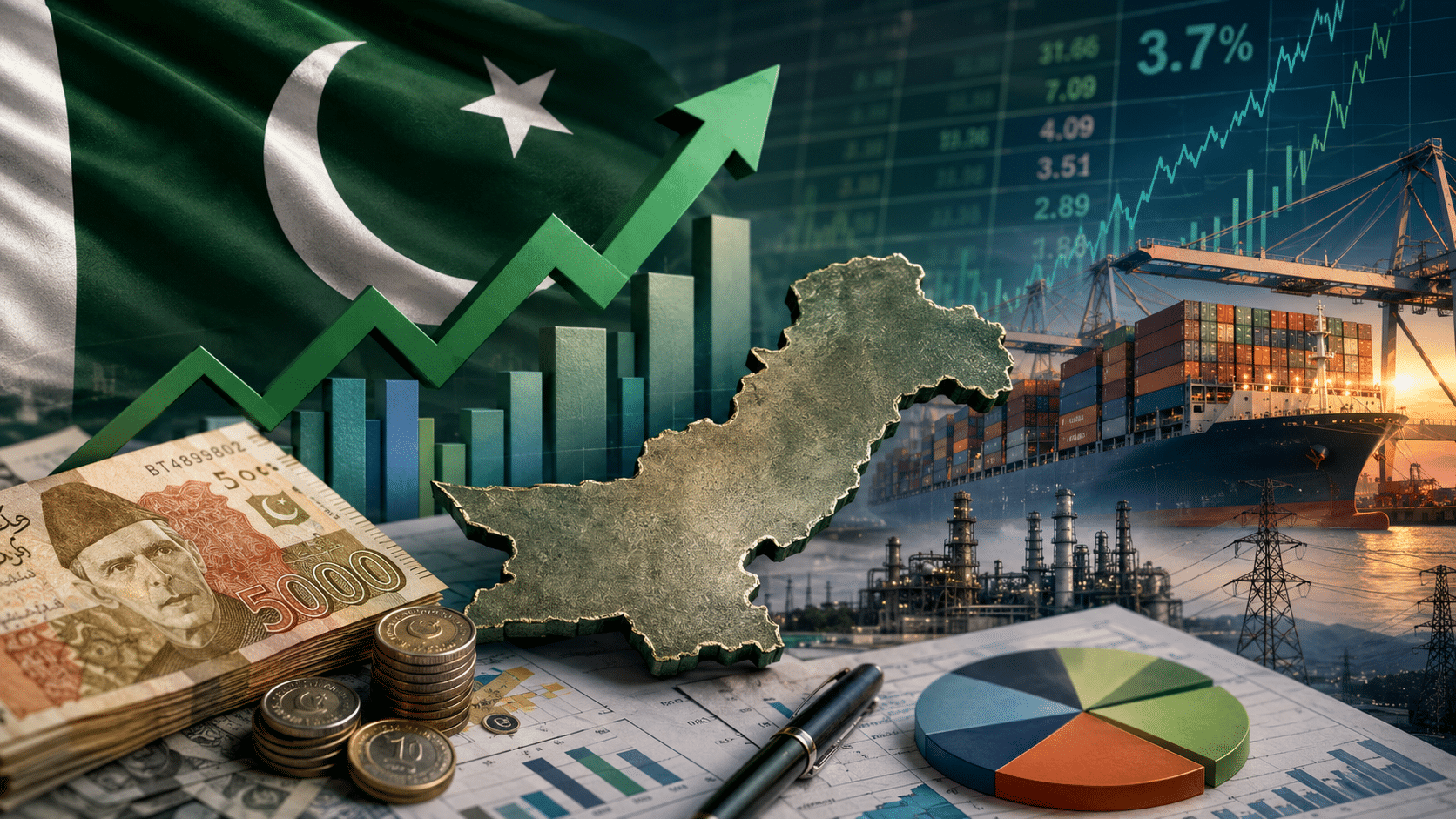
That is a universal truth as far as Pakistan’s political dispensation is concerned; and to act as abettors is the bureaucracy, per se. Pakistan is in the grip of a draconian elite capture, which as per World Bank estimates eats away $22 billion per year to stay afloat. The entire power and governance decorum is at their disposal, and the so-called elected strata are compromised and spineless. Pakistan’s 40th economy having reached a size of $452 billion is in dire need of a healing process. From experiments in stabilization to growth, we have come a long way. Now is the time for some genuine nation-building. It is a pity that an agrarian state is a prime grain importer and, likewise, has not been able to invent a nexus of farm and industry.
With minerals worth trillions of dollars beneath its sovereign surface, it is still busy tuning a workable modus operandi for extraction, and has fallen flat at the hands of arbitrary litigations. Last but not least, it has a rotten and corrupt revenue generation machinery that relies on taxing the salaried class (more than Rs500bn per annum) and an insane petroleum levy target of Rs.1.7 trillion for the upcoming year.
This lopsided paradigm must change for good, if the common man has to heave a sigh of relief. Scrapping of elite capture, feudalism and tax-evasion mafia is a must, if we have to survive. Wealth generation is the way to go, and the least that is required is to start believing in ourselves. The economy stupid has to be in sagacious hands and not with the book-keepers and gate-crashers.