





From the Balfour Declaration in 1917 to the Abraham Accord in 2020, Israel has come a long way. The Jewish state has gone from strength to strength, irrespective of the fact that it was shunned, discouraged and secluded by a majority in the community of nations. Yet, it has inched towards recognition in a tortoise format.
To Israel’s fortune, the United States, Russia and Great Britain were at its beck and call, since day-one of its creation, and there was hardly a moment in its history when it felt insecure. Though surrounded by hostile Arab states who openly vowed to root it out from the map of the world, it has survived, thrived and now seems to be on a path to fortify its geo-diplomatic acknowledgment from the very same Arab adversaries.
But Israel has failed its neighbours time and again. Likewise, the Who’s Who of the League of Nations created after World War-1 and entrusted with the Palestine Mandate in 1922 failed to ensure that Palestinians are properly rehabilitated, and the Diasporas’ come to an end. The agony continues to this day.
To sum up, it is the power arrogance of Israel which drew its cue from self-proclaimed divine injunctions, coupled with the jaundiced perspective of the US and Europe, especially, in the post 1948 era that is responsible for the Palestinian homelessness. The dispossessed Palestinians, who were trapped to sell their land on hollow promises, are in pursuit of a fair deal to this day, which would see them Israel “trade land for peace”!
That bit of current history has kept the world peace on tenterhooks since 1948, as the Middle East has been exploding for the last 70 years. From the Commonwealth of Nations to the Non-Aligned Movement, and from the ranting speech-making forum of the United Nations to the inconsequential Organization of Islamic Conference, Israel was vehemently criticized, and persistently boycotted by member states.
ISRAEL’S MYTH & MIGHT
That negation strategy from the world at large had hardly dented Israel’s path of journey towards glory and self-fortification. Today, almost the entire research and development in modern sciences and inventions are either Israeli-sponsored or Jewish-funded, one way or the other. The Zionist state is home to world’s latest armament, and it is the only country in the world to create a Dome of Iron to protect itself conveniently from any kind of aggression, if there is one alas!!
This hubris is one of the fundamental elements that have enabled Israel to stand tall, notwithstanding its blatant human rights excesses, mayhem, barbarism, and last but not the least, its power-intoxicated strategy to encroach and occupy every piece of land that fell relevant to its Lebensraum (Adolf Hitler’s expansionist policy).
ACTING AGAINST THE TABOO
Recognising and normalising relations with Israel for long had been a taboo for the Muslim world. But as the proverb goes, “if you can’t beat them, join them”; one after another Arab and Muslim states had extended their hand of friendship towards Israel.
Turkey was the first Muslim-majority nation to recognize the State of Israel in 1949. Likewise, Iran maintained high-profile diplomatic relations with Israel till the 1979 revolution. Then the first to fall in line was Egypt (1979); and Jordan (1994). The United Arab Emirates and Bahrain are the latest to join the bandwagon, after nursing years of secret security ties.
Egypt was no ordinary Muslim country. It was the bastion of Muslim learning and renaissance, and also home to radical politico-Islamic movements such as the Muslim Brotherhood for decades, and to this day.
President Anwar Sadat’s leap forward towards the Jewish neighbour was not an episode of treachery! It was a well-calculated step to protect and preserve the interests of Egyptians, especially, as they shared a porous border along the Sinai Desert. Moreover, it led to a number of security guarantees to the Palestinians.
THE DIVISIVE SECTARIAN MOSAIC
Let us dissect the assertion as to why Muslims, in particular, worldwide are so repulsive to Israel? For decades, the Arab world was united, in public at least, in its antipathy toward Israel over the plight of the Palestinians. That is a cause on the path of human dignity and emancipation of mankind. Appreciated!
But at the back of the mind of the Sunni Arab world, in particular, there was an inherent assumption that they saw Israel as a strategic partner against (Shia) Iran. This is an undeniable aspect of realpolitik. But that narrative was either a well-kept secret or was deliberated in gossip, as Arab leaders met.
But as far as Tehran is concerned, it hasn’t invaded any Arab land to this day. Iraq (an Arab state) was the aggressor as per United Nations dictum in the 1980-88 Iran-Iraq war. All Iran has done is to create proxies such as militias in Yemen, Iraq and Syria, and unleash militaristic politics in Lebanon in the form of Hezbollah.
Likewise, Iran’s ambition to export the credentials of the 1979 Revolution were, nonetheless, met with stiff resistance be it Iraq, Bahrain or Pakistan (countries with thick Shia populations). Iran has failed to replicate the revolution anywhere to this day, and is severely contested even at home.
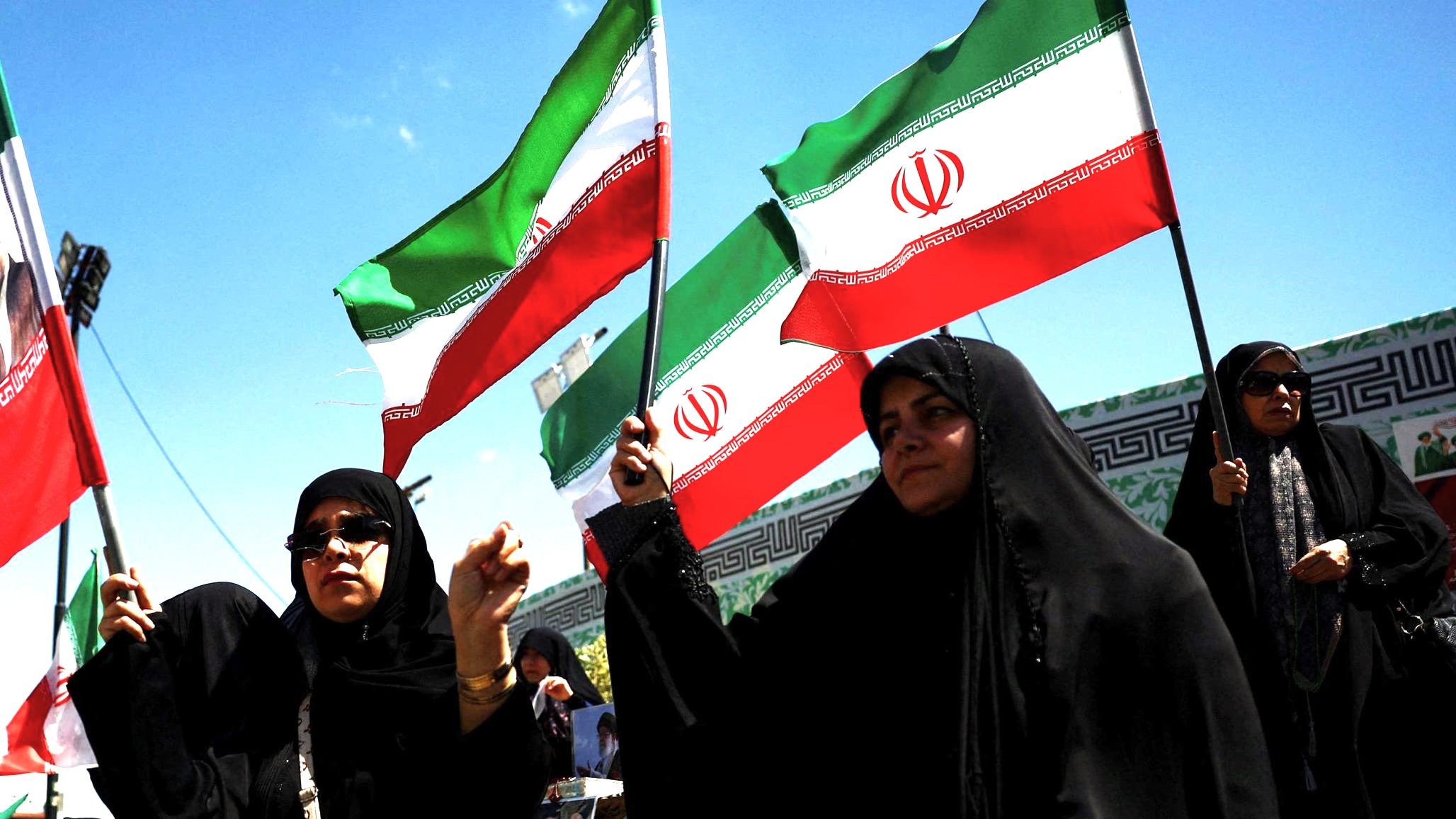
Contrary to the Western propaganda, Iran is hardly a real-time threat to the Jewish state. The world’s lone 95 per cent Shia-populated republic has merely contented itself by playing to the gallery, in purporting enmity towards Israel. Tehran hasn’t dared to fire a missile on Israel to this day. The skirmishes between Hezbollah and Israel are a different ball-game altogether – with Iran militaristically restraining well within its borders. The destruction of Syria and Balkanisation of Lebanon by Iran’s proxies is Machiavellian politics.
ANTI-JEWISH MANTRA!
So why in the last seven decades the mighty Muslim world in terms of geography and resources (oil is a case in point, especially) not been able to overwhelm a tiny Jewish state to compel it to vacate Palestinian territories or reach a permanent peace deal lest talk of an independent Palestinian state?
The reasons could be many, but most compulsive is the fact that it all revolved around merely condemning Israel, and playing to the gallery when it came to realising Palestinian aspirations for a homeland. The Jerusalem status, West Bank, Gaza, Intifada, militaristic onslaughts by Hamas and politics by Fatah; they were all messed up in a way that Israel felt itself scot-free to have its way, unchecked.
Thus, the new realisation! Why not befriend Israel to help address the security and territorial woes of the Middle East? Cairo and Amman had successfully walked that path and cherished decades of perpetual peace. So now is the time for others to follow suit, especially in an era when the world’s power paradigm is shifting towards multi-polarity.
Hatred and prejudice towards Israel is nothing new. It has been part and parcel of Muslim world’s political diatribe for long. But as Jared Kushner, architect of the Middle East policy for the Trump administration, and his son-in-law too, said: ‘There is no need to be captive to old conflicts and old thinking.’ The Arabs have apparently heard him this time in the right context and are reciprocating.

ARABS ADVANCEMENT TOWARDS ISRAEL
The UAE, similarly, exhibited leadership irrespective of the fact that neither it shares a border with Israel nor has been in any bilateral conflict with it. The deal will turn the oil-and-gas rich UAE into a regional powerhouse, and from a diplomatic perspective it will be a shot in the arm.
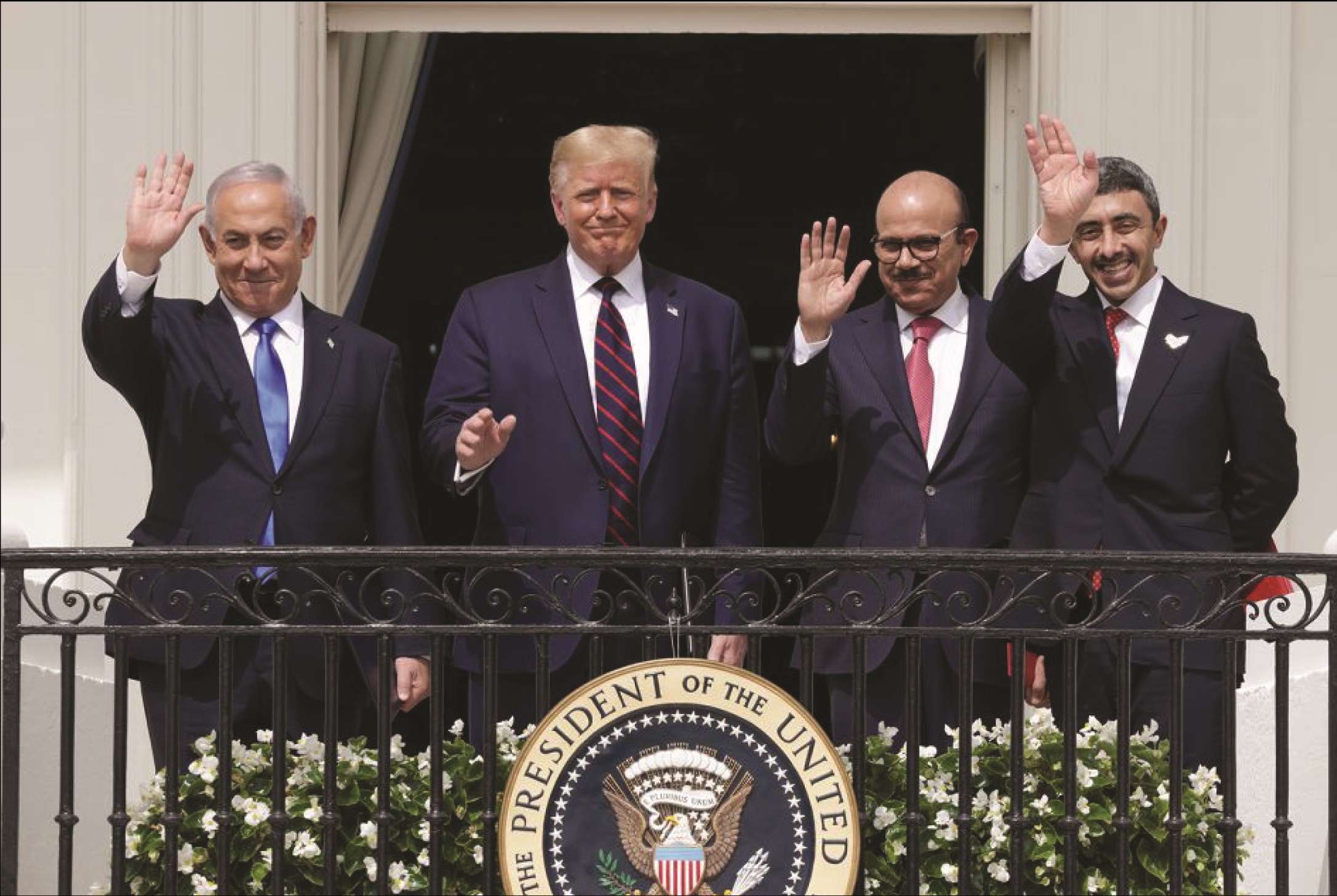
Likewise, the quadruple Abraham Accord signed on September 15, 2020, between the UAE, Bahrain, the US and Israel, is bound to have geo-political influence over Libya, the Horn of Africa, and deep in the East of Africa. Many of the Muslim states in Africa already are under the influence of UAE and Saudi Arabia by virtue of their charity and developmental aid projects.
Thus, the path that Bahrain and the UAE walked is no surprise. Numerous other Muslim states are either in a clandestine dialogue process or have walked an extra mile to oblige Israel. Here are some of the instances of our times:
- The Imam-e-Kaaba (recently) voiced for normalizing ties with Israel, and tactfully seconded the political moves of the Kingdom in this regard.
- The Saudis allowed Indian flights to Israel to use its airspace reducing the trip length by hours.
- Qatari envoy stays put in Tel Aviv to oversee Qatari-funded development projects in the Gaza Strip.
- Bahrain has off-and-on publicly defended Israel’s right to self-defence; and condemned Iran’s jingoistic foreign policy.
- Morocco and many other African diplomats are often seen hobnobbing with their Israeli counterparts.
But, come-what-may, the Arab establishments have always held the Palestinian cause dear to their hearts, and with the passage of time do not see inching towards Israel as a ‘sell-off’. Rather, they see it is a means to an end. For them, the destination is realisation of a Palestinian state, per se.
It is little wonder that American diplomacy has convinced many of the Arab and Muslim states that acknowledging Israel as a sovereign Jewish entity is indispensable. In other words, it is a quid pro quo. The exceptional dissent voices are Turkey and Pakistan. The million-dollar bet is that it shouldn’t be a ‘one-way traffic’, and Arabs should stand ‘tall and firm’ to convince Tel Aviv to trade land for peace.

PAKISTAN-ISRAEL FIXATION:
What ails Pakistan from having normal diplomatic ties with Israel, if our Arab compatriots can do so?
Prime Minister Imran Khan’s utterance that recognising Israel will be a setback to Pakistan’s Kashmir cause is judgmental and a misnomer. Pakistan has no territorial disputes with the Jewish state, nor has fought a war with it. Whereas, Pakistan not only has territorial altercation with New Delhi over Kashmir but has also fought, at least, four wars. Yet, we have full diplomatic relations with India and there is no harm in it, as per the norms of Westphalia.
So Israel, too, shouldn’t be an anathema to Pakistan. Here are some of the short-circuit instances to prove that Islamabad had been rubbing shoulders with Israeli diplomats.
Since Pakistan’s first foreign minister (a veteran jurist and diplomat), Sir Zafrullah Khan, every major Pakistani leader has taken a realistic approach towards Israel, despite no diplomatic relations. Former Prime Ministers Benazir Bhutto, Nawaz Sharif and his emissaries, including Khurshid Mehmood Kasuri, as well as President Pervez Musharraf envoys had interacted with Israeli delegates in various world capitals, as and when required!
So it is unrealistic to say that Israel is an interdiction for Pakistan. If Pakistan can do a great service to the world powers by brokering Sino-US friendship through the snowy-hilly tracts of Nathiagali way back in 1972-3, resulting in America’s ‘One-China’ policy, what bothers Islamabad from standing tall and negotiating with Israel a broad-based peace for the region in lieu for recognising it. This will be statesmanship, indeed.
Pakistan’s political proclamation for years has been ‘Pakistan First’. Prime Minister Imran Khan is a practical believer in it for protecting and upholding national interests. Islamabad can well protect its vital national interests in Washington and the United Nations in collaboration with the Jewish lobbies, and at the same time do its bit for the realising a Palestinian sovereign state. Ignorance is no bliss. The Ostrich syndrome hasn’t served any purpose. Let’s evolve a proactive approach towards Israel. The leap towards Tel Aviv will have definite dividends.