

“Jis se jigar-i-lala ma thandak
ho wo shabnam,
daryaoon ke dil jis se dahel jain
wo toofan,
har lehza hai momin kee nayee shaan nayee aan”
(so breathtaking as to produce the sublime feeling of dew in the depths of heart;
so awesome as to make the storms in ocean tremble).
This is Iqbal’s portrayal of a ‘momin’ (guardian of faith). A dispassionate study of history will often leave us with some abiding lessons and if followed in letter and spirit, these can bring about revolutionary changes in the life of individuals or a nation. The war of 1965, for whatever its outcome had one forceful message: strong national solidarity and resilience can become a strong bulwark against a numerically superior foe. The consensus, unity and singleness of purpose seen during the 1965 war remain unsurpassed to this day. It is etched in national memory.
While narratives on land and air battles on both sides have appeared and still continue, the battle at sea largely remains obscure from general public eye. In July 1965, a major part of the Indian fleet was at Madras on India’s eastern seaboard and was conducting exercises with British submarine Astute. In August 1965, the venue of these manoeuvres was shifted to Vishakhapatnam and upon conclusion of these exercises, cruiser Mysore and the frigates Brahmaputra and Beas proceeded to Calcutta. On Pakistan side, following the events of Runn of Kutch in March 1965, ships of the Pakistan Navy (PN) frequently proceeded to sea. The PN fleet conducted extensive manoeuvres and honed skills in anti-aircraft, anti-submarine as well as surface action. Exercises continued through the monsoons and in August, all leave was stopped in view of the imminent threat of hostilities.
By virtue of being self contained in terms of fuel, ammunition, rations and furnished with inherent attributes like mobility, versatility and flexibility, a man of war can swiftly change its posture from a benign platform to a lethal fighting machine. Given these unique characteristics, navies have little difficulty in switching over from peace to war time role. This holds true even more in the 21st century where we now have ominous doctrines like Pro Active Operations, formerly the cold start doctrine that affords little reaction time for mobilization.
In any case, at the onset of the war, the Indian Navy (IN) was thrice the size of PN. Compared to one aircraft carrier, 3 cruisers, 19 destroyers/frigates held by the IN, Pakistan Navy had only one cruiser and 7 destroyers/frigates. Submarine Ghazi was the only edge PN had against the intimidating adversary. Both navies had limited strategic options available. This included ‘fleet in being’, a fundamentally protective strategy that aims to preserve war stamina and (or) limited ‘power projection’ capability. Given the ratio and combat power, it was logical for PN to adopt the former and for the IN to resort to the latter strategy. However, as the events unfolded, it became more than clear that it was the IN that went on the defensive with ‘fleet in being’ while PN decided on ‘power projection’.
On 6 September, Pakistan Navy units were ordered to proceed to war stations. The surface units were deployed as single force on patrol off Karachi for seaward defence, and to conduct offensive operations. The PN submarine Ghazi was deployed off Bombay, home port to heavy units of the Indian Navy. The threat of PN submarine Ghazi proved too much and despite considerable numerical edge, the bulk of the IN remained holed up in harbor throughout the war. Compounding Indian Navy problem was the absence of carrier borne strike aircraft parked at Cochin till end of August and by the time these were moved to Bombay and Jamnagar, it was already too late. This provided PN the much needed flexibility to go on the offensive. A chosen target for one such offensive operation was Dwarka, a coastal town with radar station and other surveillance facilities at the mouth of Gulf Kutch on the Indian coast.
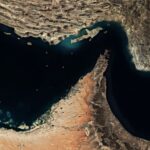
On 7th September, orders were received by the Pakistan Navy surface group comprising of seven ships to attack Dwarka. At 1800 that day, a small but accomplished Pakistan Navy added a new leaf in the history of North Arabian Sea in the Indian Ocean. The group of Pakistan Navy ships having assumed a classical formation, spewed 50 rounds of ammunition each on Dwarka. The entire operation with almost 350 rounds gushing out from the ships’ main guns was over in four minutes. During the operation, Pakistan Navy did not encounter any surface or aerial threat.

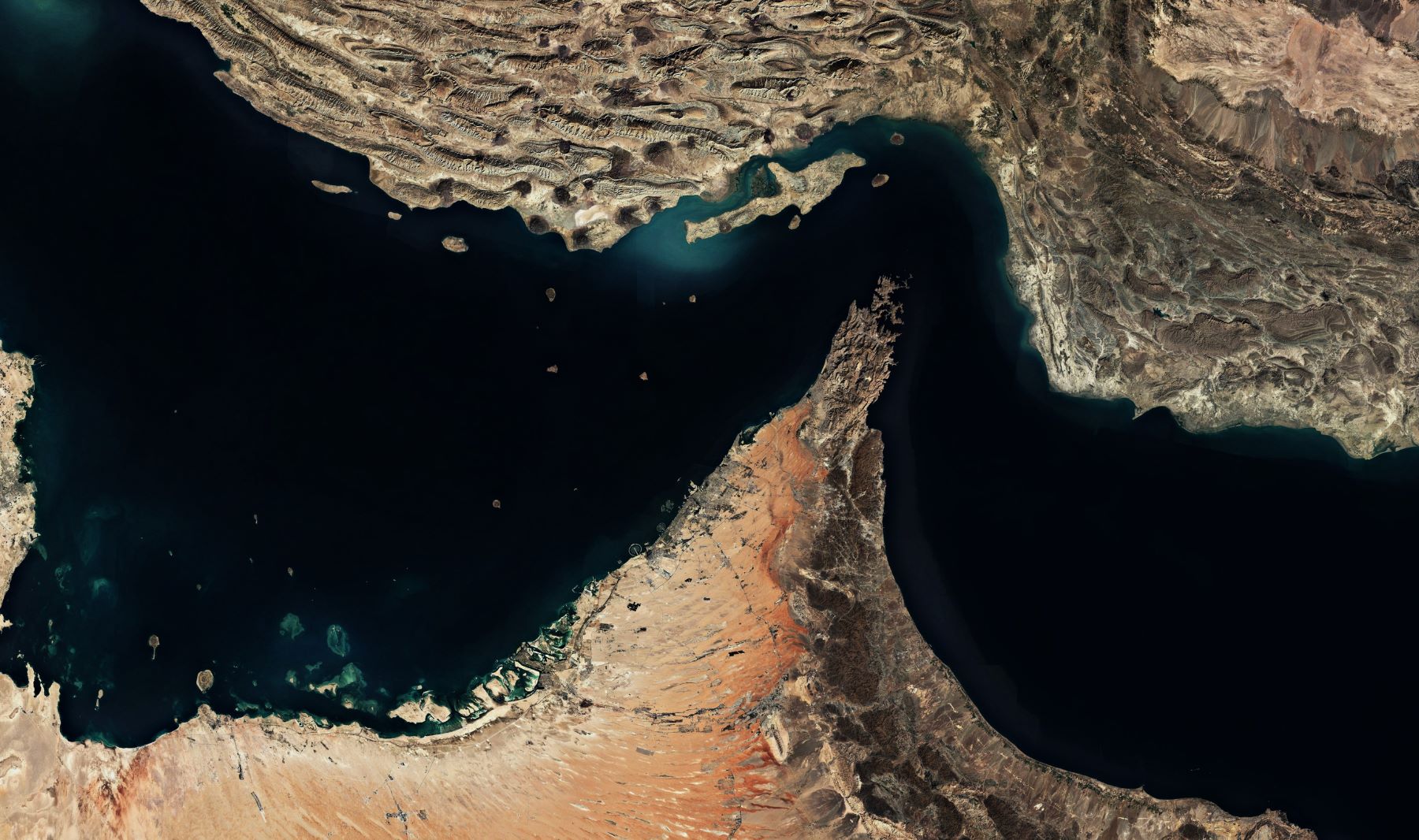
Five decades on, the Indian Ocean is in global spotlight for quite different reasons and is now an international arena for cooperation and contest. Over the past decade, earth shaking changes have transpired and at a fearsome pace both, in and on the shores. The nature and dimension of threats, the warfare and geopolitics have all morphed. A fascist government in New Delhi has unleashed an aggressive foreign policy agenda to dominate the region through overt, covert, fair or foul means. India’s pursuit for a blue water Navy to become a regional policeman has also seen a quantum leap in recent years. The Middle East is unravelling with civil wars and insurgencies raging across much of its expanse. Following a landmark nuclear agreement with the US and Europe, Iran now offers a wide range of market opportunities. New Delhi is restlessly cozying up to Tehran and frantically investing in the Iranian port of Chahbahar. The recently sealed China Pakistan Economic Corridor (CPEC) agreement with Gwadar port is viewed as a threat by India and other powers. Consequently, India’s premier intelligence agency, RAW is in overdrive to stall the multibillion dollar project.
During a recent visit to the UAE, the first by any Indian PM in over 34 years, Premier Modi held talks with the leadership of world’s second largest Arab economy. He also addressed the Indian diaspora which forms 30 percent of UAE’s population. India-UAE trade, valued at $180 million per annum in the 1970s, has gone up to around USD 60 billion. The two countries are also cooperating in the defence and security sectors and are forging ahead through a forum established for the purpose.
Given these developments, foreign policy realignments in the region are unfolding with rapidity. The disenchanting six decades of ‘off’ and ‘on again’ experience with the United States, has compelled Pakistan to finally reorient eastwards. Likewise, we will have to unshackle ourselves from the enduring land fixation and turn towards the sea in earnest. This is where most of Asia is now glued and investing. Times have changed. With Gwadar as its centerpiece, CPEC will open new vistas of economic opportunities connecting vast regions of ME, Europe, and Africa besides CAS. But for that, Islamabad will have to demonstrate readiness and forethought in true letter and spirit. As commercial activities in the Indian Ocean rise so will the task and responsibilities of PN. Pakistan has little choice except to have a new national security paradigm with Indian Ocean as its nucleus and Pakistan Navy as the cornerstone.