

Section – 1
Introduction
The brief but intense four-day conflict between India and Pakistan in May 2025 ignited significant global discussion, with
The New York Times notably describing: “The recent battlefield standoff between India and Pakistan was “a clear setback for India”, underscoring the decades-long Kashmir conflict and exposing India’s inability to impose a resolution with India an aspiring diplomatic and economic power, it now finds itself equated with Pakistan, a smaller, weaker country.”[1].
“The four-day clash reminded the world of India’s powerlessness to resolve 78 years of conflict with the troubled nation next door. Any act of confrontation plays into the hands of Pakistan, where friction with India has long been a lifeblood. Outright military victory is nearly impossible, given the threat from both countries’ nuclear arsenals,” it added.
Drawing on interviews with more than a dozen diplomats, analysts, and officials, the report painted a stark picture of India’s enduring dilemma. “After multiple wars and several failed attempts at solving their disputes, the problem has only grown in complexity,” it added. Due to the complexity of the subject it has been covered in five sections for easy comprehension and later expansion to a book if desired.
Genesis Of The Conflict
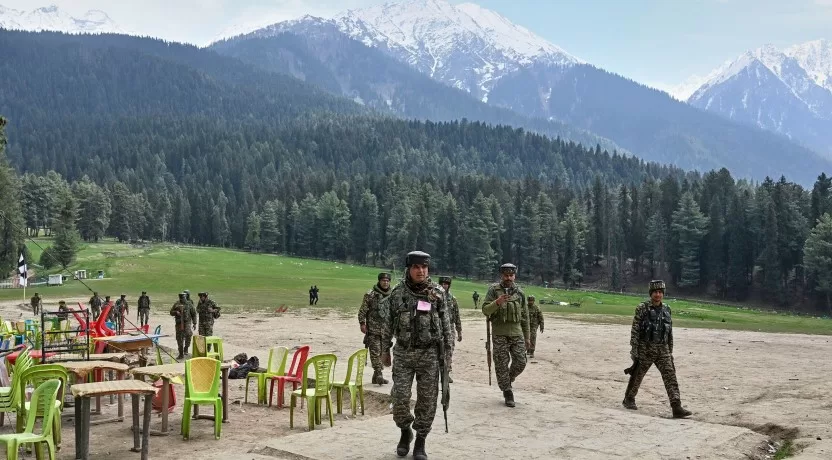
The crisis erupted following a terrorist attack in Pahalgam in Indian-administered Kashmir on April 22nd which tragically killed 25 Indian tourists.
While without any investigation or proof, India immediately blamed Pakistan-based militant groups and launched “Operation Sindoor” missile strikes on May 7th. Pakistan vehemently denied involvement and notably accused India of a “false flag operation” to create a pretext for aggression.
It requested an independent inquiry to the incident; this allegation has been highlighted by various Pakistani sources, including a documentary film “Marka-e-Haq” and analysis from institutions like the Institute of Strategic Studies Islamabad.
Conduct Of Hostilities
Pakistan retaliated with its own drone and missile strikes. This marked a significant escalation, being the first time both nuclear-armed nations engaged in drone warfare against each other. Both sides claimed successful hits on military targets, with India reporting deep strikes into Pakistani territory, and Pakistan asserting it had shot down several Indian fighter jets (Five, including two state of the art Rafaels) and damaged Indian infrastructure. Reports from both sides indicate civilian casualties, with Pakistan claiming 31 civilian deaths from Indian strikes.
Underlying Issues
Hostilities were eventually halted by a US-mediated ceasefire on May 10th. However, the root causes of the enduring conflict remain unresolved. Beyond the immediate catalyst of cross-border terrorism, the core dispute over Kashmir continues to fuel tensions. Furthermore, the Indus Waters Treaty, a crucial water-sharing agreement became a flashpoint.
India unilaterally suspended the treaty on April 23, 2025, citing national security concerns and alleging Pakistan’s support for terrorism.
Pakistan responded by declaring any attempt to stop or divert water as an “act of war,” highlighting the critical dependence of its agriculture on the Indus Basin.
This unilateral action by India raised serious concerns about its legitimacy, as the treaty has no provision for such suspension, and could set a dangerous precedent, potentially backfiring on India (e.g. concerning the Brahmaputra with China).
Military Dynamics and Strategic Lines: Strategic Balance
Despite India’s significantly larger active military force (around 1.4 million personnel) and a defense budget vastly exceeding Pakistan’s (approx. $81 billion vs. $10 billion), the notion of “parity” in deployable forces is a frequent, though disputed point of discussion, particularly in Pakistan. This argument suggests that India’s substantial deployments along the China border and for internal security duties balance its numerical superiority, leaving its forces roughly equivalent to Pakistan’s 660,000-strong army. However, military analysts generally contest this.
While India faces a genuine twofront challenge and commits substantial forces to the China front and internal security, its overwhelming reserve and mobilization capacity, coupled with a general technological edge and superior logistics, mean it retains a significant conventional advantage. Strategically, Pakistan operates on interior lines. This means its forces are geographically concentrated, allowing for rapid deployment and reinforcement to any threatened point along its border with India, supported by shorter supply lines. Conversely, India operates on exterior lines, with its forces spread across a wider geographical area, including the long border with China and various internal security commitments. This necessitates longer lines of communication and potentially slower concentration of forces against a specific threat from Pakistan.
Despite India’s much larger military (1.4 million personnel) and significantly higher defense budget ($81 billion vs. $10 billion), Pakistan often argues for “parity” in deployable forces. This argument suggests that India’s commitments to its China border and internal security duties effectively equalize its numerical advantage, leaving its active forces comparable to Pakistan’s 660,000-strong army. However, military analysts generally disagree, noting India’s substantial reserves, mobilization capacity, technological edge, and superior logistics give it a clear conventional advantage.
Strategically, Pakistan benefits from “interior lines,” meaning its forces are geographically concentrated, allowing for quick deployment and reinforcement along its border with India with shorter supply routes. In contrast, India operates on “exterior lines,” with its forces dispersed across a wider area due to its long border with China and internal security needs, leading to longer communication lines and potentially slower force concentration against Pakistan.
The China Factor
The “China factor” is an increasingly dominant and multifaceted element in the India-Pakistan conflict scenario, significantly influencing military capabilities, strategic calculations, and the broader geopolitical balance in South Asia.1 The May 2025 conflict brought this factor into sharp focus. Here’s how China plays a pivotal role:
• Military Supplier and Modernization Partner to Pakistan
China serves as Pakistan’s prividual weapons, China hasmary and most reliable military supplier, providing over 80% of its arms imports and significantly aiding in its defense modernization. The May 2025 conflict highlighted this partnership, with Pakistan employing Chinese J-10C fighter jets and PL-15 missiles against Indian Rafaels, effectively showcasing China’s advanced defense technology. Beyond indi vidual weapons, China has helped Pakistan integrate a “system of systems” including air defense and radar networks, and has supported indigenous production like the JF-17. Historically, China has also been crucial in Pakistan’s nuclear program, deepening their strategic alliance.
• Strategic Alignment and Counter-Balance to India
China’s “all-weather friendship” with Pakistan is strategically vital, primarily aimed at countering India’s regional influence by creating a potential “two-front war” dilemma for India, stretching its military resources. Beijing consistently offers diplomatic support to Pakistan on the Kashmir dispute, a stance India views as non-neutral, as evidenced by Chinese Foreign Minister Wang Yi’s statement during the May 2025 conflict. Furthermore, reports suggest deeper operational assistance with claims that Chinese military advisers aided Pakistan in realigning air defenses and satellite coverage over Indian territory during the conflict, though China has not confirmed this. Economically, the China Pakistan Economic Corridor (CPEC), a key Belt and Road Initiative project offers China strategic access to the Arabian Sea via Gwadar Port, bypassing the Malacca Strait, which is a significant maritime security concern for India. This economic leverage also gives China a vested interest in Pakistan’s stability, reportedly influencing Beijing to seek swift de-escalation during the May 2025 crisis due to the presence of its nationals on CPEC projects.
• China as a “Winner” from Regional Instability
China is perceived by some analysts to benefit from ongoing India-Pakistan tensions. The May 2025 conflict, in particular, served as a “combat showcase” for Chinese-made weapons like the J-10C fighter jets and PL-15 missiles, providing valuable real-world marketing for China’s defense industry globally. Furthermore, sustained instability between India and Pakistan diverts India’s military resources and strategic focus away from countering China’s increasing influence in the Indo-Pacific.
This regional instability also creates strategic opportunities for China to assert diplomatic influence, even as a non-neutral party, and to deepen its already robust economic and military ties with Pakistan, thereby enhancing its own strategic footprint in the region.
Conclusion
The “China factor” in any Indo-Pak conflict is not merely about arms supply; it encompasses a comprehensive strategic partnership. China provides Pakistan with critical military hardware, technological assistance, and reported operational support, strengthening Pakistan’s ability to deter India and operate as a proxy in a broader regional strategic competition.15 For India, this means a constant need to prepare for a potential two-front challenge, accelerating its own defense modernization and strategic partnerships to balance Beijing’s growing influence. The May 2025 conflict underscored that China’s role is increasingly active, complex, and central to the stability and dynamics of the South Asian security landscape. [1]
Section – 2
PAF Superiority over IAF
The May 2025 India-Pakistan conflict highlighted a fascinating dynamic in modern aerial warfare, with Pakistan claiming success against India’s more advanced Rafale jets, primarily through sophisticated system integration rather than individual aircraft superiority. While definitive, independently verified accounts are still emerging, several reports from military analysts and news sources have shed light on the techniques and innovations PAF likely employed:
• Integrated “Kill Chain” and Systems Warfare: The most significant factor cited by experts like Michael Dahm (Mitchell Institute for Aerospace Studies) is not the individual capability of PAF’s J-10C jets versus India’s Rafales, but rather Pakistan’s effective integration of its Chinese-origin weapons and air defenses to create a complex “kill chain.” This involves:
Ground Radars
A Pakistani ground radar (potentially part of a surface-to-air missile system) likely initiated the engagement by “illuminating” the Indian target.
Long-Range Missiles
A Pakistani J-10C fighter then launched its missiles, likely the export version of China’s PL-15 air-to-air missile, which has a reported range of 145 km (80 nautical miles), enabling beyondvisual-range (BVR) engagements.
Airborne Early Warning & Control (AEW&C) Aircraft
A Pakistani AEW&C aircraft likely provided mid-course data-linking to update and guide the missile to the Indian fighter, demonstrating seamless coordination between ground assets, fighter jets, and airborne platforms. This “A launched by B and guided by C” approach is a hallmark of modern systems warfare, similar to concepts like the US’s CJADC2 (Combined Joint All-Domain Command and Control).
• Electronic Warfare (EW) Capabilities and Spectrum Control
Pakistan’s success in this air combat is strongly attributed to its superior control in Electronic Warfare (EW) capabilities and EW Spectrum domination. Reports suggest Pakistan may have recently converted several Chinese AEW&C aircraft into dedicated electronic warfare aircraft. PAF reportedly excelled in EW spectrum control, which can involve jamming radars, spoofing signals, and disrupting enemy command and control links. The unconfirmed reports of brief outages in Indian early warning systems suggest a role for cyber and electronic warfare in the conflict. The ability to blind or corrupt enemy radar and data links can effectively neutralize even technologically superior aircraft.
• Extensive Drone Warfare and Counter-Drone Measures
The May 2025 conflict marked the first time both nations engaged in significant drone warfare.
Pakistan’s Drone Swarms
Pakistan reportedly deployed hundreds of drones (over 600 in total, with 350-400 on the night of May 7-8) in an attempt to overwhelm India’s aerial defense capacities. These included domestically manufactured drones like the Burraq and Shahpar, as well as systems from China (CH-4) and Turkey (Bayraktar, Byker Yiha Kamikaze).
“Soft-Kill” Anti-Drone Systems
Pakistan claims to have neutralized numerous Indian drones using newly inducted “soft-kill” systems, which disabled their communication and data-linking capabilities, sending them off-target. This suggests advanced electronic countermeasures against UAVs.
Radar-Guided AAA Guns
These were also used for hard kills against drones that got too close.
Loitering Munitions/Kamikaze Drones
Pakistan also used these in retaliation, aiming to trigger Indian air defense responses and reveal their ground locations.
Advanced Missile Systems
The use of Chinese PL-15E BVR air-to-air missiles by PAF’s J-10C fighters is a critical innovation that allowed them to engage Indian Rafales from long ranges, beyond visual combat. Pakistan is also reported to have used longrange guided rocket artillery (Fateh-1 and Fateh-2 missiles) and air-to-ground missiles against Indian air defense units like S-400 radar systems at bases like Adampur and Bhuj.
• Cyber Warfare
While specific details remain speculative, reports indicate that cyber warfare played a significant role in the conflict. Unconfirmed accounts suggest that cyberattacks and electronic warfare may have caused brief disruptions in India’s early warning systems, while Pakistan’s air defense networks reportedly operated without major interruptions.
Pakistani-affiliated hacker groups were allegedly involved in various cyber operations against Indian targets, including web defacement and online disruptions of armed forces websites. Additionally, advanced persistent threat (APT) groups linked to Pakistan, such as APT36 (Transparent Tribe) and SideCopy, reportedly carried out sophisticated phishing campaigns, deployed malware, and created spoofed domains to target Indian government and defense personnel. These cyber operations may have contributed to the broader strategic dynamics of the conflict, though official confirmations remain limited.
Why this gave “superiority” to “inferior” aircraft (J-10C vs.Rafale)
The narrative isn’t that the J-10C is inherently a “superior” fighter jet to the Rafale in a one-on-one comparison. Instead, the key takeaway from the analysis is that “systems of systems,” integration, tactics, training, and effective use of the electromagnetic spectrum were more decisive than the raw capabilities of individual aircraft. Pakistan’s ability to integrate its ground radars, AEW&C aircraft, and BVR missiles into a cohesive “kill chain,” combined with robust electronic warfare allowed its platforms to achieve operational success even against more advanced individual aircraft like the Rafale, which likely faced a more challenging and disrupted electromagnetic environment.13 This signifies a shift in modern air warfare where networked capabilities and information dominance can outweigh the pure technological superiority of a single platform.[2]
Section – 3
Terrorism & Nuclear Factor Terrorism is arguably the single most destabilizing factor in the already fraught relationship between India and Pakistan. It acts as a constant trigger for escalation, severely limiting diplomatic engagement and fueling deep-seated mistrust, with both nations vehemently accusing the other of sponsoring such activities.1 Here’s how terrorism affects Indo-Pak relations, characterized by mutual accusations
• Triggers for Conflict and Escalation
Terrorist attacks originating from either side of the border frequently serve as catalysts for military and diplomatic crises.2
India’s Perspective
India, (the occupier of Kashmir and violator of UN resolution to hold a plebiscite. Non-compliance result in indigenous freedom movement wrongly called terrorism.) consistently points to cross-border terrorism, primarily from Pakistan-based militant groups, as a direct threat to its national security and sovereignty.
3. Major attacks like the 2008 Mumbai attacks, the 2016 Uri attack, the 2019 Pulwama attack, and most recently, the April 2025 Pahalgam attack, are attributed by India to Pakistan-backed elements.4 These attacks prompt strong Indian reactions, often involving diplomatic isolation, economic sanctions, and increasingly, overt military responses.5
Operation Sindoor in May 2025 was India’s direct retaliation to the Pahalgam attack, targeting alleged terrorist infrastructure.6
Pakistan’s Perspective
While condemning specific attacks, Pakistan often denies state involvement and, in turn, accuses India of orchestrating terrorist activities within its own borders. Pakistan has presented what it calls “irrefutable evidence” of Indian state-sponsored terrorism, alleging that India trains and funds militant groups to destabilize Pakistan, particularly in Balochistan and other regions.7 The April 2025 Pahalgam attack, for instance was termed a “False Flag Operation” by Pakistan, designed to create a pretext for Indian aggression.8 Pakistan launched “Operation Bunyanun Marsoos” in response to India’s strikes, claiming to target “enterprises that were responsible for fomenting terrorism in Pakistan.”9
• Diplomatic Freeze and Trust Deficit
Terrorism fundamentally erodes trust, making meaningful bilateral dialogue extremely difficult.10
1. India’s Stance India’s consistent position is that “talks and terror don’t go together.”11 It refuses to engage in a comprehensive dialogue with Pakistan until cross-border terrorism ceases “credibly and irrevocably.” This stance often leads to downgrading diplomatic ties, suspending trade links, and rejecting offers of third-party mediation on issues like Kashmir, insisting they are bilateral.12
2. Pakistan’s Stance Pakistan, while expressing willingness for dialogue on outstanding issues, often emphasizes the need for independent investigations into terror incidents and points to India’s alleged human rights abuses in Indian-administered Kashmir as a root cause of militancy. They view India’s conditions for dialogue as a way to avoid addressing other core disputes.
Courtesy ny Times
• Weaponization of Non-Military Tools
The terrorism narrative is used to justify escalatory measures beyond conventional military action.
3. Water as a Weapon India’s unilateral suspension of the Indus Waters Treaty (IWT) in response to the Pahalgam attack is a stark example.13 India asserted that “water and blood cannot flow together” and linked the resumption of the treaty directly to Pakistan’s credible action against terrorism. Pakistan termed this an “act of war” and a violation of a binding international treaty.14 This move has raised serious international concerns about humanitarian implications and adherence to international law.
4. International Pressure and Blacklisting
Both countries actively engage in international forums to garner support for their narratives. India lobbies for Pakistan to be designated a state sponsor of terrorism by global bodies like the Financial Action Task Force (FATF), citing its alleged failure to curb terror financing. Pakistan, conversely, seeks to expose India’s alleged involvement in terrorism within its borders to the international community.
• Domestic Political Impact
Terrorism-related incidents have a profound impact on domestic politics in both countries, often leading to hardened stances and reduced political space for de-escalation.
1. Nationalist Narratives: Public opinion and political rhetoric in both India and Pakistan often become highly charged after terror attacks, demanding strong responses. This makes it difficult for leaders to pursue conciliatory approaches.
• Perpetual State of Readiness and Nuclear Shadow
The persistent threat of terrorism keeps both India and Pakistan in a state of heightened military readiness, further intensifying the ever-looming risk of nuclear confrontation. Each terrorist attack carries the potential to trigger rapid escalation into full-scale conventional warfare—a particularly alarming scenario given that both nations possess nuclear arsenals. The May 2025 conflict, marked by drone strikes and missile exchanges, demonstrated just how quickly tensions could spiral out of control. Compounding these dangers, India’s post-Pahalgam “new normal” (rejected by Pakistan) military doctrine adopts a more aggressive stance, emphasizing preemptive strikes against “terrorist bases” and a refusal to yield to what it perceives as “nuclear blackmail.” This shift in strategy signals a hardening of India’s approach, raising the stakes in an already volatile region where any major confrontation risks catastrophic consequences. In conclusion, terrorism is not just a security challenge but a deeply embedded political and diplomatic weapon in the India-Pakistan dynamic. The cycle of accusation, retaliation, and diplomatic freeze ensures that relations remain volatile and fraught with the constant danger of escalating conflict. [3]
Section – 4
USA on Indo-Pak Conflict
The United States (and allies in the West) views conflicts between India and Pakistan with a complex and evolving perspective, primarily driven by a desire to prevent escalation, particularly given their nuclear arsenals, and increasingly, by its broader strategic interests in the Indo-Pacific and its relationship with China. The May 2025 conflict clearly illustrated these dynamics. Here’s a breakdown of how the US generally looks at conflicts between India and Pakistan.
• Preventing Nuclear Escalation: The Paramount Concern
The most urgent and critical priority for the U.S. in any India-Pakistan conflict is the existential threat of nuclear escalation. Both nations possess nuclear arsenals, and even a conventional war risks spiraling into a catastrophic exchange with global repercussions. This grave possibility forces the U.S. to act swiftly, often through high-level diplomatic intervention. During the May 2025 crisis, Washington rapidly shifted from an initially detached stance—reflected in Vice President J.D. Vance’s May 8th remark that the conflict was “none of our business”—to urgent, top-tier engagement. Vance and Secretary of State Marco Rubio personally mediated between Indian and Pakistani leadership, including their Prime Ministers and National Security Advisors, to secure a ceasefire. This abrupt pivot underscores how quickly regional tensions can demand global involvement, with the specter of nuclear war leaving no room for hesitation.
• Counter-Terrorism and Regional Stability
The United States has consistently supported India in condemning cross-border terrorism, reinforcing New Delhi’s long-standing demands for action against militant groups allegedly operating from Pakistani soil, without giving any concrete evidence. Following the April 2025 Pahalgam attack, the US reaffirmed its stance, declaring it “stands strong with India against terrorism” while urging Pakistan to dismantle terrorist infrastructure—a position that aligns closely with India’s counter-terrorism objectives. However, Washington also maintains a strategic relationship with Pakistan, shaped by Islamabad’s historical role in Afghanistan and its continued relevance for regional stability. Pakistan’s status as a Major Non-NATO Ally (MNNA) underscores this dual approach, though debates persist within US policy circles about conditioning this designation on verifiable counter-terrorism progress and greater accountability. This balancing act reflects the complex geopolitical tightrope the US walks in South Asia, where counter-terrorism cooperation with India coexists with pragmatic engagement with Pakistan.
• Balancing Strategic Interests: The US-India- Pakistan Dynamic
India frequently voices frustration over perceived US policy of “equidistance” between New Delhi and Islamabad, viewing such equivalence as undermining its growing strategic value—particularly as a key counterbalance to China. *The New York Times’* characterization of the May 2025 conflict as a “clear setback for India strategically,” by framing it symmetrically with Pakistan, amplified these concerns, reinforcing India’s unease about being equated with a state it accuses of sponsoring cross-border terrorism. Yet, the US continues to engage Pakistan, recognizing its role in regional stability—especially regarding Afghanistan—and seeking leverage to prevent escalation. This delicate balancing act is often termed the “India-Pakistan Trap,” where Washington strives to advance ties with India without letting Pakistan-linked crises derail progress.
Section – 5
Russia, OIC, Arab and Islamic Countries on Indo-Pak Conflicts
The repose of Russia, the Organization of Islamic Cooperation (OIC), and various Islamic and Arab countries to the hypothetical May 2025 India-Pakistan conflict was generally characterized by calls for de-escalation, restraint, and dialogue, while also reflecting their individual strategic interests and relationships with both India and Pakistan. Turkey and Azerbaijan and the Grand Mufti of Oman openly supported Pakistan.
• Russia’s Balancing Act: Strategic Neutrality in the Indo-Pak Conflict
Russia adopted a stance of pragmatic neutrality during the 2025 crisis, carefully balancing its historic alliance with India against its growing engagement with Pakistan. President Vladimir Putin swiftly condemned the Pahalgam terrorist attack (April 2025) as a “brutal crime with no justification,” expressing full solidarity with India’s counterterrorism efforts and demanding accountability for perpetrators.
However, Moscow simultaneously urged restraint from both sides, emphasizing bilateral dialogue under the Shimla Agreement and Lahore Declaration frameworks, with Foreign Minister Sergei Lavrov engaging diplomatically with New Delhi and Islamabad.
Notably, Russia avoided direct criticism of Pakistan—a reflection of deepening bilateral ties, including counterterrorism drills and $1 billion in annual trade. This calibrated approach also stemmed from Moscow’s need to maintain equilibrium within the Shanghai Cooperation Organization (SCO), where both nations hold membership. Unlike the U.S., Russia refrained from assertive mediation, offering only limited de-escalatory support—a posture underscoring its prioritization of strategic flexibility over direct intervention in South Asia’s volatile geopolitics.
• OIC’s Stance on the Indo-Pak Ceasefire and Kashmir Issue
The OIC, as the collective voice of the Muslim world, generally adopted a position that advocated for de-escalation, dialogue, and a peaceful resolution to the Kashmir dispute. The Organization of Islamic Cooperation (OIC) welcomed the ceasefire between Pakistan and India, commending mediating countries for their role in de-escalating tensions.
Urging sustained diplomatic engagement, the OIC called on the international community to intensify efforts in facilitating constructive dialogue between the two nations to resolve outstanding disputes—particularly Kashmir—through peaceful means and in line with relevant UN Security Council resolutions.
The organization expressed grave concern over the recent military escalation, condemning what it termed “unjustified strikes” in Pakistan and Azad Jammu and Kashmir. Reaffirming its long-standing position, the OIC emphasized the need for a peaceful resolution to the Jammu and Kashmir conflict to ensure regional stability and prevent further escalation between nuclear-armed neighbors. Additionally, the OIC Group in New York criticized India’s “hostile rhetoric and aggressive actions,” urging New Delhi to refrain from what it described as “unfounded allegations” against Pakistan. The statement reinforced the OIC’s firm stance on Kashmir while advocating for restraint and dialogue to avert further crises.
• Islamic and Arab Countries: Diverse Responses with a Focus on De-escalation
The responses from individual Islamic and Arab countries varied, often reflecting their specific bilateral ties with both India and Pakistan, but generally leaned towards calls for restraint and dialogue.
1. Saudi Arabia Expressed concern over heightened tensions and continuous border fire, appealing to both nations to de-escalate, avoid further escalation, and resolve disagreements through diplomatic channels. 9 Saudi Minister of State for Foreign Affairs Adel al-Jubeir made back-to-back visits to India and Pakistan, underscoring Riyadh’s diplomatic efforts to facilitate a peaceful resolution.10
2. United Arab Emirates (UAE) Called for restraint and de-escalation of tensions.11 The UAE opted for “quieter shuttle diplomacy,” engaging with Indian and Pakistani leaderships on parallel tracks to de-escalate.12 There were reports that the UAE or Saudi Arabia could host future India-Pakistan talks.13
3. Iran Was one of the first regional powers to offer mediation.14 Iranian Foreign Minister Abbas Araghchi expressed Tehran’s willingness to “use its good offices” to de-escalate the conflict,15 while also condemning the Pahalgam terrorist attack and expressing “heartfelt condolences” to India.16
4. Turkey While generally aligning firmly with Pakistan (Prime Minister Shehbaz Sharif lauded strong support from Turkey), Turkey also positioned itself as a voice of de-escalation, emphasizing its aversion to a fullscale war in South Asia.17 Indians have boycotted Turkish and Azerbaijan tourism and products.
5. Qatar & Kuwait Both expressed “great concern” and called for “self-restraint,” urging resolution through diplomatic channels and adherence to international law.18
6. Oman Oman’s Grand Mufti, Ahmad bin Hamad al-Khalili publicly “saluted Pakistan, our Muslim brother nation, which has bravely confronted aggression.”19
7. Algeria, Libya, Afghanistan, and Bangladesh Generally expressed deep concern, urged self-restraint, and called for dialogue and the prioritization of peace and stability.
In summary, while there were nuances in their statements and actions (some leaning more towards India’s anti-terrorism narrative, others more towards Pakistan’s stance on Kashmir and sovereignty), the overarching message from Russia, the OIC, and most Islamic and Arab countries was a strong push for de-escalation and a return to diplomatic engagement, primarily driven by the grave concern over the nuclear implications of the conflict.
• Lessons Learned and Future Outlook The May 2025 conflict served as a stark reminder that a clear military victory remains elusive for either side due to the nuclear threat. The mutually assured destruction (MAD) doctrine acts as the ultimate deterrent against large-scale conventional offensives aimed at territorial conquest.
For India, the conflict was described as a “strategic setback,” potentially undermining its image as an emerging global power by equating its status with Pakistan in the eyes of some observers. While India claimed to have inflicted damage, this came after reported aircraft losses.
The incident highlighted India’s ongoing struggle to definitively resolve the Kashmir issue and cross-border tensions. The unilateral suspension of the Indus Waters Treaty, though intended as leverage, also brought international criticism and raised concerns about regional stability.
For Pakistan, the conflict arguably boosted the military’s domestic image. Despite the impact of Indian strikes, Pakistan’s swift and reciprocal actions, along with its claims of downing Indian jets, were presented domestically as a victory. The US-led ceasefire was framed by Islamabad as evidence of the necessity for external mediation in the dispute, contrasting with India’s preference for bilateral resolution. The conflict underscored that hostilities with India remain a central narrative for Pakistan’s military’s continued relevance. Looking ahead, the conflict highlights the alarming risk of rapid escalation due to the deployment of advanced weaponry, including drones. Both sides are prone to hardened positions, fueled by nationalist narratives. The underlying issues of Kashmir and water remain potent flashpoints. Without sustained diplomatic efforts and a willingness to address core grievances through multilateral dialogue, the region faces a perpetual threat of further, potentially even more destructive, confrontations.