





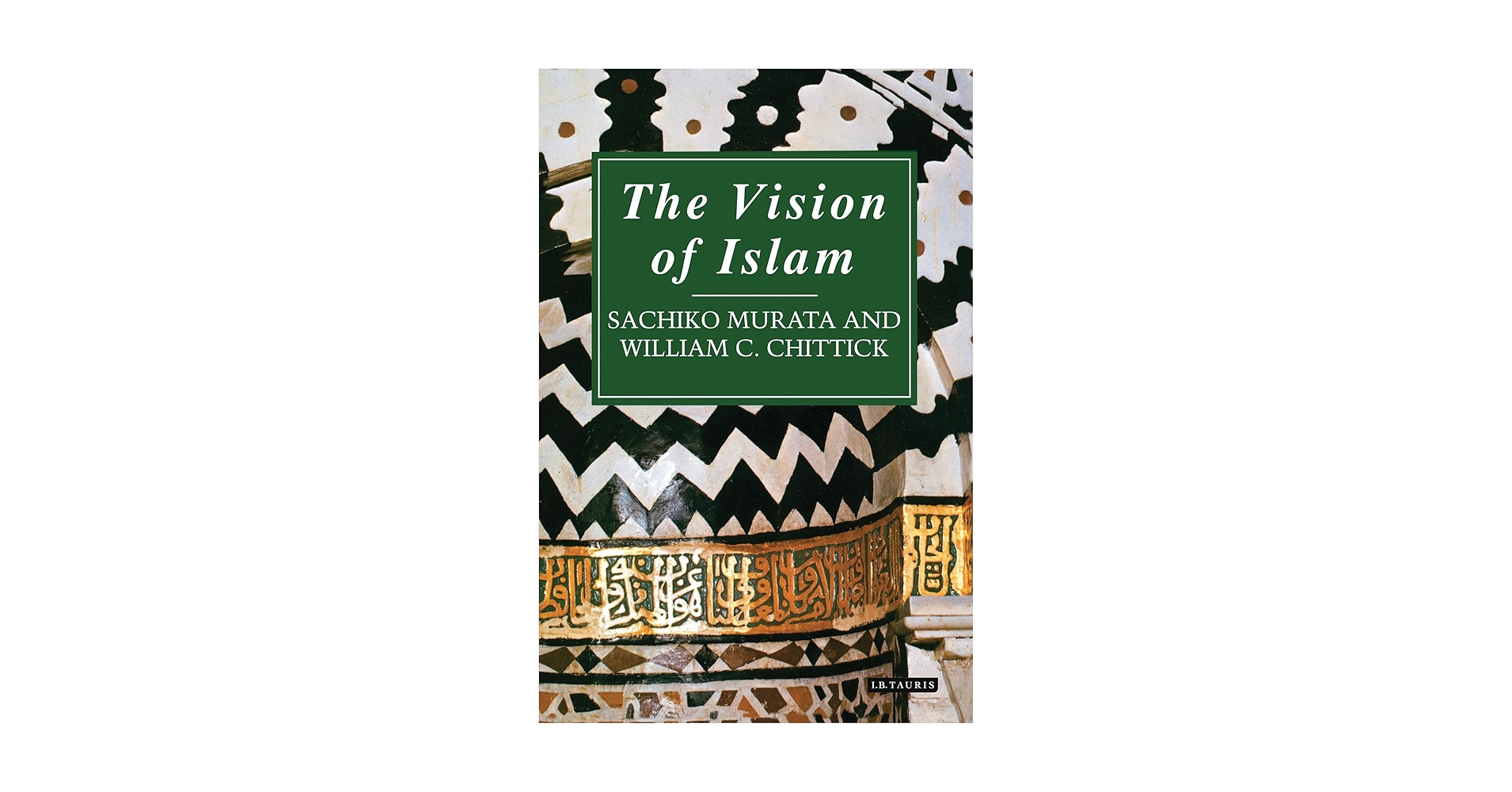
By Sachiko Murata and William C. Chittick
“The Vision of Islam” authored by Dr. Sachiko Murata and Dr. William C. Chittack delves into the multifaceted aspects of Islam, including practice, faith, spirituality (Ishan), and the Islamic perspective on history, drawing from the teachings of the “Hadith of Gabriel”, which is based on summarized contents from the Quran. Dr. Ishar Ahmed (may Allah bless him) held a deep appreciation for this book, endorsing it to all Muslims. There has been no alterations in the original text, as desired by Dr. William C. Chittick, however endnotes are added wherever required.[1] Sixteen parts were reproduced here, which can be seen in previous issues prior to January 2024. Now again started with part seventeen.
Creaturely Diversity
God measures out all things.
“There is nothing whose treasuries are not with Us, and We send it down only with a known measuring out” (15:21).
Measuring out pertains not simply to the issue of whether or not people have the ability to make free choices. It has far wider implications, since it is the principle of creation itself. No matter what there might be in existence, God has measured it out and determined its nature.
“He gave everything its creation” (50:20).
The net result of all this measuring out is that God produces an inconceivably enormous cosmos with an infinite diversity of created things. If we investigate the creatures one by one, the task can never be completed. But if we speak in general terms, it is possible to classify created things into categories. Such classifications are not meant to be exhaustive, simply to indicate in general terms what people observe or may observe if they have the necessary insight.
We have already mentioned that the cosmos can be divided into two basic worlds, the unseen and the visible, sometimes referred to as “the heavens and the earth,” or “the spiritual world and the bodily world.” We also said that there is a third world that is both similar to and different from these two basic worlds, called the “world of imagination.”
And we pointed that out, if these three worlds represent the general structure of the total macrocosm, the human being can be called a microcosm, since three parallel domains are found within each individual: spirit, soul, and body.
At this point, we want to look at other bodily creatures, that is, those physical things that fill the visible universe. Muslim authorities follow the standard Greek classification by dividing the visible things into three broad categories: inanimate objects, plants, and animals. What is interesting for our purposes is how these three kinds of creatures manifest the signs of God.
We suggested earlier that one way to read the signs is to meditate upon the divine attributes that become visible through them. Which attributes become visible in inanimate objects? Perhaps the best way to answer this question is to say that more than anything else, inanimate objects conceal God’s attributes rather than revealing them. They tell us what God is not rather than what he is. Of course, everything in the universe, by being something, is other than God, and hence we learn from each thing that God is not like that. This is the perspective of tanzih. All things also say something in terms of tashbih, and tashbih[2] is weakest in inanimate things. It is extremely difficult to see divine attributes in a stone, although stones do suggest something of the divine permanence and eternity. But for the most part, stones tell us that God is infinitely distant and different from themselves.
However, stones—especially big stones, like planets—teach us that God is the Powerful, the Majestic, and the Magnificent King, who throws around big stones, not to speak of suns and galaxies, as if they were sand.
In contrast to inanimate things, plants display several obvious divine attributes. It is easy to see that plants are alive, and life is the first of the Seven Leaders, the seven divine attributes that predominate in creation. Plants have a certain knowledge. They know where to hunt for nutrients and where to find the sun. They certainly have desire: they want water, sunlight, fertilizer, trace elements. If you treat them well and give them what they really desire—like nice, rich manure—they even show their gratitude by producing enormous crops; they are not ungrateful truth-concealers. Plants have power and can destroy stones and concrete, but they need time. But all these divine attributes are found rather feebly within plants, so tanzih outweighs tashbih.
In contrast, the divine attributes found in animals are much more intense. Moreover, animals add other attributes that are difficult to find in plants. The knowledge possessed by animals can be extraordinary, though it is always rather specialized. Bees can tell their hivemates exactly where to find the best honey, but they don’t know much about vinegar. Monarch butterflies know the precise location of their valley in Mexico, but they cannot be trusted to take you to New York City. The animal kingdom represents an incredible diversity of knowledge and skills, divided among a vast number of specialized organisms. Desire is also clearly present in animals, but each species desires different things, and thus a great natural harmony is created where, as Rumi puts it, “Everything is both eater and eaten.”
Both plants and animals represent a tremendous variety of specific signs. Each plant or animal species is a special configuration of divine attributes that is not reproduced in any other species. Hence, oak trees produce acorns, and we are never surprised that we don’t get apples. If we did get apples from an oak tree, we would know that something extraordinary had occurred. Each animal species is defined by the specific knowledge, desire, power, and other divine attributes that differentiate it from every other animal species. Because the attributes are specific, we always know what to expect from peacocks and elephants and cats. There may be a certain element of surprise involved, but we know that this is traceable to our ignorance of the species or of certain external factors, such as a disease, that complicate the picture.
Human beings are a species of animal, and they share many characteristics with them. But there is one remarkable characteristic that differentiates them from all other animals: Each animal is what it is, with little or no confusion. We never mistake a dragonfly for an eagle, or even a cat for a dog. But human beings are unknown factors. We never know what a human being is, because a human being can be practically anything.
A dog is a dog, but a human being may be a dog or a pig. We use such terms as insults, but they contain a profound wisdom that every culture has recognized. Each species of animal is dominated by one or a few characteristics. For the animal, all these characteristics are good, since they define its very nature. But if the same characteristics dominate over human beings, they may be good or bad.
A dog has a number of characteristics. It is faithful, and this is a good quality when found in people. But dogs also have a strong streak of rapacity and viciousness, and this is usually what people have in mind when they call someone a dog.
The human being is infinitely malleable. We never know what we have when faced with a roomful of people. We could have saints and serial killers, and never be able to tell the difference. When we are faced with a dog or a lion or a slug, we know what to expect and how to act. But with people we never know.
To be continued ……
Next – “The Human Being” …
Book Reference: Vision of Islam [3]
[1] Vision of Islam:اردو ترجمہ مکمل کتاب :http://www.williamcchittick.com/wp-content/uploads/2019/06/Chittick-and-Murata-Vision-of-Islam-Urdu-Translation-by-Muhammad-Suheyl-Umar.pdf \ https://salaamone.com/vision/ , https://SalaamOne.com/e-bookshttps://traditionalhikma.com/wp-content/uploads/2015/02/Vision-of-Islam-by-Sachiko-Murata-and-William-C.-Chittick.pdfhttps://defencejournal.com/2024/02/10/the-vision-of-islam
[2] In the technical language of theology, especially as it developed after the seventh/thirteenth century, two terms are commonly employed to express the contrast between the perception of God’s nearness and mercy and that of his distance and wrath. These terms are tanzih (declaring incomparability) and tashbih (affirming similarity).
https://defencejournal.com/2024/07/10/the-vision-of-islam-6/
[3] Vision of Islam:اردو ترجمہ مکمل کتاب :http://www.williamcchittick.com/wp-content/uploads/2019/06/Chittick-and-Murata-Vision-of-Islam-Urdu-Translation-by-Muhammad-Suheyl-Umar.pdf \ https://salaamone.com/vision/ , https://SalaamOne.com/e-bookshttps://traditionalhikma.com/wp-content/uploads/2015/02/Vision-of-Islam-by-Sachiko-Murata-and-William-C.-Chittick.pdfhttps://defencejournal.com/2024/02/10/the-vision-of-islamogle.com/document/d/e/2PACX-1vQ1z8Ir3qtr7n-cxqIWOsHeTPFF_DQCICO1lU_AEc0D4jfH08bEBSTXfpTJa0UGLVpKXAAWGDPRrXbr/pub