


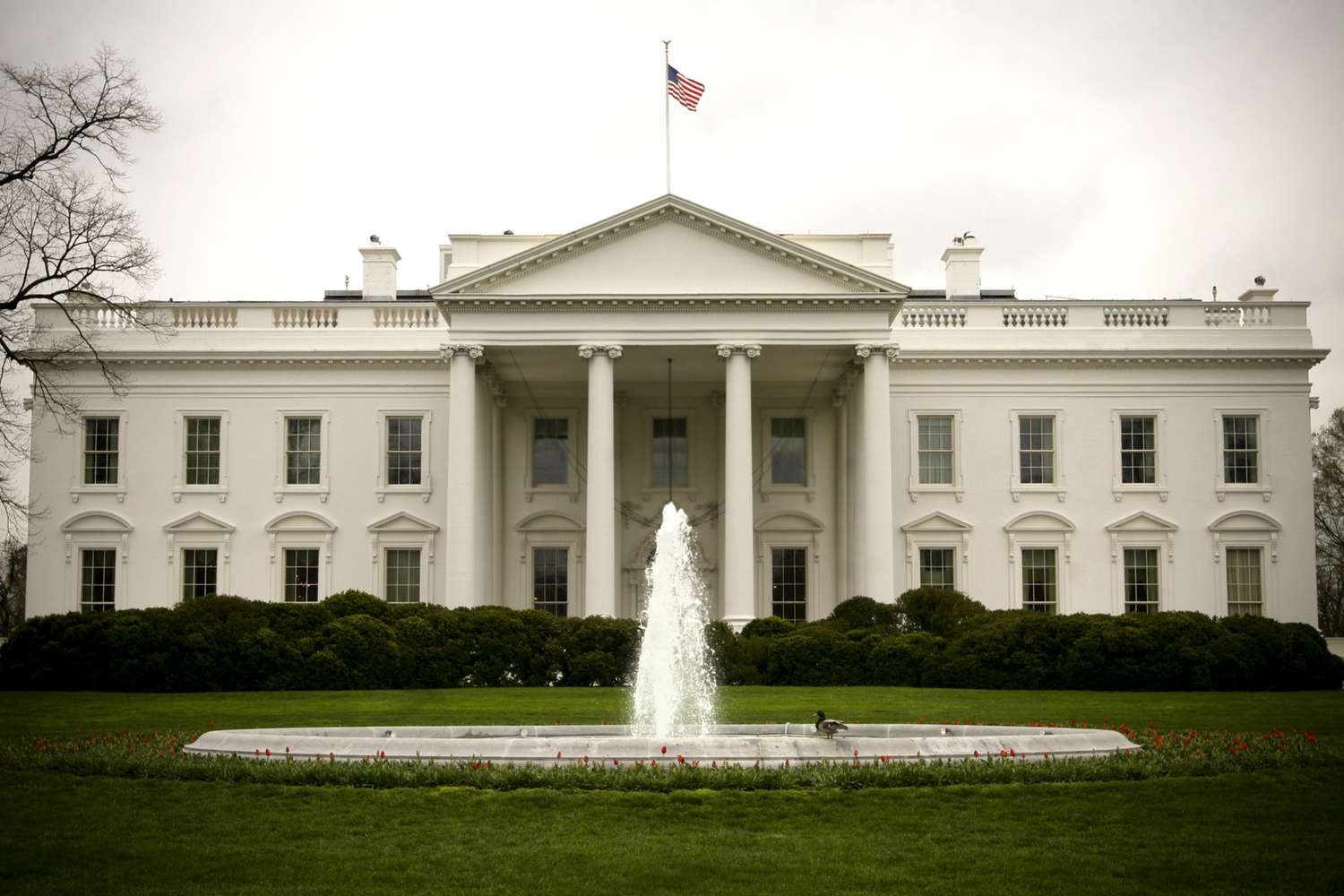
Henry Kissinger, George Marshall, Lee Kuan Yew, George Schultz – two things unites them all. One, they were all masters of foreign policy. Two, they would find themselves at a loss to see how flattery has replaced foreign policy in the Trump White House!
Foreign policy has always required a delicate balancing act – security concerns here, economic interests there, a dash of diplomacy, a sprinkle of nuance. But during the Trump era, world leaders encountered a requirement not found in any known diplomatic textbook: to engage the United States, you had to flatter the White House. Extensively. Creatively. Sometimes musically!
Shortest route to Washington influence wasn’t a treaty, an alliance, or a military concession. It was a compliment!
This wasn’t merely an open secret; it was closer to an entry requirement. After all, this is the same White House that began full cabinet meetings in 2017 and 2025 by inviting senior officials to take turns publicly praising the President – an event that looked less like governance and more like a national-security version of open-mic adulation night. Reince Priebus thanked Trump for the “blessing that you’ve given us to serve your agenda”. Mike Pence declared it the “greatest privilege of my life”. Stephen Miller – not astonishingly – said the US “was going to die without you”. During these ego-massaging sessions there must be times when analysts wondered if the State Department had mistakenly hired a Broadway choreographer instead of a protocol officer.
Thus was born the Praise or Perish Doctrine: an unofficial but unmistakable foreign policy approach under which the White House responded most positively, decisively, and energetically to leaders who offered, shall we say gift-laden compliments. And we are not talking about regular compliments. Big compliments. Tremendous compliments. Beautiful compliments! $400M Qatari jet anyone? Or a personal letter from a royal monarch?
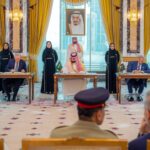
The international community learned quickly. Saudi Arabia rolled out a welcome for Trump in Riyadh that was so extravagantly complimentary – complete with sword dances, gilded everything, and glowing orbs – that it reset the global standard for diplomatic flattery pageants. Some, like Japan’s Prime Minister Shinzo Abe, mastered the art early. During Abe’s 2017 visit, he not only lavished praise on Trump’s leadership and business acumen but also endured an 18-second handshake that became instantly iconic – a physical manifestation of the new doctrine: hold on, smile, flatter, and don’t blink. South Korea welcomed Trump with a replica gold crown and awarded him with the “Grand Order of Mugunghwa”, the country’s highest decoration.
A specialized team dedicated to crafting compliments calibrated to pass the shimmering White House grading system
These historic moments forced embassies worldwide to adapt. Soon every embassy is said to have its own Praise Overseeing Organisation, in short: POO. These are rumoured to have a specialized team dedicated to crafting compliments calibrated to pass the shimmering White House grading system.
Foreign compliments were evaluated against three criterions. One, scale – did the praise reach cabinet-meeting levels? Two, comparative value – did it surpass what the President’s friends and domestic allies had offered that week? Three, repeatability – did the flattery lend itself to future Trump speeches and conversations?
France’s Emmanuel Macron used this insight and found that touching Trump frequently – on the arm, on the shoulder, on the handshake – boosted rapport. Macron praised Trump’s leadership; Trump called Macron “perfect.” Commentators speculated whether the two were negotiating climate accords or auditioning for a friendship montage but all agreed, the White House grading system went into overdrive!
China’s Xi Jinping, for his part, famously told Trump that relations had “a thousand reasons to get better” and no reasons to worsen. Trump in turn referred to Xi as a “very special man”. Somewhere in the deep recesses of the State Department an official reportedly fainted. When Poland’s President Andrzej Duda suggested naming a U.S. military base “Fort Trump”, internal praise meters reportedly hit a record high.
Even though the base never materialized, the compliment itself achieved near-mythic diplomatic status. In a recent press conference with world leaders, Trump pushed Pakistani Prime Minister in the spotlight by asking him to say some good things about Trump. True to the accepted norms in flattery foreign-policy, Shehbaz Sharif didn’t disappoint!
But with this abandon praise comes alarm. Medical researchers are isolating a new diplomatic condition called “praise fatigue”. Around the world, diplomats reported symptoms of praise fatigue. British officials complained that they had run out of synonyms for “unprecedented”. Australian diplomats reported accidentally complimenting random objects, such as airport signage. Swedish officials tried their best, but the linguistic structure of the Swedish language makes effusive praise sound like instructions to assemble a new cupboard. One South Asian ambassador allegedly confessed: “just yesterday I told my laptop its performance was truly historic – I just can’t stop”.
And we are not talking about regular compliments. Big compliments. Tremendous compliments. Beautiful compliments!
Historians will debate for decades whether the Praise or Perish Doctrine strengthened geopolitical stability or simply created the world’s largest international compliment economy. But its impact is undeniable. The era produced some of the most surreal moments in modern diplomacy – moments where foreign leaders discovered that the shortest route to Washington influence wasn’t a treaty, an alliance, or a military concession. It was a compliment!
A note to upcoming White House visitors:
praise enthusiastically, praise strategically, or prepare to be called “very unfair” on television.