



A Conceptual error
The literal meaning of the word “Jihad” is “Strenuous effort” or “struggle”. War for the independence of one’s homeland or for any other purpose is called Harb (war), but commonly it is also called Jihad, which depends on circumstances and is debatable.
While a detailed article was published in DJ (Jihad: Myth & Reality) this short reminder only covers “preparation”, “strength”, migration and “Prudence”, mostly ignored by the Jihadi groups, resulting in defeat, higher casualties and disappointments.
In Islam, there are several important types of Jihad:
1. Jihad bil-Lisan (Jihad with the tongue): Speaking the truth, giving the call to faith, and forbidding evil.
2. Jihad bil-Ilm (Jihad with knowledge): Acquiring knowledge, spreading it and eliminating ignorance.
3. Jihad bil-Mal (Jihad with wealth): Spending wealth in the way of Allah and helping the poor.
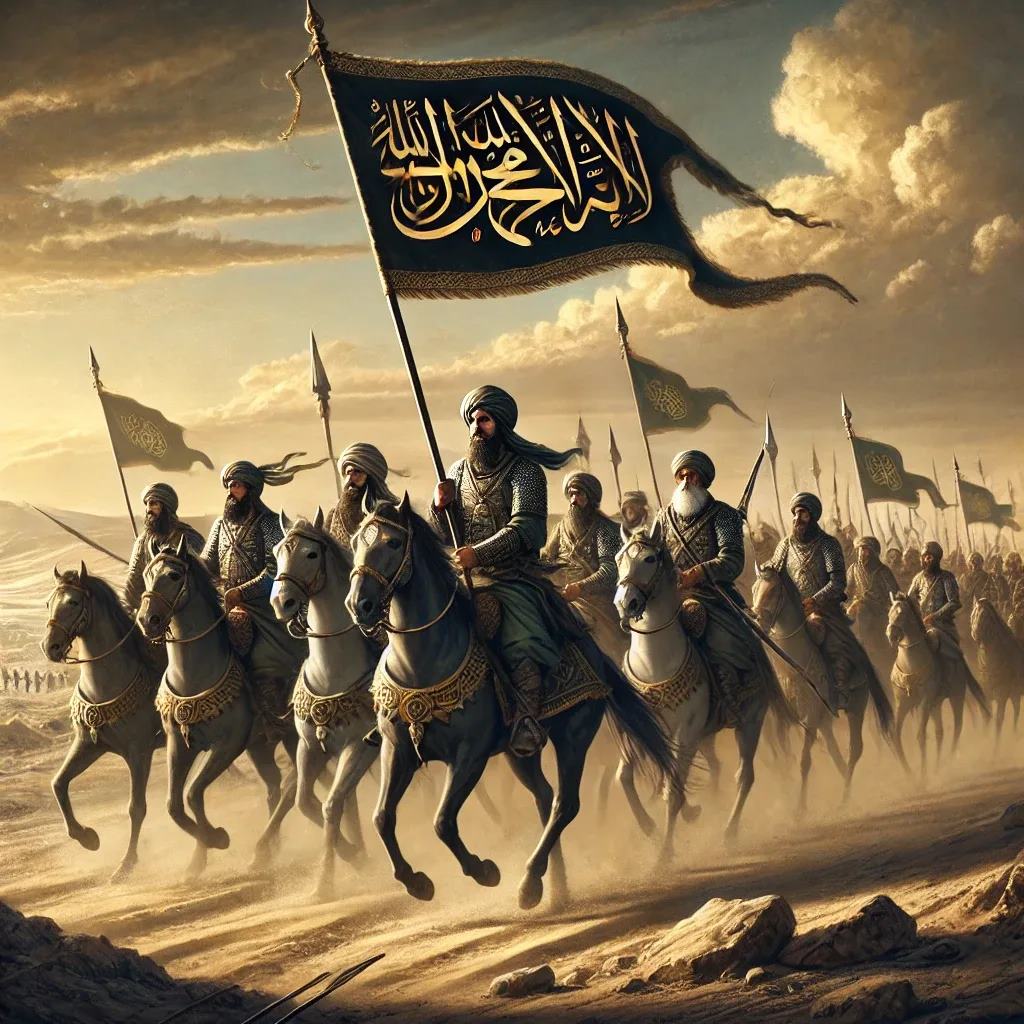
4. Jihad bin-Nafs (Jihad against the self / The Greater Jihad): Struggling against one’s own base desires and evils. Following the guidance from the Quran. JIHAD & SHAHADAT A CONCEPTUAL ERROR This image is a depiction of an early Islamic battle
5. Jihad bil-Qital (Jihad by fighting / The Lesser Jihad): This is only for defense, to stop oppression, or in the case of aggression against a Muslim state, under specific conditions, and is the responsibility of the Islamic state, not of individuals or groups. Its purpose is not to force people into Islam, but to help the oppressed and protect Muslim freedom.
Not every war (Harb) that Muslims fight becomes Jihad. “Jihad Fi Sabilillah” (Jihad in the way of Allah) is against oppression and in accordance with Allah’s commands and guidance. In Islam, the interpretation of Jihad is bound by strict regulations which prohibit harming women, children, the elderly, priests and non-combatants. Nowadays, terrorist groups are misrepresenting and tarnishing the sacred concept of Jihad. These people call their war (Harb) Jihad which goes against the Quran; this is pure deception.
Jihad Fi Sabilillah
Jihad is conducted in the light of the guidance provided by Allah in the Quran. Setting aside the verses of the Quran is not Jihad, it is Harb (war). All verses on Jihad are applicable in peculiar circumstances and situations but the following verses are overriding [Quran: 8:60, 8:65, 8:66, 4:97, 4:98, 3:28] which must be considered and applied before undertaking any armed conflict :
1. Prepare for Jihad (Qital):
Make preparations, train strong, well-trained military forces and provide ample weaponry. (8:60)
2. A Muslim can overcome twice the number of enemies:
A hundred steadfast believers can overcome two hundred, due to their faith and strength granted by Allah. If there are a hundred, they can overcome a thousand disbelievers if they have strong faith. (8:65-66). This sets a strategic benchmark.
Fiqh Ruling: From a juristic perspective, according to the majority of commentators and jurists, these verses establish a definitive standard. If the enemy’s number in battle exceeds twice the number of Muslims (e.g., three enemies against one Muslim), it becomes permissible for the Muslim army to withdraw from the battle or strategically retreat, as the divine promise of victory is linked to the 1:2 ratio. Therefore, the 1:2 ratio is considered the minimum requirement for military resolve and steadfastness. It is not followed by militant groups who are few in number but fight against strong enemies resulting in unnecessary deaths.
3. Migration:
Migration to distant lands to escape oppression is another option, but there are people who cannot immigrate due to their own circumstances or no one is ready to accept them. They are exempt from any punishment.
4. Prudence in Weakness:
Human life is precious, use wisdom and tact to save life, but when preparation (3:28) and circumstances are better, then perform Jihad (Qital).
If these conditions of the Quran are not accepted and one only follows one’s own desires, then they should not expect a good outcome. Some people, after getting thousands killed by a tyrannical enemy without preparation, adequate weapons and numbers, are found to be still expecting positive results and miracles. Worldly examples, which are dependent on circumstances, are neither a substitute for the Quran nor for its eternal guidance.
Conclusion
Neither did the clerics understand the Quran themselves, nor did they make others understand it. They just say, “Attack the enemy… even if the enemy is powerful, the oppressive enemy crushes you, and gets martyrdom or Shahadat.”
The very concept of this thinking is wrong and baseless, and does not have roots in the Quran which recommends prudence in such a situation. The excessive use has already caused shedding a lot of innocent Muslim blood.
The poet and philosopher Iqbal said: Iqbal’s thought:
فکر اقبال
آں کتاب زندہ، قرآن حکیم حکمت او الیزال است و قدیم ٔنسخہ اسرار ِ تکوین حیات بے ثبات از قوتش گیرد ثبات حرف او را ریب نے، تبدیل نے آ ٔ یہ اش شرمندہ تاویل نے
That living book, which is called the Wise Quran, its wisdom is everlasting and eternal. It is the prescription for the secrets of the creation of life. The unstable become steadfast due to its power. Its words have no doubt, nor can they be changed. Its clear verses do not require any interpretation (i.e. no misinterpretation can hold against its true meaning).
ز مَن بر صُوفی و مُلاّ سلامے: کہ پیغامِ خُدا گُفتَند ما را
ولے تاویلِ شاں در حیرت اَنداخت: خُدا و جبرئیلؑ و مصطفیؐ را
“My salutations to the Sufi and the Mullah: For they conveyed God’s message to us. But the interpretations they made, astonished God, Gabriel and Mustafa Prophet Muhammad(ﷺ)
It’s time for Muslims to adhere to the clear commands of Allah mentioned in the Quran to avoid unnecessary casualties.
References
JIHAD: The Myth & Reality:
https://SalaamOne.com/e-books/ war/jihad/
#Quran #Jihad #Shahadat
Links
https://docs.google.com/document/d/e/2PACX1vSlgCoIvhWEmB9zPdvdZUwuLXiDajCmqCh2Q0zrSs3mgKOY4tYlPzD2u8hOHvCbPuZxUm2ctRw1GP6V/pub