




The international system seems to be under stress as the era of unipolarity is ending while the era of multipolarity is taking off. This transformation is witnessing global turbulence marked by challenges, chaos, and disorder.
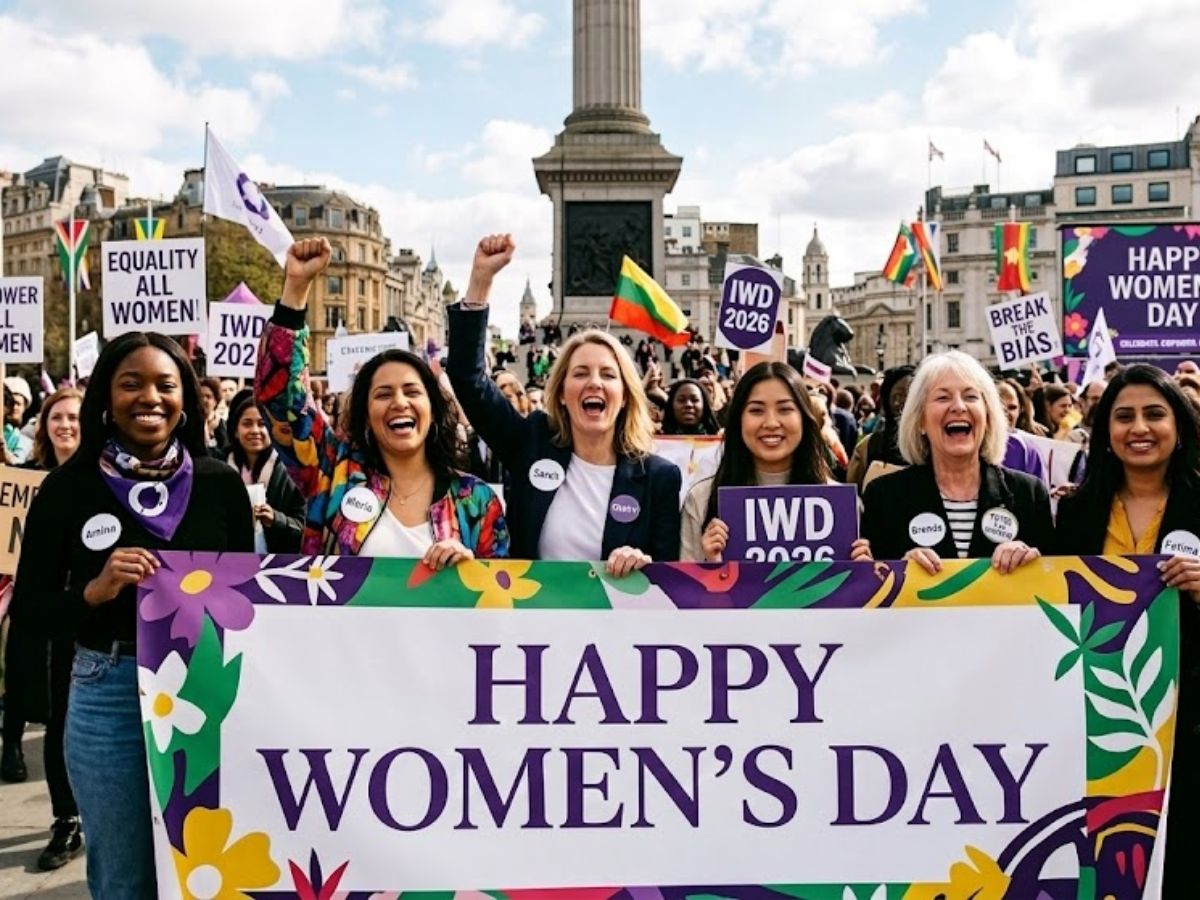
There is a rise in traditional and non-traditional threats, and according to an estimate, more than 90 countries are engaged in conflicts outside their borders. The world is suffering from deep moral crises, which include violations of international laws and systems, resorting to genocide, increasing use of force, and the inhuman treatment of those who are weak. Women form almost fifty percent of the world’s population and participate in every single job that their counterparts take part in. Still, they have been subjected to prejudice and gender bias. To overcome such a discrepancy, there are several dedicated days including the International Women’s Day (March 08) highlighting the social, economic, cultural, and political achievements of women. It also marks a call for action to accelerate gender parity, educate and awareness raise about women’s equality, call for positive change advancing women, lobby for accelerated gender parity and fundraise for women focused charity. In this context, events are organised worldwide as groups come together to celebrate women’s achievements or rally for women’s equality.
Most unfortunate is the fact that they are not shielded against the outcomes of this era of chaos and have been subjected to torture, rape, mutilations and killings. When we review the overall situation, we find that the collateral damage in any conflict mostly includes women casualties, despite the fact they don’t take part in conflicts directly.
This is because they are vulnerable to such atrocities directly for being the backbone of fighting forces. There is a need to take a serious look at what has happened with women around the world especially those who lived in a conflict zone. For the reference, three conflict zones; Indian Illegally Occupied Jammu and Kashmir, Karabakh region and Gaza have been selected to highlight how innocent women living in these areas suffered due to the atrocities of the adversaries.
Gaining momentum from the late 1980s, the Nagorno-Karabagh conflict was fully blown in the 1990s, and by 1994, the region, with seven surrounding areas was captured by Armenia, resulting in the displacement of more than 100,000 Azerbaijanis from the occupied territory, 700,000 from the seven buffer zones and 250,000 from inside Armenia. Based on official reports from the Republic of Azerbaijan and documentation from international organizations, the Khojaly massacre alone, which occurred between February 25–26, 1992, resulted in the massacre of 106 women which forms twenty percent of overall casualties including men and children. In addition, many casualties took place during the migrations to and from one area. The mental and physical stress that women of these areas have suffered is unexplainable. But this was not all, there was widespread sexual violence and mutilation including torture, scalping, rape and sexual assault. More than a thousand people were taken hostage with significant number among being women, some of whom are still missing. The most gruesome act was horrific injuries as a result of being burnt alive or women having their eyes gouged out. A similar situation is witnessed in Kashmir where the Indian occupation forces have killed over 100,000 men, women, and children since 1989, according to a United Nations Security Council document out of which over 2,300 women were martyred, which amounts to 23%. Moreover, over 11,000 cases of women being molested or gang-raped by Indian security forces have been reported.
It needs to be understood that due to fear of retribution from security forces and armed groups, as well as the severe social stigma associated with sexual violence in a conservative society, it is suspected that actual number of cases is believed to be significantly higher. In the Gaza Strip, the situation is more gruesome where two-thirds of more than 75,000 Palestinian casualties are women and children, indicating disproportionate suffering endured by these groups. Additionally, over 50,000 pregnant women in Gaza face lack of access to clean water and food, along with limited access to medical supplies and clinics, resulting in increase in infant mortality and the spread of disease. This has been described as an assault on Palestinian women’s dignity and rights by the United Nations Special Rapporteur on Violence Against Women. There were reports of Palestinian women and girls who were randomly executed in Gaza, often together with their children. It is a shame that Palestinian women and girls were deliberately targeted and extrajudicially executed by the invading Israel Defense Forces, even when they were holding white pieces of cloth.
There is an urgent need to study the effects of conflicts on women residing in different regions. There must be a complete moratorium on causing sufferings to the women during conflicts. But to ensure this in true letter and spirit seems to be an uphill task as the warring parties pursue their respective objectives without realising the trauma of collateral damage they cause especially to the women of the area. Women form the backbone of any nation and while war pursuits are important for any warring party, it is to be realised that the women of opposing side also enjoy the same sanctity as their own.
While marking such days, every year there is a moral obligation to pay homage to those who sacrificed their dignity, prestige and lives in any armed conflict and make the world leaders realise that their actions against the innocent women do not go unnoticed.