
Ms Nadira Panjwani HI, SI Chairperson KCFR
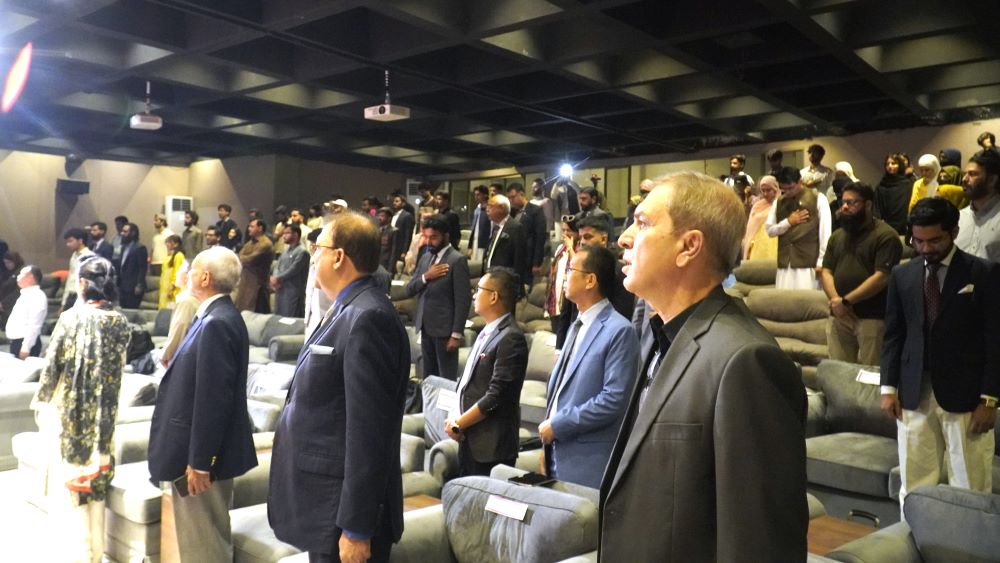
Assalam-o-Alaikum, Karachi Council on Foreign Relations (KCFR) is pleased to hold this seminar. Because what we will examine today is more than just a regional conflict. What is happening in the Middle East is a global disaster with far-reaching consequences affecting all of us. This conflict is perhaps the most defining challenge of our era, demanding full attention, honesty, and integrity to champion justice with courage. For today, our esteemed keynote speaker, including Ambassador Zamir Akram, and all distinguished panelists are people of vast experience and knowledge. They will surely enrich today’s proceedings with their clarity and wisdom.
On 28 February, 2026, the United States of America and Israel launched a military assault against Iran, which by all standards and definitions of International Law and Conventions, is an illegal and unlawful war. This happened at a time when negotiations were underway between Iran and the United States where both had made significant progress, as confirmed by the Foreign Minister of Oman. But these so-called negotiations were not meant to be a path to peace, rather a pretense and a smoke screen for military aggression by the United States. The opening salvo of firing a Tomahawk missile by the US at an elementary school in Iran, killing over 170 young school girls in Minab, Iran is perhaps most revealing of the barbaric strategy and the mindset guiding the decisions and the conduct of the aggressors. Decapitation of senior leadership is an act prohibited under multiple legal frameworks, like the Geneva Conventions and the UN Charter. Yet the top-tier leadership of Iran was eliminated right at the beginning of this war.
Immense pain, misery and destruction are being inflicted on hundreds of thousands of innocent civilians and children from Tehran to Beirut and beyond. So in the flames over Iran, what we see is not just a war, it is a burning down of the rules-based international system where norms of sovereignty, multilateralism and diplomacy have totally collapsed. These defined norms have been replaced by acts of aggression, subjugation, unilateralism and militarism.
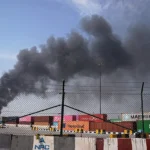
The Gulf States and their people are experiencing significant economic and security hardships as collateral victims of this conflict. Like neighbors to a burning house, they are inhaling the smoke of this war. The Gulf’s policy of stationing over 60000 US troops in this region and depending on the US defense shield for security and protection has backfired. The strategic restraint being shown by the Gulf States is commendable and they have so far avoided the Zionist entrapment. The realization that regional security is effective only when it is homegrown and culturally aligned which has now led to talks of establishing a Gulf NATO.
Dear Ladies and Gentlemen, 87 years ago, Adolf Hitler, with his madness and tyranny, set the world on fire, causing catastrophic losses worldwide. Unprecedented human casualties of more than 70 million, devastation of cities, widespread displacement and starvation, atomic bombings and global spread of conflict were the outcomes of the Second World War. History is not simply a record of the past, it also mirrors the future. Today, we look at the tragedies unfolding in the Middle East. We cannot help but hear echoes of the past. The same patterns of unchecked aggression, human suffering and disregard for civilian life and property are resurfacing before our eyes. Innocent civilians are paying the highest price for reckless decisions made across the world, far away from their homes and their shores.
There is a sorrow much deeper than the grief of this conflict. And that deeper sorrow is the painful death of the world’s conscience, and this is killed by indifference, selfishness and fear. It seems that the moral compass that once guided humanity has completely broken down. In the current scenario, the loud silence of the Muslim block is heartbreaking. At times like this, neutrality is not a stance. It’s an abdication of responsibility, an act of betrayal, and a stain or shame on the body of the myth of a Muslim polity, which needs serious introspection. When we talk about the failure of the Muslim World, it does not mean referring to the faith of our people. We are talking about the failure of our political institutions, leadership structures and collective decision-making bodies.
Perhaps the most obvious case in that point is of the OIC, the so-called Organization of Islamic Countries, a symbol of paralysis and not being a responsible institution. In moments when injustice demands condemnation and suffering cries out for help, the Muslim states retreat into empty statements devoid of action or conviction. The roots of this failure lie in the legacy of colonialism, which fractured the political landscape of the Muslim world into artificial boundaries with competing geopolitical rivalries and inter-divisional conflicts. Widespread corruption, proxy leaders and foreign influence further aggravate our disunity.
Therefore, at times of humanitarian catastrophe, whether in Palestine, Bosnia, Kashmir, Gaza, Yemen, or Iran, the Muslim bloc’s response is that of hesitation, inconsistency and silence. Over 75000 Muslims were massacred in Gaza, and we watched in silence. We are now one month into this war and there have been hardly any high-profile or eminent Muslim figures standing up to the world with the courage and boldness of Joe Kent, the top US counterterrorism official who quit the Trump administration categorically opposing the war with Iran and saying that Iran posed no imminent threat to the US and that this war is Israel’s war. He is a man with a conscience.
Similarly, Spain under the leadership of Pedro Sanchez, has risen right from day one of this war as a beacon of moral clarity, refusing to allow the use of its soil or skies for an illegal war of destruction. The largest-scale anti-war marches are being held in the United States and European capitals, but sadly none in the more than 50 Muslim countries. By refusing to stand up and speak, by masquerading silence as diplomacy, governments imagine they are shielding themselves from consequences. But this is a foolish illusion of security. Today the fire that we ignore will sooner or later engulf our homes. The US Director of Intelligence, Tulsi Gabbard’s briefing to the Senate Intelligence Committee about Pakistan’s missile program must be taken seriously by Islamabad as it is a forerunner of more false narratives that will emerge from their administration in due course of time.
Ladies and Gentlemen, this conflict has had major consequences, such as a huge number of deaths and injuries, millions of people displaced, severe economic shocks, a shortage of fuel, fertilizers and food, disruption of supply chains, skyrocketing inflation, aerospace closures, flight disruptions, military escalation, cybersecurity threats and long-term public health deterioration. Efforts for the de-escalation of the war are underway.
Eventually, the guns will fall silent, war will end, treaties will be signed, and peace will be declared. But at what cost? The real price has been paid in the lives of Muslims, the misery of shattered families, the grief of mothers, the silence of the youth robbed of their lives and the deepest scars of this aggression. This war was inflicted upon our region by those who do not walk our path, share our future, suffer our losses and feel our agony. This has to stop. Our story must be written by our own pen and not authored by strangers on the other side of the globe. I would like to conclude with a call to action in the form of a famous saying attributed to Dante’s Inferno, and I quote,
“The darkest places in hell are reserved for those who remain silent in the face of injustice.”
KEYNOTE SPEAKER
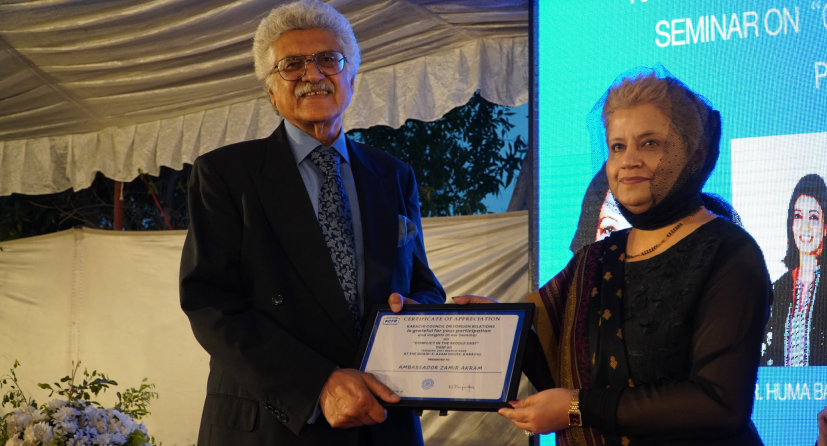
Ambassador (Retd) Zamir Akram,
Advisor to the Strategic Plans Division of the government of Pakistan, at the KCFR seminar on ‘Conflict in the Middle East’ speaks:
Assalam-o-Alaikum, I’m honoured to be here with you today. It’s a great privilege for me to be invited to speak to such a distinguished audience on an issue of such importance for Pakistan and indeed for the Muslim world. And to set the stage, we have just heard Miss Panjwani’s brilliant analysis of this situation, and I’m honoured to be here to share the stage with her and with other speakers who follow me.
In my presentation I want to begin by focusing on the strategic perspective. I want to present to you a broad strategic perspective from which this current crisis should be viewed and three elements crosscut that inform this particular situation. The FIRST strategic perspective is that since 1990, the global system has changed dramatically with the collapse of the Soviet Union in 1991 and the emergence of a unipolar world dominated by the United States. In that situation, the US became the sole superpower and instead of helping to bring about what President George Bush claimed he wanted, which was a rules-based international equitable order, the United States unleashed a campaign of global domination unchallenged by any other superpower or any other power at that time and this unchallenged exercise of hegemony globally has brought the world to where we are today.
The SECOND strategic perspective that we need to understand is the consequences of the Islamic revolution in Iran in 1979. This revolution brought about a new approach towards the issues confronting the Muslim world, with unqualified, complete and total support for the Palestinian cause, calling for the expulsion of the Zionist entity, the Jewish entity, from Palestine.
This was an uncompromising position which Iran has continued to uphold to this day. But in its wake were the confrontations that took place between Iran and the United States, which has a long history and I don’t want to go into the details of it, but the fact remains that the US was totally opposed to the emergence of this Islamic Republic in Iran in place of its puppet regime of the Shah and tried every effort to undermine this government and continues to do so. So this is where it started.
The United States also used its influence and used the opportunity of differences of historical nature in some ways between the Arabs and the Ajam to stoke the fires, stoke the differences of sectarianism between Shia and Sunni, between the Arab Shia, between the Arab Sunnis and between the Iranian Shia. This was also a part of that dynamic. The result was the Iraq-Iran war which went on for eight years, a war that was imposed on Iran and even saw the use of outlawed chemical weapons which the United States actually supplied to the Iraqi regime.
And the THIRD perspective that I want to talk about is that, since at least 2002, when Benjamin Netanyahu became the Prime Minister of Israel at the head of the Likud party. He has unleashed the remnants of the Zionist movement both within Israel and within the United States. And this Zionist movement is racist. It is a movement that applies apartheid much like South Africa did, and it is a fascist movement in the same way that Nazism is a fascist movement. It talks about the chosen people and it justifies the murder and mayhem that Israel has unleashed on the Palestinians and others under their control. Since 2002 Netanyahu has persuaded the American administration of George W. Bush and every subsequent American administration have implemented the Zionist agenda for a greater Israel. As a result of that the two-state solution to the Palestinian problem that was negotiated by President Clinton was torn apart and thrown away and a systematic persecution of the Palestinians started in Israel-occupied Palestinian lands, leading up to what we have seen in this inhuman genocidal war. This has been unleashed on the Palestinian people in Gaza, where even children have not been spared. In fact the inhumanity of the Israeli Zionists is that the children of Gaza have been deliberately targeted. It’s not as if they were collateral damage, but they were deliberately targeted. So this is the kind of entity that the world is dealing with when we talk about a Zionist Israel.
Now, coming with this background to what happened or why it happened, I think that to put it very plainly, the United States is being led by Israel. It is Benjamin Netanyahuwho is making decisions for Mr Trump. He managed to convince President Trump that after the June attack against Iran and then the inspired uprising so-called uprising or civil disobedience or movement of so-called freedom in Iran that was unleashed through outside intervention had weakened the Iranian regime to the extent that if the regime was decapitated, if the leadership was killed, the Iranian government would collapse and Iran would fall into the lap of the Americans and the Israelis. This is in the same way that the Americans had pursued the Zionist agenda earlier in Iraq by overthrowing Saddam Hussein, or by overthrowing Gaddafi in Libya or by overthrowing Bashar al-Assad in Syria.
But Iran is different. Iran is unlike these countries. Iran is a revolutionary state with a multiple-institutional leadership structure. A country of more than 90 million people, it is a vast land which cannot be toppled or which cannot be conquered simply because an air strike or a missile strike wipes out its top leadership.
And that has been demonstrated very clearly by the Iranian resilience to fight back. So the question is, if it was actually a regime change and regime change has failed to take place, why is the United States continuing to send mixed signals? Sometimes President Trump says that we have achieved 75% of our objectives; we have destroyed Iran’s nuclear program, its missile program; we have eliminated its leadership and we will end the war soon. Sometimes he says, “I’m going to bring troops from Japan and Korea and other places.” And sometimes he talks about taking over Iran’s Kharg Island and other Iranian assets.
The American military, actually, which is more sensible, the Pentagon not its Secretary of War. I would describe the Secretary of War as a man with the brain of a USDA-approved meatloaf. He has no brains at all. But the people under him, the professionals, have very clearly warned the American system that if you get into a ground war in Iran, then it will be another quagmire in which America will be stuck, as it was in Iraq or Afghanistan.
But the reason why we are getting these conflicting signals from Washington is that the American system cannot decide how to get out of this control that the Jewish lobby, the American-Israeli Public Action Committee, which supports Mr Netanyahu’s agenda exerts. How can you get out of this? Everyone, with very few honourable exceptions in the American Congress is in the pay of the Israelis. This is not an exaggeration. This is a fact.
If you read a book called “The Buying of the President”, It explains very clearly how the Jews buy a president and not just the president, how they buy every American politician at every level of the American government. That is the depth of penetration by the Israeli Zionist entity into the American system. Which is why it is the Israeli dog that is wagging the American tail. And that is why they cannot decide how to get out of it and be able to survive. But the costs are mounting. For the first 15 days, the US spent upwards of 11 billion on the missiles and other equipment that they had used up. They are spending over $2 billion a day. And now we are almost a month into this war.
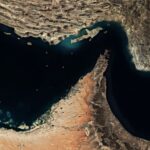
And for every missile that the US fires, worth $35 million or $40 million, the Iranian response is a drone worth 35 to $40000. So Iran has responded to this aggression very cleverly, very effectively in a deeply work strategically developed manner which involves asymmetrical warfare using low tech and low cost weapon systems, missiles, drones, speed boards, etc. to combat a highly technically expensive weapon system of the opponent, with this capability of high-tech of low tech and low cost war which Iran has spread horizontally across into the GCC countries because these attacks come mainly from the GCC countries. Under international law, Iran has every right to attack targets in third countries that are being used against it. Customary international law, Article 51 of the UN charter, both allow Iran to do that. And at the same time, the most important strategic gain that Iran has achieved is to use the threat of closing the Strait of Hormuz. Actually Iran has not closed it. He’s just said we will close it. And the shipping company, their insurance companies are not willing to pay for the insurance of the shipping companies, with the result that the Gulf is automatically closed, the Strait is automatically closed. But they have the capability to use military force to close it as well. In the most dramatic move in this entire conflict has been the Iranian use of the Strait of Hormuz, which has become, if you are a student of strategy, what is called the centre of gravity of this conflict. And for the Americans, the most important objective now is no longer the Iranian nuclear program or its missile program, but to open the Strait of Hormuz.
Now to come to the final part, which I wanted to talk about, which is what are we doing about it? What does it mean to Pakistan? So, it’s obvious that every Pakistani is fully 100% in favor of Iran and its war, just a conflict for survival and it struggles for its survival against the United States and Israel. On this there is no doubt, but there are problems that we confront. One problem is, of course, that this war can have negative consequences on Pakistan itself. We are already engaged in a confrontation on our eastern border with India and on parts of our western border with Afghanistan. Any breakdown of security on our border with Iran will obviously have consequences for Pakistan’s security. So that is a very important consideration.
The second important consideration is that if the war engulfs Saudi Arabia, if the Saudis decide to respond and join in response to attacks on Saudi targets or American targets in Saudi Arabia, that would trigger Pakistan’s mutual defence treaty with Saudi Arabia and the last thing we want is to be involved in a war on the side of the Saudis against the Iranians. That is simply unacceptable, and that would be unthinkable for Pakistan to do. And then of course, there is the economic cost of the rising prices of oil and other factors that we are facing. So our objective and not surprisingly, is to try and promote a ceasefire and a process to resolve this problem as soon as possible, which is why we are at the centre of a process involving Saudi Arabia, Türkiye and Egypt, whose foreign ministers met in Pakistan a few days ago. We are also in touch with the American administration who have shared 15 goals, 15 objectives, or 15 demands while our Iranian friends have also shared ten of their demands.
I would say that if there is a will to find a solution, it is possible to find a solution. Pakistan has the diplomatic capacity to do so. But it also need a will to be able to do so. The most important demand from the Iranian side is that they should be first compensated or given reparations for the damages caused to Iran, which is a justified demand because it’s an illegal war. Second, Iran should be paid a fee for transit ships through the Strait of Hormuz just like it has paid to Egypt to transit through the Suez Canal. So, Iran’s demand is not unreasonable.
The Iranians have already agreed to some of the measures that the Americans wanted on the nuclear issue. This is clear from what the Omani foreign minister said, who was mediating a negotiation agreement before the Americans broke that agreement. So there is a possibility to find a way to address the nuclear issue as well.
So there is room. What I’m saying is that there is room to find, first and foremost, that step one has to be a ceasefire, followed by an agreement to engage in a direct or indirect dialogue to resolve issues and find a permanent solution. But the real problem here is one of intention. And I end by recalling what I said right in the beginning, that you are getting conflicting signals from the United States about its intentions.
If the Americans are interested in their own interests, they will agree to end the war. But if the Israeli dog is wagging the American tail, then they will not agree. And then we might see a ground invasion or a continuation of this war. So this is really the problem. What are America’s intentions and what does it want to do in the next few days, weeks and months? So I would end here on this note. Thank you so much for your attention.
Ikram Sehgal
I will take this opportunity, as Patron-in-Chief of Karachi Council on Foreign Relations (KCFR), to first commend Ms Nadira Panjwani, Chairperson of KCFR for doing such a remarkable job. I had the honor of being her predecessor, and she and the then Secretary General Commodore Sadeed Malik, subsequently got the Board of Directors KCFR to vote unanimously to become the Patron-in-Chief. Besides Nadira Panjwani, I would also like to commend Commodore (Retd) Sadeed Malik, who truly held the KCFR together until Ms Gaity Khurram took over from him. And now, KCFR is hosting regular events here at the Quaid-e-Azam Museum and at other venues. Really, well done, Nadira, and well done to the entire KCFR team.
Ambassador Zamir Akram has given a brief exposition, and before that, Nadira Panjwani spoke. So, I am not going to talk about the how, the what, and the why. But I would certainly like to speak about what the future holds. I want to start with Saddam Hussein. He fought an eight- or nine-year war with Iran, and regardless of the outcome, many people died during those years, and the fighting was extremely vicious on both sides. Therefore, when Saddam’s control mechanism was destroyed in a matter of days by the US and Coalition Forces during the Gulf war, people in Iran asked themselves how this man and the Iraqi Army, which had fought them for eight years, had suddenly capitulated. They concluded, based on a process led by Iranian Major General Muhammad Ali Jafari that the objective was to decapitate the Iraqi command and paralyze its leadership. Maj Gen Jafari then spent the next five years at the Iranian Staff College perfecting a succession and decentralization scheme, in which Iran was divided, according to the latest information into 31 commands. Even if the Central Command was wiped out (as it did happen) and a leadership vacuum emerged, these 31 commands could operate independently. Some were in urban areas, but most were in the deserts and mountains. That first strike, which wiped out the Iranian high command completely, including Imam Khomeini, did impact Iran, but not in the way that Israel and the United States had hoped. What you see today are those 31 commands continuing to fight. They obviously fought to buy time, and some form of succession must have emerged on the ground, which is already operational. General Jafari later became the commander of the Iranian Revolutionary Guards in 2013 and he perfected the scheme before he retired. So, what you see today is a continuation of war, a conventional war being fought by guerrilla means. This is similar to what Mao Zedong practiced in his war against the nationalists in China in the 1930s and 1940s, he maintained separate commands so that even if one command was isolated temporarily, the greater effort continued. What we are witnessing today is essentially a continuation of such a war.
Without going into various details again, I want to start from where Ambassador Zamir Akram left off. Where do we go from here, and what happens to Pakistan? We are at a very difficult stage of our existence because we are confronted with a possible eventuality based on facts on the ground.
If a ground war were to occur, it would require a secure and absolutely safe logistics line, yet there is no place in the Middle East today that provides that, as every route has been affected. Entering Iran is impossible through Iraq, the Gulf, or the North; the only feasible route is Pakistan. Looking at Pakistan’s coastline, we have beaches and airbases or airports that could be used. I am not suggesting this will happen, but it is something we must be concerned about. One could imagine someone deciding to use Pasni, the beachheads of Pasni, or Gwadar, taking control, establishing a secure base, and moving westwards into what would likely be the Sunni province of Khuzestan to attempt declaring it an independent republic. I repeat, there is no way to conduct a ground war except through Pakistan, which is why, as Ambassador Zamir Akram has said, we are confronted with an extremely difficult and serious situation.
This has happened to us before. There was a US amphibious landing in Pasni at the start of the Afghan war, though many people do not know much about it. The small airfield in Pasni was developed and used as a major base to support operations from Jacobabad, which remained a significant U.S. airbase for more than fifteen years. We may not talk about it, but the fact remains that it happened.
So, it has happened before, and it can happen again, and we must be concerned because it could happen to us. We must pray that our leadership has the courage and resilience to oppose such a measure and not try to appease both sides. We must stand firm. We cannot afford to be on the wrong side of history today, and we would be if such a scenario were to unfold.
Now, waiting on the eastern side is our implacable foe for whom our nuclear deterrent was intended. Whatever Tulsi Gabbard says is nonsense. Even if we were to develop ballistic missiles, it would be because India is deploying its missiles in the Indian Ocean, the Andaman Islands, and other locations that we cannot reach without such capabilities. Our entire nuclear program has essentially been a deterrent against India, and it has proven successful on the ground with tactical nuclear weapons. This is often framed in terms of the so-called theory of Mutual Assured Destruction (MAD). The concept, combined with India’s overwhelming numerical superiority, was demonstrated to some extent on May 9th, 2025, when the Indian Air Force was literally grounded. Eight planes, six planes, seven planes, it does not matter, but the point is that we ensured their aircraft could not take off due to the threat of being shot down.
So, we come to the question of where we go from here, and I am saying to you very openly that, yes, the military bases there are a provocation against Iran, but with all due respect, so are the proxies, Hezbollah or otherwise; they are also a provocation. I think the balance has to be maintained. It has to be quid pro quo, and we must understand that when a nation is driven to its limits, as Iran has been, it has the right to fight back. I am not scared that while there will be a ceasefire, but will it hold?
I must go back almost fifty, fifty-five years to early 1966, I was a Garrison Duty Officer in Lahore for a week. Nobody liked that job. We had to inspect guards around Lahore, and one of the houses I went to inspect was the Governor’s House. I came across the then Governor, Nawab of Kalabagh sitting under a tree, I went and saluted him, and he said, “Come sit have a cup of tea with me.”
He started asking me questions: where had I been, what had I done, and so on. I had just returned from a place where I had felt very uncomfortable because we used to go with the military police to Heeramandi, which was not a very pleasant experience. So, I told him, “Sir, why don’t you just shut this place down?” He replied, “Young man, if I shut it down, they will be all over Lahore” unquote. You wipe out the Iranian Central Command, now they are all over Iran. And they will keep fighting!
My point is, you must have a ceasefire. But will you be able to control the hotheads down the line, those who have decided that they have died when their Imam has died, who believe this is the second Karbala, and who will not give up until they inflict the same damage, whether it came from Israel, the United States, or the Gulf States? I think it is time, and I say this openly, that there must be a comprehensive solution. A comprehensive solution must address military bases, proxies, and all related issues. I agree with Ambassador Zamir Akram that closing the Strait of Hormuz is the right of Iran, and any shipping passing through it is subject to that right, just as I would say the UAE also has rights in the region. They can decide whether to impose tolls or take other measures, but their rights exist, and it needs to be safeguarded, possibly by a neutral force supporting both sides, or through some mechanism that guarantees peace. One must understand that peace can only be achieved with good intentions on both sides. If the intent is genuinely good, peace is possible; otherwise, we are in for considerable pain. That pain may come in the form of conflict or it may take the shape of economic difficulties, but it will come. For all of us, we can keep debating how, why, when, and where, but the most important question is where we go from here? What must we do to ensure that there is peace in our time, for our children and our children’s children?
Contributed by:

She is working as an intern at Pathfinder Group. She is an MPhil scholar in International Relations from Quaid-i-Azam University, Islamabad.