



How the 2026 Middle East War Shattered American Hegemony
The Empire did not Fall in a Single Battle. It Fell in The Silence of Allies Who Declined to Answer the Phone.
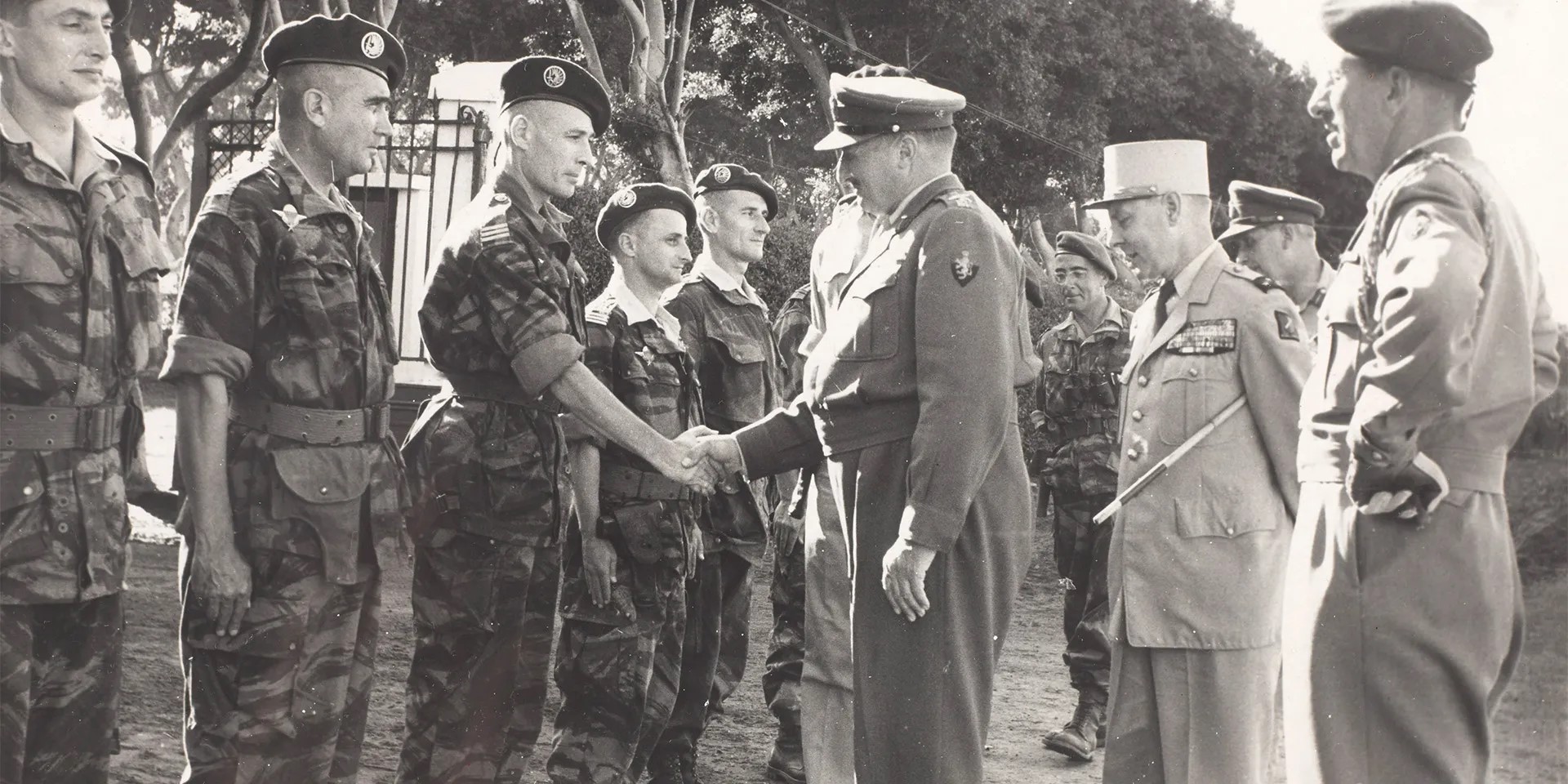
In November 1956, British and French paratroopers descended on the Suez Canal and seized it with the confident swagger of men who believed the imperial order still held. Within seventy-two hours, Washington had made clear, through currency pressure and diplomatic frost that it did not. The pound collapsed. The troops withdrew. And the world understood, in the blunt arithmetic of power that Britain’s era as a global guarantor was over. Not defeated in war. Abandoned by circumstance, overreach, and a patron who had grown impatient with the pretence.
Seventy years later, history has not repeated itself so much as rhymed with a darker cadence. The United States, once the arbiter that ended Britain’s Suez folly, has now assumed Britain’s role: overstretched, diplomatically isolated, and watching its security architecture dissolve in real time. The 2026 Middle East war did not begin the decline of American hegemony; it merely made the decline legible to everyone who had been politely pretending otherwise.
I. The Hormuz Stand-off: The Death of the Global Coalition
The first sign that this crisis would be categorically different came not from a missile strike but from a toll booth.
In mid-March 2026, Iran’s Islamic Revolutionary Guard Corps imposed a $2 million transit fee on commercial vessels passing through the Strait of Hormuz, a brazen sovereignty test, deliberately calibrated to humiliate without yet triggering Article 5. The response from Washington was the instinctive one: assemble a coalition, replicate the logic of Operation Prosperity Guardian demonstrate that the global order still had a sheriff.
The calls went unanswered.
The European allies, still absorbing the shock of 25% universal tariffs and a Washington administration that had treated Danish sovereignty over Greenland as a negotiating chip, had no appetite for absorbing further strategic costs on behalf of a patron that had spent two years treating them as economic adversaries. The calculus was not ideological.
It was actuarial. Why underwrite American power projection when American power had been explicitly wielded against you?
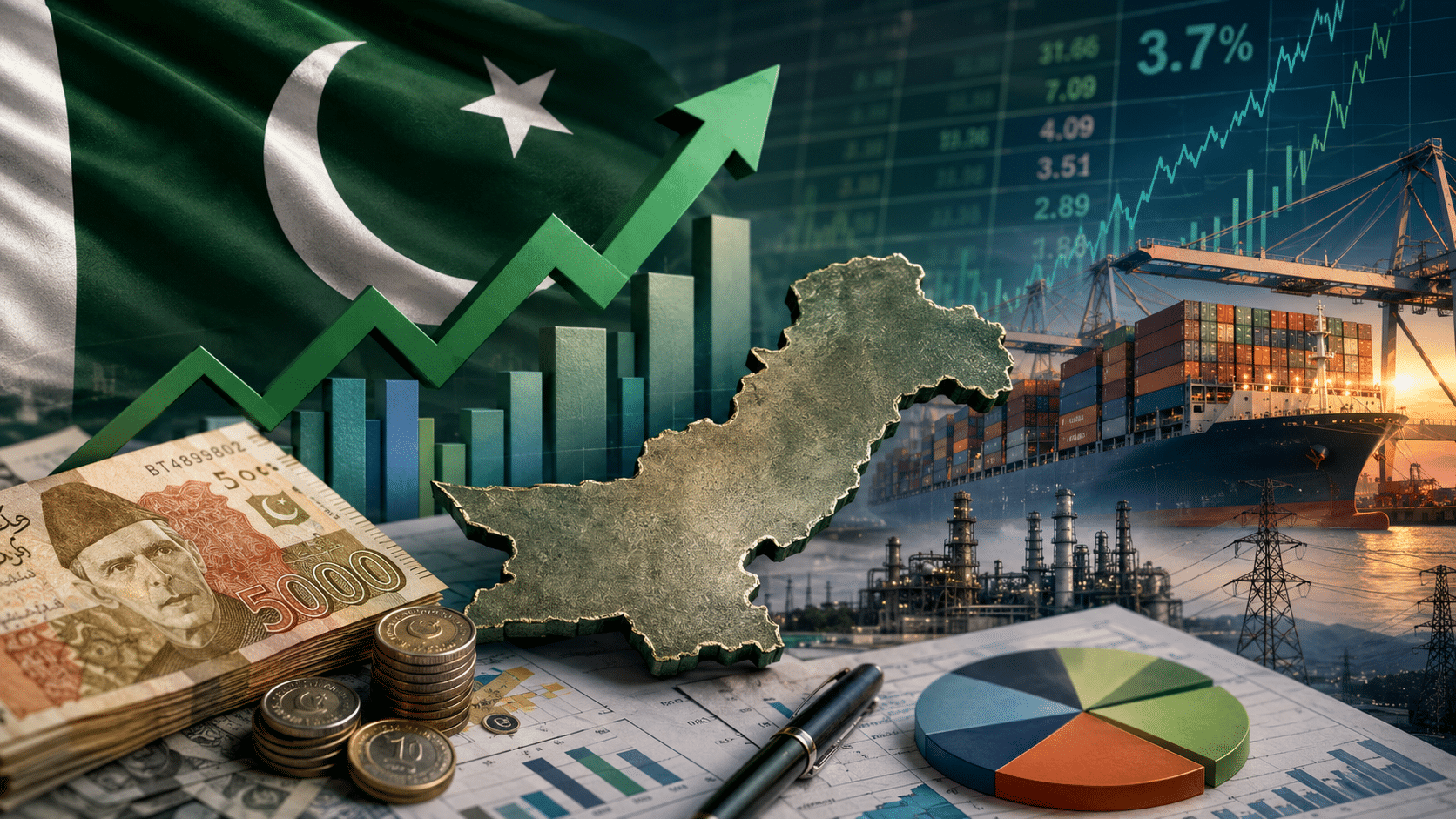
Iran understood this arithmetic better than Washington did. By routing Hormuz transit payments through Kunlun Bank, bypassing SWIFT entirely and accepting settlement in USDT, Bitcoin, and yuan, Tehran demonstrated that the financial architecture of American sanctions had already been circumvented before the first shot was fired.
The isolation was not imposed on Iran. It was imposed on the United States by the accumulated weight of its own decisions.
II. The Doha Trigger and the Security Paradox
The March 20 strike on Ras Laffan, Qatar’s liquefied natural gas hub and the beating heart of European energy supply, was the moment abstraction became catastrophe.
The GCC leadership had operated for decades on a foundational premise: American THAAD and Patriot batteries constituted a credible shield. The Ras Laffan strike shattered that premise with clinical precision. U.S. missile defence assets, it emerged, had been systematically prioritized toward Israel’s defensive perimeter, leaving the world’s largest LNG terminal exposed. What Colonel Douglas Macgregor has described as the fundamental inversion of the American value proposition, from “shield” to “target magnet,” became undeniable in the smoking wreckage of Qatari gas infrastructure. The paradox was operationally grotesque. The very presence of American bases and hardware in the Gulf had made GCC states more attractive as Iranian targets, while the defensive coverage those assets nominally provided had been quietly hollowed out.
Qatar and Saudi Arabia arrived at the same conclusion simultaneously: the American guarantee was not merely insufficient, it was structurally counterproductive. A security relationship that increases your exposure while decreasing your protection is not a security relationship. It is a liability dressed in the uniform of an ally.
III. The GCC Civil War of Ideas: Stability vs. Escalation
Not every Gulf state drew the same lesson. The UAE, haunted by the prospect of a regionally ascendant Tehran, doubled down on the hawk axis, pressing for what its leadership privately characterized as a “final solution” to Iranian power projection. In this, Abu Dhabi found itself aligned with an Israel whose own deterrence posture, as the analyst Alastair Crooke has argued compellingly, had fundamentally evaporated. Israel’s capacity to threaten without being threatened in return, the invisible architecture of its strategic dominance since 1967, had been eroded by a combination of drone saturation, Russian electronic warfare intelligence shared with Tehran, and the sheer attrition of sustained conflict. The UAE’s hawkish posture, divorced from this reality, left it stranded. Saudi Arabia and Qatar had already moved toward the China-brokered ceasefire framework. The broader Islamic world, from Islamabad to Cairo had little appetite for an escalation whose primary beneficiary would be a Washington that had spent years treating Muslim-majority nations as afterthoughts or adversaries in its strategic planning. The UAE found itself a hawk without a nest: committed to a maximalist outcome that neither its neighbours, its faith community, nor its Chinese trading partners would support.
The schism was not merely tactical. It was civilizational, a fracture between those Gulf States willing to absorb further instability in service of Western strategic goals and those that had concluded, quietly but definitively, that Western strategic goals were no longer aligned with Gulf survival.
IV. The THAAD Betrayal: Cannibalizing the Pacific to Save a Ghost
If any single decision crystallized the concept of imperial overstretch, it was the redeployment of THAAD batteries from South Korea to Middle East bases.
The withdrawal was operationally logical in the narrow sense. The batteries were needed where the immediate fire was. But strategically, it was an act of self-inflicted amputation. Seoul and Tokyo, already recalibrating their threat assessments in the shadow of Chinese military modernization and North Korean missile development, received the signal with cold clarity: the American nuclear umbrella was not an infinite resource. It was a finite, depletable asset, and Washington had just demonstrated its willingness to deplete it in a theatre that was strategically secondary to East Asia.
The “Pivot to Asia,” the defining strategic doctrine of three successive administrations, died in the logistics of moving missile defence hardware from the Korean Peninsula to the Persian Gulf. The pivot required credible forward presence. Credible forward presence required assets that were not being stripped from allies to compensate for failures elsewhere. The contradiction was irresolvable, and America’s allies in the Indo-Pacific updated their planning assumptions accordingly.
V. The Economic War Context: Greenland, Tariffs, and the Rare Earth Trap
History will record that the American security order was not undermined solely by Iran or China or Russia. It was undermined, with extraordinary efficiency, by Washington itself.
The 25% universal tariff regime, applied with sovereign indifference to allies and adversaries alike, was designed as economic pressure. It functioned as political divorce. The Greenland episode, in which Washington’s territorial ambitions toward Danish sovereign territory were expressed with the subtlety of a 19th-century colonial dispatch, completed the estrangement. By the time the United States needed European cooperation in the Strait of Hormuz, it had systematically converted its closest partners into reluctant neutrals.
China’s March 11 rare earth export ban completed the encirclement. The ban didn’t just disrupt supply chains; it functionally decapitated the U.S. defence industrial base. When Raytheon engineers realized that F-35 production was architecturally dependent on the very adversary it was meant to deter, the “paper tiger” theory was no longer a provocation. It was a logistical consequence of forty years of offshoring. The U.S. discovered, far too late, that you cannot fight a war of hardware when your rival owns the software of your supply chain.
VI. The Financial Coup: From Petrodollar to Crypto-Yuan
The death of the petrodollar system will not appear on any specific date in the historical record. But if forced to choose a proximate cause, historians will likely return to the 2022 seizure of $300 billion in Russian sovereign assets, an act that demonstrated, to every non-Western government watching, that dollar-denominated reserves were not assets but conditional privileges, revocable at American discretion.
The message was received with precision in Beijing, Riyadh, and Tehran. If dollar reserves could be frozen, dollar reserves were a vulnerability. The infrastructure of an alternative — Chinese CIPS, Kunlun Bank, digital yuan settlement, USDT as a neutral bridge currency — was not built in response to the 2026 crisis. It was built in the four years following 2022, patient and deliberate, waiting for the moment when the alternative would become necessary rather than merely preferable. That moment arrived in the Strait of Hormuz in March 2026, when Iranian transit fees were settled in currencies that carried no risk of American interdiction. The sanctions toolkit, the primary instrument of American power short of military force, had been rendered structurally obsolete. Not defeated. Circumvented, at scale, by a parallel financial architecture that the United States had inadvertently incentivized into existence.
VII. The New Security Alternative: The Regional Shield
What emerges from the wreckage of the American security guarantee is not a vacuum. Vacuums in geopolitics are theoretical; in practice, they are filled.
The “Regional Shield” is defined by a new, pragmatically lethal geometry: the Islamabad-Riyadh-Ankara triangle. The rumours of Turkey, a NATO cornerstone for seven decades, considering a formal entry into this security pact represent the final fracture in Western Atlanticism. This is not merely a movement of boots. It is an intelligence revolution. During the height of the 2026 skirmishes, it was Russian satellite data and Chinese electronic warfare intelligence that provided Iran with a near-omniscient view of the theatre, effectively blinding American carrier groups. The U.S. no longer possesses the monopoly on battlefield visibility that has underpinned every major military doctrine since the Gulf War.
The deployment of 13,000 Pakistani troops to the Gulf, negotiated between April 7 and 11 under the framework of the Islamabad-Riyadh defence pact, anchors this architecture on the ground. Beijing has been careful to present itself as a diplomatic broker rather than a military guarantor.
But it is a security architecture underwritten by Chinese technology, integrated into previously NATO-standardized defence grids, and, critically, perceived by its beneficiaries as culturally coherent and politically non-coercive. The vacuum left by Washington is not being filled by a new hegemon imposing its own imperial logic. It is being filled by a collaborative, multipolar technical umbrella. That distinction matters enormously, because it means the GCC states are not trading one dependency for another. They are, for the first time in the modern era, building a security relationship on terms closer to their own.
The Lesson Britain Never Wanted to Learn
In 1956, the lesson of Suez was absorbed slowly, painfully, and incompletely by the British political class. It took a generation to fully accept that the era of imperial guarantee had passed, that Britain’s role in the world would henceforth be defined not by the power to project force globally but by the wisdom to exercise influence regionally, in coalition, without the illusion of unilateral authority. The American political class now faces an equivalent reckoning. The 2026 Middle East war has not destroyed American power. It has exposed the gap between American power as it exists and American power as it is rhetorically claimed. That gap, between the security guarantees Washington has issued and the security outcomes it can deliver, between the financial coercion it has weaponized and the alternatives it has thereby catalysed, between the alliances it has inherited and the trust it has systematically spent down, is the defining strategic reality of the present moment.
The dollar didn’t die because of a conspiracy. It died because it was used as a weapon one too many times, and the world, with quiet deliberation, finally built a shield. The Suez crisis did not end Britain’s relevance. It ended Britain’s illusions. America has arrived at the same threshold. The choice between managed retrenchment and embittered overreach remains open. But the tide has already turned, and this time, there is no Washington left to call.