

Bombings/IEDs
At least seven Policemen, including station house officer (SHO), were killed while five constables sustained injuries when unidentified terrorists targeted Police patrolling vehicle with an improvised explosive device (IED) along the Shahdikhel-Mastikhel road in the Bettani subdivision of Lakki Marwat District on March 13. Dawn
Miscellaneous
On March 17, five terrorists were killed during an intelligence-based operation (IBO) in Bajaur District while on the same day three terrorists were killed during an IBO in Khyber District.
Three soldiers were killed while two other soldiers sustained injuries when Balochistan Liberation Front (BLF) cadres targeted a military convoy consisting of two vehicles and motorcycles with an improvised explosive device (IED) in Absar area of Turbat tehsil in Kech District. Dawn
On March 18, three terrorists associated with Fitna-al-Hindustan (A State term for the Baloch insurgents) were killed in an IBO after Security Forces (SFs) tracked the presence of terrorists in Basima tehsil (revenue unit) of Washuk District.
Daily Dawn reported that at least 10 TTP cadres were killed in a SFs precision drone strike when a group of TTP cadres tried raising a flag on the school in Bara tehsil (revenue unit) of Khyber District on March 30
At least 10 Tehreek-e-Taliban Pakistan (TTP) terrorists were killed during an intelligence-based operation (IBO) conducted by SFs in the Bara area of Khyber District on March 30
On April 1, Army foiled a major infiltration attempt along the Pakistan-Afghanistan border, killing eight terrorists in North Waziristan District
On April 2, five civilians were killed and 13 others, including a policeman, were injured when an explosives-laden car rammed into the rear side of the Domel Police Station in Bannu District.
Pakistan
Afghan Taliban regime hiding militants in Government buildings, says ISPR chief Lieutenant General Ahmed Sharif Chaudhry
The Inter-Services Public Relations (ISPR) Director General (DG) Lieutenant General Ahmed Sharif Chaudhry said on March 18 that the Afghan Taliban regime is sheltering militants in State infrastructure, adding that Pakistan was fighting a war against terrorism imposed on it. “The Afghan Taliban regime has hidden terrorists in government buildings,” he said while speaking on Geo News programme ‘Capital Talk’. Geo Tv, March 19, 2026.
Terror incidents in the province drop by 65 per cent after launch of Operation Ghazab lil-Haq, says KP Police
On March 28, Khyber Pakhtunkhwa (KP) Police stated that terror incidents in province have declined by 65% following the launch of Operation ‘Ghazab-Lil-Haq’ (Righteous Fury) against terrorists and their support infrastructure in neighbouring Afghanistan. According to a report compiled by KP Police, 240 incidents of terrorism were reported this year in the province before the operation began, while 80 incidents have been recorded since its launch. In total, 323 terror incidents have been reported so far in 2026, as per the report. Geo Tv, March 29, 2026.
796 Afghan Taliban killed, 286 check posts destroyed in Operation Ghazab Lil Haq so far, says Federal Information Minister Attaullah Tarar
Federal Information Minister Attaullah Tarar said on April 5 that 796 Afghan Taliban operatives have been killed and more than 1,043 injured during the ongoing Operation Ghazab-lil-Haq (Righteous Fury), launched in response to “unprovoked action” from across the Afghan border. Providing a summary of the Afghan Taliban regime’s losses on his X (Erstwhile Twitter) account, the information minister said that 286 check posts had been destroyed and 44 others captured by Pakistani Security Forces (SFs). “Two hundred and forty-nine tanks, armored vehicles and artillery guns have also been destroyed during the operation,” he said. The Minister added that air strikes effectively targeted 81 locations across Afghanistan. The Express Tribune, April 5, 2026.
CCD claims 56% drop in crime rate across Punjab
The Crime Control Department (CCD) on April 10 reported a significant decline in the crime rate across Punjab, claiming a 56% reduction in serious crimes during the first three months of 2026. According to a CCD spokesperson, crimes such as murders during robberies dropped by 50%, while incidents of injuries decreased by 68%. Overall, robbery cases reportedly fell by 81%, while street crime involving snatching declined by 76%. Motorbike snatching cases decreased by 43%, and motorbike theft cases fell by 51%. Car theft reportedly dropped by 60%, while incidents of car snatching declined by 67%. House burglaries also showed a reduction of 47%. Ary News, April 11, 2026
Afghanistan – Internal Dynamics
Taliban ‘not weak’ and capable of confronting Pakistan, warns Sirajuddin Haqqani
On March 18, Taliban’s Interior Minister, Sirajuddin Haqqani, said the group is “not weak” and capable of confronting Pakistan but does not want the situation to escalate. Haqqani said the Taliban had the capacity to respond but sought to avoid further crisis. He called on the people and religious scholars in Pakistan to prevent actions against civilians in Afghanistan. Afghanistan International, March 19, 2026.
Militant groups based in Afghanistan are expanding their operational capacity, says RATS
On April 3, in the 45th meeting of the council of the Regional Anti-Terrorist Structure (RATS), a regional security body linked to the Shanghai Cooperation Organization (SCO), held in Tashkent (Russia), warned that militant groups based in Afghanistan are expanding their operational capacity, posing a growing threat to countries across the region. Member states expressed concern over what they described as the evolution and strengthening of threats from extremist and separatist groups.
NRF announces 2,000 attacks against Taliban for over five years
On March 17, Abdullah Khenjani, head of National Resistance Front (NRF) political office, said the group has carried out more than 2,000 attacks against the Taliban over the past five years. He made the remarks at a meeting in the Belgian Senate. Khenjani said none of the operations had caused harm to civilians. He added that hundreds of NRF members had been detained by the Taliban but said armed resistance against the group was continuing. Afghanistan International, March 19, 2026.
Afghanistan instability threatens Central Asia, says CIS
On April 8, the ninth regional meeting of border chiefs from Commonwealth of Independent States (CIS) countries was held in Guliston, Tajikistan, and participants voiced concern over the impact of Afghanistan’s instability on Central Asian border security. The meeting was attended by officials from Tajikistan, Uzbekistan, Kazakhstan, Kyrgyzstan, Belarus and Russia, along with representatives from the Collective Security Treaty Organisation and the Commonwealth of Independent States. Afintl, April 10, 2026.
Human rights situation in Afghanistan worsened in 2025, says Rawadari report
On March 25, Rawadari published a report on the human rights situation in Afghanistan for the year 2025, stating that targeted and extrajudicial killings, arbitrary detentions, enforced disappearances, torture, and other cruel and degrading practices have increased compared to 2024. According to the report’s findings, former government employees, journalists, human rights defenders, and individuals accused of cooperating with opposition groups continue to be targeted for extrajudicial killings, detentions, enforced disappearances, and other acts of retaliation. Hasht-e-Subh Daily, March 26, 2026.
96 people killed and 328 injured in mine and unexploded ordnance incidents across Afghanistan over 2025, says ANDMA At least 96 people were killed and 328 injured in mine and unexploded ordnance incidents across Afghanistan over the past year, according to data released by the Taliban-run National Disaster Management Authority (ANDMA). Between April 1, 2025, and March 31, 2026, ANDMA recorded 225 incidents involving mines and unexploded ordnance, resulting in a total of 474 casualties. Of those affected, 321 were children and 153 were adults, reflecting the disproportionate impact on younger populations.
Bangladesh – Internal Dynamics
Repatriation of Rohingyas to Myanmar only viable solution, states State Minister for Foreign Affairs Shama Obaed
On March 25, State Minister for Foreign Affairs Shama Obaed underlined that the repatriation of Rohingyas to Myanmar is the only viable solution to the crisis, in a meeting with UNHCR Country Representative Ivo Freijsen. They both agreed to collaborate in keeping the international community’s attention focused on this issue of critical importance, according to the Ministry of Foreign Affairs. The Business Standard, March 26, 2026.
Anti-Terrorism Act Amendment Bill passed, banning Awami League activities
On April 8, the Anti-Terrorism (Amendment) Bill was passed in the National Parliament, adding provisions to prohibit the activities of individuals or entities involved in terrorist activities, including the Awami League and its leaders, until the trial of the party at the International Crimes Tribunal (ICT) is completed. Earlier, the Anti-Terrorism Act did not have a provision to ban the activities of any entity.
India – Internal Dynamics
India and Pakistan relations remain at risk for nuclear conflict, says US Intelligence report
On March 18, according to the Annual Threat Assessment of the United States (US) Intelligence Community presented to the US Senate, it was stated that India and Pakistan relations remain at risk for nuclear conflict. According to the report, though India and Pakistan do not seek to open conflict, conditions exist for terrorist actors to continue to create catalysts for crises. The Hindu, March 19, 2026.
NIA arrests seven foreigners, including six Ukrainians and one American on charge of conspiring to carry out terrorist activities against India.
On March 13, National Investigation Agency (NIA) arrested seven foreign nationals, including an American, and six Ukrainian (identities not yet revealed) on the charge of conspiring to carry out terrorist activities against India. They were arrested at the airports of Lucknow, Delhi and Kolkata during their attempted return from India.
| Monthly Fatalities: The following casualties, related to ongoing insurgencies and acts of terrorism occurred during the period March 17, 2026 to April 16, 2026: | ||||
| Civilian | Indian Security | Terrorist | Total | |
| Arunachal P | 00 | 03 | 00 | 03 |
| Chhattisgarh | 02 | 00 | 02 | 04 |
| Manipur | 02 | 00 | 03 | 05 |
| Total | 04 | 03 | 05 | 12 |
Nepal – Internal Dynamics
Former PM KP Sharma Oli arrested
On March 28, former Prime Minister K P Sharma Oli was arrested from his residence in Gundu, Bhaktapur, and taken to the District Police Office, Kathmandu, following due legal procedures. Police had been deployed overnight in the area ahead of the operation. Oli, also Chairman of the Communist Party of Nepal-Unified Marxist Leninist (CPN-UML), was transported in a police vehicle.
On March 28, former Home Minister Ramesh Lekhak was arrested from his residence in Katuwanj, Bhaktapur, by Nepal Police and lodged at the No. 2 Battalion barracks in Maharajgunj, Kathmandu. Lekhak, a senior leader of the Nepali Congress (NC), was detained in accordance with recommendations of a commission led by former Justice Gauri Bahadur Karki, constituted to probe the Gen-Z Movement. Khabar Hub, March 28, 2026;
Khabar Hub, March 28, 2026.
A probe report says 51 protesters killed in police firing during Gen-Z unrest: On March 26, a probe panel led by Gauri Bahadur Karki revealed that 76 persons were killed and over 2,500 injured during the September 8-9, 2025 Gen-Z protests across Nepal.
The report states that 51 protesters died due to police firing, while nine fatalities resulted from burns caused by arson and explosions, and three from police beatings; one death occurred after a fall, and one remains unexplained.
On September 8, 20 persons were killed, while on September 9, 20 more fatalities were recorded. Khabar Hub, March 27, 2026.
International
Drone attack from Sudan kills 17 in Chad
A drone from war-torn Sudan killed 17 people when it bombed the border town of Tine in eastern Chad, the Chadian government said on Thursday, March 19. The incident was the latest spillover into Chad from the conflict in Sudan, where the paramilitary Rapid Support Forces (RSF) have been fighting the Sudanese army since April 2023.
The paramilitaries have conducted several operations near the Chad border, leading to deaths on the Chadian side. Chad shut the border on February 23 in a move it said was aimed at preventing “any risk of the conflict spreading”. “This latest assault of extreme gravity has caused the death of 17 of our compatriots and left several others injured,” it added.
Late on Wednesday, a military source said a drone attack from Sudan attributed to the RSF had killed 16 people in Tine. The RSF denied involvement in a post on Telegram, blaming Sudan’s army, its rival in the three-year civil war. The Sudanese army, in turn, issued a statement on Thursday denying the claim, asserting that the drone belonged to the RSF.
Chadian President Mahamat Idriss Deby called a meeting of the defence and Security Council during the night. He ordered the army to “retaliate starting from tonight to any attack coming from Sudan”, according to a presidency statement on social media.
The UN’s representative in Chad warned that the Sudan conflict must not spread over the border.
A rocket launched from Sudan caused damage at the end of February in Tine, where 15 soldiers and eight civilians had already been killed as a result of the conflict since late December, according to a tally.
64 killed in attack on Sudan hospital: WHO
A strike on a hospital in Sudan killed 64 people and wounded 89 others, the World Health Organisation said on Saturday, March 31 with 13 children counted among the dead.
WHO chief Tedros Adhanom Ghebreyesus said the attack on Friday hit El-Daein Teaching Hospital in the state capital of East Darfur, adding that “enough blood has been spilled” and it was time to stop the nearly three-year conflict ravaging Sudan. The hospital “was struck, killing at least 64 people, including 13 children, two female nurses, one male doctor, and multiple patients”, he announced on X.
The paramilitary Rapid Support Forces dominate the vast Darfur region in western Sudan, while Sudan’s army is in control of the east, centre and north. Tedros said eight health staff were among the wounded in Friday’s attack, which damaged the hospital’s paediatric, maternity and emergency departments.
Fresh push in Congress to curb Trump’s war powers
Fresh efforts are under way in both the House and the Senate to rein in President Donald Trump’s authority to wage war against Iran, as Democratic leaders renewed their push to force a vote on ending US involvement in hostilities not authorised by Congress.
In the House, Minority Leader Hakeem Jeffries announced that Democrats would soon introduce another war powers resolution aimed at stopping what he repeatedly described as a “reckless war of choice”.
“I would focus right now on stopping this reckless war of choice and we will bring another war powers resolution to do just that,”
Mr Jeffries said. “I expect strong Democratic support for that resolution, including among some who previously may have voted against it earlier in this war. And all we need is a few Republicans to join us. So, we can stand up for the American people who are overwhelmingly opposed to Donald Trump’s reckless war of choice.”
Early March resolution defeated by a narrow margin, with at least four Democrats voting against it
An earlier House measure failed on March 5 by a narrow 212-219 vote. All but two Republicans opposed it, while four Democrats — Reps. Jared Golden of Maine, Juan Vargas of California, Greg Landsman of Ohio and Henry Cuellar of Texas — crossed the aisle to defeat the resolution.
In the Senate, lawmakers have also attempted to limit the president’s authority. On March 18, a war powers resolution seeking to restrict Mr Trump’s ability to continue military action against Iran without congressional authorisation failed 47–53, largely along party lines. The measure would have required the withdrawal of US forces from hostilities against Iran unless Congress formally approved them. Several efforts have been introduced in the upper chamber, including a resolution led by Senator Cory Booker and other Democrats to withdraw US forces from hostilities absent congressional approval.
The Karachi-born Democratic Senator Chris Van Hollen accused the president of escalating the conflict unlawfully. “Now Trump has launched an illegal regime change war of choice on Iran. This is not a war to make us safer. What the president has done is to make the world less safe for America,” he said.
At a recent Senate hearing, Democratic lawmakers pressed military officials on whether air strikes alone could bring a new, pro-American regime to power in Iran, but the generals said such questions could only be addressed in classified briefings. The Democrats, however, are demanding a public hearing to examine the objectives, strategy, and potential costs of the conflict.
UNSC takes up resolution on use of force to open Strait of Hormuz
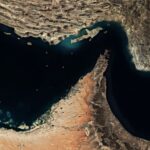
The UN Security Council is negotiating on a draft resolution, introduced by Bahrain, to authorise states to use “all necessary means” to ensure freedom of navigation in the Strait of Hormuz, diplomatic sources said on Monday, March 23. The Iranian foreign ministry, however, said the Strait of Hormuz is “not blocked”, adding that the vessels “belonging to the aggressor parties cannot be considered normal” amid the US-Israeli war on Iran.
Normally, about a fifth of global crude oil and liquefied natural gas pass through the Strait. Just a trickle of cargo ships and tankers have made it through the Strait since Iran effectively blocked it in response to US-Israeli attacks on the country that began three weeks ago.
The draft text demands that Iran “immediately cease all attacks against merchant and commercial vessels and any attempt to impede lawful transit passage or freedom of navigation” in and around the Strait.
The resolution text could be modified during the negotiations among member states in the 15-member council, the UN’s highest decision-making body. Its chances of approval by the council, where the five permanent members have veto power, remain unclear.
‘The draft resolution proposes allowing member states “to use all necessary means” — including within the territorial waters of littoral states within or bordering the Strait — “to secure transit passage and to repress, neutralize and deter attempts to close, obstruct or otherwise interfere with navigation” there.
Air strike, missile fire kill 21 fighters in Iraq
An air strike in Iraq killed 15 members of a former paramilitary coalition, the deadliest attack on the group since the Middle East war began, as missile fire elsewhere killed six Kurdish security personnel. Iraq has been pulled into the war sparked by US and Israeli strikes on Iran on February 28, and which has since engulfed much of the region.
The Hashed al-Shaabi coalition, part of Iraq’s regular armed forces but which also includes brigades belonging to Iran-backed groups, blamed the strike that killed a commander and 14 other fighters on the United States.
In Iraq’s autonomous Kurdistan region, a ballistic missile attack killed six peshmerga fighters, with the region accusing Iran of conducting the first such deadly attack on Kurdish security forces since the war began. Neither the United States nor Iran commented on the accusations.
Since the war began, pro-Iran armed groups have claimed responsibility for attacks on US interests in Iraq and across the region, while strikes have also targeted these groups.
In a statement, the Hashed al-Shaabi, also known as the Popular Mobilisation Forces (PMF), said those killed in the strike targeting its fighters included a top provincial commander. It described the strike as a “treacherous American attack that targeted the operation headquarters”.
The overnight strike targeted a base in the western Anbar province bordering Syria, long the scene of operations against the militant Islamic State group.
Since the start of the Middle East war, Baghdad has repeatedly denounced attacks on the Hashed al-Shaabi, formed in 2014 to fight IS.
Strike on Iraqi base kills 7 security personnel
A new strike in western Iraq killed seven security personnel, the defence ministry said on Wednesday, March 25 a day after a deadly attack on the same base targeted the former paramilitary Hashed al-Shaabi. Iraq has been unwillingly pulled into the war sparked by US and Israeli strikes against Iran on February 28, and which has since engulfed much of the region.
Pro-Iran armed groups have claimed responsibility for attacks on US interests in Iraq and across the region, while strikes have also targeted these groups, including on state-linked positions.
On Wednesday, the office of the prime minister said Iraq would submit a formal complaint over the latest strike to the United Nations Security Council.
Gulf States demand stoppage of attacks by ‘pro-Iran groups’ from Iraqi soil
The defence ministry said seven security personnel were killed and 13 others wounded in the attack on the base in Anbar province, which hosts both regular security personnel and Hashed forces.
‘The ministry said the air strike also targeted the base’s military healthcare clinic.
It labelled the assault a “flagrant and dangerous violation of international law, which prohibits targeting medical facilities and their personnel”.
Rescue operations were ongoing, it added. A security official said that a military doctor was among those killed, and six of those wounded belonged to the Hashed al-Shaabi, also known as the Popular Mobilisation Force (PMF).
It follows Tuesday’s strike on the same base which was the deadliest in Iraq since the start of the war, killing 15 PMF fighters including a commander. The coalition was formed in 2014 to help fight the militant Islamic State group, but has since been integrated into the armed forces, though some of its factions have been known to act independently of the state. Tuesday’s attack prompted the government to grant the PMF and groups within the official armed forces the “right to respond” to any attack by drones or aircraft against their bases.
11 Nigerian soldiers killed in ambush
Militants ambushed Nigerian soldiers on a highway in the northwest of the country, local government and health sources said, in the latest attack outside the insurgency’s northeastern epicentre.
Militant groups have been fighting the Nigerian government in the northeast since Boko Haram’s 2009 uprising, but the Tuesday evening (March 24) ambush in Kebbi state was attributed to Lakurawa, a group that operates in the northwest.
The militants killed 11 soldiers, one civilian and one police official, said Ibrahim Ngaski, secretary of the Red Cross Society of Nigeria’s Kebbi chapter. Nigerian media reported similar tolls.
“Suspected Lakurawa have ambushed security personnel along a highway,” he said.
Visiting victims at a local hospital, Governor Nasir Idris confirmed the attack, telling journalists “it is a very unfortunate situation”.
The Kebbi police said it “acknowledges reports of the incident at Giron Masa village in Shanga local government area”.
Germany says ‘misguided’ Trump policies hurting economy
Germany said on Wednesday, March 25 US President Donald Trump’s “misguided policies” were hitting its economy as the fallout from the Middle East war adds to headwinds for the Eurozone’s industrial powerhouse.
The turmoil unleashed by the conflict, especially the surge in energy prices, has dealt a fresh blow to the world’s third-biggest economy as it is struggling to rebound from a long decline.
“We are facing a serious threat from a geo-economic shock,”
said Lars Klingbeil, Germany’s finance minister and vice chancellor. “President Trump’s misguided policies are having a direct impact on the wallets of people here in the country.” Klingbeil, of the centre-left Social Democrats, also took aim at companies seeking to profit from the crisis, labelling their actions “despicable”.
“It is unpatriotic what we are seeing from corporations,” he said during a speech in Berlin. Officials have voiced suspicions that energy firms are unfairly hiking petrol prices to profit from the crisis, and have vowed to strengthen oversight of the sector.
There are fears that pricier energy and other issues, such as supply chain snarls, could push up inflation more broadly.
Klingbeil reiterated several proposals he had made in recent days aimed at easing the impact on households. These include a windfall tax on extra profits earned by energy firms during the crisis, and bigger tax breaks for commuters, he said.
Germany’s economy had only just been getting back on its feet following the energy shock unleashed by Russia’s full-scale invasion of Ukraine in 2022. That crisis pushed the economy into two straight years of recession, in 2023 and 2024.
Trump says ‘Cuba is next’
In his latest threat against the Caribbean island, US President Donald Trump said on Friday, March 27 “Cuba is next”, as he dismissed concerns that recent American military actions would cost him political support.
Cuba’s communist government has faced mounting pressure from Trump, who imposed a de facto oil blockade in January and mused about “taking” the country.
Speaking at the Saudi-backed FII Priority investment forum in Miami, Trump said his Make America Great Again (MAGA) movement wanted “strength” and “victory,” citing the January raid where US forces seized Venezuelan leader Nicolas Maduro.
“And Cuba is next, by the way. But pretend I didn’t say that.” Trump did not specify what he planned to do with Cuba, telling the media to “disregard that statement” before repeating “Cuba’s next” to laughter from the audience.
China, Russia veto UN resolution to reopen Strait of Hormuz
Russia and China on Tuesday, April 07 vetoed a draft resolution at the United Nations Security Council for reopening the Strait of Hormuz, while Pakistan abstained.
The draft resolution prepared by Bahrain, which underwent six revisions during negotiations to bridge differences among council members, received 11 votes in favour, two against and two abstentions.
Bahrain, the Democratic Republic of the Congo, Denmark, France, Greece, Latvia, Liberia, Panama, Somalia, the United Kingdom and the United States voted in favour of the resolution. Russia and China voted against the measure, exercising their veto power as permanent members of the 15-nation UNSC, thereby blocking its adoption despite majority support. Pakistan and Colombia were the two countries that abstained from voting.
The Strait of Hormuz is a strategic maritime chokepoint through which a substantial portion of global oil shipments pass. Iran has effectively shut down the Strait of Hormuz following the US-Israel war on the Islamic republic.
Earlier versions of the draft resolution reportedly invoked Chapter VII of the UN Charter, which could have authorised the use of force. Objections from Moscow, Beijing, and several non-permanent members led to its removal.
Despite those revisions, Moscow and Beijing on Tuesday maintained their opposition, arguing that the draft failed to adequately reflect underlying regional dynamics.
Trump halts Iran attack after talks with PM Shehbaz, CDF Munir
Pakistan on Wednesday, April 8 announced that the Islamic Republic of Iran and the United States of America, along with their allies, had agreed to an immediate ceasefire, including in Lebanon, effective immediately, and invited their delegations to Islamabad on April 10 for talks aimed at reaching a lasting settlement of disputes.
Prime Minister Shehbaz Sharif announced the ceasefire in an early-morning post on X, welcoming the move and extending his “deepest gratitude” to the leadership of both countries.
Both sides have displayed “remarkable wisdom and understanding” and remained constructively engaged in furthering the cause of peace and stability, the prime minister said, expressing hope that the ‘Islamabad Talks’ would succeed in achieving sustainable peace and that more positive developments would follow in the coming days.
The prime minister, who helped mediate the ceasefire, also invited delegations from both countries to Islamabad on April 10 to “hold further negotiations towards a conclusive agreement to settle all disputes”. However, White House Press Secretary Karoline Leavitt said the US has not yet agreed. “There are discussions about in-person talks, but nothing is final until announced by the President or the White House,” Leavitt said.
Israel has also agreed to the ceasefire deal between the United States and Iran, a White House official confirmed.
According to a statement issued by Israeli Prime Minister Benjamin Netanyahu, Israel supported Trump’s decision, but it maintained that the ceasefire “does not include Lebanon”.
The breakthrough came after a request by Pakistan, with US President Donald Trump saying early on Wednesday that he would suspend the bombing of Iran for two weeks if Tehran fully reopened the vital Strait of Hormuz.
At the same time, Iran said that if attacks against the country were halted, it would cease its defensive operations and that safe passage through the Strait of Hormuz would be possible for two weeks.
Trump’s statement came less than two hours before his ultimatum (8pm ET on April 8) for Iran to make a deal and reopen the Strait of Hormuz was set to lapse.
On Tuesday, he had renewed his threat to Iran, saying “a whole civilisation will die tonight”, as Tehran showed no sign of accepting his ultimatum. With hours left for the deadline to end, Prime Minister Shehbaz Sharif took to the social media platform X to say, “Diplomatic efforts for peaceful settlement of the ongoing war in the Middle East are progressing steadily, strongly and powerfully with the potential to lead to substantive results in the near future.
| Current Threat Levels : | ||
| City/Region | Threat Level | |
| Islamabad | Level 2 | ** |
| Karachi | Level 2 | ** |
| Lahore | Level 2 | ** |
| Punjab | Level 2 | ** |
| Khyber Pakhtunkhwa | Level 3 | *** |
| Peshawar | Level 2 | ** |
| Quetta | Level 2 | ** |
| Upper Balochistan | Level 3 | *** |
| Lower Balochistan | Level 2 | ** |
| Upper/ Rural Sindh | Level 2 | ** |
| Gilgit and Northern areas | Level 3 | *** |
| Tribal Areas, Close to Afghan border | Level 3 | *** |
| Index to Threat Level References | |
| Threat Level 1 No threat to foreigners although there may be isolated incidents involving petty crime. No security precautions are required. | * |
| Threat Level 2 No specific threat to foreigners, however because of the overall general law & order situation, some security precautions are advised, especially if traveling. | ** |
| Threat Level 3 Indicates that law and order situation is cause for concern and travel should be avoided unless absolutely necessary. Foreigners should rehearse plans for evacuation. | *** |
| Threat Level 4 Indicates complete breakdown of civil administration and law and order leading to possible anarchy. All foreigners remain indoors and confined to their own city. Families and staff not required to be evacuated retaining only a skeleton staff. | **** |
| Threat Level 5 Indicates complete breakdown of law and order, enemy action/hostilities, invasion/ occupation by enemy | ***** |