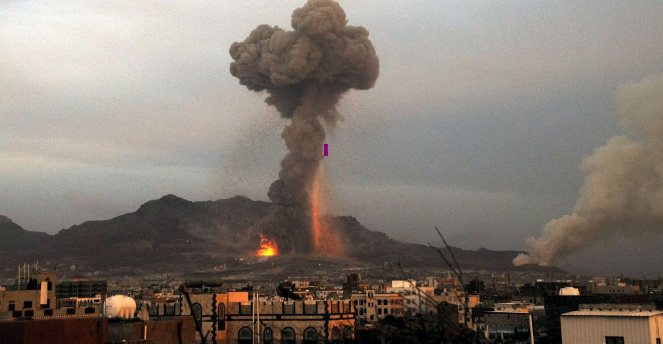


Having lived and worked in the UAE for more than a decade, it was heart-wrenching for me to see my second home come under a reign of fire. The once business capitals of the Middle East are in a shambles, as corporates, investors and tourists are keeping their fingers crossed. Likewise, the death and destruction in Iran under the misconstrued arrogance of Israel and the United States is unacceptable. The Islamic Republic has been wronged, and it is bizarre to see global diplomacy harping the tune of appeasement without erecting remedial measures to call a spade a spade.
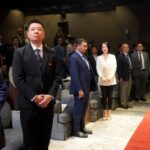
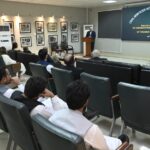
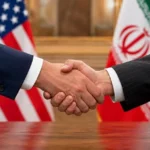
The stepping in of Pakistan as an honest-broker made the difference, and the astute and tactful manner in which Islamabad conducted behind the curtain diplomacy was a game-changer. The first round of Islamabad Talks held in April 2026 were startling from the perspective of realpolitik. For the first time in four decades, arch-foes Iran and the United States sat down for a comprehensive dialogue and not like those earlier meant for addressing merely the uranium riddle.
The fact that US Vice-President J.D Vance and Iranian Speaker Bagher Ghalibaf exhibited highest standards of responsibility in an adverse situation and refused to play to the gallery, by keeping their delegates glued to their chairs for more than 30 hours, is statesmanship. The Persians were more firm in their stance and seemed well-prepared with their footnotes duly furnished and they did not feel like ringing bells in Tehran as they canvassed their 10-points agenda.
The Blue Stripes, however, were little dumbstruck and despite being from a position of strength as the sole superpower were seen whispering and repeatedly tapping to wiser minds in Washington D.C. The outcome, nonetheless, was optimism and this is where the euphoria is being erected for a landmark peace deal.
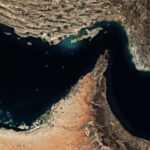
The dilemma of talks was that a country under sanctions for the last four decades, and with an inferior world view of technology and development, was sitting pretty cool, and it was holding the jugular vein of global commerce in the form of blocking the Straits of Hormuz, and keeping the US allies on their toes in the Mideast.
The most promising aspect of talks under the shadows of Margalla Hills was that a new world order was in the offing. Iran surprisingly was calling the shots, undeterred with the tangible amount of destruction it had faced including the extermination of its entire top leadership. The Islamic Republic reportedly suffered a loss of $270bn and whose revival would take at least 12 years.
The salient features of discussion as desired by Iran were a complete end to hostilities; a total withdrawal of US forces from the region; lifting of all sanctions; recognition of nuclear enrichment; compensation for war damages and last but not least a thumbs-up for Iranian sovereignty over the Straits of Hormuz.
The intricacies of diplomacy, however, surfaced all of a sudden to derail the consensus that was in the making. As stated by Tehran officially, “…when just inches away from ‘Islamabad MoU’, we encountered maximalism, shifting goalposts, and blockade.” An obvious reference to impediments that came their way as President Trump insisted on “Hormuz First” doctrine, shunting out more tricky issues such as nuclear threshold and a perpetual peace. Foreign Minister Abbas Araghchi aptly termed the proceedings as, “Zero lessons earned. Goodwill begets goodwill. Enmity begets enmity”.
It reminds me of General Colin Powell, the man who misled Washington to invade Iraq on a faulty premise of weapons of mass destruction, “A dream doesn’t become reality through magic; it takes sweat, determination and hard work”. Though the Americans kept on dragging their feet in talks, it was Islamabad’s sincerity, influence and articulation that made both parties to avoid figments of imagination and absurd benchmarks to call it a day. There were, however, bigger issues that were not on the table. The destabilization and security phobia that the Gulf States are facing is an outcome of a politico-strategic choice these Arab states made in complicity with the lone superpower. Unfortunately, they are paying a cost not worth their sagacity. It is a fact that Washington has failed to live up to the expectations of guarding these monarchs, and is in a faux pas of its own as the 40-day war has erased America’s military footprints in the region.
This war has changed the dynamics of power politics for good. Anti-Iranian sentiments will simmer on for decades with these Gulf States, and their social mosaic will be a contested terrain in terms of sectarian amalgamation. While believers of Shia faith constitute a majority in the region, political upheavals might be the next challenge to face as the once marginalised ‘minority’ will stake its claim to power. That is exactly what is happening in Bahrain and elsewhere.
Tehran, for its part, will continue to rebuild its military structure. Iran will be a power to reckon with as sanctions and embargoes are bound to meltdown with the demise of Pax-Americana. It is widely assumed that Iran will be a beneficiary of big finances as more than $130 billion will flow back into its coffers, as well as being able to trade more oil on a better price tag. It will be back to IBAN connectivity with global banks, and the Europeans will compete with each other to be the first to trade with Iran.
The tactical understanding, similarly, that Iran enjoyed with China and Russia during the conflict has dismantled unipolarity. Had it not been the Kremlin’s preoccupation in Ukraine and Beijing’s desire to be more inward-looking in terms of global economic networking, this conflict could have turned nastier. President Xi Jinping, nonetheless, played a master-stroke in diplomacy by hoisting Taiwanese opposition leaders in the Mainland, and that was a signal to Washington that enough water has flown down the Straits of South China Sea too, and an accord with the dissent republic is round the corner. The future of realpolitik, perhaps, will continue to revolve around the Straits of Hormuz.
The strategic 104 miles water passage will never be the same as it was on February 28 when the Islamic Republic was vehemently bombed, and Supreme Leader Syed Ali Khamenei was taken out. The clergy-military combine has arduously fought back, and the resilience of Iranians is stirring inspiration all over the region. The dream of ‘regime-change’ has burst on face. It is a Persian Spring, per se.
Tehran now has a new geopolitical order to boast, as the petro-dollar economy in vogue since the 1973 oil crisis is now biting dust. A new mechanism of tariffs and tolls is in the offing, and a basket of currencies will be the new fiat with the Chinese Yuan at the vanguard. This is no mean achievement for a battered country under sanctions for more than four decades. It is a tribute to its astute planning for militarization and a war-strategy that has successfully overcome the technological superiority of Western arsenal. The way forward is not just cessation of hostilities but a comprehensive format to erect a new order of serenity. The best route in adversity could be a grand huddle of the six Gulf States and Iran with a realization for peaceful coexistence. A reincarnation of Élysée Treaty in the Middle East is indispensable to bury the hatchet. France and Germany after being at odds for decades are now friends, and so can the Arab and Persian be too. Last but not least, with Israel on its knees having tasted a psychological and strategic defeat, it must go back to pre-1967 borders, and let a de jure State of Palestine emerge in all humility.
This aggression was quite un-American, to say the least. An overwhelming majority has distanced itself from the ill-conceived trigger-happiness of President Donald Trump. The Americans have repeatedly been betrayed at the hands of Zionists from the Knesset calling the shots. Washington will be better advised to pour in its ideals of emancipation for nation-building in the Mideast, and not on armament for staking its global leadership. Signing a peace treaty with Iran was never as attainable as it is today, and the third generation of the 1979 Revolution is resilient, open-minded and sagacious to take a call.