

Deterrence, Doctrinal Shifts, and Strategic Stability in South Asia
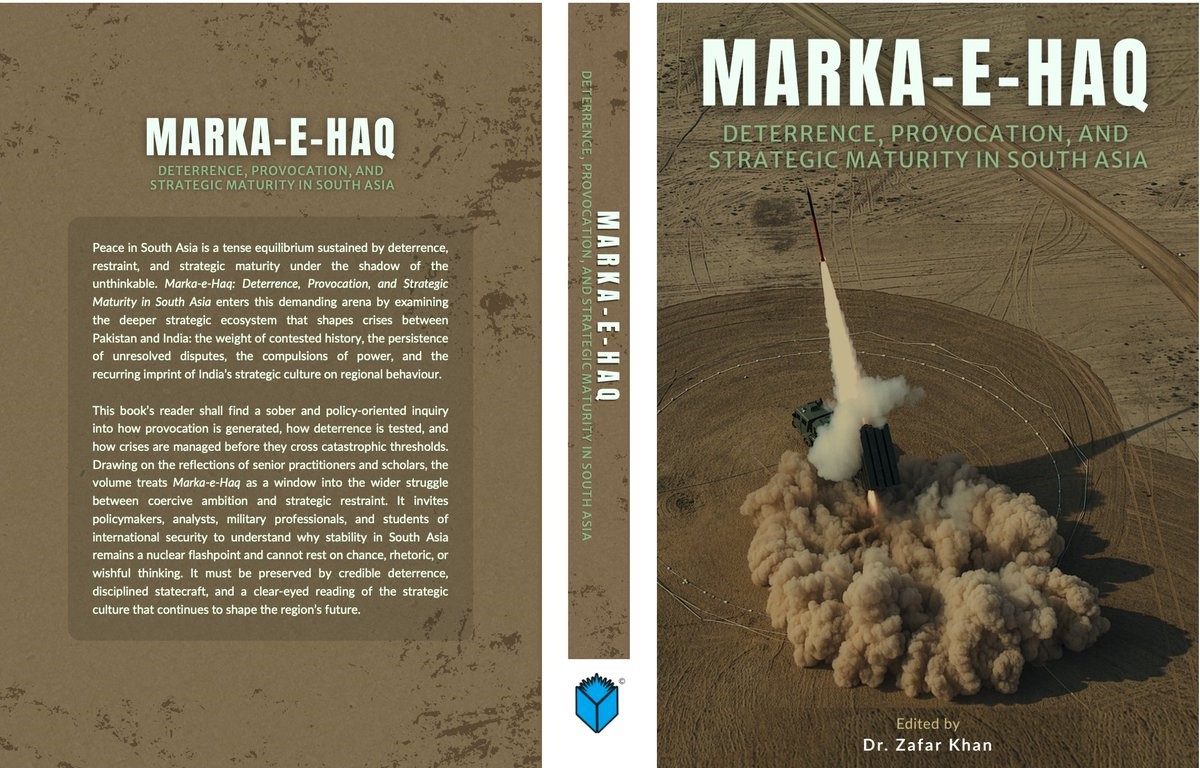
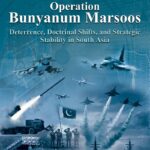
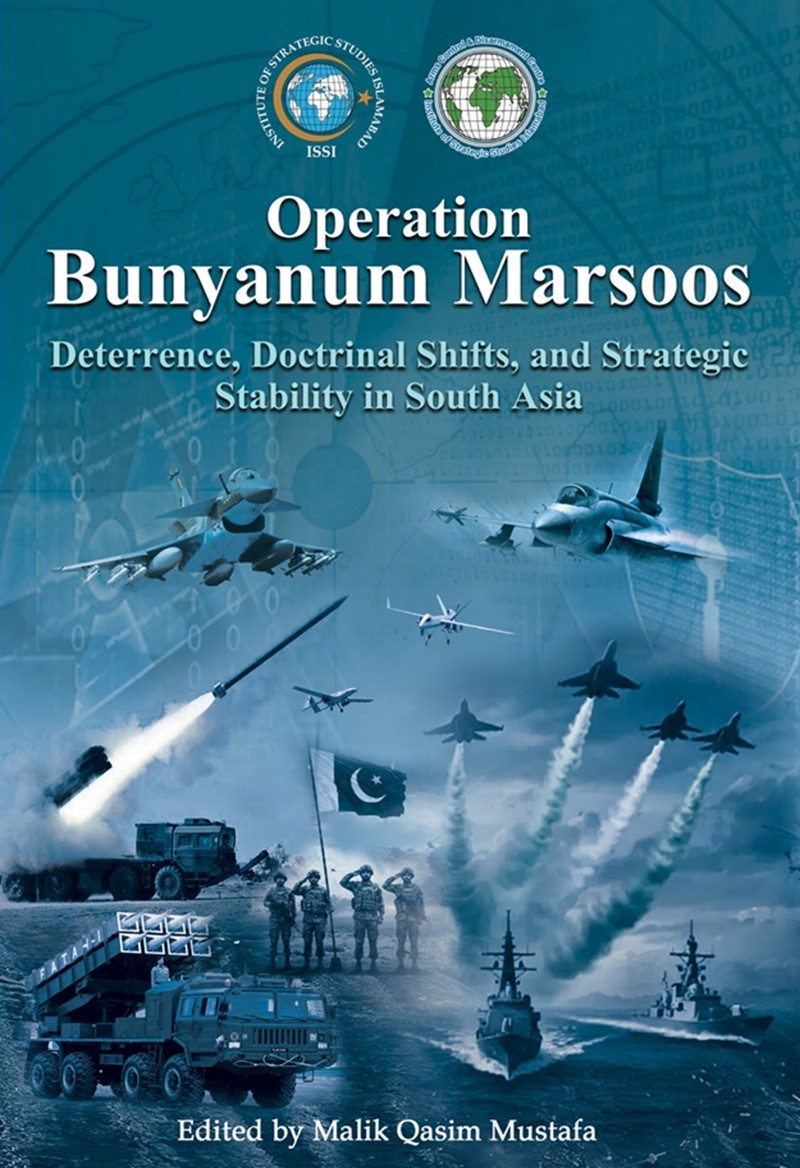
The 87-hour “mini war” between India and Pakistan under the nuclear shadow has marked a new chapter in the history of South Asian regional politics, where the Indian leader always tried to rationalise their expansionist policies against the territorially adjoining nations. These policies have resulted in an explicit doctrinal transformation and a persistent evolution of New Delhi’s strategic posture, compelling Pakistan to adopt substantial defensive measures to maintain the efficiency and practicality of its counterbalancing regional potential. The outbreak of a four-day war between the pair of South Asian nuclear rivals reiterated India’s coercive regional hegemonic ambitions, presently pursuing the objective of implementing the Akhund Bharat concept on certain pragmatic grounds. It led the two-sided intellectual communities to reconsider the merits of regional stability in the post-Pahalgam crisis and its unignorable effects on South Asia’s regional security calculus. In this scenario, the book under review is published by an Islamabad-based research institute, the Institute of Strategic Studies Islamabad (ISSI), to present a logically convincing account of the arguments advanced by key figures in Pakistan’s mainstream strategic community. It is an edited book, compiled by Malik Qasim Mustafa, the Director of the Arms Control and Disarmament Centre (ACDC) at the ISSI. Mustafa is presently pursuing a doctoral degree from the country’s top-ranked university and holds a reputable standing in the global debates of the strategic community. While sharing his academic insights on the complexities of South Asian regional security at various national and international forums, Mustafa has demonstrated his scholarly strength through several research papers, book chapters, and edited books. In his latest edited volume, under review, he attempts to provide a comprehensive examination of the India-Pakistan May 2025 confrontation, questioning existing wisdom on the strategic contestations of the nuclear powers.
In addition to a brief introductory section, the book’s main structure is divided into nineteen short chapters that address various topics related to the short-lived armed conflict between New Delhi and Islamabad, beginning with the tragic Pahalgam incident.
The book’s central theme is a combination of strategic, military, political, and diplomatic analyses that attempts to present a different picture of South Asia, laced with factual data on Operation Sindoor and Operation Bunyanum Marsoos. Both military operations were considered turning points for India-Pakistan competing strategic postures and in their constant evolution in response to changing patterns in modern technologies, escalation management, and regional strategic stability.
In this way, the debate started in the book from the initial escalation phase with a terrorist incident in the Indian Illegally Occupied Jammu & Kashmir (IIOJK), which resulted in five unilateral coercive measures announced by the New Delhi-based Indian formal state authorities. Their anti-Pakistan obsession and quest for establishing a New Normal in the region led to the closure of border check posts, the imposition of a travel ban, the withdrawal of Services Advisors, and the reduction of formal diplomatic staff from 55 to 30 (p. I). The subsequent incidents witnessed the formal launching of military operations beyond the historical blueprints of nuclear politics, ultimately granting a decisive victory to Pakistan, parallel to pushing India towards American mediating rescue. Pakistan dubbed the victory as the Marka-e-Haq, revealing internationally the strategic error of the Indian security establishment relying on an illusion of New Delhi’s asymmetrical capabilities for maintaining military superiority while keeping a space for conventional war under the nuclear threshold.
The Director General ISSI provided these narrations in his remarks in the book (p. II), and further verification was presented by the book’s editor in his opening comments. Additional clarification of the editor’s thoughts are found in the eighth chapter, in which he highlighted the important regional developments in the nuclearised subcontinent that shape the dynamics of stability and the likely scenarios for future wars. This perspective underscores the adoption of disruptive modern technologies and their extensive use in the defence sector, thereby elevating the India-Pakistan conflict to a new level (p. 84).
The book’s interesting debate begins in the first chapter, authored by General Zubair Mahmood Hayat (Retd.), who calls Marka-e-Haq a universal reminder, noting the prevalence of a new global scenario in which the age of war is over, and the age of escalation control has begun (p. 08). The supporting opinion on the significance of Pakistan’s victory in the regional hostile environment is articulated by a retired Air Force Officer in the second chapter. This chapter, reflecting the views of a former Air Force Chief, presents the Marka-e-Haq’s practical demonstration, reassuring Pakistan as a responsible state that cannot be intimidated or coerced and will not accept Indian offensive provocations (p. 10). The third chapter, dealing with the maritime domain of the May 2025 crisis is written by a former naval officer who is currently the President of the National Institute of Maritime Affairs (NIMA). With the support of a commendable maritime-centric discourse on geopolitics, he highlighted the adoption of a well-choreographed Anti-Access/Area Denial (A2AD) strategy, corresponding with the deployment of specific units to deter, delay, deny, and disrupt adversaries entering targeting areas (p. 19). A brief description of Pakistan’s Multi-Domain Response to Indian aggression in Multi-Domain Operations (MDO) has been briefed in the chapter which consequently caused an unambiguous Indian retreat. Reacting appropriately to India’s launch of drones, Pakistan’s drone strikes targeted fifteen Indian cities, and this change made it the first South Asian drone war (p. 31). It was described in the fourth chapter, written by another retired intellectual figure with a military background, who advocated an inseparable rising connection between the MDOs and the future spectrum of India-Pakistan conflict (p. 41).
Dr Zafar Khan, Executive Director of Balochistan Think Tank Network (BTTN), shed light on the strategic miscalculation of the Modi regime in assuming deterrence-by-punishment as its preferred strategy. New Delhi’s such reckless behaviour met with a well-calculated and well-organised response in line with Pakistan’s Full Spectrum Deterrence (FSD), falling within the ambit of Credible Minimum Deterrence (CMD), as mentioned by Dr Khan in the fifth chapter (p. 48)
Dr Nasir Mehmood provides further insight into the FSD in the sixth chapter, where it is treated as Pakistan’s principal defence strategy (p. 53). By underscoring the post-2025 strategic upgrades between New Delhi and Islamabad, Dr Mehmood pointed out India’s attempt to establish an Integrated Rocket Force (IRF), whereas Pakistan announced on the seventy-ninth Independence Day the creation of the Army Rocket Force Command (ARFC). It also says the ARFC will be equipped with rockets armed with conventional payloads, with a targeting range of 140, 400, and 750 km (p. 60). The role of information operations was also an important aspect of the May 2025 war, in which Pakistan’s war plans focused on conventional deterrence across multiple domains to help reestablish nuclear deterrence. In this setting, information operations were a central element of Pakistan’s key war-fighting priorities, as highlighted by Dr Maria Sultan, the Chairperson and Director of the South Asian Strategic Stability Institute (SASSI). Dr Sultan’s analysis in the seventh chapter provided an interesting set of insights into the escalation timeline of the conflict and the Indian military force structure (78-79).
The discussion on the role of the Pakistan Air Force (PAF), covered in the ninth chapter. The chapter is written by an official from the Centre for Aerospace & Security Studies (CASS). In his intellectual briefing about the PAF, Air Commodore Raza Haider (Retd.), explained how “PAF effectively employed cutting-edge technologies, advanced fighter aircraft like the J-10C Vigorous Dragon, JF-17 Thunder Block-III, F-16 Fighting Falcon, and Mirage, Beyond Visual Range (BVR) missiles, Drones, and Airborne Early Warning (AEW) Systems in an Electronic Warfare (EW) and Network Centric Warfare (NCW) environment” (p. 92).
The discussion of integrating advanced technologies with the two states’ war-fighting doctrines in the conventional and unconventional domains cannot be completed without understanding the role of Artificial Intelligence (AI) in the South Asian four-day war. Dr Sumaira Kausar, Director at Centre of Excellence in AI, Bahria University says in the tenth chapter that this brief clash contains considerable significance for the mainstream defence planners of both contestants who think through the integration of AI, autonomous systems, and cyber capabilities, which undermined the traditional connotations of deterrence (p. 99).
In addition to this book’s editor, another research officer from the ACDC-ISSI offered an interesting analytical survey of India’s aspirational New Normal thinking and its negative impacts on the notions of the escalation ladder and strategic stability in South Asia. In her conversation in the eleventh chapter, Ghazala Yasmin Jalil from the ISSI traced the genesis of the New Normal to the Cold Start Doctrine (CSD) of 2004, an unspoken and unacknowledged fact of India’s emerging doctrinal advancements (p. 109).
She supported the performance of Pakistan’s strategic planning, linked to its FSD posture, its inseparable link with the QPQ+ response, and the combination of both elements effectively upheld the regional framework of strategic stability (p. 117). Apart from the strategic dimensions, this book comprises a brief conversation on the India-Pakistan Confidence-building Measures (CBMs), comparing them with the Cold War experiences of the great powers. It is highlighted by Tehmina Janjua, a former ambassador of Pakistan, in the book’s twelfth chapter that the lessons of the past decades of India-Pakistan hostility suggest that dialogue is fragile, but silence is perilous. If the two-sided leaders cannot yet agree on final settlements, they can at least agree to keep talking, especially during the critical times (p. 125).
The subsequent chapters continued the debate on the book’s central theme while adopting their respective intellectual examinations, in which the thirteenth and fourteenth chapters underlined the increasing intensity of hydro-politics in South Asia, where India’s recent aggression has affected the Indus Water Treaty (IWT). A Karachi-based meritorious professor, Moonis Ahmar, views the Kashmir and water issue as the mingling of blood and water. However, an advocate of the Supreme Court of Pakistan, Dr Zia Ullah Ranjha, calls India’s placing of the IWT in “abeyance” as the weaponisation of water.
Dr Ranjha’s contribution to the book provides conceptual clarity on IWT politics in South Asia from certain legal aspects, in which India’s desired suspension of the treaty has raised several legal questions on its agreed framework. It is rationally proved in the fifteenth chapter by Dr Raja Qaiser Ahmed of Quaid-i-Azam University that the Pahalgam attack was an overt false-flag operation because it was an extraordinarily symbolic and strategically well-positioned event for the BJP’s political optics (p. 146).
Post-attack media narrations from India started blaming Pakistan without noticeably reporting Islamabad’s pledge to conduct an impartial inquiry. Apart from this false flag terrorism incident, the Doval Doctrine of “offensive-defensive” strategy operationalised in 2014 already validated the Indian involvement in Pakistan’s domestic security issues where the menace of terrorism is challenging, as cited by D. Khuram Iqbal in the sixteenth chapter. The Doval Doctrine, coined by Indian National Security Adviser Ajit Doval, fundamentally chalked out a plan for adopting multilevel covert strategies to stir unrest in Pakistan by exploiting the ethnic and religious fault-lines of the country (p. 150). The interconnection between the Doval Doctrine and the Mod Doctrine jointly shapes the current Indian strategic posture towards Pakistan, which has unquestionably lowered the threshold of an arms conflict between two contesting nuclear neighbours of South Asia, according to Dr Khuram Abbas, the Director at the India Study Centre (ISC) at the ISSI. Based on his exceptional analytical skills and non-traditional intellectual strengths, Dr Abbas, in the seventeenth chapter, discusses Modi’s use of the Pakistani card in domestic politics, which has led to an unprecedented rise in the hyper-nationalist Indian media, dubbed as “Godi Media” (p. 167).
The last two chapters, written by Dr Asma Shakir Khawaja and Dr Atia Ali Kazmi, focused on the future of South Asian regional politics amid the intensifying India-Pakistan conflict. Dr Khawaja stresses the need for adopting a bilateral regional security approach, in which the PAF has already established a New Normal of Pakistan’s air superiority (p. 181).
However, Dr Kazmi’s predictions talk about the next five years, covering the 2025-2030 period. Based on these narrations, it can be maintained that the book is an appropriable and substantive intellectual volume that presents the views of authors from diverse backgrounds. This diversity has increased the significance of this book in the academic and research communities worldwide interested in understanding the post-May 2025 developments in the South Asian regional political landscape.
Moreover, the logically convincing and empirically strong arguments in all chapters have made it an essential reading for the South Asian political authorities, military professionals, and formal defence planners, because the book has become a valuable part of a foundational source to understand the strategic debates of the nuclearised subcontinent, especially after the 2025 conflict.