



Saudi Arabia – Unites Arab Emirates Rivalry in Yemen
Abstract
The recent military gain by Houthis in Yemen coming close to the Bab al Mandab strait has raised the stakes for many countries especially Saudi Arabia. In the last few years, Saudi – Emirati competition in Yemen transformed to conflict due to divergent interests of both countries. This contributed to the fragmentation of anti-Houthi forces and provided the opportunity to Houthis to make the move. This coincided with Iranian interest of raising the threat to the Bab al Mandab chokehold. Now, the Saudis need to respond, but they do not want the conflict to be viewed as a Saudi-Houthi war but as an intra-Yemen war. This is the reason for asking Turkey and Pakistan to shoulder some burden. The Saudis are trying to bring Emiratis back with limited role, but the Emiratis are looking at their long-term interest that is more aligned with southern separatist groups. Weakening of Saudi-supported pro-Yemen government forces and Houthis in current round paves the way for the return of separatists in the south.
“By three methods we may learn wisdom: First, by reflection, which is noblest; second, by imitation, which is easiest; and third by experience, which is the bitterest.” Confucius
Yemen was known to the ancient Romans as Arabia Felix (Fortunate Arabia), but modern Yemen is the most unfortunate country on the world map. It is engulfed in a multilayered conflict where internal civil war is intertwined with regional and global power struggles.
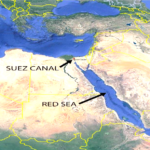
In September 2026, Ansarullah, commonly known as the Houthis rapidly moved from their stronghold in Hodeidah along the Red Sea coast to capture the strategic port of Mokha overlooking the Bab al Mandab strait. This story is more about Saudi – United Arab Emirates (UAE) rivalry splintering the already fractured anti-Houthi groups than about Houthi military prowess.
In 2015, when the Houthis took control of Yemen’s capital Sanna, alarm bells rang in Saudi Arabia and UAE as Iran could not be allowed to set a powerful base on the Arabian Peninsula. Houthis raced along the coast capturing Mokha and laid siege of the Arabian Sea port of Aden. Riyadh and Abu Dhabi assembled their impressive military machine and deployed it for the first time on the battlefield. Saudi Arabia launched devastating air strikes on military and civilian infrastructure to break the Houthi momentum while UAE launched an agile amphibious assault that even impressed Washington. This military campaign was successful in recapturing Mokha, breaking the siege of Aden and forcing the Houthis to retreat their steps back to Hodeidah. After this initial operational success the remainder of the operation moved from bad to worse.
The initial objective of pushing back Houthis was in the common interest of both countries but strategic priorities of two countries were divergent in Yemen theatre. Yemen has been a major national security issue for Saudi Arabia since the birth of the state, when ill-defined borders resulted in wars. The Taif Agreement of 1934 ceded Yemeni provinces of Jizan, Asir and Najran to Saudi Arabia. Yemeni tribes are on both sides of the border, and this border has been used for drug and weapons smuggling and human trafficking. Core objective of Saudi Arabia is border security; therefore, Saudi geographic focus is on northern Yemen that shares 1800-kilometer-long border with southern Arabia; the western part of which is mountainous terrain and eastern part a harsh barren desert. In view of this Saudi high priority where border instability is viewed as an existential threat, Saudi risk tolerance is low. For decades, the Yemen file is managed by a Special Committee and King Salman bin Abdul Aziz headed it when he had been governor of Riyadh and later as Defense Minister. A peek into its activities was provided by leaking of classified directives of this Special Committee that is essentially paying off Yemeni leaders and tribal sheikhs.
UAE foreign policy is crafted and executed in Abu Dhabi by Shaikh Muhammad bin Zaid (MBZ) with extremely limited input from other smaller emirates of the union. He views UAE as a middle power and in private equates UAE with ancient Sparta. The Emirati policy was envisioned by MBZ over two decades ago. It started with ‘Singapore model’ to create a financial hub for global capital with Dubai as the flagship. It then evolved into a ‘Venetian model’ of connectivity of maritime trade corridors but soon it was clear that in view of the chaos in areas of interest, an “East India Company model’ of fortification of crucial ports and islands is needed. However, in view of lack of military depth, this model required a modification of linking with local power brokers. This had the dual advantage of avoiding the burden of outright occupation and in case of a sudden shift in the situation, Emiratis could quickly exit the troubled spot.
In the aftermath of the Arab Spring, political Islam is viewed as an existential threat by MBZ. The Emirati policy is a combination of an ideological component of fighting the Muslim Brotherhood (Ikhwan al Muslimeen)-inspired political Islam on its home turfs in Sunni Arab countries, confronting Iran especially and restricting activities of Tehran-sponsored groups in the Arab world while securing economic interests, especially maritime logistics.
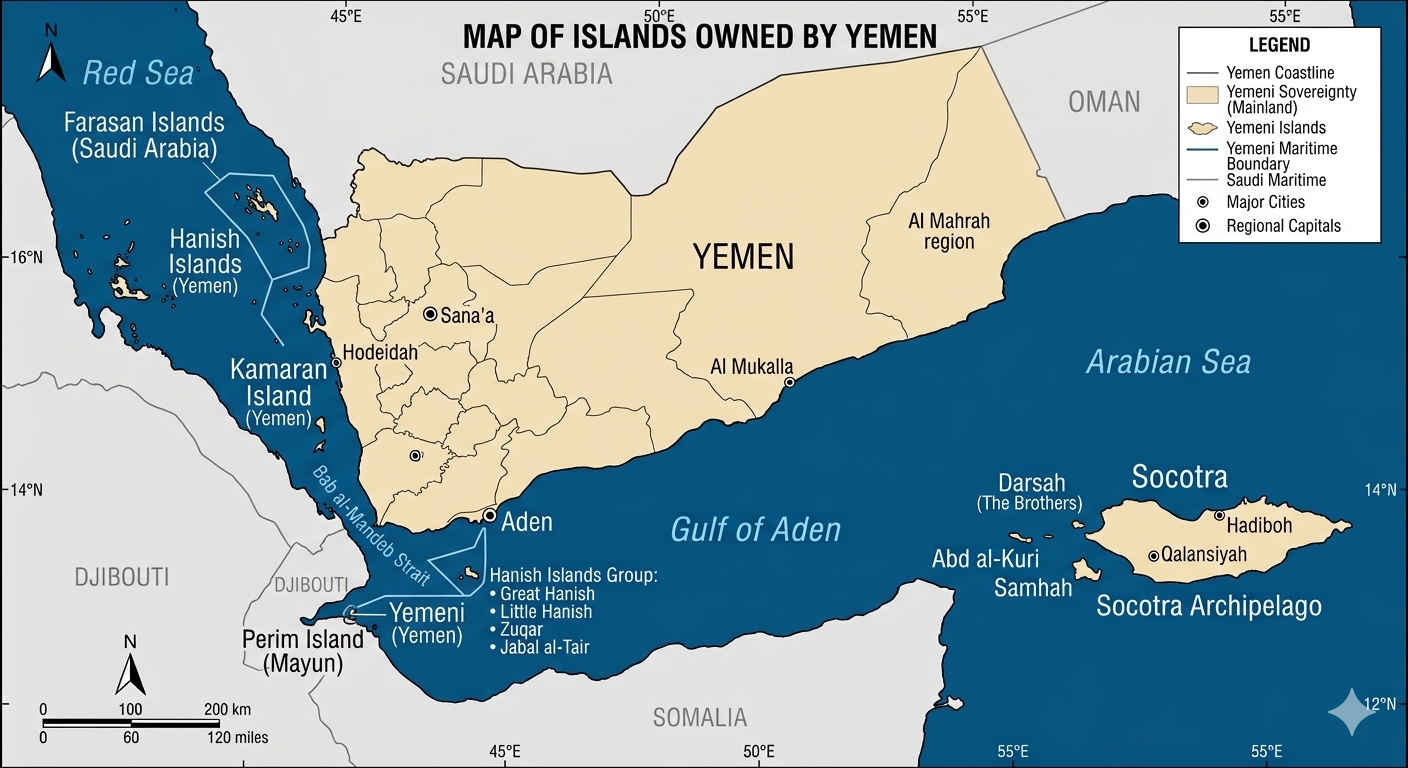
Yemen is just one piece of a larger Emirati strategy of maritime influence over important commercial sea lanes and of securing commercial and military foothold in strategic ports of the region. In this scheme of things, southern and eastern coastal ports of Mokha, Aden, al Mukallah and strategic islands of Socotra and Mayun are the principal areas of Emirati interest.
Emiratis successfully assembled an agile diplomatic, military, and commercial machine that punched way above its weight. Emiratis were able to rapidly expand their influence by strategic investments coupled with an effective lobbying effort in Washington spearheaded by its shrewd and influential ambassador Yusuf al Otaiba where he has been serving since 2008.
Emirati strategic interests of fighting Sunni political Islam, pushing back Shia Iran and securing maritime commercial interests are also Israeli core interests therefore it was just a matter of time when both sides would coordinate very closely. The home work was done several years before the Abraham Accord was formally signed in 2020. The crucial aspect of cooperation is that it is not a mere symbolic diplomatic exercise but has developed into a robust and much deeper collaboration in security and economic spheres.
There was rapid expansion of intelligence cooperation between the Israelis and Emiratis and Israel got access to crucial intelligence and logistic nodes. This included strategic Yemeni Mayun and Socotra islands, Berbera Port of Somaliland, Bossaso port in Puntland and Kismayo port of Jubaland. These three autonomous federal states of Somalia are operating as de facto independent entities with no control of central government of Somalia.
Israeli presence at these strategic nodes gives it operational advantages. In recent conflicts, missiles and drones attacking Israeli mainland are the major threats paralyzing daily life and having psychological impact even if structural damage is extremely limited. Radar and early-warning systems installed at these remote nodes can detect missiles and drones at launch, providing timely warning and enabling more effective interception. Intelligence and Special Forces operations and drone strikes can be conducted more effectively from facilities close to the troubled spot. This arrangement significantly shortens the ‘kill chain’ and relieves the burden of long and complex air operations. Israel also economically benefits from making inroads into the Mediterranean energy systems as well the Red Sea and Indian Ocean trade corridors and in expanding its export of high tech and military wares.
UAE has a population of ten million with nine million foreign workers who run the country. Native Emirati population of only 1.3 million does not have the depth and breadth to deploy diplomatic and military assets to so many theaters. The first and most painful lesson was learned in Yemen when in 2015 a Houthi missile on an Emirati base in Marib killed 52 Emirati soldiers; the largest loss of life in Emirati history. Ironically, this huge loss was caused by a vintage Soviet Tochka missile of the 1980s. This limitation necessitated using proxy networks to project its power and the Emiratis have a large purse to pay handsomely for services.
MBZ has a different view about many Arab and African countries going through a process of fragmentation due to extreme polarization along political, religious, sectarian, tribal, and ethnic lines, resulting in the collapse of central state authority and economic challenges. He views attempts to resurrect central authority as a hopeless cause and there is an element of truth in it. Once he reached this conclusion, then a practical option was to develop working relationships with local players who have support in their respective areas. In the case of Yemen there is an organic local force in South Yemen that used to be a separate country before North and South united in 1994. Southern separatists and Emiratis became natural allies as they shared a common interest. In 2017, the Emiratis put southern factions under the umbrella of Southern Transitional Council (STC) and provided weapons and training to several militias operating in southern region.
Emiratis and Saudis have been drifting apart regarding the Yemeni file since 2018, but the breaking point came in December 2025 when STC rapidly seized strategic eastern territories in Hadramaut and al-Mahra governorates along the Saudi border. This wascrossing of the Saudi red line. The Saudi Crown Prince and de facto ruler Muhammad bin Salman (MBS) responded swiftly by bombing weapon shipments at the Port of Mukalla and bribed groups allied with UAE that triggered the collapse and dissolution of the STC and forced withdrawal of remaining UAE military assets on the ground.
In addition to Yemen, Saudi and Emirati interests moved from competition to conflict in different theatres including civil wars of Sudan, Libya, and the Horn of Africa where both sides supported rival factions. Saudis worked aggressively to force retreat of Emirati commercial and military assets from strategic ports of Djibouti (wresting back control of Doraleh container terminal from Dubai Port World) and the Eritrean port of Assab where Emiratis were operating a vital naval and drone base and working to establish foothold in strategic Dahlak archipelago along Eritrean coast.
In the regional re-organization, Saudi Arabia and UAE are drifting apart and forming opposing blocks of regional states and non-state actors. The UAE has embraced Israel with Bahrain and Morocco playing the second fiddle. Greece, Cyprus, India and secessionist forces of eastern Libya under Khalifa Haftar family, Rapid Support Forces (RSF) of Sudan under Muhammad Hamdan Dagalo Musa ‘Hemedti’ and Somaliland, Puntland and Jubaland of Somalia are being pulled into this orbit.
On the other hand, Saudi Arabia is incorporating Pakistan and Turkey in its sphere and pulling Qatar, Egypt, Eritrea, Somalia and central governments of Yemen, Sudan, and Libya in its orbit. Each member brings some advantages but also the baggage. Saudi Arabia connects the Persian Gulf energy powerhouse with the Red Sea maritime corridor, positioning it as a bridge between Asian energy markets and Mediterranean trade routes. Turkey’s location as a bridge between Asia and Europe and presence in the Mediterranean, and the Black Seas, and the Horn of Africa gives it the leverage to project its influence in multiple arenas simultaneously. Pakistan is in proximity and its role at this stage is only defense- related providing manpower. The sole nuclear Muslim power badge gives it a prestige but in the ongoing battles of ‘networks warfare’, nuclear factor is not at the center stage.
UAE-Israeli camp is putting together strategically flexible networks that are not solely ideological or security-centric but pragmatically linking intelligence and security goals with infrastructure development and technological integration. Severe reputational damage of Israel in the context of the Gaza war is a major limiting factor as the extreme negative public opinion limits public acknowledgement by partners. Saudi-led axis is hinged on defense agreements among states that are not ideological but security-centric which makes them less flexible. This stark reality is evident from the hesitation and confusion of the Saudi decision-making process when their economic lifelines are being threatened not by any serious or middle power but flip flop-wearing Houthis.
Tehran must be watching these developments carefully, as both blocs have Tehran in its crosshairs. Tehran’s room to maneuver is curtailed due to recent military and economic setbacks in its latest clash with the United States and severe damage to its ‘axis of resistance’ courtesy of relentless offensives by Israel on multiple fronts. The collapse of the Syrian theatre, the diminishing role of militias in Iraq, the decimation of Hamas in Gaza and major damage to Hezbollah leaves only the Houthis as a viable partner of Iran. However, this single viable partner is worth its weight in gold as it is positioned at the strategic choke point of Bab al Mandab. If Tehran opts for escalation, then the only sharp instrument left in its toolbox is Houthis.
The Saudis finding themselves with no good options are now reaching out to the Emiratis on Yemen file. Fall of Mokha was the wake-up call and Saudis now want Emiratis to chip in as STC cannot be effectively mobilized without Emirati help. Washington and Tel Aviv are also working overtime to patch up Saudi-UAE differences and are promising assistance in Yemen theatre if the two reconcile. Benjamin Netanyahu secretly flew to Abu Dhabi on 27 September 2026 and met MBZ; Iran and the Houthis were probably the main agenda. Israeli sources leaked that representatives of other Arab countries were also present but Jordan and Saudi Arabia issued a public denial. Two days later, MBZ brother and UAE Vice President Shaikh Mansur bin Zaid flew to Riyadh to meet MBS.
If the Emiratis decide to support the counter-offensive, their role will be to resurrect the ground command and control center for STC and activate its human intelligence network in Yemen. If the Emiratis join, then Israelis will also have a role as they are embedded in Emirati security and intelligence nodes. Israelis will provide intelligence, early air defense warning and target selection and possibly drone strikes against Houthi leadership from its outposts along Red Sea. If Emiratis stay away, then the Israeli role will be extremely limited if any as Saudis are not comfortable to have any visible role for Israelis. They understand that Houthis will use the Israeli stick against them in the propaganda offensive. Even if Saudi – Emirati cooperation comes to fruition it will be a short-term arrangement as strategic objectives of Saudis and Emiratis are divergent on many fronts. In my view, the Emiratis will not be militarily involved as the current crisis helps their long-term interests. High paced kinetic operations weaken both Houthis and Yemen government forces that provide the ideal environment for the southern separatists allied with UAE to recover their losses in the south. On the bigger canvas, Houthi attacks on Saudi energy and transport hubs dampen Saudi drive to force large corporations to relocate their regional headquarters from Dubai to Riyadh. Sitting out this round benefits Emiratis more than joining the Saudi led coalition against the Houthis.
In the short term, Saudis and the Houthis are on the trajectory of escalation. Houthis will escalate strikes on Saudi economic targets especially airports and oil facilities to increase the cost for Saudis. The current Saudi strategy is to focus on air strikes on all Houthi-controlled areas including Sanna, bribe tribal leaders and guide local anti-Houthi forces. It is also leaning heavily on Pakistan to contribute more, however Islamabad is facing its own serious political and security challenges in the two border provinces and has no public support for involvement in a civil war in the Middle East. A counteroffensive even with limited dividends is necessary at this stage to push Houthis back as Saudi Arabia cannot afford to be held hostage to such a force on its border, and it is essential to lift Saudi morale in perception arena.
“Any fool can know. The point is to understand.” Albert Einstein
Acknowledgments: Author thanks many well informed individuals for their candid views on the subject.