
New Socio-Economic, Geo-Political and Geo-Strategic Dimensions
Pak-China friendship higher than mountains, deeper than oceans (President Asif All Zardari)
The recent visit of the Chinese Prime Minister Wen Jiabao has given a new strategic direction to Pak-China alliance. During his three day official visit from December 17-19 both the countries signed 17 agreements, four MoUs and one joint venture worth $15 billion for investment in various sec-tors of the economy. Both the countries have agreed to initiate a new 5 year development plan. China also donated $229 million to help the country recover from the floods as well as granted Pakistan a soft loan of $400 million.
Joint Statement
Both the governments agreed to further strengthening of strategic bilateral relations. The joint statement covers all possible sec-tors and fields of national and international importance. The salient features of the joint statement are as follows:
(a) Strengthening of strategic friendship: It will serve the fundamental interests of the two countries and peoples, and contribute to peace, stability and development in the region and beyond.
(b) Enhancing of strategic coordination & advance pragmatic cooperation: Both the countries agreed to enhance strategic coordination, advance pragmatic cooperation and work jointly to meet challenges in pursuit of common development. The year 2011 has been designated the “Year of China-Pakistan Friendship”, and decided to hold a series of activities in the political, economic, trade, military, cultural, sporting and education fields.
(c) Consolidation of relations with Pakistan: Chinese government reassured its firm commitment to consolidating and developing relations with Pakistan and is keen on the policy of pursuing friendly ties with Pakistan. Moreover, the Chinese side appreciates Pakistan’s longstanding firm support on issues that concern China’s core interests.
(d) Political commitment of Pakistan: The government of the Pakistan emphasized that pursuing friendship with China is the bedrock of Pakistan’s foreign policy and national consensus. In this regard, Pakistan appreciates the valuable strong support and selfless assistance from the Chinese government and people for its economic and social development. Furthermore, Pakistan will continue to pursue the policy of further strengthening friendly relations with China.
(e) Reaffirmation for Pakistan’s sovereignty, independence, and territorial integrity: The China reaffirmed that it respects Pakistan’s sovereignty, independence, and territorial integrity, respects the development path chosen by the Pakistani people in the light of Pakistan’s own national conditions, and appreciates and supports Pakistan’s efforts in safeguarding its sovereignty, independence and territorial integrity and promoting peace and stability in South Asia.
(f) Support for Chinese geo-political & geo-strategic issues: On part of Pakistan it reiterated that it remains committed to the one-China policy, opposes Taiwan independence, supports the peaceful development of cross-straits relations and China’s reunification, and supports the efforts made by the Chinese government in safeguarding its sovereignty and territorial integrity.
(g) Regular exchange of bilateral visits: The countries shared the view that exchange of high-level visits and contacts between leaders of the two sides have played an irreplaceable role in promoting bilateral relations. Both the countries agreed to maintain regular mutual visits and contacts at the leadership level, establish the annual meeting mechanism between leaders, set up the foreign ministers’ dialogue mechanism and reinforce the Foreign Ministries’ dialogue mechanism to strengthen China-Pakistan strategic consultation and coordination.
(h) Chinese generous humanitarian assistance: The Pakistani government thanked the Chinese government and its brotherly people for their generous humanitarian assistance in our national crisis caused by deadly floods. The Chinese side reiterated that it would take full part in the post-flood reconstruction and fulfill its existing promises.
(i) Extension of Chinese sup-port in post-flood scenarios: The Chinese side will support, the government of Pakistan in the phases of recovery and rehabilitation in the most affected areas of flood in the country especially the national high-way network post-flood rehabilitation project in flood-affected areas, the national project for improved rice-processing, the national project for controlled atmosphere and advanced ventilated cold storage and crop monitoring through remote imagery satellite. It will also allocate 10 million US Dollars for the Citizen Damage Compensation Plan of Pakistan, and provide 100 million US dollars in preferential loans and 300 million US dollars in preferential buyer’s credit for projects of great importance to Pakistan. In order to cope with natural calamities, China is stand ready to share with Pakistan relevant information and experience on disaster reduction and relief, and provide related technical support and training.
(j) Cooperation in the fields of environment and eco-systems: Both sides are agreed to enhance cooperation in the fields of environment particularly research and exchange of information on shared eco-systems.
(k) Cooperation in the fields of infrastructure development, energy and agriculture: Pakistan and China agreed to further intensify cooperation in infrastructure development, energy and agriculture on a priority basis. China will provide assistance for upgrading the Karakorum Highway, resolve the problem of earthquake lakes, and encourage Chinese financial institutions to explore feasible financing schemes with the Pakistani side.
(I) New horizons of energy cooperation: Energy cooperation is the outcome of recent visit of Chinese Prime Minister. The energy cooperation mechanism will be established to push forward bilateral cooperation in conventional energy, renewable energy and civil nuclear energy. The two sides agreed to start the construction of China-Pakistan Agriculture Demonstration Zones as soon as possible.
(m) Cooperation in the finance and banking sectors: It is agreed to extend cooperation in the fields of finance, banking and to establish currency swap arrangements. The Chinese side is also ready to facilitate qualified Pakistani banks to open branches in China.
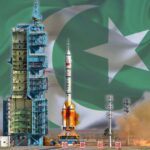
(n) Collaboration in Space and Upper Atmosphere Research Commission: Implementation of the Framework Agreement between Pakistan Space and Upper Atmosphere Research Commission (Suparco) and China National Space Administration (CNSA) on Deepening Cooperation in Space Science and Technology is strong stressed. The Chinese side is ready to help Pakistan enhance its capacities in science, technology and management.
(o) Renewal of five year development programme: Pakistan and China decided to renew the five-year development programme on trade and economic co-operation. The two sides expressed satisfaction with the 14th meeting of the China-Pakistan Joint Economic Commission and the Business Cooperation Summit, and instructed related departments to implement the decisions of the Joint Economic Commission to strengthen China-Pakistan economic and trade cooperation.
(p) Development of the China-Pakistan Free Trade Area: Both the countries pledged to work for continuous and all-round progress in the development of the China-Pakistan Free Trade Area, and decided to establish the China-Pakistan Entrepreneurs Forum to strengthen exchanges between their business communities. Pakistan decided to establish a Special Economic Zone for Chinese Businesses to attract more Chinese investment in Pakistan.
(q) Trans-border economic zones: Promotion of common development and prosperity in the border areas. Exploration the possibility of establishing trans-border economic zones and take steps to enhance co-operation in border management.
(r) Military and security cooperation: Bilateral cooperation in the fields of the military and security will be further strengthened in the light of the Treaty of Friendship, Cooperation and Good neighborly Relations between the People’s Republic of China and the Islamic Republic of Pakistan signed in 2005.
(s) Defence production & joint exercises: Training of the personnel, joint exercises, training and cooperation for national defence, science and technology, and collaboration in defence production. The two sides also agreed to give further impetus to maritime security co-operation.
(t) Promotion of cultural and sport relations: Further expansion of cultural, sporting and people-to-people interactions in a comprehensive manner, and engage in broad contacts between universities, think tanks, academic institutions, mass media, and film and television industries.
(u) Cultural centers: Establishment of cultural centres in each other’s country, maintain and expand step by step the one hundred youth exchange programme and enhance cooperation in young officials training, exchanges between young entrepreneurs and young volunteer services.
(v) Grant of different scholar-ships:
(w) Medical health facilities: Provision of medical health facilities especially free surgical treatment for 1000 Pakistani cataract patients within two years. The two sides agreed to open new air routes and increase flights.
(x) Mutual cooperation on the important issues of terrorism, separatism and extremism.
(y) Collaborations on important regional issues: Strengthening of communication and coordination in regional affairs, on hotspot issues such as the issue of Afghanistan and regional cooperation.
(z) Support political stability in Afghanistan: Support for the unity and territorial integrity of Afghanistan, the efforts of the Afghan government to advance peace, reconstruction and national reconciliation based on the fundamental interest of its country and people, and expressed hope to see a peaceful, stable and independent Afghanistan that enjoys development and good neighbourliness.
(aa) Solidarity with developing countries: Stronger solidarity and cooperation among developing countries, to upholding their rights and interests in the process of glob-alisation, and to making sustained efforts to achieve the United Nations Millennium Development Goals.
(bb) Climate change & food security: Step up coordination and cooperation on major international issues such as climate change, food and energy security and UN reform.
| Hydropower capacity (2008-09) | |
| Province | Capacity |
| NWFP | 3767 MW |
| Punjab | 1698 MW |
| AJK | 1036 MW |
| Northern Areas | 94 MW |
| WAPDA (December 2008). | |
| Thermal power generation capacity (2008-09) | |
| Organizations | Capacity |
| WAPDA | 4900 MW |
| KESC | 1756 MW |
| IPPs | 5859 MW |
| Nuclear power generation plants | 462 MW |
| WAPDA (December 2008). | |
- Energy cooperation
Pakistan is suffering from an acute power shortage. It is expected to go up from the present 20,000 megawatts to more than 160,000 megawatts by the year 2030. China-Pakistan energy cooperation started in 1983. Now, nuclear power and wind power are are also included. Many Chinese companies such as Harbin Power Engineering Company Ltd., Dongfang Electric Corp., CWE, Sinohydro Corp., Zhongyuan Engineering Group, Gezhouba Group, CMEC, and CMC are busy in Pakistan. These private companies are engaged with 40 projects amounting $5 billion of hydropower, thermal power, nuclear power, and electricity transmission and transformation. Chashma Nuclear Power Plant II and the Neelum-Jhelum Hydropower Station and the Sardhi wind power project are the prime examples of Pak-China energy cooperation. China, being a helpful ally, has an edge over other countries to invest in the country’s ailing energy sector which would be win-win position for both the countries. Moreover, Pakistan has 185 billion tons of coal reserves and any Chinese investment will be more than appreciable. - Nuclear energy cooperation
Keeping in view the recent emerging geo-political and geo-strategic trends in the region especially after the US-India nuclear alliance the government of Pakistan requested to further strengthening of peaceful civil nuclear cooperation with China. Pakistan-China nuclear energy cooperation is completely peaceful and in line with obligations of international non-proliferation and the safeguard and supervision of the IAEA. The Chinese premier reaffirmed to Pakistanis that China would continue to cooperate with Pakistan for peaceful use of nuclear energy and help it exploit power through renewable means. China has also agreed to assist the country in the construction of Bhasha-Diamir multipurpose dam.
A project to generate 2,300MW of electricity through wind turbines and solar panels has turned out to be the most important agreement reached with China during the visit of Wen Jiabao. The project would involve an investment of $6.5 billion and wind power projects of 1,000MW each would be set up in Punjab and Sindh. In addition, a 200MW solar power project would be set up in Punjab and another of 100MW in Sindh. China should also help exploit the rich natural resources of Pakistan, which will better the national economy and provide ample job opportunities. - Military cooperation
China and Pakistan have established trustworthy and time-tested partnership in high-tech defense production. China has provided military assistance to Pakistan whenever it needed it the most. It encouraged self-reliance and indigenization of military supplies and transfer of technologies to Pakistan. This included supply of spare parts, setting up local overhauling facilities, license production and joint ventures.
Military cooperation is an important component of China-Pakistan strategic partnership. In recent years, two militaries have conducted all-dimensional and multi-level exchanges and cooperation in defence consultation, military personnel training, anti-terrorism exercises and etc.
| Importance of free trade agreement | |
| Pakistan | China |
| Customs duty on the import of 2,423 items from China would be eliminated in the next three years, with a first reduction of 35.6 percent. Pakistan would bring down its import duty to 0 percent to 5 percent on the import of 1,338 in the next three years. Customs duty would be reduced on the import of 157 items by 50 percent in the next five years on the basis of Margin of Preference. And customs duty would be reduced by 20 percent on the import of 1,768 items in the next five years on the basis of Margin of Preference. Pakistan would offer no concession on the import of 1,025 items from China | Eliminate import tariff on 2,681items in three years on imports from Pakistan. China will also reduce customs duty to 0% or 5 percent on the import of 2,604 items during the next five years. Import duty would also be reduced by 50 percent on the import of 604 items during the next five years on the basis of Margin of Preference. China would reduce import duty by 20 percent on the import of 529 items from Pakistan in the next five years on Margin of Preference. China would offer no concession on the import of 1,132 items from Pakistan. |
In the defence field, both the countries have cooperated successfully on Al-Khalid Tanks, JF-17 Fighters and F-22 Frigates and other important projects. The bilateral defence cooperation is aimed at improving national defence capacity and fighting against extremism, terrorism and separatism, contributing to peace and stability of the region and development and prosperity of the world at large.
It is predicted that Sino-Pakistan defence cooperation will provide regional strategic balance in the South East Asia.
- Economic alliance
China has become the second leading economic partner of Pakistan and Chinese entrepreneurs are heavily investing in the country. China mobile company has made an investment of $1.7 billion and provided employment to 7,000 people in Pakistan. The Chashma power plants, heavy mechanical and electrical complexes and Gwadar deep sea port are the prime examples of our strategic friendship.
Some issues regarding economic protectionism, tariffs, and resolution of balance of trade between the two countries would be beneficial for both the countries. Extended cooperation in mega infrastructure projects and establishing Pakistan-China Trade and Economic Cooperation Zones/Industrial Parks and Special Economic Zones would also increase trade volumes. - Bilateral trade
The bilateral trade between the two countries was $6.8 billion in 2008, which was higher by 30 per cent as compared to the previous year. Bilateral trade volume in the first five months of this year rose by 31 percent and Pakistan’s exports to China grew by 72 percent, as compared to the same period last year. Bilateral cooperation in such fields as energy, transportation, telecommunication and infrastructure continue to expand and deepen. It is expected that trade between Pakistan and China is likely to surge to $18 billion in the next 5 years. China has a $3.26 billion trade surplus with Pakistan. China is Pakistan’s second-largest source of imports and seventh-largest export market.
The balance of trade is heavily in favour of China but the Chinese prime minister promised to resolve this situation gradually. In this regard, both the countries signed a unilateral tariff concession on 268 items which would strengthen the country’s balance of payments and give impetus to economic development.
| Table-1 ($US million) | |||
| Year | Exports | Imports | Balance |
| 2001-01 | 228.63 | 575.37 | -346.74 |
| 2002-03 | 244.59 | 839.00 | -594.41 |
| 2003-04 | 288.259 | 1,153.514 | -865.25 |
| 2004-05 | 354.092 | 1,842.270 | -1488.18 |
| 2005-06 | 463.967 | 2,706.159 | -2242.20 |
| 2006-07 | 575.903 | 3,533.794 | -2957.89 |
| 2007-08 | 684.739 | 4691.813 | -4007.02 |
| Table-II: Major Pakistan’s exports (commodities) to China | |||||
| ($US million) | |||||
| Commodities | 2003-04 | 2004-05 | 2005-06 | 2006-07 | 2007-08 |
| Cotton yarn & woven fabrics | 157.358 | 206.767 | 213.133 | 379.219 | 352.867 |
| Organic chemicals | 33.427 | 8.487 | 37.718 | 19.911 | 24.71 |
| Leather & leather manufacturers | 15.08 | 14.55 | 28.132 | 31.639 | 39.27 |
| Ores, slag, ash | 3.641 | 9.909 | 25.615 | 22.092 | 27.42 |
| Fish and its products | 18.659 | 19.604 | 22.252 | 29.767 | 34.94 |
| Source: Federal board of statistics and WTO (2009). | |||||
| Table-Ill: Major Pakistan’s imports (commodities) China | |||||
| ($US million) | |||||
| Commodities | 2003-04 | 2004-05 | 2005-06 | 2006-07 | 2007-08 |
| Boiler machinery & appliances | 161.208 | 257.74 | 483.87 | 618.937 | 808.22 |
| Electrical appliances & parts | 114.668 | 171.332 | 327.49 | 449.72 | 587.25 |
| Organic chemicals | 62.03 | 77.838 | 104.672 | 128.508 | 167.81 |
| Petroleum products & oil | 6.47 | 22.96 | 66.83 | 97.596 | 127.428 |
| Misc. products | 44.458 | 74.50 | 81.773 | 75.735 | 98.89 |
| Source: Federal board of statistics and WTO (2009). | |||||
It is evident from table-I that there is no diversification in Pakistan’s exports to China which is indeed a major policy issue in order to enhance bilateral trade between the two countries. Currently, 70 per cent of Pakistan’s exports to China are cotton yarn and cotton fabric. Pakistan is also keen to promote its other products ranging from mangoes to footballs. Pakistan’s mangoes are the best in the world. All the chambers of commerce, Pakistan showed great excitement that new business ties Pakistan and China would provide win-win position to both the countries.
- Public-private sector collaboration
A 260 member Chinese delegation and 150 Pakistani business-men actively participated under public-private partnership. A MoU worth $6.5 billion was also signed between the Alternative Energy Development Board of Pakistan and China International Water and Electric Corporation for power generation through wind and solar energy. A framework agreement of $3.5 billion was signed between the National Transmission and Dispatch Company of Pakistan and China Development Bank along with Shenyang Transformer Company for up-gradation of transmission lines in Pakistan’s power sector. Moreover, a joint venture between Sindh government and Chinese private sector would be undertaken to improve irrigation system in the province to set up small dams on canals for power generation. The two countries agreed to conduct currency swaps, which will help to promote bilateral trade. The Trade Development Authority of Pakistan launched a web portal to link businessmen and traders of Pakistan and China by providing information on various trade issues. Chinese investment in Pakistan has increased across many sectors of the economy, including port development, roads, railways, mobile phones, communication technology, hydro and thermal power, mining, electronics, and nuclear energy. The number of Chinese companies in Pakistan is about 60, involved in 122 projects. - Major agreements signed
In the recently held Pak-China Business Cooperation Summit held in Islamabad, different agreements and MoUs of $5 billion were signed between the private sectors of the two countries. It was decided to extend cooperation in fishing, financial sector, machinery import, textile, chemical, services, mining, live-stock, yarn import, medical equipment, etc. The SBP has granted licence to Industrial and Commercial Bank of China (ICBC) to commence its operations in Pakistan. ICBC is China’s largest bank with a market capitalisation of $300 billion.
The Securities and Exchange Commission of Pakistan and China Securities Regulatory Commission have also signed a MoU to exchange information on investment companies, brokerage houses, takeovers/mergers of listed companies and discovery of insider dealings, market manipulation, other deceptive marketing practices and supervision, as well as monitoring of stock exchanges. - Investment incentives for Chinese businessmen
The country offers investment friendly policies for Chinese businessmen to invest in the economy’s different sectors. Pakistan is located in the heart of Asia. It can act as a medium connecting western China to the Arabian Sea, South Asia and West Asia. It is in the process of creating a national trade corridor connecting the north and south of the country that would connect China through the Karakoram Highway. Furthermore, besides the free trade agreement and joint five year economic programme, both nations are now jointly moving to establish closer financial and banking cooperation.
Pakistan has announced special economic incentives for Chinese investors including duty-free import of plant and machinery, exemption from sales tax and income tax. The Pakistan-China Joint Investment Company is operational in Pakistan. Both the countries also agreed to establish trans-border economic zones in the other country for investment promotion. In this regard, the Ministry of Industries and Production offered the Chinese government to establish electric cars’ manufacturing plants in export processing zones of Karachi or Gwadar.
Pakistan has abundant natural resources and offers extensive opportunities for oil and gas exploration. Due to widespread housing shortage in the country, there is a huge demand for housing and construction which will not only require further investments in the cement and steel industry, but also other related industries. Therefore, China being a trustworthy friend has unlimited opportunities of joint ventures and investments in Pakistan.
Chinese strategic contributions: A Comparative study
Pak-China friendship as a pine tree that remains evergreen despite the harshest of winters and it has stood the test of time like a strong horse.
(Chinese Premier Wen Jiabao)
China being a strategic ally supported Pakistan in the fields of peaceful civil nuclear power generation, defence production, heavy industry and mega infrastructural projects. China has also made valuable contribution to Pakistan’s economic development on regular basis. Gwadar Deep Seaport, Karakoram Highway, Thar Coal Mining, Power Generation Projects, Upgrading of Pakistan Railways and the last but not the least Upgrading of Pakistan’s Defence capabilities are the prime examples of Pak-China strategic friendship. In terms of foreign direct investment, Chinese’s FDI in Pakistan had increased by more than 6 times.
| Pakistan’s moral and political support |
| Historical Perspectives |
| Membership to UN General Assembly, relations between US and China, Taiwan, Tibet and Sinkiang, one China policy, human rights, and the last but not the least recent noble prize controversy |
| FDI from China | |
| Sectors | (10,000 USD) |
| Metal Products | 5,214 |
| Transport Equipment (Motorcycles & automobiles) | 151,068 |
| Construction | 189,000 |
| Communications | 22,287 |
| Others | 76,194 |
| Total | 443,763 |
| Source: Pakistan Board of Investment. | |
| Pakistan’s investment in China (10,000 USD) | ||||
| 2003 | 2004 | By 2004 | ||
| Number of projects | 19 | 21 | 96 | |
| Contractual value | 1949 | 3210 | 7148 | |
| Actual investment | 343 | 454 | 1700 | |
| China’s investment in Pakistan (10,000 USD) | ||||
| 2003 | 2004 | By 2004 | ||
| Number of projects | 4 | 3 | 34 | |
| Contractual value | 930 | 7344 | 10411 | |
| Source: Chinese Feasibility Study on Free Trade Agreement (March 15, 2005). | ||||
New Chinese model of economic growth
(a) Role of the state, concentrates much more on increasing domestic demand for the products of the expanding industrial base.
(b) Relies on building trading ties with the countries in its immediate neighborhood.
(c) Paradigm shift in structure of the economy.
(d) Mega projects of urbanization in order to discourage migration process
(e) Exports-oriented policies and mechanism
(f) Equitable exchange rate management
(g) High levels of domestic savings invested in United States Treasuries.
(h) Active participation of private sector
(i) Renewal of agricultural sector especially in western provinces such as Xinjiang and Gansu.
Pakistan’s strategy
It is suggested that Pakistan should strengthen agriculture, seafood, basic raw materials, coal and marble etc. It must set up joint ventures with Chinese private companies with buy-back arrangements. It is expected that our labours can learn Chinese technology, increase productivity as well increase yield per acre, and export backed arrangements with China will help us to further increase its exports to China.
Suggestions/ Recommendations
It is strongly recommended that constant declining of private Chinese companies presence in Pakistan should be reduced for further strengthening of bilateral trade. There should be strong and comprehensive network of liaison offices in both the countries. Absence of complete financial and banking mechanism must be geared up because without proper financial facilitation, the true potential of Pakistan-China trade relation cannot be realized. Moreover, language barriers ought to be gradually minimized.
On part of Pakistan deteriorating law and order situation must be rectified for the attraction of Chinese investments in Northern Areas of Pakistan. Joint effort is required to cope with the rampant smuggling. More focus should be on joint ventures in energy production, textiles, agriculture, banking and finance, science and technology and technology transfer.
| Potential future sectors |
| Details of Sectors |
| Renewable energy, light industry, automotive parts, components of manufacturing industry, electric appliances, plate work, spray coating, injection mould, packaging, printing, hardware accessories, cable/wire harness, logistics support, R&D and standards, engine, rubber tire, auto engineering plastics, motorcycle, trucks, CNG buses, CNG equipment for gas stations. Cotton growing and processing technology, upgrading textile equipment and technology, joint production and investment in the textile sector, chemical fibers, tourism management, professional tour guide training and tour information, urban rail & road transport systems; urban property development and construction; urban water supply, water and waste treatment., development of copper and gold mine resources, refining facilities, downstream industries, development of ferrous metal, decorative stones, marble and granite, development of lead, zinc and other mineral resources and manufacturing of mining machinery. |
| Expected cooperation |
| Sectors |
| Defence production, Reko-Diq Copper Mining project in Balochistan, energy generation, technology development, industrial base and software park building and communications infrastructure to promote ICT sector, including e-government, e-commerce and e-enterprise. |
Concluding Remarks
The destiny of both nations is inextricably which has geo-political and geo-strategic dimensions too. Pakistan and China have solid bilateral ties that will provide ample benefits to both the nations, most particularly Pakistan, to boosting trade and investment. The time-tested relations also bring hopes for increasing collaboration in energy and defence sectors. The country should rectify its pivotal issues of deteriorating law and order, good governance and continuity of favourable business and investment policies for further strengthening their strategic partnership.