



Introduction
Experience has no substitute. My active service experience is replete with many memorable events. History of 70 years (I am 90 years old) remains vivid in my thoughts, as fresh as a daisy, and some I can narrate some events as if the whole episode is happening before my eyes now. I am mentioning below briefly in the subsequent paragraphs some events pertaining to some months of 1944-45.
Result – Battle of KOHIMA and IMPHAL
In the bitterly contested and long drawn out battle of KOHIMA and IMPHAL, during June – August 1944, the Japanese had suffered a most disastrous defeat and they were thoroughly out manoeuvered and outfought on the battle field, having to suffer terrible losses in men and equipment. Enemy began retreat through the jungle covered hills at the height of the monsoon but was hard pressed by our advancing formations. Even during the prevailing treacherous weather the principle of vigorous pursuit continued unabated. The retreating enemy remnant was disorganized, diseased and almost starving. The Japanese had launched a ground offensive (ARAKAN, TIDDAM, UKHRUL, IMPHAL and KOHIMA) but it fizzled out because they had grossly neglected the principle of Administration and underestimated the Allied support of air power. Also their senior commanders rigidly followed the plans and displayed no flexibility for changing their plans as demanded by the ground situation.
My Duty as Liaison Officer
On 23 June 1944, 33 Brigade of 7 Division took over the pursuit operation against the Japanese on UKHRUL road. The area was to be cleared up to IMPHAL.
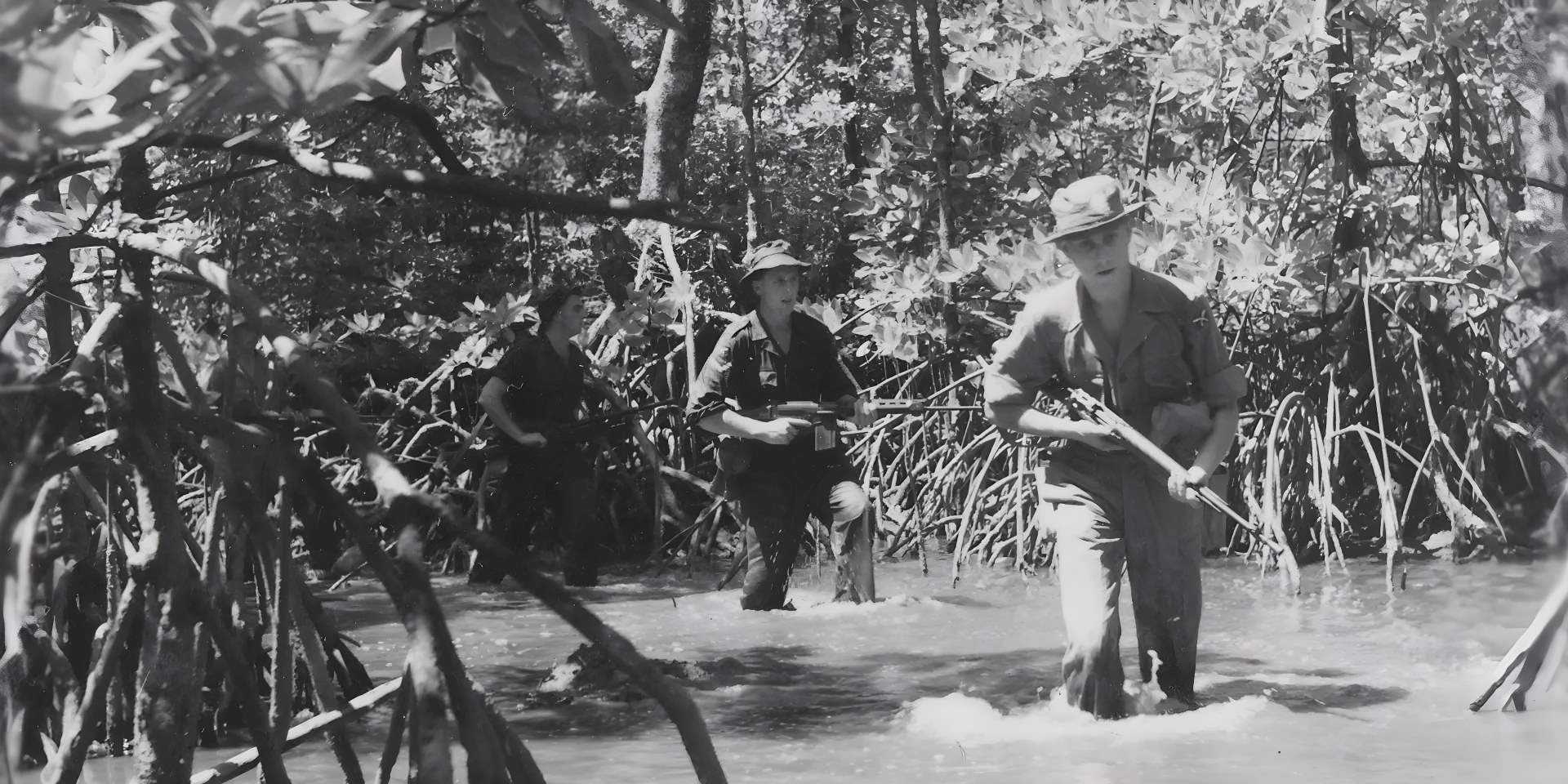
I was attached with HQs 33 Brigade (Brig LOFTUS-TOTTENHAM, later GOC 7 Division in Pakistan) CBE DSO as Liaison Officer for the UKHRUL operation. The monsoon had broken and storms of rain and cloud lashed the mountain tops, flood water making the rivers and nullah in the narrow valleys roar in their rocky beds. As the troops advanced and cleared forward areas, dead bodies of Japanese and their pack animals were seen on either side of the road. The decomposed bodies were spreading unbearable stench. Equipment lay everywhere, water bottles, gas masks, rifles and ammunition – all mute testimony to the power of the advancing troops. The track had been used by the retreating Japanese. NAGA tribesmen started bringing in Japanese prisoners, too sick to move, filthy skeletons, weeping and gibbering in their madness. Under the weight of Japanese light lorries the road had collapsed in places and on either side lay broken bodies of lorries, their drivers dead at the wheel or lying in the mud beside their vehicles. In the foot-deep mud of the track were the dead bodies of the Japanese and carcasses of animals. A field gun was found buried, a tank stuck in the mud, its crew dead inside it. All along the over one hundred jungle paths the sick and battered remnants of the would-be conquerors of India struggled painfully southwards, dying in the thousands. These horror scenes melted even the most obdurate hearts.
After four days of duty with the HQs 33 Brigade I was sent back to the read HQs, escorting about a dozen battle casualties riding on the mules.

New Offensive Plan
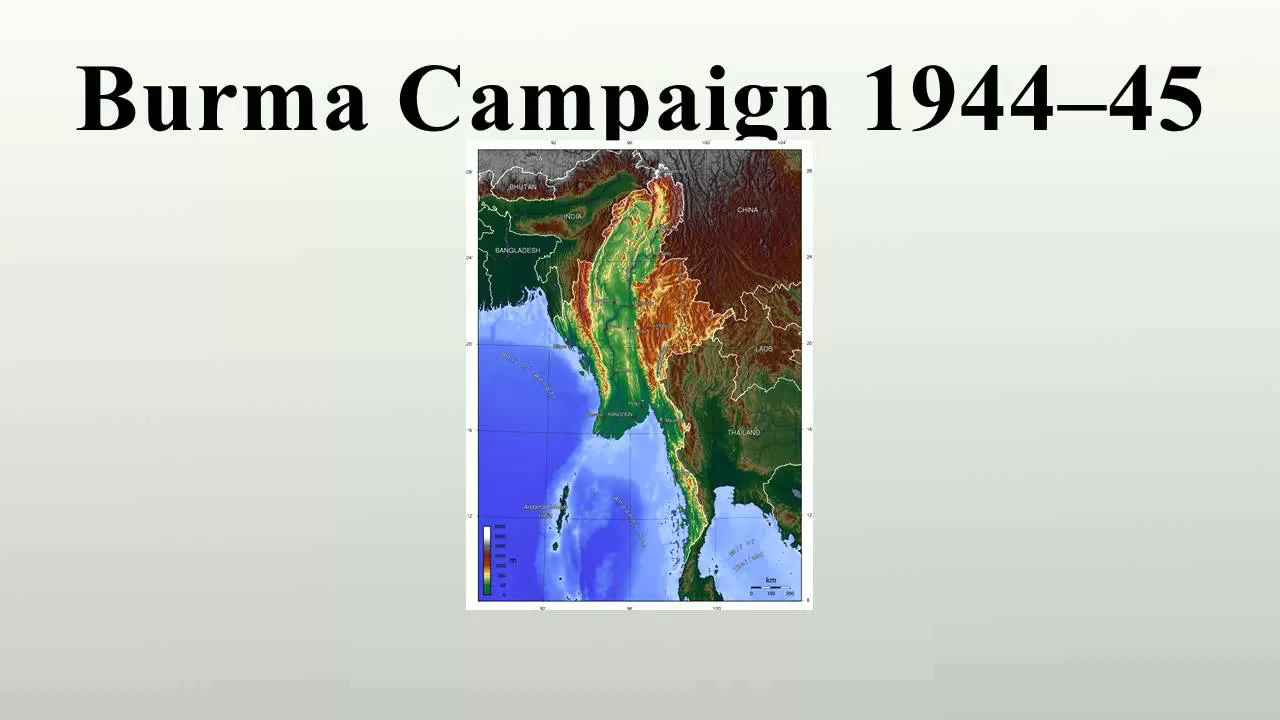
To finish the war sooner a new offensive role was assigned to 4 Corps (Commander General MESSERVY), moved secretly down the KABAW Valley (also called the Valley of Death) for over 320 miles for crossing the mighty river IRRAWADY for striking at MEIKTILA with a mechanized, armoured and partially air-borne column. MEIKTILA military base was the strategic and nodal point of all Japanese communication to their 15 army and their chief air field center. It was safely located over 80 miles in the south from the IRRIWADY.
During August 194 7th Division was concentrated for rest in the cool climate of KOHIMA, the hills around were covered with jungle trees and occasional drizzle and the enchanting beauty of floating clouds forced us to admire the beauty of nature. Leave was opened and training of specialists and minor tactics continued. In the evening games (football, volleyball and hockey) were played.
Early in December 1944, 7th Division was ordered to move secretly for the new destination on the way to the river IRRAWADY concentrating for the crossing of the river and establishing a bridgehead for the main force assigned the task of capturing MEIKTILA. My article, ‘The Master Stroke of Gen Slim, BURMA Campaign – 1945’ published in the March 2007 issue of Defence Journal has adequately covered the entire operation of 4 Corps.
Move with Animal Transport Column
To avoid conjunction in KOHIMA-IMPHAL road it was decided to move the mules of various units of 7 Division and the supporting AT Company from KOHIMA, via UKHRUL to IMPHAL. The main road was required to remain clear for vehicular traffic. Four officers, including myself, were present in the mule column, consisting of about 700 mules and over a dozen horses. The distance from KOHIMA via UKHRUL to IMPHAL over the jungle track was about 120 miles and it was to be covered in four days. The jungle track had been covered into fair weather narrow road by the Japanese.
The AT column was commanded by the OCAT Company. He it is relevant to mention that the mule has been mankind’s companion from time immemorial and it has been working as a load carrier and for ploughing and pulling carts. It is very tough and sure footed and can move easily with a full load on its back over difficult terrain, climb steep gradient and even wade through knee deep water. In the BURMA Campaign, the mule was of immense help, carried supplies, ammunition, water buckets and even battle casualties. An army marches on its belly – this proverb proved very true when applied to the performance of the mule – an asset of incomparable value.
Enroute there were some NAGA villages where the villagers would come out to sell eggs, chickens and vegetables. Most of the men and even children were seen wearing Japanese boots and uniforms which they had removed from the dead bodies of Japanese soldiers. We came to know that the Japanese had forcibly abducted two young NAGA women from a village whereupon some NAGA men, bent upon exacting revenge, had the courage to ambush some Japanese soldiers and killed them with their deadly sharp spears. Then the villagers moved far away into the thick jungle area where the Japanese patrol had failed to reach. The story of their daring action was narrated by the headman of the village in his broken Hindustani. The NAGA tribesmen were aware that the Japanese were being defeated so they would raid their supply centers. A NAGA villager produced a sack full of Japanese currency which he burned for preparing tea; over a million was turned into ashes.
We camped outside UKHRUL, the villagers were celebrating the marriage of a young couple and we watched the famous MANIPURI classical dance performed by young women. We paid a few silver coins to the young couple and also left over food from the cook house was presented to the villagers.

Lieut KARAM JEET SINGH of 4/15 Punjab (now 12 Punjab – raised as 20 Punjab in 1857 at Ferozepore) of 33 Brigade, part of 7 Division and I had become friends. We both would gallop our horses on smooth surface and clear road to enjoy horse riding. On talking about his future and family affairs he would often become serious and sad because we were fighting against a cunning, merciless and treacherous enemy and often advanced under intense small arms firing and shelling of the enemy. We were sure ‘every bullet has its billet.’ It was appointed beforehand by fate what soldiers would fall in battle, life has an appointed span.
On the 4th day of March the column reached IMPHAL where vehicle were arranged to load the mules and dispatch them to their respective units. I and KARAMJEET SINGH embraced and parted, wishing each good luck and good wishes. But we never met again.
Gist of Salient Events
For continuation of events in chronological order a gist of salient happenings pertaining to the move of 4 Corps (formations) and crossing of the IRRAWADY is appended below:
1) 4 Corps consisted of 7 Divisions + 17 Division (mechanized and airborne) + 255 Tank Brigade (Shermans) + Lushai Brigade + 28 East African Brigade.
2) 4 Corps was to capture PAKLOKU, establish a bridgehead over the IRRAWADY, advance with speed with a mechanized and airborne column, strike at MEIKTILA.
3) Reserve – 5 Division (mechanized and airborne) to be used in MEIKTILA battle.
4) To cancel the movement of 4 Corps via KALEWA, KARI, GANGAW, TILIN, PAUK, PAKKOKU and eventually to PAGAN, a plan was evolved to convince the enemy high command that 4 Corps movement in the GANGAW Valley was a minor force.
5) A fake 4 Corps HQs was substituted for the real one. Indiscreet conversation in clear between staff officers was carried out to ‘leak’ out information about the presence of 4 Corps on the left of 33 Corps (MANDLAY Sector).
6) On 12 January 1945, LUSHAI Brigade captured GANGAW after one of the most strenuous fighting. Air strike had provided most effective close support.
7) 7 Division commenced advance in a flanking movement through the hills and drove the enemy from PAUK. Right flank of 4 Corps was protected by 28 East African Brigade. 33 Brigade was assigned the task to move to PAKKOKU, whereas 114 Brigade advanced on the main axis.
8) 89 Brigade on all pack basis made a wide out-flanking move between the KALE Valley and the river CHINDWIN. 7/2 Punjab (the Recce battalion – my unit) moved further to the left under 4 Corps orders down the west bank of the river CHINDWIN. All the units received supplies from airdrops. I led many patrols and ambushed withdrawing enemy parties. Lots of abandoned arms and equipment were dumped at safer places. PAKKOKU air strip was captured by me with a couple of platoons. As a part of the deception plan for a fake crossing A Company 7/2 Punjab (my company) despite 4 to 5 feet depth waded across the IRRAWADY opposite PAKKOKU, where the river CHINDWIN joined the IRRIWADY and created an island about 2 miles x 8 miles. Under cover of artillery shelling, attacked a village, but after suffering casualties the company established defensive locality on higher ground on the island. The Commanding officer jokingly informed me on wireless that I had been appointed Governor of the island, also called PAKKOKU Island because I was commanding a force of 50 soldiers.
9) The crossing of the IRRIWADY by 7 Division began at NYAUNGA on 13 February. Here the river was 1500 yards wide but it had to be crossed diagonally which entailed for some troops 2000 yards of water.
10) According to General SLIM the 7 Division crossing was an outstanding example of how such an operation should be done.
11) On 19 February a mechanized and armoured column (17 Division and a tank brigade) had pushed out towards MEIKTILA. After the capture of THABUTKON airfield on 27 February the fly in of the airborne brigade of 17 Division commenced. On 28 February the assault on MEIKTILA began.
Two Gallant Action at MYINGYAN by 4/15Punjab (now 12 Punjab)
1) The Japanese were holding strong positions on the north bank of the SINDEWA Chaung (nullah) covering the routes into MYINGYAN, across the IRRIWADY. On the night of 2nd/3rd March, in order to pin down the enemy, two companies of 4/15 Punjab carried out a wide encircling move to establish road block to the rear of the enemy positions on the KAMYE-MYINGYAN road. Nk GIAN SINGH was the leading Section Commander who, firing his tommy gun from the hip, under cover of light machine fire, rushed on the enemy, got wounded but kept on firing on the enemy killing many and enabled the companies to capture the positions. Still firing and covering own tanks he fell down and breathed his last. His gallantry earned him the Victoria Cross, the highest gallantry award in the British and Indian Army.
2) On 17 March 4/15 Punjab attacked the southern approach to the town of MYINGYAN which was held in strength. But the attack failed. The next day (18 March) it was resumed on the cotton mill area by the Company of Lieut KARAMJEET SINGH Judge, tanks were in support. From noon until 1500 hours he dominated the entire battlefield by his numerous and successive acts of superb gallantry which earned him a posthumous Victoria Cross. Escape across the river was blocked by a detachment of my battalion under my command.
Origin of Victoria Cross Medal
The Victoria Cross is the highest gallantry award in the British Army but was awarded to the soldiers of the British Indian Army also. The medal was minted from the copper of the captured Russian copper guns during the CRIMEAN War – 854-56 (the battle of BALACLAVA, 25 October 1854 – Charge of the Light Brigade under Lord CARDIGAN, strength 607 horsemen, on the Russian guns at 1110 hours and captured the guns at 1135 hours but lost 407 horsemen).
Cannon to right of them
Cannon to left of them
Cannon in front of them
Into the Valley of Death
Rode the Six Hundred
Bibliography
The Campaign of 14th Army 1943-45, Field Marshal Slim
Defeat into Victory, Field Marshal Slim
Golden Arrow – the Story of the 7th Indian Division 1939-45, Brig Roberts
Report to the Combined Chiefs of Staff by the Supreme Commander SEA 1943-1945, Vice Admiral Mountbatten.
The Golden Galley – The Story of the 2nd Punjab Regiment: 1761-1947, Lt Col Geoffrey Betham.