


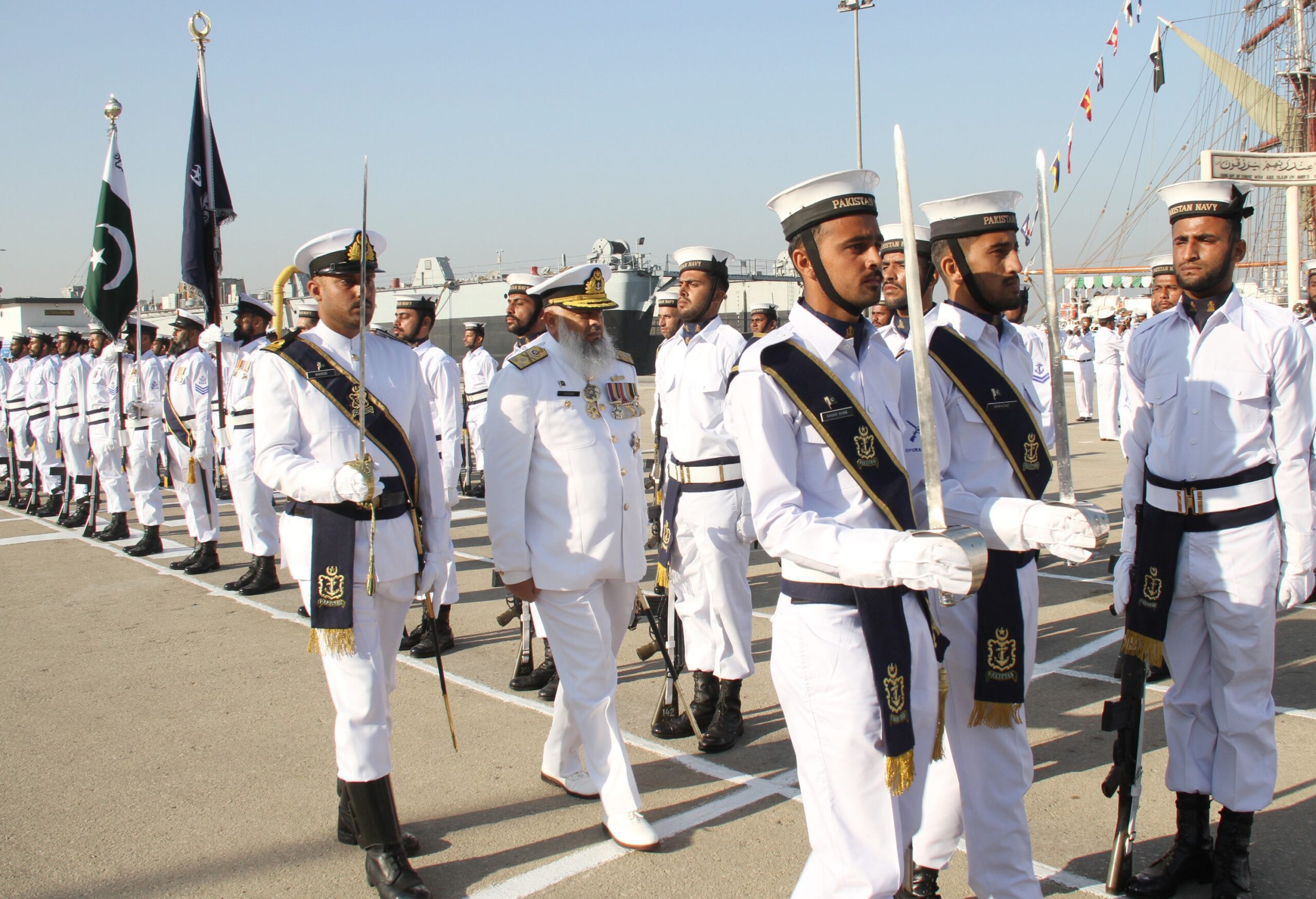
The Nation is well aware of the role of Pakistan Navy as the custodian of the maritime fronts / borders. The glorious tales of bravery during war as well as peacetime had established the fact that our navy will stand valiant with the nation in times of all tests and trials. However, it is not well known that, in addition to filling its traditional maritime security role, Pakistan Navy has also been engaged in the development of maritime sector of Pakistan since independence. Assisting the government and civil departments, the Navy has always provided valuable advice and initiative for growth in all the maritime sectors, including port development, shipbuilding, extension of national maritime boundaries, fisheries management, search and rescue at sea, training of mariners, as well as for the socio-economic rehabilitation of the coastal community. Apart from the technical support and expertise, the role of the navy in developing regulatory framework/guidelines for this much-neglected sector is commendable, which needs to be highlighted.
The maritime sector is crucial for our sustenance and progress of the country. Almost 95% of our mercantile trade (estimated 62.414 Million tonnes in FY-2012/13) transits through sea. In Pakistan, there is a tendency for the maritime sector to be viewed by the public only as a part of the ports or shipping. This perspective has contributed to a lack of maritime tradition and sound maritime policies. The first step towards realizing the maritime potential for any state is to have an all-inclusive maritime policy/strategy which can transform the maritime aspirations of the nation. To fulfil this need the first National Maritime Policy was developed by Pakistan Navy and Pakistan Maritime Security Agency (PMSA) in the year 2002 and was adopted by the government in the same year. The purpose was to set out guidelines for an overarching vision for the national maritime clusters. However, keeping in view the changing global scenario and emerging trends, dedicated efforts to revise National Maritime Policy and strategy were commenced in 2009. The idea was to make it more dynamic and purposeful according to the emerging trends and contemporary global needs. After seeking inputs from all concerned, the revised policy has been proposed to the government for adoption. The revised document is aimed at furnishing a framework for the sustained growth of Pakistan’s maritime sector in an integrated, secure and conducive environment. In line with the 18th amendment, the revised national maritime policy and strategy will allow provinces to establish their own policies under an integrated framework for the nation’s sustainable growth and development.
Apart from National Maritime Policy, the Navy is also engaged in developing a much needed policy document i.e. Maritime Doctrine of Pakistan. It will be utilized as a beacon for developing maritime security policies and strategies while safeguarding our national interests.
The Pakistan Navy has always kept coastal environmental protection and marine pollution very high on its agenda. After the TASMAN SPIRIT oil spill, realizing the need to protect our harbours and coast from oil spill incidents and all types of marine disasters, Pakistan Navy formulated a National Marine Disaster Contingency Plan (NMDCP) in 2007. The plan was adopted by the government in 2008, wherein the role and the actions to be taken by all national stakeholders in case of a marine disaster are clearly articulated. In order to ensure efficient response to counter marine disasters, PN and Pakistan Maritime Security Agency (PMSA) regularly hold tabletop and practical exercises with various agencies and actors involved.
The contribution of the maritime sector to the national economy, social development and progress of Pakistan is indispensable. Therefore, the management and regulation of the maritime sector should remain a matter of concern for all stakeholders. In the light of this reality and growing economic competition at regional and global level, there is a strong need to enhance co-operation among all concerned institutions. In this regard, the Pakistan Navy has taken the lead to establish an inter-agency coordination body named “Joint Maritime Information & Co-ordination Centre (JMICC)” in 2013 to establish a cooperative mechanism at the national level. All national maritime stakeholders are members of JMICC. This coordinated effort will surely create new conditions for innovation and will be helpful to formulate a consolidated approach towards the issues and challenges of security being faced by nation’s maritime arena.
The contribution of the Pakistan Navy in the overall progress of the maritime field in general and in the policy developments in particular, is praiseworthy. Nevertheless, the dissemination of maritime policy guidelines and frameworks, howsoever realistic or productive, may not yield the desired results. If we want to have a dynamic maritime sector, we have to make our institutions more committed, co-operative and accountable towards their responsibilities. To become a true maritime nation, greater responsibility lies on the shoulders of all stakeholders to implement/ follow these policies in their true letter and spirit.