
As we enter the new phase of the war against non-state actors, there is a growing anxiety that many of the Arab regimes may not be able retain the territorial shape they acquired at the end of WWII. Especially when the first stage of this campaign, which was primarily premised on the use of kinetic tactics, failed to produce a clear victor. The conflicting pressures to provide security and economic opportunities for their citizens, fight extremists, and at the same time maintain credibility on the Arab street, are humongous challenges to manage even in normal times.
While the Arabs have their own demons to sort out, the West led by the US, are in the process of their own deep thinking and introspection. This involves an overhaul of its interests and priorities, including the risks and the best strategy to achieve the reexamined policy goals. Then there is the issue of unprecedented resource constraint, accompanied by an aspiration to uphold American exceptionalism. Top American leadership has made it clear that they do not want to be over occupied with fighting the non-state actors when there are other state strategic adversaries to worry about.
Nonetheless, hidden underneath the struggle against Islamic extremists is a tussle of the emerging and established powers. The present situation of Iraq and Syria, and even Afghanistan for that matter, are perfect illustrations of this multidimensional and multiregional conflict. At this stage, campaign against extremism cannot be fully understood independent of the recent Russian assertiveness and the tensions in the South China Sea.
The new world order will likely emerge from the ashes of the war against terror. The powers that are rushing in to fight Islamic State (IS) and Al Qaeda affiliated groups are not only worried about protecting their interests and territorial integrity, but also to influence and shape what is likely to emerge.
American Exceptionalism
President Obama’s recent speeches at the UN, including the one at the West Point in May, and the National Defense University in May last year, present a reflection of an going deliberation on understanding the present global change, its major underpinnings, and the appropriate response. Obviously, the more one grasps the different facets of this flux, the better one can shape what is emerging. The leading think tanks and centers of western strategic thinking are facilitating this dialog.
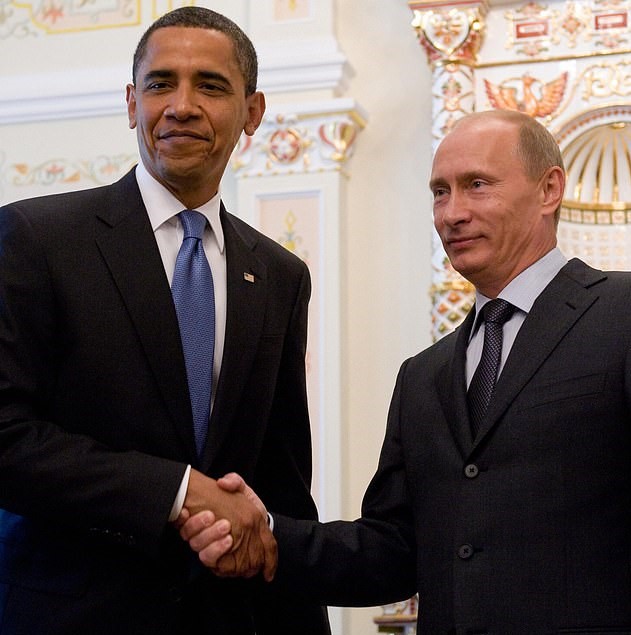
Consider this exchange on the topic of ‘exceptionalism’ between Putin and Obama last year. Countering Putin’s article in The New York Times on September 11, 2013, Obama stated in his speech at the UN General Assembly last year,
“But I believe America is exceptional. In part because we have shown a willingness through the sacrifice of blood and treasure to stand up not only for our own narrow self interest, but for the interest of all.”
Putin had written in his piece:
“It is extremely dangerous to encourage people to see themselves as exceptional, whatever the motivation. There are big countries and small countries, rich and poor, those with long democratic traditions and those still finding their way to democracy. Their policies differ, too. We are all different, but when we ask for the Lord’s blessings, we must not forget that God created us equal.”
The debate on recalibrating American interests and policy has revolved around both tactical and strategic considerations. Former US secretary of state Henry Kissinger is one of the leading participants of this strategic thinking. In his new book ‘World Order’ Kissinger has attempted to lay down an interesting framework for American involvement abroad in view of the present constraints. In an article that appeared on The Wall Street Journal on August 29, Kissinger suggested:
“For the U.S., this will require thinking on two seemingly contradictory levels. The celebration of universal principles needs to be paired with recognition of the reality of other regions’ histories, cultures and views of their security. Even as the lessons of challenging decades are examined, the affirmation of America’s exceptional nature must be sustained. History offers no respite to countries that set aside their sense of identity in favor of a seemingly less arduous course. But nor does it assure success for the most elevated convictions in the absence of a comprehensive geopolitical strategy.”
The Change and Uncertainty
One the starkest dilemma being face by the policy-making circles is how to make one when so much is uncertain and when so much is changing rapidly, and where most of the energy is spent on managing change and the accompanied public anxiety on a daily basis, and where there is a relentless pressure of election cycles and politicking. Former US sectary of state Madeleine Albright conceptualized this as a distinction between being objective or subjective. If the situation so fluid; how can anyone be objective about it.
Many strategic thinkers are pondering over if the goal of attaining stability as even attainable in these uncertain times. Some have suggested that the constant flux and the accompanied unpredictability is the new normal.
There is a growing alarm that the present governance and security structures, institutions, and policies, are either unfit or are moving too slowly to deal with the impediments. Henry Kissinger stated at the inception of Asia Society’s Policy Institute (ASPI) in April that the world needs fresh conceptual frameworks to identify underlying problems, analyze them, and develop solutions. He added, if there are no mechanisms in place to identify emerging risks, understanding and solving them would become even more difficult.
Associated with this concern is a discussion about the availability of conceptual contexts to understand the intricate world affairs and where they may be heading. For example, Kissinger highlighted that there is a difference of opinion on what triggered Arab Spring and regarding its future direction.
The nature of power is also changing as well. It has become more dispersed and does not get delivered solely from the barrel of the gun. Widely available communication tools have enabled and empowered individuals while creating new sources of influence. Although the application of hard power has persisted, the soft power is increasingly at play as well. With the rise of non-state actors and technological advancements, a related concern has emerged about when and against whom should a state apply different tools of its economic, political, soft, and military power, and what does that imply for international law and state sovereignty.

The Interests and Strategy
In last years UN address, President Obama spelled out the core American interests at stake in the Middle East: the free flow of energy; dismantling the terrorist networks; building the capacity of its partners to fight the extremists; and preventing the development and use of weapons of mass destruction.
These interests, however, were laid out before the events of Ukraine had taken place, which have forced NATO to recalibrate its global posture and has meanwhile jettisoned the US-Russia reset. However, even before Ukraine, Russia and China have usually opposed foreign intervention in places like Syria and Libya in the UN Security Council, despite sharing concern with the West towards fighting extremists.
Speaking at the Washington Institute, Deputy Secretary of State William Burn stated on September 29 that protecting and shaping a moderate order in the Middle East is a policy goal. When asked about the role the Russians are playing on P5+1 negotiations with Iran, Secretary Burn commented that Russians have pursued a constructive role in these talks and have conveyed that a nuclear Iran is not in its interest either. Similarly, he hinted that perhaps the greatest limitation to the leadership change in Syria is from Russia, which continues to see its role in the Middle East in a zero-sum fashion.
On the other hand, Dr. Kissinger recently commented that Iran represents a greater threat than IS. And this statement presents the deeper thinking that is at play now, which is aligned more with the threat perception of Israel but not necessarily with Russia, whose influence had prevented a strike on Syria last year. After Ukraine, there may no longer be tolerance to play ball with Russia in the Middle East. However, if western sanctions become harsher and NATO’s posture hardens further against Russia, we could see changes in Russian cooperation in the Middle East.
When it comes to China, the recent appointment of a special representative for Afghanistan was a significant move. While the Pacific is the home sphere of influence, South and Central Asia represent the other flanks for China, as it strives to secure its energy and trade routes. If India were to become active in the pivot strategy, without doubt its security footprint in Afghanistan will come under more Chinese scrutiny. In such a case, India will likely face considerable pressure for acting as a strategic partner to the West while at the same time be a member of the BRICS.
The ‘Pivot to Asia’ has stirred quite a bit of resentment from the Chinese side, which sees it as an attempt to contain and build alliances against it in the Pacific. Chinese Ambassador to the US Cui Tiank elaborated his views at the ASPI event that they are not against the US presence in the Pacific; after all they have been there for a while. Furthermore, US businesses have large presence with in China as well. What they (Chinese) are worried about is the US intent when it is building alliances in the region and conducting military exercises. In this context, the eruption of pro democracy protests in Hong Kong appears an ominous development that could further strain relations between US and China.
As these global power dynamics unfold, there remains a fear that one or the other kind of non-state actor may soon become a state proxy, and there is ample historical precedence for that. This is why fighting the extremists is apparently a good place to start with when managing the global balance of power tussles. One of the key lessons of Syrian war so far is that Assad would not have survived had it not been for the urban fighting skills of Hezbollah, accompanied by the Iranian backing and Russian Security Council support.
And now with the emphasis on training moderate Syrian opposition forces to counter IS; proxy wars are back on the world stage. At the same time, it is important to keep in mind the aspirations of Kurds and the moderate Syrian fighters. William Burns stated in his speech at the Washington Institute that US would be sympathetic towards these ambitions. This is obviously worrisome for Turkey, Iraq and Syria.
The Risks
At this juncture of the war against extremists, attempting to maintain and shape a ‘moderate order’ is fraught with risks. Especially when there is little progress to show on finding political solutions to simmering hot spots, such as the Israeli-Palestinian conflict.
Irrespective of the reasons, religious conservatism and political polarization in many of terror-inflicted societies has been growing over the years and now is at a tipping point. This is why the airpower and the proxies will not win the war against IS. Ultimately, the ground troops will be needed along with T.E. Lawrence.