
Pakistan’s journey since inception has been turbulent with continuous change in regimes, regressive policies, too much debt, an ever-increasing trade deficit, the
practice of privatization and nationalization, perpetually swelling nondevelopment expenditures, a nonexistent tax system and rampant corruption. This brought the country on the brink of economic precipice and meltdown.
The Pakistani economy has become considerably diversified. The economy, which was primarily agricultural at the time of independence, has now moved towards secondary as well as tertiary sector.
At the time of independence, Pakistan faced grave economic issues and to sustain it, Jinnah asked for help from the united States and the first aid received was $500 Million out of $2 Billion asked. Pakistan’s economy was largely based on the private enterprise in the 1960s and demonstrated a hockey stick economic growth leaving behind Korea, Turkey, Iran and other east Asian countries.
In the early 1970s, significant sectors/ industries were nationalized, including financial services, manufacturing, and transportation. further changes were made in the 1980s under the military government of Zia-ul-Haq. Pakistan fought a proxy war for the US which resulted in flow of money to Pakistan from Washington but that was utilized
only in developing nuclear weapons and fighting the war.
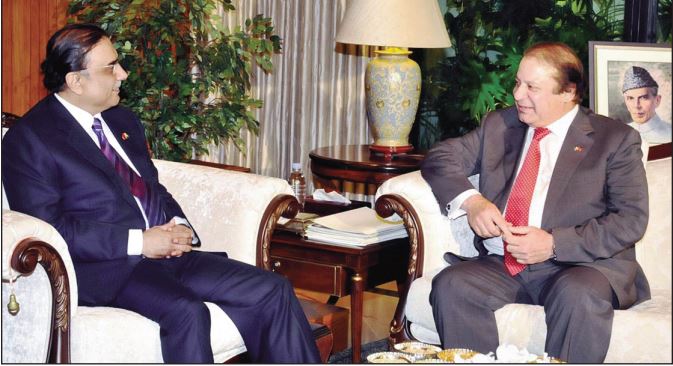
Prime Ministers Zulfikar ali Bhutto and Nawaz Sharif further destroyed the economy and for a decade we saw musical chair of the two governments and prevailing of widespread corruption. During the era of Pervaiz Musharraf from 2002 to 2008, the economy was controlled and growth was stabilized, Zardari came to power in 2008 and for the next five years the economic growth became stagnant, corruption was prevalent and nepotism coupled with energy crisis which made external investors reluctant to invest in the country.
In 2013, the PML-n came to power, the economy gained momentum due to the CPEC projects and foreign direct investment that led Pakistan on the growth of 5.8% per year.
The present economic growth of Pakistan is less than 3% and it’s predicted to go down to 2.7 or 2.4% which will be the country’s lowest in the past 10 years. The Pakistani rupee has lost a fifth of its value against the dollar since the beginning of this fiscal year. Inflation is expected to hover around 13 per cent over the next 12 months, reaching a 10-year-high as well.
Pakistan’s current GDP is about $315 Billion of which debt and a huge payment deficit eats up some 30 per cent of the budget every year. Pakistan continues to take out loans to be able to cover repayments of past borrowing. It recently signed yet another deal with the International Monetary fund (IMF) for a bailout package worth $6bn.
The FBR this fiscal year 2019-2020 has been determined to increase the Tax to GDP ratio from the current 12% to 19%. 99% of the country’s wealth is accumulated in the hands of 1% of businessmen, politicians, big companies and elites, etc. out of which only a limited few pay taxes due to which the economy does not grow. at present, the PTI Government is relying on indirect taxes; it’s constantly increasing the burden on the middle class and the poor. The government needs to impose taxes on the agriculture sector as it utilizes 80% of the total water resources and contributes 20% to the GDP. If this sector is exempted from taxes, how would Pakistan be able to increase its revenue collection? There is a serious trade deficit and increase as Pakistan is unable to produce goods and services on the domestic front, which has increased our imports leading Pakistan to take loans from the US, IMF, World Bank, UAE, Saudi Arabia, Qatar and china. The loans that any country takes have some conditions attached to them which serves the lending country‘s national interest and then are used to further that state‘s strategic policy, for instance, Pakistan providing logistics and railroad to the US in its Afghanistan invasion. Moreover, Pakistani has a stated policy to stand by Saudi Arabia in the Shia Sunni proxy war. The rampant corruption that tenaciously flows throughout Pakistan is a major obstruction in its economic growth. according to the World Bank latest report, 82% of the foreign companies in Pakistan are under compulsion to pay bribes to receive tenders or to substantially invest in Pakistan. furthermore, according to latest 2018 reports of Transparency International, Pakistan stands at 117th position out of 180 countries as the most corrupt country in its CPI.
Contributed by:
Alifiya Aun Ali