Revered Italian philosopher of the Renaissance era, Niccolo Machiavelli, had once observed that, “One change always leaves the way open for the establishment of others.” Indeed, it sounds so true even today in an era of alliances and interdependence.
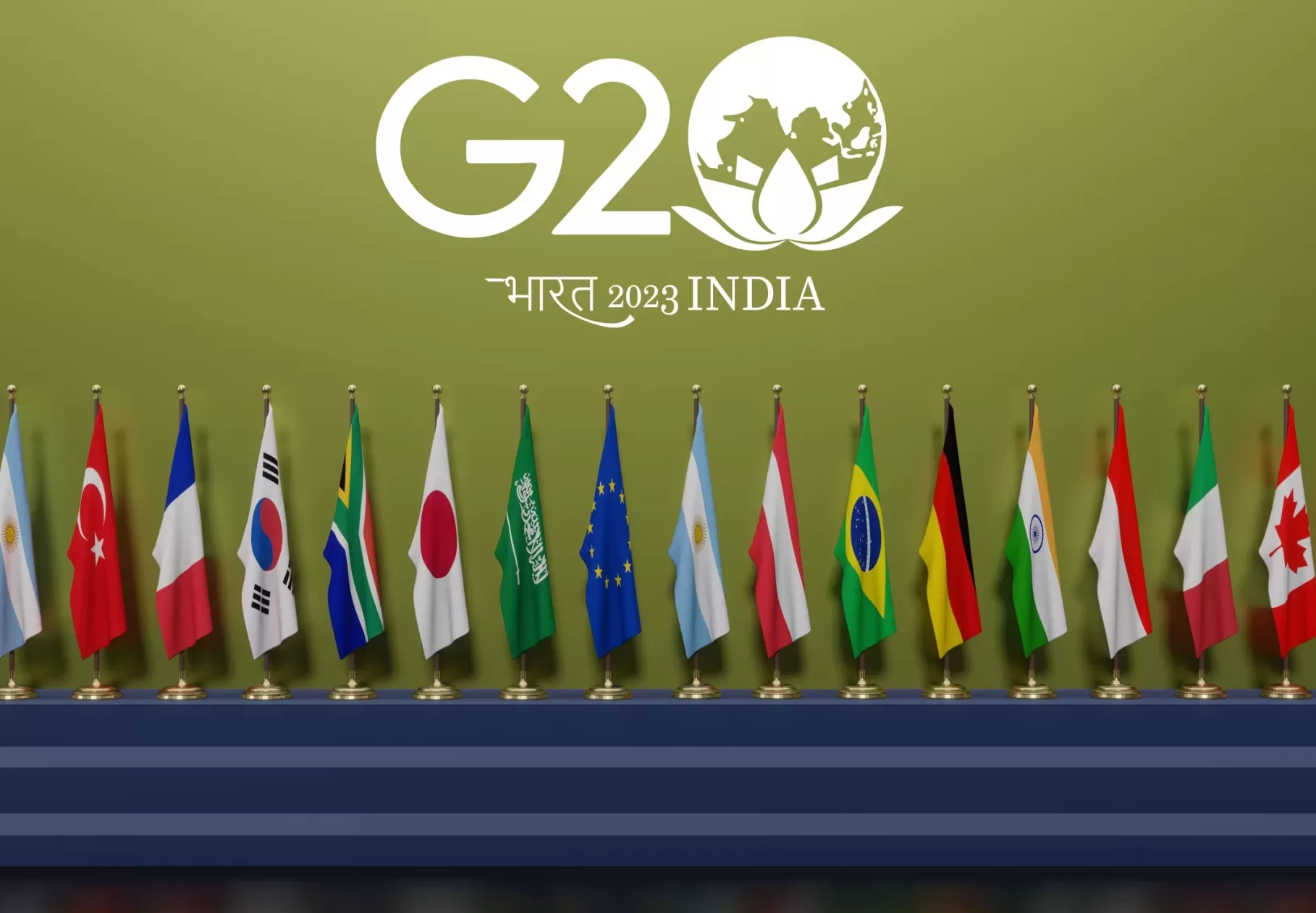
The G20 summit in New Delhi simply turned a new leaf in multilateralism, as strict protocols were adhered to in ensuring that personal bias, friction and inter-state complexities do not come to derail the momentum of internationalism.
Incidentally for Prime Minister Narendra Modi, it was a moment of showcasing his leadership. And he did that with great astuteness. As they say, give the enemy too its due, Modi had marshalled India on new lines, and the G20 leadership huddle came close on the heels of two landmark successes for a nation of 1.2 billion people.
One; The BRICS Summit in Johannesburg wherein India was recognised as a middle power by virtue of its expansionist role in the Global South, and, Two; the successful Moon expedition. The landing of Chandrayaan-3 mission on the moon on August 23, despite consecutive failures from Russia and Japan in recent times, was a marvel of its making inroads in science and space technology. It did not stop here, as it was quick to announce the adventure over sun, called Aditya-L1, which will see the South Asian nation scale new heights of laurels among the comity of nations.
The G20 Summit in the same vein was a treatise on diplomacy. India, despite being in media trolling for months as it kept on changing its goalposts when it came to holding sessions in Occupied Jammu & Kashmir, surprised all and sundry by coming up with a unanimous communique at the 18th moot of the grandiose gathering. The Bali Summit last year was in a fix as it could not come up with a resolution, as major powers were divisive and there wasn’t any chemistry of clubbing the resolve for a joint statement. The fact that the United States, Russia, Britain, Canada, China and even the Middle Eastern states were on the same page, and led to a watered down communique, at least, in the context of the ongoing Russo-Ukrainian conflict has raised many eyebrows. This simply underscored the commonality of interests as India tries to outreach itself to Russia and the US, and at the same time keep playing fiddle with Europe and Ukraine.
Kyiv was left wandering as its Foreign Office in the midst of the summit issued a blue-penned edited version of the resolution, categorically stating the brinkmanship of the West and Russia to play under the table for the sake of keeping India on board.
The G20 had many surprises for all in the diplomatic strata.
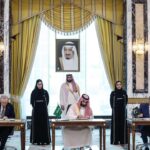
One of the foremost shocking revelations was the announcement of a trade corridor through the Middle East and Europe, linking the United States with India. Connecting the two extreme focal continents was a bolt from the blue even for the Chinese, who had a decade ago kick-started their visionary Belt and Road Initiative that would link five continents, and around 60 countries. What made the initiative more startling was that a proud announcement came from Crown Prince of Saudi Arabia, Muhammad bin Salman, as he was seen in a troika with President Biden and Narendra Modi. Surely enough, the Russians and the Chinese held their breath for a moment, as they were themselves apparently not on board for one of the world’s most ambitious and expensive corridors that will see it run through landmass and under the oceans and straits.

The multi-trillion dollar corridor uniting three continents can be interpreted in the light of President Biden’s June 26, 2022, unveiling of an ambitious Partnership for Global Infrastructure and Investment (PGII) with a seed money of $600 billion. Earlier, Washington along with its European allies in 2021 had announced the launch of the Build Back Better World (B3W) with the aim of narrowing the $40 trillion infrastructure gap in the developing world. The New Delhi summit was just connecting the dots and that too by making the Chinese Premier Li Qiang sit on the same table in a state of wandering.
The second master-stroke was convincing Italy to exit the Chinese BRI’s and that too with the audacity of pronouncing it to the Chinese leadership on the sidelines of the summit. Rome has cited unfounded reasons of complicity for excusing from the connectivity network that has seen many of her neighbours reap Chinese dividends and investment. It is surprising that Italy is staking its $18 billion exports with China, and is home to around $30 billion investment since 2014. What necessitated this velvet divorce is Italy’s upcoming presidency of G7 next year. The fact that it chose to withdraw at this point of time has much to do with de jure exigencies, as its BRI’s five-year deal ends this year-end. Like India being pulled in the QUAD by the US, Italy was made to play the allied-ally ballgame merely to rupture Chinese inroads in the heartland of Europe, and G20 shoulders were a mere carrier.
There were some grim misgivings at G20. Apart from snubbing the Ukrainian right of sovereignty and refusing to call a spade a spade in terms of aggression over it, the freedom of speech and democracy-loving West showed a pusillanimous attitude. Similarly, there was no conviction as far as outlawing fossil fuels, and the IMF had to remind the developed industrialized states of their promise to pool in $100 billion per annum for climate change. The communique, nonetheless, said that $4 trillion a year is needed to pay for a green energy transition, but did not lay out any pathway to it. Though the communique called for building a better future, energy transition to improve jobs and livelihoods, and strengthening economic resilience, there wasn’t much strategy on the table to walk the talk. “We will pursue development models that implement sustainable, inclusive and just transitions globally, while leaving no one behind,” it pronounced, leaving the developing world baffling as to how that will walk the talk. The only progress achieved was that leaders agreed to pursue tripling renewable energy capacity globally by 2030, and to phase-down unabated coal power.

The theme ‘One Earth, One Family, One Future,’ was thoroughly played to the gallery, purporting consensus on issues ranging from climate change to sustainable development, and from saving the world from misuse of nuclear weapons to recasting supply chain ruptured under the Black Sea ‘grain deal’. The 37-page joint declaration was full of hype in terms of Global Biofuels Alliance and the Partnership for Global Infrastructure and Investment, but was muted on the conflicts going on in the region and beyond.
Last but not least, India after heralding the flag of Non-Alignment in the hey-days of the Cold War, had a continental surprise as the 55-member African Union was formally made a permanent member of the G20. It was a move to put the Backward and Black Continent on par with the prosperous European Union, and it hinted at an era of alliances at a time when the world body, the United Nations, is infructuous in essence. The tact behind this expansion was India’s ambition to make use of its G-20 presidency to give voice to concerns of the Global South. It is no surprise that Russia, Europe and the US obliged Delhi for reasons of strategic convenience. The 18th egalitarian moot on the sprawling lawns of historic Pragati Maidan in New Delhi had an ethno-political thunderbolt from India for the world at large. The Hindutva-ideology wielder renamed his country as ‘Bharat’. The world’s second populous state and third largest economy didn’t mind in adopting hardliner-ism as an identity tag, and apparently itself shunned the mantra of secularism. None questioned the sagacity to do so at a world fora, and perhaps chose to be tight-lipped.
Maybe it was a quid pro quo, as Moscow, Washington, Beijing, Riyadh and Brussels all were obliged to see their side of the story make headway at the august gathering. Perhaps, India was setting in a change of political anthropology, and the world was in a mood of appeasement. Ten cents for Machiavelli!