
The issues of women’s rights in Pakistan primarily originate from the traditional positions of females associated with the conventional socio-economic and socio-political descriptions. A complex combination of various cultural, religious, and ideologically driven legal factors generally shapes the marginalized role of women in mainstream state affairs. These created the multileveled issues of women’s marginalization across the country while upsetting the societal symmetrical gender balance. In reaction to the deepening issues of women’s rights violations in the developing world, including Pakistan, various studies have emerged from different directions where, in their varying viewpoints, the authors from diverse backgrounds tried to portray a distinctive picture of female ostracism in Pakistan due to the widening gaps between Islamabad’s women-centric legislative mechanisms and their appropriate application in the targeted areas.
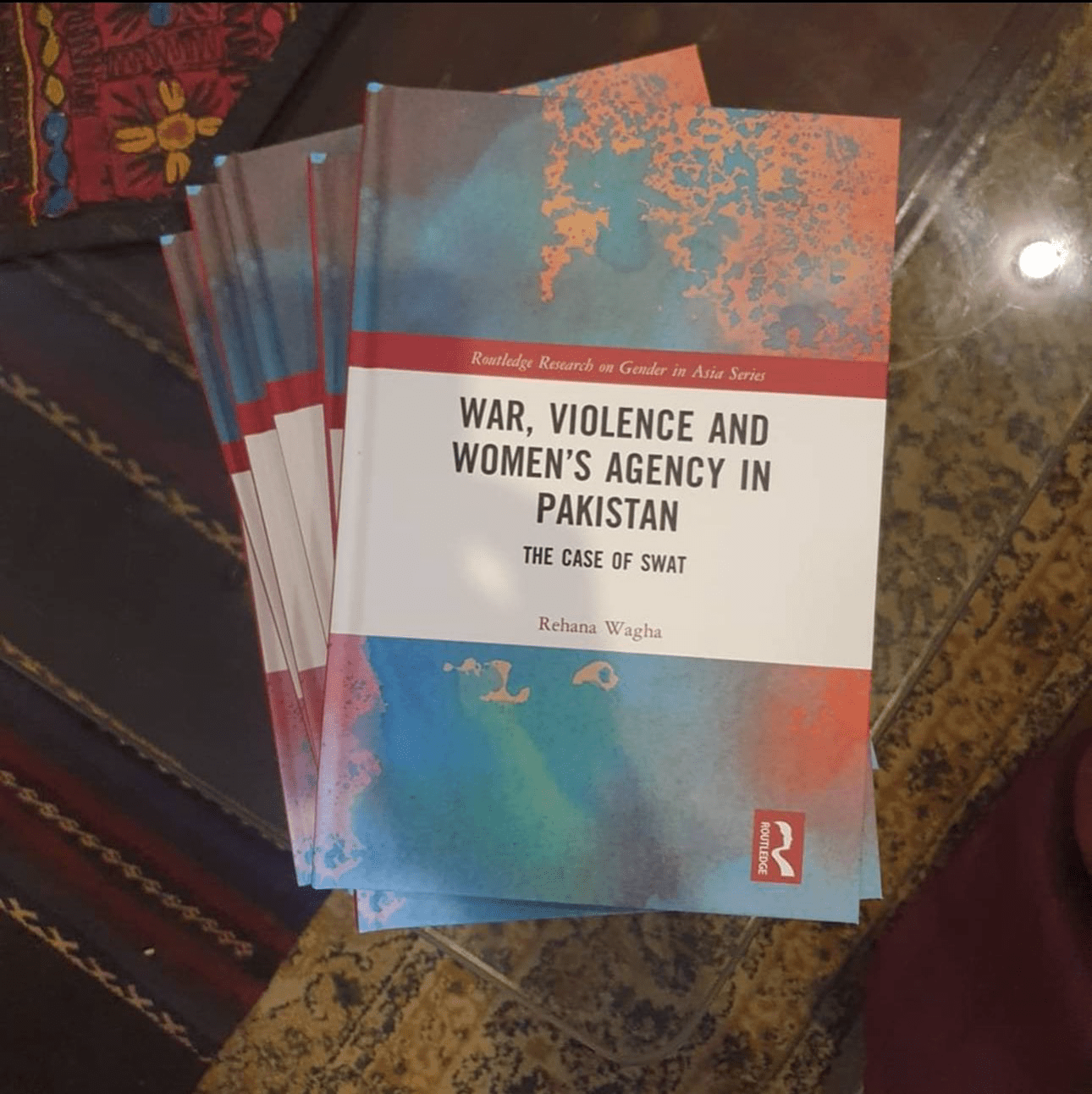
Thus, the increasing tendencies of the world’s leading intellectual and policymaking circles towards the status of women in Pakistan and the nature of their marginalized positions in the society have gained significant importance in recent years. Akin to a few studies, the book under review is an intellectual work concerning women’s role in the country’s challenging security dynamics. The book’s author, Rehana Wagha has attempted to provide a different picture of women in certain areas of Pakistan where the fanatical ideological trends have become the overwhelming forces, contributing significantly to the existing literature concerning women rights. This contribution of the author attempted to enrich the reader’s understanding about the evolution of women status in Pakistan under the obstinate ideological pressures. Rehana Wagha is a visiting lecturer at the Quaid-i-Azam University and holds prominent academic associations with specific regional and international intellectual forums such as South Asia Feminist Alliance (SAFA for ESCR), Women’s Action for Better Workplace (WAction), and National Commission on the Status of Women (NCSW). She has commendable expertise in the diverse areas of women marginalization and their national-level empowerment problems.

Her book goes beyond the conventional patterns of women-centric studies related to the issues of gender-based violence, women discrimination, and the critical aspects of female education and employment conditions. The modern patterns of gender studies generally revolve around the problems of domestic violence, honour killing, child marriage, and under-aged labour, whereas Wagha’s viewpoint concentrates on the impacts of conflict and patriarchal societal patterns regarding women’s problems, especially in those areas that survive under the influences of fanatical ideologies. In her book, Wagha mainly underlined the increasing tensions between the progressive legislations of the government and the conservative societal norms, which try to seek the intentions of formal state authorities.
It requires the government’s decision-making bodies to introduce diverse reforms for safeguarding women’s status under the threats of religious extremism and ideological polarizations. The selection of Swat District, commonly known as Swat Valley, in the book as the case study validates the author’s argument with the support of both data sources. In this way, an appreciable combination of primary and secondary data sources increases the intellectual strength of Wagha’s study, which covered the five years (2005-2010) of women marginalization in the Swat district. The book investigates the socio-political structures in the region and examines their impact on women’s political behaviours. The author questions how these patriarchal socio-political structures have contributed to the formation of women’s subjectivities and their ability to subvert and resist patriarchal regimes of oppression. An exclusive reliance of the author on the collection of primary data through various interviews led her to widen the study’s scope on empirical evidences. Additionally, including different biographical accounts developed by prominent females like Malala Yousafzai further enhanced the rationality of the author’s arguments in the book’s five chapters. The mention of Malala’s global promotion in the book presents a solid reference to women’s empowerment in the areas resisting the influences of religious extremism, and it accepts the symbolic role of Pakistani women in struggling for their gender-specific and educational rights.
According to the author, the story of Malala provides a strong case of courage and resistance, proving women’s undeniable sufferings in the conflict zones. Thus, the discussion in all chapters carries a feminist perspective concerning the female’s role in the country’s cietal landscapes. The theoretical support for the book’s central argument linked it with the postmodern structure and agency framework to see the relevance of feminist political theory in the 21st century (p. 5). The postmodern feminist approaches are considered helpful in answering the study’s main research questions related to women’s struggle for equality and empowerment (p. 10). Thus, the argument supported by extensive fieldwork makes this book a vital contribution to the existing literature discussing the issues of women’s suffering under strict ideological pressures.

Therefore, one can safely contend that the book offers a comprehensive analysis of women’s lives and agencies in the conflict-ridden region of Pakistan, where the government was compelled to launch an anti-militancy operation. The author’s arguments in all chapters attempted to present the valuable resilience and agency of women living under terrible societal treatments parallel to the government’s legislative responses. So, the book’s central theme critically treats the emerging women-centric narratives in Pakistan and their irresistible association with the women-centric survival strategies adopted in Swat Valley. The author’s attention to the changing patterns of women’s issues in the militancy-influenced area of Pakistan makes this book important for people interested in understanding the prevailing complexities of gender issue in the conflict-ridden societal influences. The students of gender studies, conflict resolution, and sociology could find this book an exciting account of varying arguments related to the contemporary socio-political dynamics of Swat Valley. Individuals seeking the analysis related to prevailing issues of women’s rights and women’s empowerment in Pakistan could also find this book an exciting set of different arguments explaining the conflict-ridden environment of Swat and its manifestation in societal gender imbalances.
Furthermore, the Islamabad-based policymakers and practitioners who intended to uphold the national vision of peace-building, human rights, and general-based impartial social practices could treat this book as a valuable insight into women’s challenges and resilience across the country, empowering them with the knowledge to make conceptually strong timely decisions.