


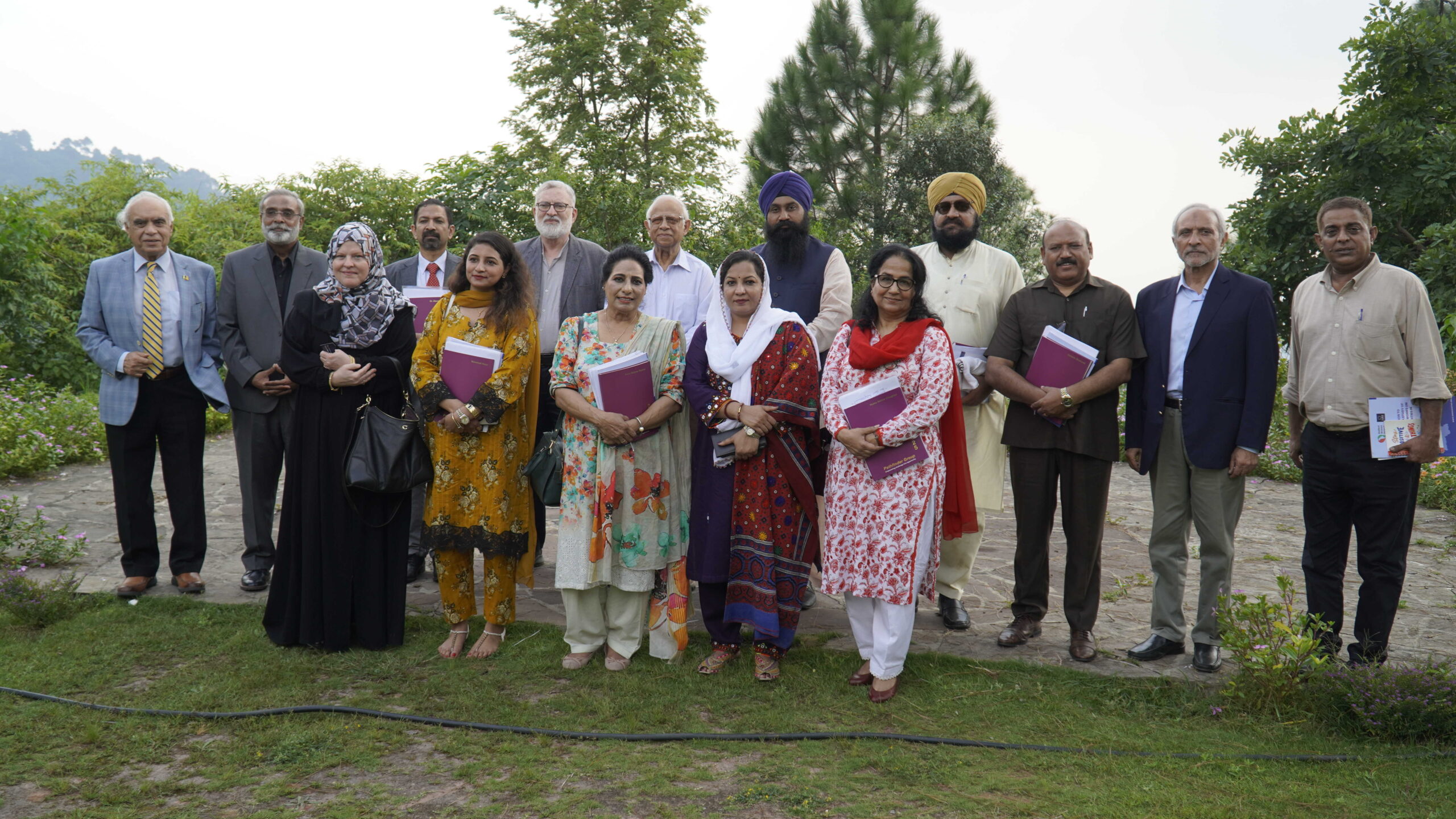
Advisory Council Introductory Meeting
Brig (Retd) Mujahid Alam CEO, Providentia Books Foundation CEO, Designate PIHI
This initiative was started by a young girl, Elena Sehgal, the granddaughter of Ikram Sehgal, who is a high school student in New York, along with her friends from various fields. We have structured this meeting to help everyone get to know each other. You all possess extensive experience and qualifications, and we are delighted to have you on board.
Our group comprises members from diverse faith backgrounds, including the Hindu, Sikh, and Christian communities, as well as representatives from the Jewish community who will be part of the council. Your expertise, communication, and guidance will be invaluable as we move forward with our society. Our primary focus is on young students at the university, college, and high school levels, as they are the ones who need to be sensitised. This is crucial before they embark on their professional lives and careers.
I trust you will agree that promoting mutual respect and coexistence among diverse communities is one of the most important aspects of our work. Our mission is to foster dialogue, understanding, and joint community engagement between different faith groups. Youth engagement is one of our most significant community projects, and we also aim to counter extremism through training and capacity building. Our core activities include an annual interfaith peace forum. We intend to encourage interaction, develop leadership through faith fellowships, organise joint service projects, and promote documentation and public outreach through various visual media. Additionally, we plan to establish active cooperation with other organisations. We are delighted to welcome Dr. Marc H. Siegel and Dr Linda Zangwill, who will represent the Jewish community, and are joining us online.
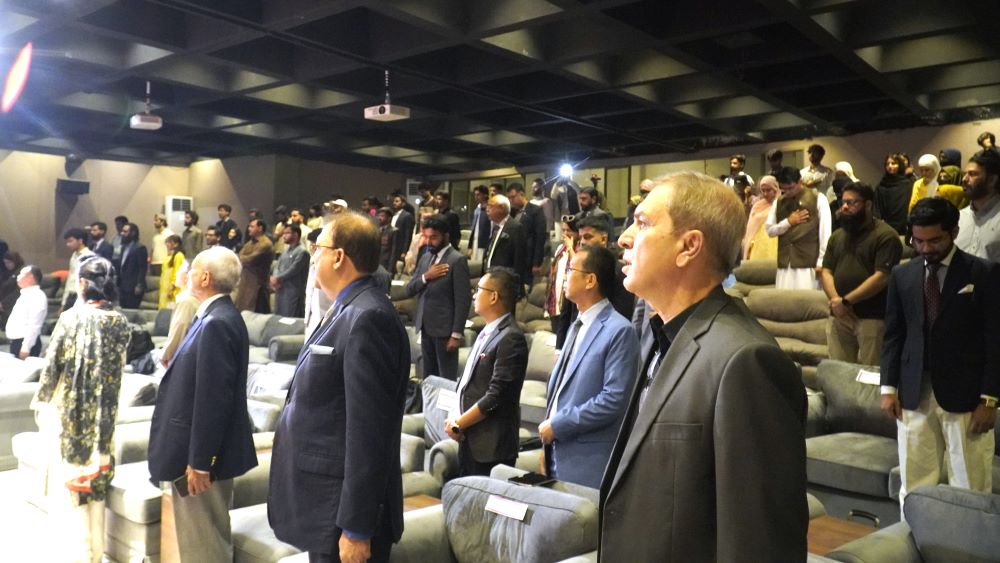
We understand that it’s very late for you, around midnight, where you are located. We have our council members here, our sisters and brothers from various faiths and communities: Christians, Hindus, Sikhs, and the Parsi community. We are especially delighted to have Marc and Linda representing the Jewish community. Captain (Retd) Babar Massey from the Christian community is also here; he has been instrumental in organising this event and serves as the Secretary of the Advisory Council. I now invite you all to introduce yourselves, after which we will commence our discussion.
Dr. Zeerak Samuel
I’m a dentist practising in Islamabad and I represent the Christian Medical Fellowship (CMF). We have over 300 doctors and dentists across Pakistan, and I am also a member of an international medical and dental association. I am truly glad to be part of this initiative. It might be late in coming, but as they say, better late than never; it’s definitely the right thing to do.
Ms Manmeet Kaur
I am from the Sikh community and, by profession, a journalist. I currently serve as a member of the Board of Directors at the Evacuee Trust Property Board (ETPB).
Ms Anne Bolyne Rubina
I am a former civil servant, having served in the Government of Pakistan for many years. Now, I dedicate my efforts, wherever possible, to contributing to the welfare of the community and, more broadly, promoting interfaith harmony among different faiths and people living here. Thank you.
Saleem Shahzad
I am the Executive Director at Far East Broadcasting Association (FEBA) Communication Trust, Pakistan. We utilise radio and other live media forums to promote community development and dialogues, including through our various onground activities. I thank God that we have been serving in Pakistan for the last 50 years. I believe this is a great initiative where we can all come together and coexist.
Sarfraz Shahid
I am the Principal of Islamabad Convent School. As an educationist, I have been serving the school for almost 25 years, teaching various subjects and managing its operations. It is an honour to be part of this council, and I hope to make a valuable contribution to this initiative.
Sardar Anoop Singh
I am the Coordinator of the Pakistan Hindu Sikh Social Welfare Society, Assistant Coordinator for Interfaith Harmony with URI (CC) Islamabad, and Legal Advisor to the Press Club, Pindi Gheb. My work focuses on interfaith harmony, social welfare, and community development at both provincial and national levels.
Ms. Huma Akhtar Chughtai
I am an international human rights law specialist as well as a Sharia specialist, currently serving as a member of parliament. Much of my life has been dedicated to research, specifically exploring the niche for interfaith harmony and social cohesion. This is what I have been actively doing.
Neelum Kumari (MNA)
Assalamu Alaikum. Namaste. I am a Member of the National Assembly and belong to the Hindu community from Muhammad Kot, Sindh. I am here to contribute to this work. Thank you.
Dr Amy (Aisha) Winslow
I hold a doctorate in women’s health and am a nurse. I have lived in Pakistan for the last 15 years. While in the United States, I was actively involved in interfaith work as part of a group called Interfaith Works. My family background is inherently interfaith; I have a Hindu family member through marriage, and I was raised Catholic before converting to Islam. Therefore, I have personally experienced interfaith dynamics within my family. I am very honoured to be a part of this group.
Syed Firasat Shah
I live in Islamabad, and by profession, I am a geoscientist. I am delighted to be part of this group. Already in these introductions, I am finding commonalities with human rights, which I am also involved with, in addition to interfaith work. I believe this is a great opportunity.
Ms Surriya Asghar
I am an ex-parliamentarian and am present here as an observer, not a member of the advisory council. I am the President of Women Network, an organisation that has been working for interfaith harmony and peaceful coexistence since 2018. Thank you so much.
Capt (Retd) Babar Bernard Massey
I carry on the legacy of my mother, a parliamentarian who served the community for 36 years. I must mention Mr Ikram Sehgal, who is my mentor in security management and, of course, for this forum. Thirty years ago, he had the vision to support churches and the Christian community by providing security wherever protection was required. He always informs me that he and his company’s guards are readily available. What’s particularly remarkable is that when these guards came for their duties, despite potentially jeopardising themselves and their families, they refused any incentives. They stated it was their duty as Muslims to protect their Christian brothers and other communities.
I am grateful to be part of this organisation and to coordinate everything as the secretary of the council. I am thankful to each one of you for being here, and I look forward to not just discussing but actively working towards a stronger, more tolerant Pakistani society where Christians, Muslims, Sikhs, Parsis, and all communities accept each other.
Rt. Rev. Nadeem Kamran
I am the Bishop of Lahore. First and foremost, I am thankful to Mr Ikram Sehgal for taking this initiative for peace and harmony. I am honoured to be a part of this. Thank you.
Subhash Chander
I represent the Hindu community, and I am grateful to Mr Ikram Sehgal for providing this opportunity.
Dr Marc H. Siegel
I am very honoured to join you all today for such an important initiative. As Ikram’s Jewish cousin, I truly feel like family with this group, which is why I speak so openly. Currently, I am working in Ukraine, teaching at universities and providing humanitarian aid. I am also working in Moldova as a Fulbright scholar. I am very happy to join these discussions, considering that both places where I am presently located definitely need similar initiatives.
Dr Linda Zangwill
I met the Sehgals through Marc. I am a professor at the University of California, San Diego. We are in San Diego, and my work involves clinical research in glaucoma. It is truly my pleasure to be here. I’ve met the extended family at the World Economic Forum, and it was a pleasure to see how close Marc is with you and to be part of that family.
Maj Gen (Retd) Syed Shakeel Hussain
I am the Deputy Chairman of the Pathfinder Group and Senior Advisor to Co-Chairman Ikram Sehgal. I am happy to be a part of this advisory group.
Brig (Retd) SSG Kiani
I am very happy to be part of this advisory group. I work as the Director of Special Projects at the Pathfinder Group. Thank you so much, Mr Ikram Sehgal, for giving me this opportunity
Ikram Sehgal Patron, Advisory Council – PIHI
My journey started when I was seven years old. My father, who was in the army, was posted frequently, and my mother began organising schools. She took over a school, and I was its very first student. That institution now has about 450 teachers and around 3,000 students; over my time, it has educated about 200,000 students. My sister, who is three years younger than I, also attended that school, passed away at 28, and was buried in Bangladesh. I went off to college at the age of 11 and completed my studies at Lawrence College. Brigadier Mujahid and my sister were classmates at the same Convent, and our fathers were friends, so our connection goes back a long way.
To cut a long story short, my family and I believe that while it’s important to work and earn a living, our religion also emphasises ‘looking after’ others. This principle is as vital as our compulsory prayers. This is what I try to instill in my family. I am very lucky that my two grandchildren, Amaani and Elena, are already contributing to this cause. Amaani, who has now been admitted to Cornell University, started the Providentia Books Foundation when she was just 12 years old. She used to come here and voluntarily teach students from underserved communities. She observed that poor students lacked access to books and told me, “Dada, we’ve got to do something.” Now, Brigadier Mujahid, after retiring from Lawrence College, is heading this foundation. I must tell you that today we have almost 400 to 500 schools donating books to us, and we are delivering books in five major cities and several smaller towns. You’ll be surprised to know that institutions like Oxford University Press used to destroy 200,000 unsold textbooks every year. We requested them to stop destroying these books and allow us to distribute them to deserving children across Pakistan.
They agreed, and we are now distributing those textbooks as well. In the future, we have discussed with NAVTTC and other institutions a passive digital initiative. We intend to open thousands of digital classrooms in schools. These digital classrooms will teach English and other subjects to children who lack access. This initiative will be inclusive of all religions.
My best friend is a Hindu, Moti Lakhwani. About 30 years ago, when a church was attacked and people were killed, we decided to act. That’s how we began offering free security services through my company, which is the largest security company in Pakistan, for Sunday church services. This initiative eventually grew to cover 130 churches.
As you know, our guards went there without taking any overtime. On the other hand, the churchgoers would often bring them food baskets, which was quite an incentive. So, it was a mutual gesture. Today, we are still discussing security for many churches, though many have rightly taken their own measures.
My 15-year-old granddaughter, Elena, attends The Brearley School for Girls in Manhattan (in which her elder sister Amaani also studied) New York, one of the best schools. She started this initiative on her own. She gathered a Jewish girl and a Christian girl, and they began community service by making and selling cupcakes for charity, donating the proceeds to old-age homes. She’s quite Athletic, even training with John McEnroe for tennis.
She is truly the driving force behind Pathfinder Interfaith Harmony Initiative. Yesterday, somebody asked me about this, and I realised both my grandchildren are helping humanity in the way they believe is right, without any prompting from me.
What I want to convey to you is that within the Muslim community, there are various sects. There is one person I truly admire – a gentleman whose name I won’t mention, but I respect him greatly as an individual. We discussed many things, and I asked him for a very credible person to lead this. He said, “I know the right person.” This person is here to ensure that, as Muslims, we follow the right path. Paraphrasing the words of Quaid-eAzam, “you can go to your churches, your synagogues, and your mosques – anywhere you wish; that has nothing to do with the state”. We want to carry this vision further.
One of my best friends, Frank, Hungarian American, died two years ago. I used to stay with him in Spain. As we drove around, he would point out places where a synagogue became a church, or a mosque became a church. The point is, Spain was a place where all religions lived together in utter harmony for 400 to 500 years; there was no problem.
One of the greatest scholars in the world is Dr. Frederick Starr, who is over 80 years old. He was the Dean of Central Asian Studies at Johns Hopkins for about 35 years and founded the program there. He has written many books, one of the most famous being “Lost Enlightenment,” where he describes how the Jewish community and others lived together. I could quote him further, but I want to shift our focus here. Let us talk about advising and not keep it confined to this room. Please let us know your counterparts in every town and city of Pakistan. I have offices in 75 cities and towns, so it’s not a problem. You tell us, “In Lahore, this is the person,” or “In Multan, this is the person,” whether Muslim or not. We will implement these initiatives across the country. We don’t have to do it exclusively or in isolation. A long time ago, for many reasons I decided not to work with the government, any government. I have never taken any contracts from them after 1990. While we have to work together in some ways, I never engage in government contracts. We do it on our own, with the private sector. As a starting gesture to you, whenever Christian churches, or any Hindu or Sikh religious temples, feel threatened, we will provide security services free of cost, at any time. We have been doing similar work in Karachi temples as well. We don’t hear about this because we don’t seek publicity. So, this is what I want to convey. I am very lucky to have a very good and supportive team, and they are committed.
We provide full scholarships to one of our guard sons who is at Harvard; it’s an achievement. My point is that we want to do things, and I am so blessed that my grandson, Suleiman, a student in The Allen-Stevenson School in Manhattan, who is 12 years old, also supports his sisters’ initiatives and wants to contribute. We are engaging with NAVTTC to implement digital classrooms there so that students can receive the same quality of education as in other schools. I am truly blessed, honoured, and grateful that you are all here with me today. Marc and Linda, I am especially grateful to you for being here (at midnight in California).
Brig (Retd) Mujahid Alam
It’s an open house now. Anyone who wishes to contribute or say a few words is most welcome.
Syed Firasat Shah
I’d like to share something that connects with the discussions I’ve heard today, particularly about Umerkot. I have had a connection with Umerkot since the 1970s, as some of my relatives lived there. The story I want to tell you is about one of these relatives and relates to the initiatives mentioned concerning education. This relative was my aunt, who migrated from India during that time. She was a widow with a son and a daughter. When she arrived in Karachi, she was a teacher, so she applied for a job in the education department. She was offered a position to start a school in Umerkot, probably in 1951 or 1952. She moved there with her two children and settled in Umerkot.
I visited Umerkot in the ‘70s, and even then, it was just a small town, not the bustling city it is today. While she lived there, she often visited us in Karachi, and we would also visit her.We heard about the hardships she faced while raising her children there. She is a significant inspiration for us because she started the very first school in Umerkot. I visited that school, and some of you might even know her name: Hafiz Begum. I visited her grave a few years ago. That school has now transformed into a college, everything stemming from what she initiated many decades ago. May Allah bless her, and may Allah bless all the people who are taking such initiatives, like Ikram Sehgal. Thank you very much.
Neelum Kumari (MNA)
I am very happy to attend this interfaith harmony session. Although I have not participated in any meetings before, I have taken part in small programs. This is my first time in this type of gathering, and I am a bit unsure about what to discuss. As the speaker mentioned Umerkot’s history, highlighting figures like Akbar Badshah and Umer Marvi, I recall that it was indeed the first school opened in Umerkot. I have visited it as well, and it left a remarkable impression on me. Today, I feel a sense of joy about being here. I have been involved in similar initiatives, and I am not here to talk about a specific program, but rather to share our observations and the historical context.
We need to act, especially considering the deteriorating situation regarding education and access to water in Umerkot. It is frustrating, as it seems incomprehensible that any organisation or government takes meaningful action. If you venture into the interior, particularly the villages where I often run my elections, the conditions are dire. Women must carry water for two kilometres, and for pregnant women experiencing complications, there are no hospital facilities. Too often, women give birth in makeshift vehicles, and these situations can lead to tragedy.
These are the challenges we face, particularly in relation to education. In Tharparkar District, the Hindu community comprises 54% of the population. It is not just Hindus; there are also very few Muslims and Christians. I want to highlight the concerns of our people in Umerkot, particularly the farmers. Many of them, especially the women, do not understand the importance of sending their children to school. When I talk to them about educating their children, they often respond, “If we send our children to school, who will do the work at home?
The high-ranking officials and farmers often want their children to continue in agriculture, while those who are in business wish for their children to follow in their footsteps. This mindset needs to change, and I am committed to changing it. I need everyone’s support to raise awareness among these families. I also come from a marginalised caste, and I am proud to be the first woman from my community to reach this platform and to be elected. I hope that every girl, like me, will step out of her home, enter politics, and pursue education. However, it is crucial to raise awareness first. I need all of your support so that I can help bring this awareness to them. Thank you very much.
Ms Huma Akhtar Chughtai (MNA)
There are so many of us working in this area, but I must say, Mr Ikram Sehgal, your efforts are extremely motivational and inspirational for this cause. As a human rights specialist and also a Sharia specialist, I have personally been working on this purpose for many years, at least a couple of decades. My focus has largely been on interfaith harmony and social cohesion, because these are vital issues. In our region, unfortunately, people are generally bound within the Baradari systems and the caste systems. These divisions still run deep. And when it comes to interreligious and interreligious cohesion, we continue to see differences, sometimes subtle, but they still divide communities.
In my research over the years, I have come across disturbing patterns. For example, children from Christian communities have expressed feeling discriminated against in schools and colleges by their peers from majority Muslim backgrounds. This reality points toward the urgent need to reinforce the dignity of mankind, which was the very first message delivered by the Prophet Muhammad (PBUH). The Qur’an also emphasizes the same message: “The dignity and equality of all human beings.” When we reflect on the vision of the Father of the Nation, Quaid-e-Azam Muhammad Ali Jinnah, we see that his words and mission are directly in line with these Islamic injunctions. He made it clear that people should be free to practice their own beliefs. However, those personal beliefs should never obstruct the collective progress of the state.
Often, people use the word “tolerance,” but as I see it, and as you have rightly pointed out as well, it is not just about tolerance. Tolerance puts one person in a position of superiority, as if saying: I tolerate you. What we truly need is respect. Respect for each other’s identities, faiths, and dignity. That is the foundation for real social cohesion. During this journey, I found a remarkable organization called the Resilient Women Network, led by former three-time Member of Parliament, Asiya Nasir. The President of this initiative, Surriya Asghar, is also here with us today. They invited me to join as a consultant, and together we started working on issues such as freedom of religion and belief. From this initiative, we also developed the Four Leadership Network, which brought together individuals from diverse backgrounds, not just different religions, but also from the judiciary, legal fraternity, civil society, and academia. We wanted a collective, broad-based approach. One of the major contributions I was commissioned to undertake was research on the gaps between legislation and implementation in Pakistan’s legal frameworks concerning these issues. Based on that research, we prepared a Handbook for Parliamentarians, a practical booklet that helps lawmakers check important boxes while drafting or reviewing legislation. We also brought copies of this handbook for council members.
These may appear to be small steps, but they are meaningful ones. The Resilient Women Network also prompted me to initiate a Parliamentarians’ Caucus on Social Cohesion and Interfaith Harmony. This caucus now includes both men and women parliamentarians, members of the National Assembly, and senators. We gather during every parliamentary session, at least once, to discuss how lawmakers themselves can play an effective role in strengthening harmony. People like Ms Neelum Kumari and many others have been active parts of this effort. Personally, I feel truly honored to be serving on the Advisory Council of this initiative.
I am deeply grateful to Brigadier Mujahid Alam, and especially to Mr Ikram Sehgal, for his constant encouragement and for rooting us in this important cause. As an international human rights law specialist, I also feel it is my responsibility to step in whenever misrepresentations of Islam emerge. Too often, extremist narratives misinterpret faith. In such situations, I make it a point to clarify: “No, this is not the true message. The true message is rooted in dignity, justice, and mutual respect.”
Going forward, we need to keep identifying the minimum agreeable agenda across different groups and communities, and then take it forward in a practical way, together. That is the spirit in which I, and the Resilient Women Network, are committed to continuing this work. I am truly glad to be part of this journey with you, and I look forward to even stronger collaboration in the future. Thank you so much.
Sardar Anoop Singh
I am truly grateful to Mr Ikram Sehgal and Brigadier Mujahid Alam for inviting me to this most prestigious event of the Pathfinder Interfaith Harmony Initiative. What makes me especially delighted is the presence of such a distinguished and diversified group of members on this Advisory Council. I see representation from the Hindu, Sikh, Christian, Parsi, and even Jewish communities. This in itself reflects the true essence of interfaith harmony and sets a shining example of inclusivity. In today’s world, where division, extremism, and chaos seem to dominate global narratives, this initiative stands out as a beacon of hope and one of the most remarkable steps in peacekeeping.
For over 35 years, I have been working in the field of interfaith harmony and social cohesion. I have attended numerous events, engaged in dialogue, and consistently dedicated my efforts to promote peace, brotherhood, and harmony among different religious communities. My journey has been one of persistence and commitment because I firmly believe that building bridges across faiths is the foundation for a stable and prosperous society. However, in many interfaith forums I have attended, I have noticed a recurring pattern: the invitation is usually extended only to elite individuals, those in positions of influence or privilege. Meanwhile, the voices from the grassroots level, the people who actually face the problems, the ones who endure the discrimination, and who are often the true identifiers of these issues, are left unheard. This is a serious gap, because unless we listen to those who are directly affected, we cannot find holistic and lasting solutions. But today, I must acknowledge with admiration that in this initiative, I do not see such discrimination. Here, every participant, whether from a minority faith, from a different profession, or from diverse walks of life, has been given equal respect and genuine value. Everyone has the opportunity to speak, to contribute, and to feel that their voice matters. This inclusivity, in my view, is what makes the Pathfinder Interfaith Harmony Initiative truly unique and commendable.
As an advocate of harmony, I feel deeply inspired by the mission, vision, and objectives of this initiative. I assure you all that I will continue to dedicate myself wholeheartedly to this noble cause. I will align my efforts with this team and contribute in every possible way to further strengthen the culture of peace, respect, and mutual coexistence that this platform seeks to achieve. In conclusion, I want to emphasize that interfaith harmony is not just an abstract ideal; it is a practical necessity for our societies to function with dignity, equality, and justice. With platforms like this, with leadership like yours, and with a collective commitment from all of us, I am confident that we can build a stronger, more cohesive, and peaceful future for generations to come.
Sarfraz Shahid It has truly been remarkable the way you have planned and carried forward this initiative. When I first came here, I honestly thought it would be just one meeting and that it would be over. But you have not let it stop there; you have taken it forward with commitment and consistency, and that is indeed a very good and commendable thing. I believe that there are a great many commonalities in all religions. These commonalities are the real bridges between communities, and they are far greater than the differences. Therefore, instead of focusing on what divides us, we should consciously look to those shared values and promote them. Respect, compassion, dignity, and justice are principles found in every faith tradition, and they provide the foundation for building harmony.
As an educationist, I strongly feel that education is the most powerful tool to transform a society. If we succeed in doing well in education, we can create real change in attitudes and behaviours. This is why I connect education directly with peacebuilding. There has been a growing global focus on peace education, and for good reason.
Being a scholar myself, and also studying peace education at the university level, I can see why it is so widely promoted today; it is because the world is facing such a severe lack of peace. This lack of peace is visible all around us, in conflicts, in rising intolerance, and in social divisions. In such a context, peace is not just a noble idea; it is the need of the day.
I firmly believe that harmony is the pathway to peace. If we can foster interfaith and intercultural harmony, we can help create lasting peace not only globally but especially within our own society. I would also like to highlight that diversity is not a weakness; it is a strength. The diversity of religions, cultures, languages, and traditions that we have is a source of richness and resilience. Within this diversity lie countless strengths and opportunities. What we must do is recognize those strengths, look forward to them, and actively promote them.
If we can celebrate our diversity while focusing on the values we share, we can build a peaceful, just, and united society. This initiative is already moving in that direction, and I am hopeful that together we can continue to strengthen it further.
Saleem Shahzad
It is truly a great pleasure for me to be part of this team, which brings together individuals from such diverse and valuable backgrounds. I am especially grateful to our dear brother, Captain Babar Massey, who encouraged and supported me in this journey. I must also extend my heartfelt gratitude to Mr Ikram Sehgal for his great vision. What you have initiated is remarkable, but I would like to reinforce the challenge you have rightly brought forward. This effort should not remain confined only to triangular meetings or limited discussions at higher levels. The real challenge is to penetrate among the communities, to reach people where they live, and to truly understand how they think about these issues. With time, and through my own experience of working with communities across various parts of Pakistan, I have come to a realization: communities themselves are not as intolerant as they may appear on the surface. What often drives division are certain internal and external factors, forces that exploit situations for their own vested interests. These influences manipulate people and steer them in directions that lead to greater division. That is why we now see increasing polarization in our society, and why divisions continue to grow at multiple levels. Having a vision is undoubtedly a blessing. But pursuing that vision and ensuring that it penetrates deeply into the communities is the greatest challenge of all. It requires consistent effort, resilience, and a willingness to confront obstacles head-on.
I truly appreciate this initiative. It provides us with a platform not only to share a vision but to take practical steps toward making it a reality. And in whatever way we can contribute to this cause, it will be our privilege. Each one of us brings expertise from different areas, and by pooling these strengths together, we can complete the bigger picture. In this way, we can transform the vision you have in mind into a reality that benefits communities and society at large.
Ms Anne Bolyne Rubina
It is indeed a great honour and privilege to be a part of this forum. I genuinely feel that the Pathfinder Group is a true achiever. Whatever they set their minds to, they pursue it with determination, and they go far to ensure that their plans are not just words but are successfully translated into action. Their track record speaks for itself; time and again, they have delivered tangible results in every sphere they have engaged with. Whatever task they undertake, they see it through to completion. I feel extremely happy and honoured to be associated with such a group, one that has not only versatile abilities but also the strength and vision to touch upon the core activities outlined in today’s plan and agenda. I am confident that together, with our collective commitment, we will give our best to this forum and, with the same spirit of achievement, accomplish the goals we set for ourselves.
Ms Manmeet Kaur
I feel truly honoured to be a part of this prestigious Advisory Council and this remarkable initiative. Listening to the valuable contributions of all the members today has been both insightful and enriching, and I must say, I have learned a great deal from each of you. We often talk about harmony, interfaith, understanding, and the many ways through which we can strive to achieve these goals. We also speak about the importance of education and schools in building a better society. However, one area that, in my view, does not receive enough attention is the ground realities of what is actually being taught in our classrooms. When a student goes to school, whatever he or she learns during those formative years leaves a permanent impression on the mind. Unfortunately, our syllabus still contains distorted facts and misrepresented historical incidents. These create long-lasting and, at times, damaging perceptions in the minds of children. To share a personal reflection: in my early education, I often wrote extensively about Maharaja Ranjeet Singh. He was portrayed to me as a figure “different” from the majority religion, and this framing implanted in my mind a sense of otherness. Yet, as I grew and studied more deeply, I came to recognize that Ranjeet Singh is, in fact, one of the most remarkable and dignified figures in Sikh history, a character worth celebrating, not separating. This is precisely why I believe we must repair the damage from the grassroots level. Our education system should be reformed to reflect truth, respect, and inclusivity. Only then can we foster genuine social cohesion among future generations. Therefore, I strongly urge that we begin focusing not only on dialogue at higher forums but also on incorporating ground realities into our curricula and policy discussions. This is where long-term change truly begins.
Dr Zeerak Samuel
As I was sitting here, I was thinking about what I should say. I am now 55, going on 56, and I have realized there are two stages in life when a person feels he has “seen it all.” The first is during the teenage years, and the second is after one has lived enough and achieved certain things. But today, I realized I had not seen it all. I have never before been in a room, whether physically or, in this case, virtually, where Hindus, Christians, Muslims, and Jews are all present together, engaging meaningfully through technology. This initiative has truly touched me, because it has brought all of us into the same space with a spirit of respect and dialogue. It also reminded me of an old story my father used to tell me. I’m not sure if it was entirely true or just a parable, but it always carried a lesson. He spoke of a man who had always dreamed of visiting America. The day he landed, overwhelmed with joy, he began waving his arms and dancing, shouting, “I’m free! I’m free!” In his excitement, he accidentally struck someone on the nose.
The person, startled and upset, said to him, “Hey, what are you doing?” The man replied, “I’m free!” And the other responded, “Yes, but your freedom ends where my nose begins.” That, to me, is the essence of harmony. Freedom is precious, but when we overassert our own freedoms in ways that diminish or harm others, we cross into disrespect. True civilization, and being civil, means knowing exactly where the boundary lies between our own rights and the rights of others.
This is what I believe this organization and this initiative are striving to achieve. It is about balance, about harmony, and about learning to live together. Deep down, of course, each of us carries our convictions: as a Christian, I believe I am right; my Muslim brothers and sisters believe they are right. But harmony does not demand that we abandon our faiths. It requires that we agree to disagree and still respect each other by finding the common ground we all share.
At the heart of it, every faith here, and even those who may not share a faith, acknowledges that the human being is unique, sacred, and created with dignity. In my belief, we are made in the image of God. That realization alone transforms the way we see humanity. And perhaps the only group missing from this gathering is the atheists, who also bring their own worldview to the conversation.
This initiative is not just about the people sitting here, but about the broader community and how we can begin to see one another in a different light. Once we truly internalize that, the way we approach humanity will change for the better. Thank you, Mr Sehgal, for making this possible.
Subhash Chander
First of all, I would like to congratulate Mr Ikram Sehgal for initiating this remarkable initiative, and I sincerely pray for his long, healthy, and prosperous life.
In my family, I am the youngest among my siblings. My elder brother, back in 1962, passed the commission and was appointed as an SDO in the Education Department. Through his journey, he witnessed many important changes, and I learned much from him.
From my childhood, I grew up understanding the true meaning of interfaith harmony. Even today, when I try to speak in Sindhi with my granddaughter, she doesn’t always understand me. I call her “Amma,” and she asks me, “Why do you call me this?” This exchange reminded me of how traditions and values shift across generations. I can also feel the deep love and affection Mr Sehgal has for his own granddaughter, who has taken part in starting this initiative. That love and continuity of values is something truly beautiful.
Looking back at my childhood, as someone belonging to a Hindu family, I remember the affection we shared with our Muslim brothers. During the month of Ramadan, whenever a Muslim neighbour or friend visited us, our mother would prepare an Iftar for them and would ask us to take special care of their needs. That was our example of interfaith harmony in practice.
Similarly, whenever someone in the neighbourhood passed away, the grieving family never had to worry about meals or arrangements. Neighbours, regardless of religion or background, would step forward, manage everything, and stand by the family in their time of need. These were the values that bound our communities together. Sadly, today we sense that those values are slipping away. Instead of feeling secure in one another’s presence, we often feel insecure and divided.
The norms that once defined our collective identity are gradually being lost. It is my heartfelt belief that we must rise above all these differences of religion, caste, and creed. Only then can we revive the spirit of mutual respect, love, and harmony that once defined our society.
Rt. Rev. Nadeem Kamran (Bishop of Lahore)
I believe today is a very special day, not by coincidence, but by the will and plan of God. We are gathered here to talk about peace and harmony. For a long time, I have wondered whether such a change must begin from the bottom and move upward, or from the top and flow downward. But today, I thank God that this initiative has started at the top, and I hope that one day it will reach every corner of the world.
As a minority in Pakistan, we face many challenges and problems. It is not enough to only talk about them; we must begin practical work to find solutions. First of all, I want to express my deep appreciation for Mr Ikram Sehgal and all the members of this Council. This afternoon, I want to express my appreciation for Brigadier Mujahid Alam and Captain Babar Massey. Both are invaluable assets, but Captain Babar stands out for his influence among the majority community and his strong relationships with our Muslim brothers and sisters. We need more people like him to bridge divides. I also acknowledge Brigadier Mujahid Alam for his warm welcomes and efforts to foster dialogue and growth, which truly mean a lot to us.
There are serious challenges that we cannot ignore. Our education system is one of them. Many Christian children still cannot go to school, not just because of syllabus biases, but because of discrimination at the hands of certain teachers who discourage their attendance. Education, which should unite, is unfortunately dividing.
There are also national issues that need urgent and practical attention. For instance, Article 295(C) of the Constitution is difficult to implement fairly in today’s climate. Both minorities and majorities are suffering under the weight of societal dilemmas. Allegations of religious bigotry often lead to immediate punishment without investigation.
I strongly believe that if an allegation is made, it must be investigated first. And if the allegation proves false, the one who fabricated it should face accountability. We continue to face issues of forced marriages, child abuse, and early marriages. These problems cut across communities and remain unresolved.
We often speak about tolerance. But why should we only tolerate? Tolerance without love, without respect, and without acceptance is hollow. What we truly need is acceptance and respect. Every person, whether Muslim, Christian, Jew, or from any other faith, deserves to be accepted and respected as a human being.
I hold a strong hope that under the leadership of Mr Sehgal, we will continue to take this initiative forward in a smooth, positive, and impactful way. But we must also remember to expand the conversation on interfaith harmony into the remote areas of Pakistan.
Students, teachers, and community leaders, who are directly connected with the masses, must be educated and empowered on this issue. This must be addressed at a national level, with all institutions being invited to participate so that they can, in turn, carry the message to the people. That, I believe, is the path toward true harmony, justice, and respect in our society.
Capt (Retd) Babar Bernard Massey
Thank you very much, everybody, for being here today. From what I have learned and seen in life, one thing stands out clearly: Christ did not come only for the Christians. Christ came for the entire world, for all of humanity. That is the true message I carry with me. I feel that one of the best initiatives we can take forward is to reach our schools and colleges, and to focus on educating the students. Why? Because if we look back into history, it was we who pioneered schools, colleges, and health centres in this region. Christian schools in the subcontinent laid the foundation for what we see today. I must highlight Mr Sehgal’s own vision. When he studied in a common school in Bangladesh, the nuns and sisters there never tried to convert him. Instead, they taught him values and knowledge, preparing him for the role he would play so many years later. That was the strength of true education.
Unfortunately, what we see today is a decline. Our schools and colleges are losing their impact, and many students are no longer being taught by parents or teachers the values of acceptance and love for one another. That is where we have gone wrong. But sitting here among all of you representatives from different walks of life, communities, and faiths, I feel hopeful. With this collective spirit, and under the leadership of Mr Ikram Sehgal, we can revive those values and strengthen harmony once again.
Forgive me for speaking as a soldier, but in my life, I have learned one thing: true leadership is to lead from the front. Generals, Brigadiers, and Officers are recognized not by their titles, but by the example they set. This is also what Jesus Christ taught. And this is exactly what I see reflected in Mr Sehgal even today. So, sir, I would say you are a young man at heart, leading with energy and passion. And I am certain that this initiative, started with love and vision by your granddaughter, will be carried forward by you and, in time, continued by her with equal dedication.
Ikram Sehgal Patron PIHI
I would like to make a humble request. In every city and town, let us find partners, individuals, or organizations who can take ownership of this cause so that we can regularly come together, connect, and work in unison. Now, perhaps what I am about to say may sound a little controversial, but I believe it is very important. I want to request our legislators to take up the matter of introducing interfaith harmony as a subject in our education system. Why? Because unless our children are taught from the very beginning, right from their earliest years, that all religions must be respected, we will not see the change we hope for. This is not something against any faith; rather, it is in support of all faiths. If such a subject can be introduced into our curricula, then every child will learn the values of respect, harmony, and coexistence from the start. They will grow up understanding how to engage with Churches, Mosques, Temples, Madrassas, and all places of worship with reverence and respect. This is a step that can plant the seeds of harmony deep within the next generation, ensuring that respect for one another’s beliefs becomes a natural part of our society.
Brig (Retd) Mujahid Alam
We are extremely happy and honored that our member from the Parsi community, Mr Isphanyar Bhandara, has also joined us today. It truly is both a privilege and a great honor to have you with us. I have personally known you for a long time, and I can say with certainty that your contributions speak for themselves. As a Member of the National Assembly, you already play a very important role in promoting interfaith harmony. I am also aware of how closely you interact not only within your own community but also with Christians, Hindus, Sikhs, and others, building bridges across faiths. Your presence adds strength, diversity, and value to this initiative, and we are deeply grateful.
Isphanyar Bhandara (MNA)
I have been trying, sometimes successfully, though often not as successfully as I would like to look after the affairs of all religious minorities in Pakistan. This is both at a personal level and, wherever possible, at the national level. I want to repeat something I once said in a speech at the Presidency on Minorities Day: the Constitution of Pakistan has, in fact, given full rights to the minorities. The rights of minorities are very much enshrined in our Constitution. There are clear provisions and statements aimed at protecting minority communities. The problem, of course, lies not in the absence of rights but in the implementation of those rights. This is where our real challenge begins. We must continue to sensitize our society, especially officials at the ground level, about the needs and concerns of non-Muslims. Take the example of a minority citizen who has to approach a government office, a section officer, perhaps for a passport, for a NADRA card, for property matters, for marriage or divorce registration. While the Constitution guarantees the rights, in practice, at the day-to-day level, the support and help often fall short. That is the gap we need to bridge. Another critical area is the national curriculum. It must be revised at the school level so that our children grow up with an education rooted in inclusivity and respect. Without such reform, the constitutional rights of minorities will never be fully realized in practice. I recall that my late father, Mr Bhandara, during his time with General Musharraf, made an effort, though unfortunately unsuccessful, to have Quaid-e-Azam’s 11th August speech included in the national curriculum. That speech, as we all know, beautifully captures the vision of Pakistan as an inclusive, tolerant nation. I believe that including it formally in our curriculum would still be a very meaningful step forward.
Ms Surriya Asghar
I want to begin by thanking Elena Sehgal, because it is truly because of her initiative that we are sitting here together in this room today. There is still a great deal of work left to be done, but as Allama Iqbal beautifully said: “Zara num ho to yeh mitti bari zarkhez hai, Saqi”, this land has immense potential if only given the right care and attention.
If a young 15-year-old girl can take such a meaningful initiative, then surely all of us, with our experience and resources, can contribute effectively. As the President of Resilient Women, I can proudly say that we are already working extensively in this field, and we are hopeful of collaborating across all sectors to promote peace and harmony in our country. But I must add, beyond vision and words, it is time we start identifying the real problems and then work collectively on practical solutions. Only then can we bring about the lasting change we all aspire to.
Ikram Sehgal
My father was Punjabi and my mother was Bengali, so my sister and I grew up belonging to two worlds. Whenever we used to come to West Pakistan, we would be looked at in a certain way, and when we went to the other side, we would be looked at differently. I myself was once kept in a prisoner camp. When I came back, I was advised not to return, because they said, “They will throw the book at you, simply because you come from a different background.” This pain of division has always stayed with me. About six months ago, I went to Bangladesh to visit my sister’s grave. Each time I stand at her grave, I feel the weight of history, and when I return to Pakistan, I feel the same emotions once again. I carry both identities inside me, and that is why I deeply believe in
the importance of unity, peace, and harmony. Today, sitting here and speaking to you, I want to tell you very openly: I am ready to contribute behind the scenes in whatever way I can. And I want to leave you with four simple yet powerful thoughts that I believe can change the future of our relationship and also strengthen the spirit of interfaith harmony we are discussing here. Whenever I talk about Bangladesh, I always mention the four basic things: First, we must remove all visas. There should be no barriers between our people. Families should not need to struggle just to meet each other, and ordinary citizens should be free to travel. Second, we must remove all tariffs.
Trade should flow freely because when economies are connected, conflicts become harder, and peace becomes easier. Third, we must stand together in defence of each other. An attack on Pakistan should be considered an attack on Bangladesh, and an attack on Bangladesh should be considered an attack on Pakistan.
We must never allow external forces to divide us again. Fourth, we must rebuild trust through unity. This means looking at each other as one family again, not as strangers divided by history. These are not just political or diplomatic measures; they are human measures. If we truly want interfaith harmony, if we truly want regional brotherhood, then we must have the courage to remove these artificial walls. My personal journey, being of Punjabi and Bengali heritage, living between both lands, has taught me that unless we take such steps, the scars of the past will continue to hurt future generations. So I humbly put these thoughts before you. Let us think beyond differences and act on what brings us together.
Dr Marc H. Siegel
It has been an interesting and enriching experience to join you, listen, and reflect on everything that has been shared today. This discussion also brought back one of my finest memories of being in Pakistan, celebrating Yom Kippur, the Day of Atonement, during my time there. What made that experience so meaningful was not just the religious observance itself, but the interchange of ideas and reflections with my colleagues at the Pathfinder Group. We were explaining what the holiday was about, and time and again, the conversation came back to this beautiful realization: “Yes, we have something similar; it may be a little different, but at its heart, it carries the same message.”
That constant return to shared themes was what made the whole experience so special. It showed me how different faiths, in their own unique ways, have developed methods of getting across profound truths, truths about repentance, forgiveness, humility, or service. And when we start to see those parallels, we begin to appreciate not only our own tradition but also the richness of someone else’s.
For me, the most valuable lesson in all of this was learning to see things from another person’s perspective, rather than overlaying my own perspective onto theirs. And I think that is one of the major things we are missing in today’s world. I have noticed this time and again, not just in Pakistan but in many countries, I before you. Let us think beyond differences and act on what brings us together. Dr Marc H. Siegel It has been an interesting and enriching experience to join you, listen, and reflect on everything that has been shared today. This discussion also brought back one of my finest memories of being in Pakistan, celebrating Yom Kippur, the Day of Atonement, during my time have visited around the world. Too often, people attempt to understand another religion or culture only by filtering it through their own narrative, their own worldview. In doing so, they miss the essence of what the other faith is truly trying to say. So, what I believe we need, and what I hope this initiative can foster, is the ability to listen through the eyes of others, not just through our own. If we can cultivate that, an openness to see, hear, and feel faith, tradition, and culture from another person’s viewpoint, we will not only strengthen interfaith harmony but also deepen our shared humanity.