


Why Pakistan’s Housing Sector Must Learn From Israel And Iran
The recent conflict between Israel and Iran has exposed a fundamental truth that Pakistan’s housing sector has been long ignored. In a volatile region, the home is the first line of defense. While Israel has mandated protective residential construction for decades and Iran invested heavily in civilian infrastructure, Pakistan’s building codes remain silent on civilian defense, even in high-risk border areas.
It is useful to look at the regional precedent. Israel’s approach to residential protection is instructive. Since 1951, Israeli law has required bomb shelters in all new construction evolving to mandate reinforced safe rooms (mamad) in every new home from 1992 onwards. Today, approximately 1.5 million such structures exist across the country. Yet even this system has gaps. As of 2024, an estimated 56% of Israeli homes lacked a mamad, and 3.2 million citizens (one-third of the population) lack access to bomb shelters.
The disparity is stark: Arab municipalities, home to 15% of Israel’s population, contain only 0.3% of public shelters.
The lesson is clear: even mandatory systems require continuous policy attention. The Knesset recently passed legislation allowing residents to expand reinforced rooms from 9 to 12 square meters and add bathroom facilities, responding to lessons from the October 7 attacks when families sheltered for hours without sanitation.
The Home Front Command also introduced lockable doors and shockwave-resistant windows to address vulnerabilities exposed by ground invasions.
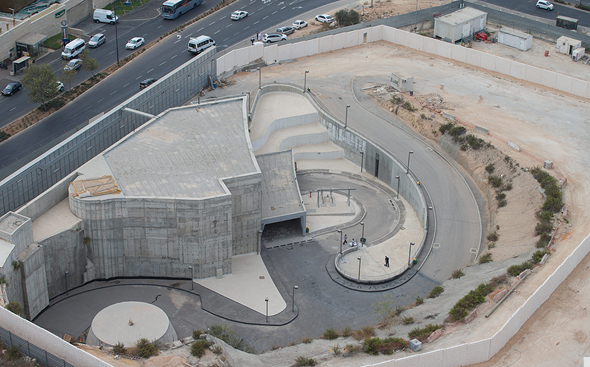
Iran’s approach, by contrast, centered on elite protection. The “Habib Ebrahimi” bunker complex, built under Tehran since 2009 at a depth of 30 meters, included blast-resistant rooms, escape tunnels, and a five-story underground office complex concealed beneath a sports center.
Despite this investment, the bunker was reportedly targeted and neutralized, proving that even the most sophisticated fortifications may not offer absolute protection.
Pakistan’s Policy Vacuum
Pakistan’s building codes, including the Pakistan Building Code 2007 and the recently approved Green Building Code (GBCP 2023) contain provisions for seismic design, fire safety, and sustainability, yet lack any requirement for protective construction against aerial attack or blast events. The National Building Code addresses earthquakes, fires, and energy efficiency, but remains silent on the most immediate threat facing civilians in a region with active conflict zones. Since Pakistan is a nuclear power and the possibility of a nuclear war has arisen more than once, nuclear shelters are also needed in key locations. A complete code for nuclear shelter design exists and can be adopted per se as a first step.
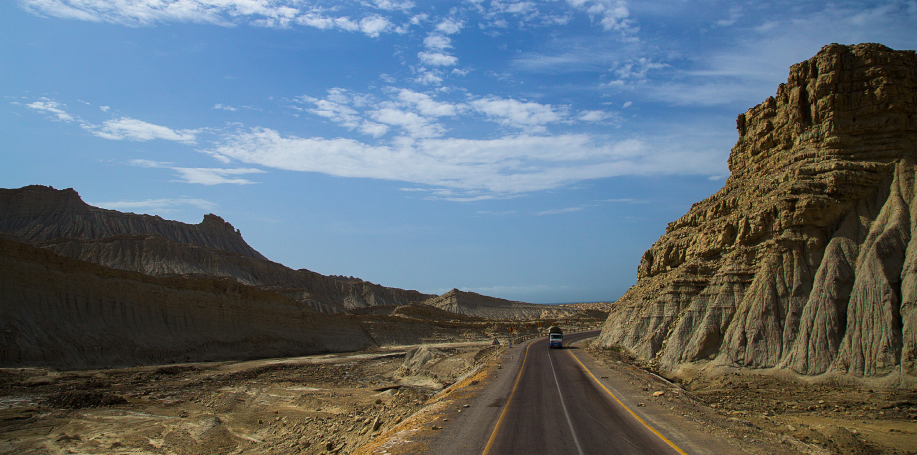
Pakistan’s mountainous terrain, which constitutes 60% of its landmass, offers natural advantages for protective infrastructure, yet construction costs and security clearance requirements have prevented civilian adoption. Meanwhile, Indian-administered Kashmir has begun adopting community shelter models (dual-use spaces disguised as schools or parks) that Pakistan could replicate at minimal incremental cost.
The Private Sector’s Blind spot
Pakistani developers, including this author’s own firm Zaamin Builders, have historically treated protective design as a luxury feature rather than a public safety necessity. This mirrors earlier assumptions about disability-inclusive housing, which CH&IR’s Aashiyana project is now challenging by demonstrating that design innovation need not be cost-prohibitive.
The academic literature supports this reframing. Research on housing estate resilience to armed aggression identifies features that promote survivability, including reinforced cores, underground parking adapted for shelter use, and spatial structures that facilitate defense yet notes these are currently not widely appreciated and indicated as a requirement for the design of residential environments.
A Way Forward
Pakistan need not replicate Israel’s model wholesale. But three practical steps could be feasible:
- Mandate minimum standards in the National Building Code for blast-resistant basements or community shelters in new housing developments, particularly in high-risk districts.
- Integrate dual-use spaces into public infrastructure like schools, parks, and parking structures can be designed to serve as emergency shelters during conflict.
- Leverage private sector innovation through tax incentives for developers incorporating protective features, parallel to existing incentives for green building certification.
As CH&IR’s ongoing research into resilient housing demonstrates, designing for one urgent need, whether disability access or climate adaptation, builds expertise to tackle others. The question is not whether Pakistan can afford protective housing, but whether it can afford to ignore the regional reality that surrounds it.
Sources:
Israel Builders Contractors Association estimate (2024)
IDF Home Front Command statistics (2025)
Iran International report on Habib Ebrahimi bunker complex (2026)
Knesset legislation on mamad expansion (2025)
Pakistan Building Code 2007 – seismic provisions
Green Building Code of Pakistan (GBCP-2023) approval (2025)
Pakistan Building Code – Fire Safety provisions
Lasocki, M. “Resilience of Urban Areas to Warfare” (2026)